The Badge Dilemma: Tesla Stickers, Anti Musk Sentiment, and the 2026 Model Y
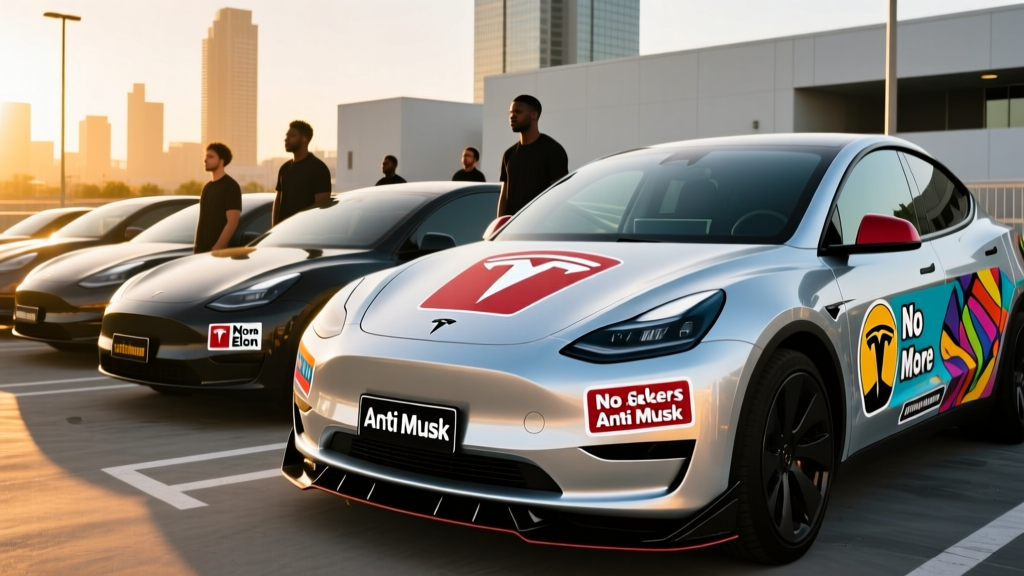
A curious accessory is appearing on Tesla vehicles in grocery-store parking lots and office garages: small vinyl stickers that read “I bought the car, not the politics,” “Anti Musk / Pro Tesla,” or simply a crossed-out X logo. The tesla stickers anti musk trend reflects a growing tension among EV buyers who want the engineering, efficiency, and Supercharger network that Tesla delivers, but feel alienated by CEO Elon Musk's public persona and political activities. For 2026, the Model Y remains Tesla's volume leader and the best-selling EV in the United States — but the brand conversation has shifted. This review separates the machine from the man, evaluating the 2026 Model Y on the data that actually matters to owners: range, charging speed, cost, and daily usability.
2026 Tesla Model Y: Quick Spec Snapshot
| Spec | Value |
|---|---|
| EPA Range | 320 miles (Long Range AWD) |
| Battery Capacity | 78.1 kWh usable, NMC (2170 cells) |
| Drivetrain | Dual-motor AWD |
| Horsepower | 384 hp combined |
| 0-60 mph | 4.8 seconds |
| Max DC Fast Charge | 250 kW peak (CCS via NACS adapter or native NACS) |
| 10-80% DCFC Time | ~27 minutes |
| Level 2 Home Charge | 11.5 kW / 44 mi/hr |
| MPGe (combined) | 117 MPGe (29 kWh/100 mi) |
| Cargo Volume | 34 cu ft (rear seats up) / 76 cu ft (folded) |
| Base MSRP | $44,990 (Long Range AWD) |
| Battery Warranty | 8 years / 120,000 miles (70% retention) |
Real-World Range: What the EPA Sticker Doesn't Tell You
The 2026 Model Y Long Range AWD carries a 320-mile EPA estimate. In mixed real-world driving — suburban commutes with regen-heavy stops — owners consistently report 290-310 miles on a full charge. Highway cruising at 75 mph drops that to roughly 260-280 miles. In sub-30°F winter conditions without preconditioning, expect 220-250 miles. Tesla's heat pump is among the best in the industry at mitigating cold-weather loss, but physics still wins: battery chemistry slows and cabin heating draws energy.
The 78.1 kWh NMC (nickel-manganese-cobalt) pack uses Tesla's 2170 cylindrical cells, which offer higher energy density than the LFP (lithium iron phosphate) chemistry found in the base RWD trim. The trade-off: NMC cells benefit from a daily charge limit of 80-90% for longevity, whereas LFP can sit at 100% without accelerated degradation. If you need maximum daily range and don't mind the charging discipline, Long Range NMC is the move. If you want simpler ownership and lower cost, the RWD with its ~270-mile EPA range and LFP battery is worth considering.
Charging Speed: DC Fast Charge and Home Setup
Charging speed is where the Model Y's maturity shows. On a V3 or V4 Supercharger, the Long Range peaks at 250 kW, adding roughly 160 miles in 15 minutes under ideal conditions. The charge curve is the critical detail most spec sheets bury: the car sustains above 150 kW only up to ~50% state of charge, then tapers progressively. A 10-80% session takes approximately 27 minutes; pushing from 80-100% adds another 25-30 minutes, which is why Tesla (and every other automaker) quotes the 10-80% metric.
| Charge Level | Power | Miles Added per Hour | Typical Use Case |
|---|---|---|---|
| Level 1 (120V) | 1.4 kW | ~5 mi/hr | Emergency / overnight trickle |
| Level 2 (240V, 48A) | 11.5 kW | ~44 mi/hr | Home Wall Connector, full overnight |
| DC Fast (V3 Supercharger) | 250 kW peak | ~1,000 mi/hr (at peak) | Road trips, 10-80% in ~27 min |
| DC Fast (CCS station w/ adapter) | Up to 250 kW | Varies by station | Non-Tesla networks (Electrify America, EVgo) |
At home on a Tesla Wall Connector (hardwired 60A circuit), the Model Y accepts 11.5 kW, replenishing the full 78.1 kWh pack in about 7.5 hours. Most owners charge overnight and wake up full. Installation typically runs $500-$1,500 depending on panel proximity and local permit fees — factor in a possible $200-$500 panel upgrade if you're on older 100A service.
The Supercharger network remains Tesla's strongest competitive moat. With over 6,000 V3/V4 stalls across the U.S., plug-and-charge reliability is measurably higher than third-party networks, though Tesla has opened many stalls to NACS-equipped competitors, occasionally creating queues at popular corridors.
Performance and Driving Dynamics
The dual-motor AWD Long Range produces 384 hp and hits 0-60 mph in 4.8 seconds — brisk for a 4,400-lb crossover and more than adequate for highway merging and mountain passes. The single-speed reduction gear means instant torque with zero shift lag. Regenerative braking is aggressive enough for one-pedal driving in most scenarios, though Tesla removed the user-adjustable regen setting in recent model years, defaulting to a fixed high-regen mode.
Ride quality has improved with the 2025 refresh (carried into 2026): revised damping, acoustic glass, and ventilated front seats address the most common complaints from 2022-2024 owners. The steering remains quick-ratio and precise, if numb on center. For buyers prioritizing comfort over sportiness, the Model Y now competes credibly with the Hyundai Ioniq 5 and Ford Mustang Mach-E in refinement, though neither matches its efficiency.
Pricing, Trims, and Federal Tax Credit Eligibility
| Trim | MSRP | Est. Federal Credit | Effective Price |
|---|---|---|---|
| Long Range AWD | $44,990 | $7,500 (if eligible) | ~$37,490 |
| Long Range AWD w/ FSD Supervised | $52,990 | $7,500 (if eligible) | ~$45,490 |
| Performance AWD | $49,990 | $7,500 (if eligible) | ~$42,490 |
The IRS §30D federal tax credit offers up to $7,500, but eligibility hinges on three constraints that catch many buyers off guard:
- MSRP cap: SUVs/crossovers must be under $80,000 — the Model Y clears this easily.
- Income cap: Modified AGI must not exceed $150,000 (single), $225,000 (head of household), or $300,000 (joint).
- Battery sourcing: A percentage of critical minerals and battery components must be sourced from the U.S. or FTA partners. Tesla has reshored significant supply, but the exact qualifying percentage shifts annually. Verify current-year eligibility on fueleconomy.gov before purchase.
Since 2024, the credit can be transferred to the dealer at point of sale, reducing your out-of-pocket price on delivery day rather than waiting for a tax refund. This is a meaningful cash-flow advantage, but confirm the specific VIN qualifies — not every build configuration passes the sourcing test.
Tech, Interior, and the Autopilot Conversation
The Model Y interior is minimalist by design: a single 15.4-inch touchscreen handles infotainment, climate, navigation, and vehicle settings. There are no physical buttons, no instrument cluster, and no Apple CarPlay or Android Auto — Tesla's proprietary OS is the ecosystem. For some, this is liberating; for others, it's a dealbreaker. The 2026 refresh added ambient lighting, a rear-seat entertainment screen, and power-folding second-row seats, closing the gap with more traditionally appointed competitors.
Standard Autopilot (lane centering + adaptive cruise) and the $8,000 FSD (Supervised) option are both SAE Level 2 driver-assistance systems. You must keep hands on the wheel and eyes on the road at all times. FSD Supervised can navigate highway interchanges, stop lights, and some city streets, but it makes errors that require immediate driver intervention. It is not autonomous. Only Level 4 services like Waymo operate without a human driver in geofenced areas.
Cargo space is genuinely class-leading: 34 cu ft behind the second row and 76 cu ft with seats folded, plus a small front trunk (frunk) for charging cables or groceries. Rear legroom is 40.5 inches — adequate for adults on longer trips, though the sloping roofline cuts headroom for passengers over 6 feet.
Who Should Buy the 2026 Model Y — and Who Shouldn't
Pros
- Best-in-class efficiency (117 MPGe combined)
- Supercharger network reliability
- Strong resale value relative to EV segment
- Class-leading cargo volume
- Over-the-air updates add features post-purchase
Cons
- Brand association with Musk's public controversies
- No Apple CarPlay / Android Auto
- Minimalist interior polarizes buyers
- FSD Supervised expensive for Level 2 capability
- Insurance premiums 15-25% above segment average
Best for: Tech-forward commuters and small families who prioritize efficiency, charging infrastructure, and cargo flexibility — and who are either unbothered by the brand association or willing to slap on a sticker and move on.
Look elsewhere if: You want a traditional luxury interior, physical controls, phone-based infotainment integration, or simply cannot reconcile the purchase with Musk's public profile. The IIHS Top Safety Pick-rated Hyundai Ioniq 5, Ford Mustang Mach-E, and upcoming Chevrolet Equinox EV all offer compelling alternatives with fewer brand-compromise conversations.
Frequently Asked Questions
What is the real-world range of the 2026 Model Y?
EPA estimates 320 miles for the Long Range AWD. Real-world mixed driving yields 290-310 miles; highway-only drops to 260-280; cold weather (sub-30°F) can reduce range to 220-250 miles without preconditioning.
How fast does the Model Y charge at home and on the road?
On a 250 kW DC Supercharger, 10-80% takes ~27 minutes. At home on a Level 2 Wall Connector (11.5 kW), a full charge takes about 7.5 hours, adding roughly 44 miles per hour of charging.
Does the 2026 Model Y qualify for the $7,500 federal tax credit?
It can, but only if your income is under the §30D caps ($150K single / $300K joint) and the specific VIN's battery meets current-year critical-mineral and component sourcing requirements. Always verify on fueleconomy.gov and consult a tax professional.
Is the Model Y worth it over the Ioniq 5 or Mach-E?
If Supercharger access and efficiency are your top priorities, yes — the Model Y's 117 MPGe and network reliability are unmatched. If interior quality, phone integration, or brand perception matter more, the Ioniq 5 and Mach-E are strong alternatives with competitive range and pricing.
Why are people putting anti-Musk stickers on their Teslas?
Some owners feel the CEO's public political statements and social-media behavior conflict with their values, but they still consider the vehicle itself the best EV for their needs. The stickers are a way to signal that the purchase is an engineering decision, not an endorsement.