Tesla Stealth Grey: The $0 Color Reshaping Tesla's Lineup
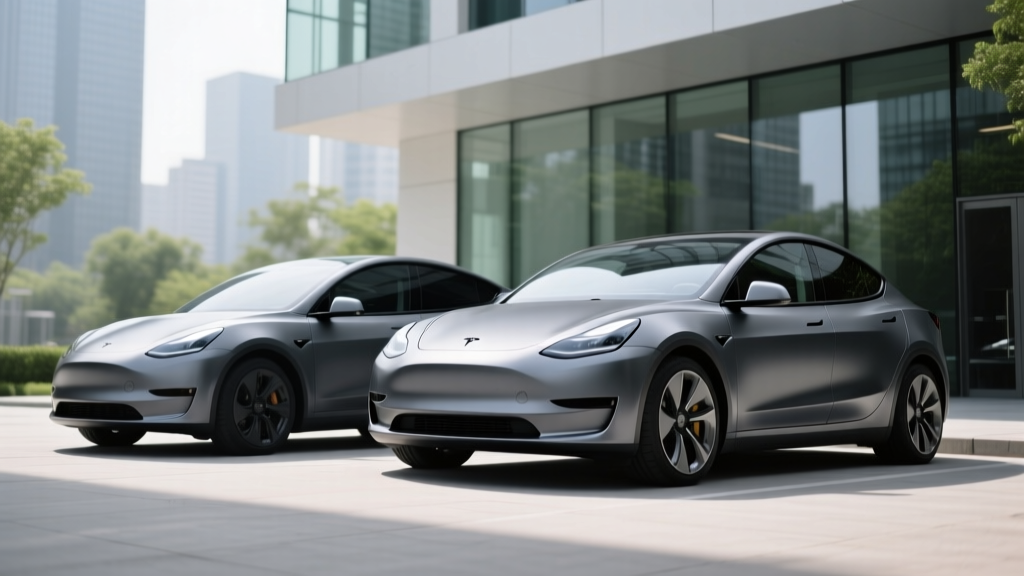
Introduced as a replacement for Midnight Silver Metallic, Tesla Stealth Grey has become one of the most popular no-cost exterior finishes across the Model 3 and Model Y lineup for 2025-2026. It's a darker, more saturated grey with subtle blue undertones that shift depending on lighting conditions — a meaningful step up from the flat silver it replaced. But a paint color doesn't make or break an EV purchase. What matters is what's underneath: battery chemistry, charging speed, real-world range, and whether the federal tax credit actually applies to the configuration you want.
This review covers the current 2026 Tesla Model 3 Long Range AWD and Model Y Long Range AWD — the two vehicles where Stealth Grey sees the highest order volume — with exact specs, pricing, and ownership economics you need before placing an order.
Full Spec Breakdown: Model 3 vs Model Y in Stealth Grey
| Specification | Model 3 Long Range AWD | Model Y Long Range AWD |
|---|---|---|
| EPA Range | 341 miles | 320 miles |
| Battery (Usable) | ~79 kWh, NMC | ~79 kWh, NMC |
| Efficiency | 130 MPGe / 26 kWh/100mi | 122 MPGe / 28 kWh/100mi |
| Peak DC Charge Rate | 250 kW | 250 kW |
| 10–80% DC Fast Charge | ~25 min | ~27 min |
| Level 2 Home Charging | 11.5 kW (~44 mi/hr) | 11.5 kW (~40 mi/hr) |
| 0–60 mph | 4.2 seconds | 4.8 seconds |
| Horsepower | ~384 hp (dual motor) | ~384 hp (dual motor) |
| Drivetrain | Dual Motor AWD | Dual Motor AWD |
| Cargo Volume | 23 cu ft (trunk + frunk) | 76 cu ft (rear seats folded) |
| Rear Legroom | 35.2 in | 40.5 in |
| Battery Warranty | 8 yr / 120,000 mi | 8 yr / 120,000 mi |
| Base MSRP (2026) | $47,740 | $48,630 |
Source: EPA fueleconomy.gov and Tesla.com. Prices include destination. Stealth Grey is a no-cost option across all trims.
Real-World Range: What the EPA Sticker Doesn't Tell You
Model 3 LR AWD: EPA 341 mi → Expect 290–310 mi highway at 70 mph; 240–270 mi in sub-freezing weather.
Model Y LR AWD: EPA 320 mi → Expect 270–290 mi highway at 70 mph; 225–255 mi in sub-freezing weather.
Tesla's heat pump (standard on both) mitigates cold-weather cabin-heating losses better than most competitors, but battery chemistry still loses 15–25% usable capacity below 32°F. Highway driving at sustained speeds above 70 mph reduces range more than city/regen-heavy driving.
The NMC (nickel manganese cobalt) battery pack in both vehicles provides high energy density, which is why these models achieve 300+ miles on roughly 79 kWh usable. However, NMC chemistry is more temperature-sensitive than LFP (lithium iron phosphate). If you live in northern climates and frequently DC fast-charge in winter, preconditioning is essential — the car's navigation-routed battery preconditioning warms the pack to optimal temperature before you arrive at a Supercharger, enabling peak charge rates. Without it, you may see charge speeds cut in half on a cold pack.
For daily commuting under 60 miles round-trip, you'll rarely dip below 80% state of charge (SoC). Tesla recommends charging NMC batteries to 80% for daily use and 100% only before long trips — a practice that meaningfully extends long-term battery health compared to routinely charging to full.
Charging Speed: DC Fast, Level 2, and the Curve Reality
| Charging Level | Power (kW) | Speed (mi/hr added) | Notes |
|---|---|---|---|
| Level 1 (120V household) | ~1.4 kW | 3–5 mi/hr | Emergency/trickle only |
| Level 2 (240V, 48A Wall Connector) | 11.5 kW | ~44 mi/hr (M3) / ~40 mi/hr (MY) | Full charge in ~7–8 hours |
| DC Fast (Supercharger V3/V4) | Peak 250 kW | ~175 mi in 15 min | 10–80% in ~25–27 min |
The charge-curve reality: Both vehicles peak at 250 kW only between roughly 10–30% SoC on a preconditioned battery. From 30–60%, expect sustained rates around 150–180 kW. Above 80%, the rate tapers sharply to protect battery longevity — often dropping below 50 kW. This is why the industry standard metric is 10–80% time, not peak kW. Tesla's 25-minute 10–80% window is competitive with the Hyundai Ioniq 5's ~18 minutes (which charges at up to 350 kW on 800V architecture) but still among the best on the 400V NACS ecosystem.
Home charging with the Tesla Wall Connector on a 60A circuit delivers the full 11.5 kW (48A continuous). Most owners find that plugging in overnight easily replenishes any daily driving. Installation costs for a Wall Connector typically run $500–$1,500 depending on panel proximity and whether your electrical panel needs an upgrade to 200A service.
Performance and Driving Dynamics
The dual-motor AWD powertrain in both the Model 3 and Model Y Long Range delivers approximately 384 horsepower split between front and rear induction/permanent-magnet motors. The Model 3 hits 0–60 mph in 4.2 seconds; the heavier Model Y does it in 4.8 seconds. Both feel immediate in everyday driving — electric torque delivery from 0 RPM means passing and merging are effortless without the lag of a turbocharged gas engine.
The refreshed Model 3 ("Highland") introduced significantly improved ride quality with updated suspension tuning, acoustic glass, and ventilated front seats. The Model Y received its own "Juniper" refresh for 2025, bringing similar interior upgrades, a rear touchscreen, and improved noise isolation. Both now feature ambient lighting, power-folding mirrors, and a rear-seat ventilation system.
Towing: The Model Y Long Range AWD is rated for 3,500 lbs when properly equipped. The Model 3 is not rated for towing in the US market. If you need to tow even a small utility trailer, the Model Y is the only option.
Pricing, Trims, and Federal Tax Credit Eligibility
| Model / Trim | Base MSRP | Stealth Grey | Est. After §30D Credit* |
|---|---|---|---|
| Model 3 Long Range AWD | $47,740 | $0 (included) | ~$40,240 |
| Model 3 Performance | $54,990 | $0 (included) | ~$47,490 |
| Model Y Long Range AWD | $48,630 | $0 (included) | ~$41,130 |
| Model Y Performance | $53,490 | $0 (included) | ~$45,990 |
*§30D credit eligibility depends on buyer income, battery sourcing, and MSRP caps. See checklist below. Consult a tax professional per IRS guidance.
- MSRP Cap: SUVs (Model Y) must be under $80,000; sedans (Model 3) under $55,000 — all trims listed above qualify.
- Buyer Income Cap: Modified AGI ≤ $300,000 (joint), $225,000 (head of household), $150,000 (single).
- Battery Sourcing: A percentage of critical minerals and battery components must meet North American sourcing thresholds — these thresholds increase annually. Verify current-year compliance on IRS.gov before purchase.
- Point-of-Sale Transfer: As of 2024+, you can transfer the credit to the dealer at purchase, reducing your out-of-pocket cost immediately rather than waiting for a tax refund.
- One Vehicle Per Taxpayer: Limited to one new EV credit per 3-year period for the buyer.
Technology, Safety, and Driver Assistance
Both vehicles run Tesla's latest infotainment on a 15.4-inch center touchscreen (Model 3) or 15.4-inch center + 8-inch rear screen (Model Y). There is no Apple CarPlay or Android Auto — Tesla's native system handles navigation, streaming (Netflix, YouTube while parked), Spotify, and phone-as-key functionality. The navigation system integrates directly with Supercharger routing and battery preconditioning, which remains a meaningful advantage for road-trip planning.
Autopilot and FSD (Supervised):
Tesla Autopilot (included) and Full Self-Driving Supervised ($8,000 option or $99/mo subscription) are SAE Level 2 driver-assistance systems. You must keep your hands on the wheel and eyes on the road at all times. The system does not make the vehicle autonomous. Only Level 4 robotaxi services (Waymo, Zoox) operate without a human driver in defined service areas.
Standard Autopilot includes Traffic-Aware Cruise Control and Autosteer (lane centering). FSD Supervised adds automatic lane changes, navigation-on-autopilot (highway on/off-ramps), traffic light and stop sign recognition, and enhanced parking features. Real-world FSD performance varies significantly by geography and road conditions — it excels on well-marked highways but can struggle in construction zones, heavy rain, and unmapped areas.
Safety: Both the Model 3 and Model Y hold 5-star overall ratings from NHTSA and Top Safety Pick+ from IIHS across all crash-test categories. Standard active safety includes automatic emergency braking, blind-spot monitoring, lane departure warning, and rear cross-traffic alert.
Who Should Buy Tesla in Stealth Grey — and Who Shouldn't
- Stealth Grey is a no-cost premium-looking finish
- Best-in-class Supercharger network access (20,000+ stalls in North America)
- Class-leading efficiency (26–28 kWh/100mi)
- Strong OTA update cadence adds features post-purchase
- 341/320 mi EPA range eliminates range anxiety for most trips
- Excellent safety ratings (NHTSA 5-star, IIHS TSP+)
- NACS connector is now the industry standard (Ford, GM, Rivian, Volvo, etc. adopting)
- No Apple CarPlay/Android Auto
- FSD is expensive ($8,000) and remains Level 2
- Minimalist interior lacks physical buttons (turn signals on steering wheel stalk removed on Model 3 Highland)
- No heads-up display
- Insurance premiums run 15–30% higher than comparable ICE vehicles
- Service center wait times can be long in high-volume markets
- Rear visibility in Model 3 is limited (no rear wiper)
Choose Model 3 LR AWD if: You're a commuter or couple who prioritizes driving dynamics, lower price, and maximum range. The sedan's 341 mi EPA and lighter weight make it the efficiency pick.
Choose Model Y LR AWD if: You need cargo space (76 cu ft with seats folded), rear-seat comfort for adults, child-seat accessibility, or light towing (3,500 lbs). Families overwhelmingly prefer the crossover format.
Look at competitors if: You want physical buttons and CarPlay (Hyundai Ioniq 5, Kia EV6), 800V ultra-fast charging (Ioniq 5 at 350 kW), or a luxury badge (BMW i4, Genesis GV60).
Frequently Asked Questions
Is Stealth Grey a free color on all Tesla models?
Yes. As of the 2025-2026 model year, Stealth Grey is a no-cost exterior option on Model 3, Model Y, Model S, and Model X. It replaced Midnight Silver Metallic and is currently one of five standard colors alongside Pearl White, Solid Black, Deep Blue, and Ultra Red (the latter two carry a $1,000–$2,500 premium depending on model).
What is the real-world range of a Tesla Model 3 in Stealth Grey?
The EPA rates the 2026 Model 3 Long Range AWD at 341 miles. In real-world highway driving at 70 mph, expect 290–310 miles. In cold weather (below 32°F), plan for 240–270 miles due to battery chemistry losses and cabin heating demands, though the standard heat pump helps mitigate this compared to resistive heating systems.
How fast does the Model Y charge at a Supercharger?
The Model Y Long Range AWD peaks at 250 kW on a V3 or V4 Supercharger with a preconditioned battery. Real-world 10–80% charging takes approximately 25–27 minutes. Peak speed is only sustained between ~10–30% SoC; above 80%, the rate tapers significantly. At home on a 48A Level 2 Wall Connector, you'll add about 40 miles of range per hour.
Does the Tesla Model 3 or Model Y qualify for the $7,500 federal tax credit?
Both the Model 3 Long Range ($47,740) and Model Y Long Range ($48,630) fall under the §30D MSRP caps ($55,000 for sedans, $80,000 for SUVs). However, eligibility also depends on your income (≤$300K joint / $150K single), battery component and critical mineral sourcing requirements that change annually, and the one-vehicle-per-3-years rule. Verify current-year requirements on IRS.gov before purchasing. The credit can be transferred at point of sale to reduce your purchase price immediately.
Is Stealth Grey hard to maintain?
Stealth Grey is one of the easier Tesla colors to live with day-to-day. Unlike Solid Black (which shows swirl marks and dust aggressively) or Pearl White (which can yellow slightly on lower panels from road debris), Stealth Grey hides light dust, water spots, and minor road grime well. A ceramic coating or paint protection film (PPF) on the front bumper and hood is still recommended to prevent rock chips, which are visible on all dark colors.
Should I buy Tesla or a competitor like the Hyundai Ioniq 5?
If Supercharger network access, OTA updates, and integrated navigation-routing matter to you, Tesla still holds an edge. If you want 800V ultra-fast charging (10–80% in ~18 min at 350 kW), physical controls, Apple CarPlay, and comparable range, the Ioniq 5 is a strong alternative. The Model Y wins on cargo space and towing; the Ioniq 5 wins on charging speed and interior ergonomics. Test-drive both before deciding.