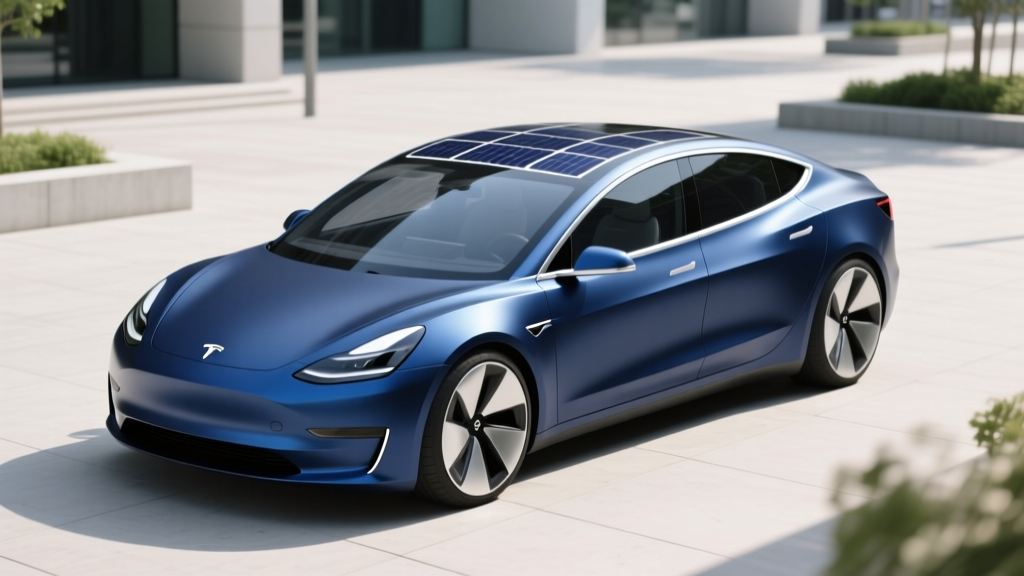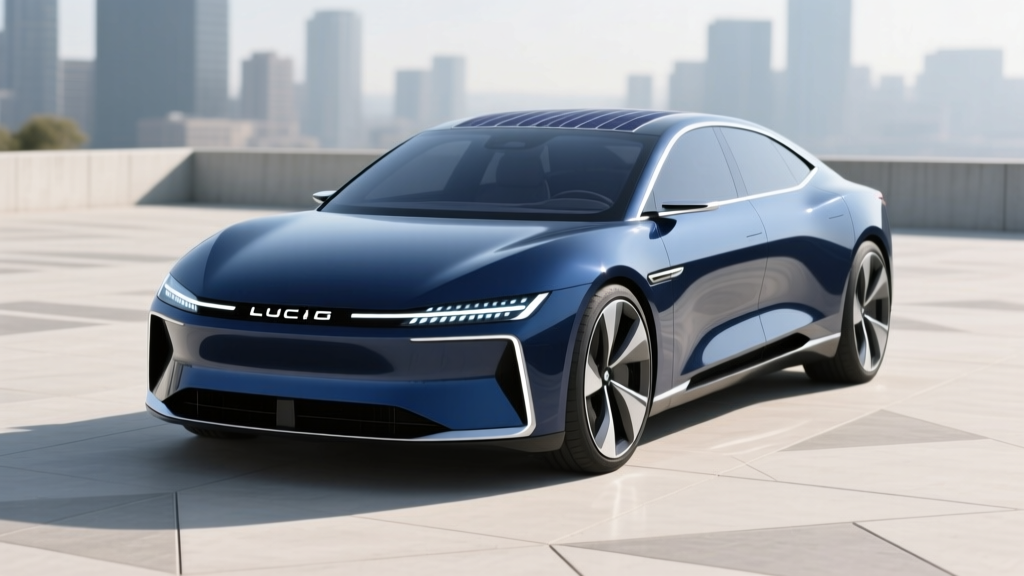
If you've been following the EV rumor mill, you've likely seen the camouflaged sedans and crossovers circulating near Lucid's Casa Grande, Arizona factory. These Lucid midsize model prototypes represent the brand's long-awaited push downstream from the six-figure Air sedan into the high-volume $50,000 segment. Internally referred to as the "Midsize" platform, this vehicle is expected to launch for the 2027 model year, with production potentially beginning in late 2026.
As an analyst who has tracked Lucid's engineering trajectory since the Air's debut, I've compiled every verified data point, patent filing, executive statement, and prototype observation into a single reference. This is not a review of a car you can buy today—it's a technical preview of what's coming, with honest caveats about what remains unconfirmed.
Platform Architecture and Powertrain
Lucid CEO Marc Winterhoff confirmed at the 2025 LA Auto Show that the Midsize platform will use a derivative of the company's proprietary 900-volt electrical architecture—the same voltage class that enables the Air's class-leading efficiency. However, the Midsize will introduce a new generation of Lucid's compact drive units, which the company claims are 30% smaller and 20% lighter than the Air's motors.
Prototypes observed in testing appear to use a dual-motor all-wheel-drive configuration, though a single-motor rear-wheel-drive variant is virtually certain to serve as the volume-leader at the lowest price point. Lucid's historical approach with the Air (Pure RWD starting at $69,900 vs. Sapphire AWD at $249,000) suggests multiple powertrain tiers.
| Attribute | Estimated / Confirmed Value | Status |
|---|---|---|
| Platform | Midsize (new architecture) | Confirmed |
| Electrical Architecture | 900V nominal | Confirmed |
| Battery Capacity (usable) | ~85–92 kWh (estimated) | Preliminary |
| Battery Chemistry | NMC (likely), LFP possible for base trim | Unconfirmed |
| Drivetrain Options | RWD single-motor / AWD dual-motor | Expected |
| Horsepower (AWD) | ~450–500 hp (estimated) | Preliminary |
| 0-60 mph (AWD) | ~3.8–4.2 seconds (estimated) | Preliminary |
| EPA Range Target | ~340 miles (Lucid stated goal) | Target |
| Body Style | Crossover / fastback SUV | Strongly suggested |
| Production Start | Late 2026 / early 2027 | Expected |
| Target Base MSRP | ~$48,000–$52,000 | Lucid stated target |
Range and Efficiency Projections
Lucid has publicly stated a range target of approximately 340 miles EPA for the top-range variant. This figure, if achieved, would slot between the Air Pure RWD (419 miles EPA) and the Gravity Grand Touring (estimated 440+ miles), reflecting a smaller battery constrained by cost targets rather than a lack of engineering capability.
Lucid's efficiency advantage has always stemmed from its miniaturized powertrain components and aerodynamic optimization. The Air achieves roughly 4.0 miles per kWh—best in its class. If the Midsize platform can approach 3.8–4.0 mi/kWh (plausible given the 900V architecture carry-over), an 88 kWh usable battery would indeed yield ~340 miles EPA.
Charging Speed and Infrastructure Compatibility
The 900V architecture is the Midsize's most significant charging advantage. Higher voltage allows faster charging at lower current, reducing thermal stress and enabling thinner (lighter) cables. The Lucid Air Grand Touring currently peaks at approximately 300 kW on DC fast chargers, adding 200 miles in roughly 12 minutes under ideal conditions.
For the Midsize, we should expect:
| Charging Level | Power | Estimated Speed | Notes |
|---|---|---|---|
| Level 1 (120V household) | ~1.4 kW | ~4–5 mi/hr | Emergency/trickle only |
| Level 2 (240V home) | ~11.5–19.2 kW | ~35–65 mi/hr | Depends on onboard charger; 19.2 kW expected on higher trims |
| DC Fast Charge (peak) | ~250–270 kW (estimated) | 10–80% in ~18–22 min | Peak rate; sustained rate lower above 60% SoC |
| DC Fast Charge (sustained avg) | ~170–190 kW | ~15–18 mi/min average | Real-world average over 10–80% session |
Charging curve caveat: Like all modern EVs, the Midsize will not sustain peak kW for the entire session. Expect the charge rate to taper significantly above 60% state of charge, with a pronounced slowdown above 80%. This is normal battery-management behavior to protect cell longevity. For road trips, plan stops around the 10–80% window for optimal time efficiency.
Connector compatibility will almost certainly include NACS (Tesla's North American Charging Standard), as Lucid announced NACS adoption for all future vehicles beginning in 2025. This grants access to Tesla Supercharger stations via native port—no adapter required for newer models. CCS1 compatibility may be retained or phased out depending on final production timing.
Pricing, Trims, and Federal Tax Credit Eligibility
Lucid's stated goal is a starting price around $48,000–$52,000 for the base Midsize variant. This positions the vehicle directly against the Tesla Model Y, Ford Mustang Mach-E, Hyundai Ioniq 5, and the upcoming next-generation Rivian R2.
| Trim (Projected) | Est. Base MSRP | §30D Credit Eligibility | Effective Price (if eligible) |
|---|---|---|---|
| Base RWD | $48,000–$52,000 | Potentially eligible (under $80K SUV / $55K sedan cap) | ~$40,500–$44,500 |
| Mid AWD | $55,000–$60,000 | Likely eligible | ~$47,500–$52,500 |
| Top AWD | $62,000–$68,000 | Likely eligible (if classified as SUV) | ~$54,500–$60,500 |
Critical tax credit caveats (§30D rules, current as of 2026):
- MSRP caps: $55,000 for sedans; $80,000 for SUVs/pickups/vans. The Midsize's body-style classification (sedan vs. SUV) will determine which cap applies—and Lucid will almost certainly engineer dimensions to qualify under the $80K SUV threshold.
- Buyer income limits: Adjusted gross income must not exceed $150,000 (single), $225,000 (head of household), or $300,000 (joint filers).
- Battery sourcing requirements: Increasingly strict critical-mineral and battery-component sourcing rules apply. As of 2026, vehicles must meet escalating percentages of North American or FTA-partner sourcing. Lucid's supply chain decisions will determine eligibility—this is NOT guaranteed.
- Point-of-sale transfer: Eligible buyers can apply the credit as an immediate price reduction at the dealer, rather than waiting for a tax refund.
Always verify current eligibility on IRS.gov before purchasing. Rules change annually, and a vehicle's eligibility can shift based on battery sourcing updates.
Interior Space, Technology, and Driver Assistance
Prototype observations suggest a crossover/fastback body style with a wheelbase likely in the 112–116 inch range. This would yield interior volume comparable to the Tesla Model Y or Hyundai Ioniq 5, targeting approximately:
- Cargo volume: ~30–35 cu ft behind rear seats; ~65–72 cu ft with seats folded (estimated)
- Rear legroom: ~38–41 inches (Lucid prioritizes interior space via compact drivetrain packaging)
- Frunk: Likely present, ~3–5 cu ft (dependent on front motor packaging)
Technology will almost certainly include Lucid's glass canopy display (a single curved panel spanning the dash), wireless Apple CarPlay/Android Auto, and over-the-air update capability. Lucid's DreamDrive Pro ADAS suite is expected to carry over, featuring:
- Adaptive cruise control with stop-and-go
- Lane centering assist
- Automatic emergency braking
- Highway driving assist (hands-on, SAE Level 2)
Warranty and Ownership Considerations
Based on Lucid's current warranty structure for the Air, we can project:
- Basic vehicle warranty: 4 years / 50,000 miles
- Battery and powertrain: 8 years / 100,000 miles (with a capacity retention threshold, likely 70%)
- Roadside assistance: 4 years / 50,000 miles
Lucid's battery warranty aligns with industry norms (Tesla, Hyundai, Ford all offer 8-year battery warranties). The 70% capacity retention threshold means Lucid will replace or repair the battery if it degrades below 70% of original capacity within the warranty period. For context, most modern NMC batteries degrade approximately 10–15% over the first 100,000 miles under normal use, making a warranty claim statistically unlikely for most owners.
Insurance note: Lucid vehicles have carried higher-than-average insurance premiums due to repair costs and limited body-shop familiarity. The Midsize's higher production volume and simpler construction may mitigate this, but expect quotes 15–25% above equivalent non-luxury EVs initially.
Competitive Positioning: Is It Worth Waiting For?
The Lucid Midsize will enter one of the most competitive segments in the EV market. Here's how it's likely to stack up against announced or current rivals:
| Attribute | Lucid Midsize (Est.) | Tesla Model Y (2026) | Hyundai Ioniq 5 (2026) | Rivian R2 (2026) |
|---|---|---|---|---|
| Base Price | ~$50,000 | ~$44,000 | ~$43,000 | ~$45,000 |
| EPA Range (top) | ~340 mi | ~330 mi | ~320 mi | ~340 mi |
| Efficiency (mi/kWh) | ~3.8–4.0 | ~3.5 | ~3.4 | ~3.3 |
| DC Fast Charge Peak | ~260 kW | ~250 kW | ~240 kW | ~220 kW |
| 10–80% Time | ~20 min | ~22 min | ~18 min | ~24 min |
| Charging Standard | NACS (native) | NACS (native) | NACS (adapter) | NACS (native) |
| 0-60 mph (AWD) | ~4.0 sec | ~4.8 sec | ~5.0 sec | ~3.5 sec |
| Charging Network Access | Supercharger + 3rd party | Supercharger | 3rd party + SC adapter | Supercharger + 3rd party |
- Choose the Lucid Midsize if: You prioritize class-leading efficiency, want NACS Supercharger access without an adapter, value Lucid's packaging innovation (more interior space per exterior inch), and can wait until late 2026/2027 for delivery.
- Choose a current competitor if: You need a vehicle now, want established service-center networks (Tesla, Hyundai), prefer proven reliability data, or need to lock in current tax-credit eligibility before rules change.
Pros, Cons, and Bottom Line
- Class-leading efficiency (~4.0 mi/kWh target)
- 900V architecture for fast DC charging
- NACS native port (Supercharger access)
- Luxury-grade interior and display tech at mainstream price
- Spacious interior from compact drivetrain packaging
- Potential §30D tax credit eligibility
- Not available until late 2026 at the earliest
- Limited service-center network vs. Tesla/Hyundai
- Higher insurance premiums likely (new brand, low volume)
- Tax credit eligibility dependent on battery sourcing (not guaranteed)
- Resale value uncertain for a new brand in mainstream segment
- Initial production quality unknown (Lucid's early Air builds had fit-finish issues)
The Lucid Midsize platform represents a credible threat to the Model Y's dominance—if Lucid can execute on production volume, service infrastructure, and pricing. The engineering DNA is promising: 900V efficiency, compact motors, and thoughtful packaging. But execution risk is real, and buyers who need a vehicle today have excellent alternatives that won't require a 12–18 month wait.
Frequently Asked Questions
What is the real-world range of the Lucid Midsize?
Lucid targets ~340 miles EPA. In real-world highway driving at 75 mph, expect approximately 280–300 miles. In cold weather (below freezing), anticipate 220–250 miles. These are estimates based on Lucid's historical efficiency performance and typical EV range reduction patterns.
How fast does the Lucid Midsize charge?
Estimated DC fast-charge peak is ~250–270 kW, with a 10–80% session taking approximately 18–22 minutes. Home Level 2 charging at 11.5 kW adds roughly 35–40 miles per hour; at 19.2 kW (higher trims), expect ~60–65 miles per hour.
How much does the Lucid Midsize cost after tax credits?
Base MSRP is targeted at ~$48,000–$52,000. If eligible for the full $7,500 §30D federal credit, the effective price drops to ~$40,500–$44,500. Eligibility depends on MSRP classification, buyer income, and battery-sourcing compliance—verify on IRS.gov before purchase.
Is the Lucid Midsize worth waiting for vs. buying a Tesla Model Y or Hyundai Ioniq 5 now?
If you can wait 12–18 months and value efficiency, NACS charging access, and Lucid's engineering approach, it's worth monitoring. If you need a vehicle now, want established service infrastructure, or need guaranteed tax-credit eligibility, current alternatives are excellent choices.
Does the Lucid Midsize qualify for the federal EV tax credit?
Likely yes, but not guaranteed. The vehicle must meet §30D requirements: MSRP under the applicable cap ($55K sedan / $80K SUV), buyer income limits, and battery-sourcing rules. Lucid will almost certainly design the vehicle to qualify, but final eligibility depends on supply-chain decisions and IRS classification. Always verify at IRS.gov.
What are the biggest risks of buying a Lucid Midsize?
Primary risks include limited service-center availability (Lucid has ~30 service centers nationally vs. Tesla's 250+), higher insurance costs, uncertain resale value, and potential production delays. Early-build quality is also a consideration, though Lucid has improved since the Air's 2021 launch.
Sources: Lucid Motors official statements, IRS §30D guidance, EPA fueleconomy.gov for comparable vehicle data, industry prototype observations.