The Tesla Start Program: What New Owners Actually Need to Know
If you've just taken delivery of a Tesla—or are about to—you'll quickly discover there's no start button, no ignition key, and no traditional instrument cluster. The "start program" for a Tesla isn't a single procedure; it's the entire onboarding sequence that takes you from unboxing the car to confidently driving, charging, and customizing it. Whether you're stepping into a 2026 Model 3 Highland, a refreshed Model Y Juniper, a Model S, or a Model X, the core workflow is the same: the car powers on when you sit down with an authenticated key, and powers off when you leave.
This guide walks through every step of the Tesla start program, including phone key pairing, driver profile configuration, Autopilot and FSD (Supervised) setup, first-charge best practices, and the real-world ownership numbers—range, efficiency, and pricing—that define each model in the 2026 lineup.
Step 1: Keyless Entry and Powering On
Tesla vehicles use a passive-entry system. There is no start/stop button. Here's how the start sequence works:
- Approach with your authenticated key — either the Tesla mobile app (Phone Key via Bluetooth), the key card (NFC tap on the B-pillar), or the optional key fob.
- Pull the door handle and sit in the driver's seat. The car detects your key, unlocks, and the central touchscreen boots to the driving interface within 2–3 seconds.
- Press the brake pedal. A "READY" indicator (or simply the drive-state bar) appears on the screen. The car is now in Drive-ready mode.
- Shift into Drive using the column stalk (Model S/X and pre-2025 Model 3/Y) or the on-screen slider (2026 Model 3 Highland and Model Y Juniper, which use steer-by-wire or revised stalk layouts depending on market).
To power off: shift to Park, exit the vehicle with your phone key, and walk away. The car locks automatically (if Walk-Away Lock is enabled in Controls > Locks) and enters sleep mode within minutes. You can also manually power off via Controls > Safety > Power Off.
Step 2: Phone Key Setup and Driver Profiles
The Tesla app (iOS/Android) is the primary key for most owners. To pair it:
- Download the Tesla app and log in with your Tesla account.
- Tap Add Product and enter your VIN or scan the QR code on the vehicle's touchscreen (Controls > Software).
- Follow the on-screen prompts to pair via Bluetooth. Keep your phone within 3 feet of the driver's-side B-pillar during pairing.
- Confirm the key name (e.g., "John's iPhone") in Controls > Locks on the car's screen.
Driver Profiles let you save seat position, mirror angles, steering-wheel height, climate preferences, media settings, and Autopilot defaults per driver. You can link a specific phone key to a profile so the car auto-adjusts when you approach. To create one: tap the driver-profile icon (top-left of the touchscreen) > Add Driver > name it > link your phone key.
Pro tip: Always carry the NFC key card as a backup. Phone Bluetooth can occasionally fail to wake the car if the phone is in a signal-blocking pocket, low on battery, or has the Tesla app force-closed by the OS. The card works by tapping it behind the driver's-side B-pillar, then tapping it on the RFID reader behind the cup holders to authorize Drive.
Step 3: First-Drive Configuration
Before your first real trip, configure these settings for safety and efficiency:
- Regenerative Braking: Set to "Standard" for maximum one-pedal driving and energy recovery. On 2026 models, Tesla has largely removed the "Low" regen option; if available, Standard is the efficiency-optimal choice.
- Stop Mode (Hold/Roll/Creep): "Hold" brings the car to a complete stop and engages the brake lights without pressing the pedal—ideal for one-pedal driving in traffic.
- Climate: Enable "Cabin Overheat Protection" if you live in hot climates. For cold-weather range preservation, use seat heaters and the heated steering wheel rather than cranking cabin heat; precondition the battery via the app before driving (Controls > Climate > Defrost or schedule via the app).
- Autopilot: Enable Traffic-Aware Cruise Control and Autosteer under Controls > Autopilot. Note that Autopilot and FSD (Supervised) are SAE Level 2 driver-assist systems—you must keep your hands on the wheel and eyes on the road at all times.
- Tire Pressure: Check the sticker inside the driver's door jamb (typically 42 PSI cold for Model 3/Y). EVs are heavier than ICE vehicles, and correct tire pressure directly affects range and wear.
Step 4: Charging Setup — Home and DC Fast Charging
Your first charge will likely be at home. Here's what to know about the 2026 Tesla charging ecosystem:
| Charging Level | Connector | Max Power | Rate (approx.) | 10–80% Time |
|---|---|---|---|---|
| Level 1 (120V outlet) | NACS (J3400) | 1.4 kW | ~3–5 mi/hr | Not practical for full charge |
| Level 2 (240V home) | NACS (Wall Connector) | 11.5 kW (48A) | ~35–44 mi/hr | ~6–8 hours (overnight) |
| DC Fast Charge | NACS (Supercharger V4) | Up to 250 kW (Model 3/Y), 325 kW (Model S/X Plaid) | ~200+ mi in 15 min | ~25–30 min (Model 3 RWD); ~18–22 min (Model Y LR) |
Home Level 2 installation: The Tesla Wall Connector (~$475) on a 60A circuit delivers up to 11.5 kW (48A continuous). A licensed electrician will typically charge $800–$2,000 for a standard install near the panel; costs rise to $2,500–$5,000+ if a panel upgrade (e.g., 100A to 200A service) is required. Always defer final specs to your electrician.
DC fast-charging reality: Peak kW is not sustained kW. A Model 3 Long Range AWD may peak at 250 kW around 10–20% state of charge, then taper progressively. Expect the 10–80% session to average closer to 150–170 kW. Precondition the battery by navigating to a Supercharger in the car's built-in nav (Controls > Navigation); this warms the pack and unlocks the full charge curve, especially in cold weather.
2026 Tesla Lineup: Range, Battery, Performance, and Pricing
Here's how the current 2026 Tesla lineup stacks up across the metrics that matter most to buyers. All EPA figures sourced from fueleconomy.gov and Tesla's official specifications.
| Spec | Model 3 RWD | Model 3 Long Range AWD | Model Y Long Range AWD | Model S LR | Model X LR |
|---|---|---|---|---|---|
| EPA Range | 272 mi | 363 mi | 320 mi | 402 mi | 335 mi |
| Battery (usable kWh) | ~60 (LFP) | ~82 (NMC) | ~82 (NMC) | ~100 (NMC) | ~100 (NMC) |
| 0–60 mph | 5.8 sec | 4.2 sec | 4.8 sec | 3.1 sec | 3.8 sec |
| Horsepower | 271 hp | 346 hp | 384 hp | 670 hp | 670 hp |
| Drivetrain | RWD | Dual-Motor AWD | Dual-Motor AWD | Dual-Motor AWD | Dual-Motor AWD |
| MPGe (combined) | 132 MPGe | 125 MPGe | 117 MPGe | 120 MPGe | 102 MPGe |
| Efficiency (kWh/100mi) | 25 | 27 | 29 | 28 | 33 |
| Cargo (cu ft) | 23 (trunk+frunk) | 23 | 72 (rear seats folded) | 28 | 88 (seats folded) |
| Base MSRP | $38,990 | $44,990 | $46,990 | $79,990 | $84,990 |
| Battery Warranty | 8 yr / 100,000 mi | 8 yr / 120,000 mi | 8 yr / 120,000 mi | 8 yr / 150,000 mi | 8 yr / 150,000 mi |
Federal Tax Credit: What You'll Actually Pay
The IRS §30D federal EV tax credit offers up to $7,500 for qualifying new EVs, and as of 2026, it can be transferred to the dealer at point of sale as an immediate price reduction. However, eligibility depends on several factors that change frequently. Here's the current checklist:
- MSRP caps: Sedans (Model 3) must be under $55,000; SUVs/trucks/vans (Model Y, Model X) under $80,000.
- Buyer income caps (AGI): $150,000 single / $225,000 head of household / $300,000 joint.
- Battery sourcing: Critical minerals and battery components must meet phased-in domestic/free-trade sourcing thresholds per the Inflation Reduction Act. Verify current-year compliance at IRS.gov §30D.
- Assembly: Vehicle must undergo final assembly in North America (all US-market Teslas qualify).
As of early 2026: The Model 3 RWD ($38,990) and Model 3 Long Range ($44,990) are under the $55K sedan cap and have historically qualified for the full $7,500 when sourcing requirements are met—bringing effective pricing to ~$31,490 and ~$37,490 respectively. The Model Y Long Range ($46,990) qualifies under the $80K SUV cap. The Model S and Model X exceed their respective MSRP caps and do not qualify for §30D. Always confirm eligibility at purchase, as battery-sourcing rules tighten annually.
Standout Tech and Notable Drawbacks
What makes Tesla's tech stack unique:
- Over-the-air (OTA) updates: Tesla pushes meaningful feature updates—UI refinements, efficiency improvements, new Autopilot behaviors—multiple times per year without dealer visits.
- Supercharger network: Over 6,500 V3/V4 Superchargers in North America, now open to NACS-equipped non-Tesla EVs, but Tesla owners still benefit from the most seamless plug-and-charge experience with no adapters needed.
- FSD (Supervised): Available as a $8,000 one-time purchase or $99/month subscription. It handles highway lane changes, city-street navigation, and traffic-light recognition—but remains SAE Level 2. The driver must remain fully engaged. It is not self-driving.
- Sentry Mode and Dashcam: Built-in cameras record incidents when parked (Sentry) and while driving (Dashcam), saving clips to a USB drive.
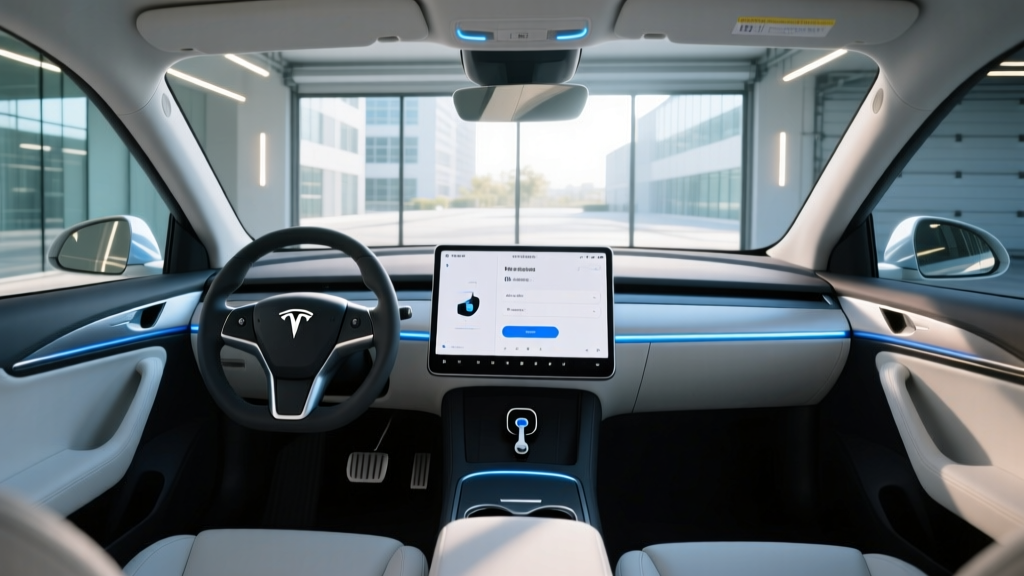
- 15.4" central touchscreen (Model 3/Y) or 17" (Model S/X): Controls virtually all vehicle functions—climate, media, navigation, vehicle settings—eliminating physical buttons almost entirely.
Drawbacks to consider:
- No physical buttons: Adjusting climate, mirrors, or glove box requires navigating the touchscreen. This frustrates some drivers, especially while in motion.
- Build-quality variability: While improved significantly since 2022, panel-gap inconsistency and minor trim issues still appear more frequently than on legacy luxury brands. Inspect your delivery carefully.
- Insurance costs: Tesla insurance premiums tend to run 15–30% higher than comparable ICE vehicles due to repair costs and sensor density. Get quotes before committing.
- Rear-seat comfort (Model 3): The Model 3's rear seat is tighter than midsize competitors; legroom is ~35.2 inches. Families may prefer the Model Y's ~40.5 inches of rear legroom.
- No Apple CarPlay or Android Auto: Tesla uses its proprietary infotainment system exclusively. If you rely on CarPlay for navigation or music, this is a significant omission.
Pros
- Class-leading Supercharger network (seamless plug-and-charge)
- Best-in-class energy efficiency (kWh/mi)
- OTA updates add features post-purchase
- Strong resale value relative to most EVs
- Low center of gravity = engaging handling
- Extensive Sentry/Dashcam camera coverage
Cons
- No Apple CarPlay / Android Auto
- Touchscreen-only controls can distract while driving
- Insurance premiums above segment average
- Build quality still inconsistent at delivery
- FSD (Supervised) remains Level 2, not autonomous
- LFP battery (Model 3 RWD) = less range in cold weather
Who Is Each Tesla Model Best For?
Model 3 RWD ($38,990): The entry point. Best for solo commuters, apartment dwellers with workplace charging, and budget-conscious buyers who want the Tesla ecosystem at the lowest price. LFP battery tolerates daily 100% charges, making it practical for consistent short-to-medium commutes. Not ideal for frequent long road trips in cold climates.
Model 3 Long Range AWD ($44,990): The sweet spot for most buyers. 363 miles of EPA range handles virtually any daily drive and most road trips with minimal charging stops. Dual-motor AWD adds confidence in rain and snow. Best for couples, commuters with longer drives, and buyers who want range without stepping up to an SUV.
Model Y Long Range AWD ($46,990): The best-selling Tesla for a reason. Hatchback cargo versatility (up to 72 cu ft), higher seating position, and family-friendly rear space make it the default choice for parents, pet owners, and anyone who regularly hauls gear. 320 miles of range is adequate for most road trips with one Supercharger stop.
Model S / Model X ($79,990+): Premium buyers who want maximum range (402 mi in the S), blistering performance (3.1 sec 0–60), and luxury features like the yoke steering option and rear-seat entertainment screen. The Model X adds falcon-wing rear doors and optional third-row seating. Neither qualifies for the federal tax credit due to MSRP caps.
Frequently Asked Questions
What is the real-world range of a Tesla?
Real-world range typically falls 10–15% below the EPA estimate during highway driving at 70+ mph, and 20–30% below in sub-freezing temperatures. A Model 3 Long Range (EPA 363 mi) delivers roughly 290–310 mi on a warm highway trip and 250–280 mi in winter. City driving with regenerative braking often matches or slightly exceeds EPA figures.
How fast does a Tesla charge at home and on the road?
On a home Level 2 Wall Connector (11.5 kW / 48A), expect ~35–44 miles of range per hour of charging—enough to fully replenish overnight. On a V3/V4 Supercharger, the Model 3 Long Range peaks at 250 kW and charges from 10–80% in approximately 25–28 minutes, though the charge curve tapers significantly above 80%.
How much does a Tesla cost after tax credits?
If you qualify for the full $7,500 §30D credit (income, MSRP, and battery-sourcing requirements all met), the Model 3 RWD drops to ~$31,490 and the Model Y Long Range to ~$39,490 at point of sale. Model S and X do not qualify due to MSRP caps. Always verify current-year eligibility at IRS.gov before relying on the credit in your budget.
Is Tesla worth buying vs. competitors in 2026?
Tesla still leads in charging-network seamlessness, energy efficiency (kWh/mi), and software integration. However, the Hyundai Ioniq 5, Chevrolet Equinox EV, and Ford Mustang Mach-E now offer competitive range, faster peak charging in some trims, and available CarPlay. If Supercharger access and software are your top priorities, Tesla remains the benchmark. If you prefer traditional controls, CarPlay, or a dealer service network, competitors are increasingly compelling.
Does a Tesla qualify for the federal EV tax credit?
The Model 3 and Model Y can qualify for up to $7,500 under §30D, provided the buyer's AGI is under the income caps, the MSRP is under the vehicle-type threshold ($55K sedans, $80K SUVs), and battery-sourcing requirements are met for the current tax year. Model S and X do not qualify. The credit can be transferred to the dealer at point of sale as an instant discount.
Do I need to install a home charger before taking delivery?
It's strongly recommended but not mandatory. You can trickle-charge on a standard 120V outlet (~3–5 mi/hr), which is sufficient only if your daily driving is under 30 miles. For practical daily use, a Level 2 (240V) installation is the standard. Schedule your electrician consultation 4–6 weeks before delivery to account for permitting and potential panel upgrades.