Why Tesla Speeding Citations Outpace Other EVs
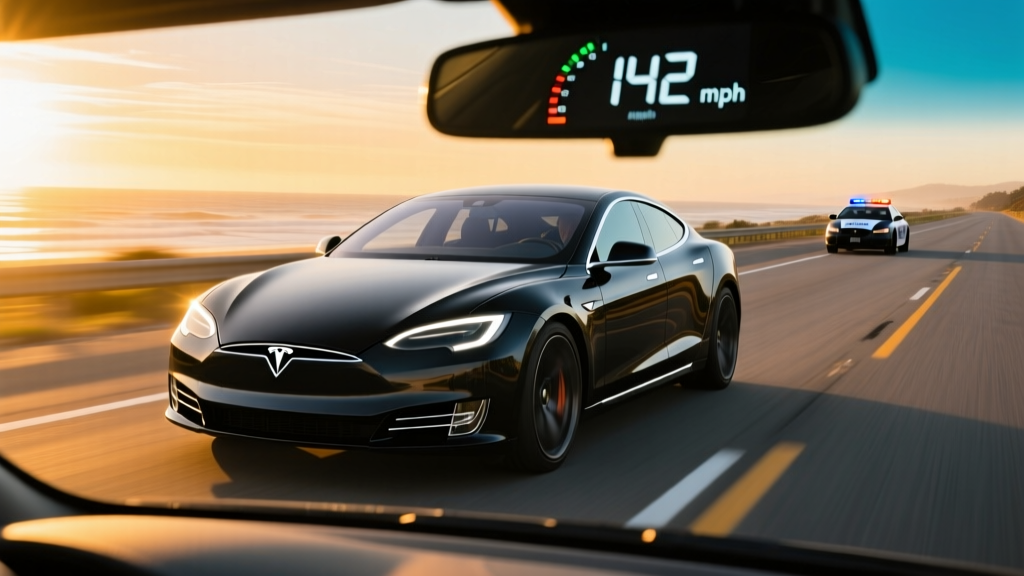
The phrase "Tesla speeding" has become shorthand in insurance and traffic-enforcement circles for a very real phenomenon: Tesla drivers receive speeding tickets at a disproportionately higher rate than owners of comparable electric and gas-powered vehicles. According to a multi-year analysis by insurance-comparison platform Insurify, Tesla owners are roughly 1.5× more likely to be cited for speeding than the average driver, with the Model 3 and Model Y leading the pack. This isn't coincidence — it's physics, software, and human behavior colliding.
In this deep-dive review, we'll examine the 2026 Tesla lineup (Model 3 and Model Y) through the lens of performance, real-world ownership costs, and the speeding-ticket risk that every prospective buyer should understand before signing a purchase agreement. We'll also cover range, charging, pricing, tax-credit eligibility, and how these cars stack up against key competitors.
2026 Tesla Model 3 & Model Y: Performance Specs at a Glance
Tesla's current-volume vehicles share a common trait: instant electric torque delivered with zero lag. That trait is the root cause of the "Tesla speeding" phenomenon. Below is the full spec breakdown for the 2026 model year.
| Spec | Model 3 RWD | Model 3 Long Range AWD | Model 3 Performance | Model Y Long Range AWD | Model Y Performance |
|---|---|---|---|---|---|
| 0–60 mph | 5.8 sec | 4.2 sec | 2.9 sec | 4.8 sec | 3.5 sec |
| Horsepower | 271 hp | 346 hp | 510 hp | 384 hp | 510 hp |
| Drivetrain | RWD | Dual-Motor AWD | Dual-Motor AWD | Dual-Motor AWD | Dual-Motor AWD |
| Battery (usable) | 57.5 kWh (LFP) | 75 kWh (NMC) | 75 kWh (NMC) | 75 kWh (NMC) | 75 kWh (NMC) |
| EPA Range | 272 mi | 341 mi | 315 mi | 320 mi | 293 mi |
| MPGe (combined) | 132 MPGe | 125 MPGe | 119 MPGe | 117 MPGe | 111 MPGe |
| kWh/100 mi | 25 | 27 | 28 | 28 | 30 |
Source: fueleconomy.gov, Tesla spec sheets (2026 model year).
The Tesla Speeding Problem: Data, Causes, and Insurance Impact
What the Traffic Data Shows
Insurify's analysis of over 4.6 million insurance applications found that 14.4% of Tesla owners had a speeding-related citation on their record, compared to roughly 10% of all drivers nationally. The Model 3 ranked as the single most-ticketed vehicle model in the study. This isn't limited to the U.S. — European and Australian traffic authorities have reported similar patterns.
Why Teslas Invite Speeding
Three factors converge to make Teslas uniquely prone to speed violations:
- Silent acceleration: Unlike a gas engine that roars as you accelerate, a Tesla's electric motors deliver thrust in near silence. Drivers consistently underestimate their speed because there's no auditory feedback. At 75 mph in a Model 3 Performance, the cabin is quieter than a Camry at 55 mph.
- Instant torque delivery: Electric motors produce maximum torque at 0 RPM. A slight press of the accelerator yields immediate, forceful acceleration. There's no downshift lag, no turbo spool-up — just instant response. This makes it trivially easy to jump from 35 to 55 mph in a residential zone before you consciously register the speed change.
- One-pedal driving and regenerative braking: Tesla's aggressive regen means drivers modulate speed primarily with the accelerator pedal, rarely touching the brake. This creates a "set and forget" mentality where speed creeps upward gradually without the tactile reminder of brake-pedal engagement.
Insurance Cost Impact
The speeding-ticket correlation directly affects your wallet. Tesla insurance premiums in 2026 average $2,800–$3,600/year for a Model 3 or Model Y — roughly 40–60% higher than comparable gas sedans and SUVs. A single speeding citation can push premiums up an additional 20–30%. Tesla's own insurance product (available in most states) uses real-time driving data via the Tesla app's Safety Score, which monitors hard braking, rapid acceleration, and speeding events. Drivers with low Safety Scores pay significantly more.
Range, Charging, and Efficiency: The Practical Ownership Picture
Charging Speeds: DC Fast Charge and Home Level 2
| Charging Level | Model 3 RWD (LFP) | Model 3 LR / Performance (NMC) | Model Y LR / Performance |
|---|---|---|---|
| Level 1 (120V / 12A) | ~3 mi/hr | ~3 mi/hr | ~3 mi/hr |
| Level 2 (240V / 48A) | ~33 mi/hr (11.5 kW) | ~44 mi/hr (11.5 kW) | ~44 mi/hr (11.5 kW) |
| DC Fast Charge (peak) | 170 kW | 250 kW | 250 kW |
| 10–80% DCFC time | ~25 min | ~18 min | ~20 min |
| Connector | NACS (native) | NACS (native) | NACS (native) |
Charging-curve reality check: Tesla's peak 250 kW rate on NMC models is sustained only between roughly 10–30% State of Charge. By 50% SoC, the rate tapers to ~150 kW, and above 80% it drops below 50 kW. The "10–80% in 18 minutes" claim assumes a V3 or V4 Supercharger with preconditioning active. Arrive at a Supercharger without preconditioning (e.g., navigating to a non-Tesla charger or starting cold) and your session will be 5–8 minutes longer.
LFP charging note: The RWD Model 3 uses a lithium iron phosphate (LFP) battery. Tesla recommends charging LFP packs to 100% at least once per week for cell balancing — unlike the NMC packs in Long Range and Performance trims, where daily charging to 80% is recommended for longevity. LFP's trade-off: lower energy density (hence shorter range) but significantly longer cycle life and lower degradation over time.
Pricing, Tax Credits, and Total Cost of Ownership
| Trim | 2026 Base MSRP | Federal §30D Credit | Effective Price (est.) |
|---|---|---|---|
| Model 3 RWD | $38,990 | Up to $7,500* | ~$31,490 |
| Model 3 Long Range AWD | $45,990 | Up to $7,500* | ~$38,490 |
| Model 3 Performance | $52,990 | Up to $7,500* | ~$45,490 |
| Model Y Long Range AWD | $44,990 | Up to $7,500* | ~$37,490 |
| Model Y Performance | $51,490 | Up to $7,500* | ~$43,990 |
* Federal tax credit eligibility under IRS §30D is subject to multiple requirements as of 2026:
- MSRP cap: Sedans (Model 3) must be under $55,000; SUVs/trucks/vans (Model Y) under $80,000.
- Buyer income cap: Modified AGI ≤ $150,000 (single), $225,000 (head of household), $300,000 (joint).
- Battery sourcing: Increasing percentages of critical minerals and battery components must be sourced from the U.S. or FTA-partner countries. Tesla's U.S.-built packs have generally qualified, but sourcing rules tighten annually.
- Point-of-sale transfer: As of 2024, the credit can be transferred to the dealer at purchase for an immediate price reduction — no need to wait for tax filing.
Verify your eligibility at IRS.gov §30D or consult a tax professional. State and local incentives (e.g., California's CVRP, Colorado's $5,000 credit) may stack on top.
5-Year Total Cost of Ownership (Model 3 Long Range vs. BMW 330i Baseline)
| Cost Factor | Model 3 LR AWD | BMW 330i (gas) |
|---|---|---|
| Purchase (after credit) | ~$38,490 | ~$46,000 |
| Fuel/Energy (5 yr / 75k mi) | ~$3,400 | ~$9,200 |
| Insurance (5 yr avg) | ~$16,000 | ~$10,500 |
| Maintenance (5 yr) | ~$1,800 | ~$4,500 |
| Estimated Depreciation | ~$18,000 | ~$20,000 |
| 5-Year Total | ~$77,690 | ~$90,200 |
The Model 3 LR wins on TCO primarily through fuel savings and lower maintenance, but Tesla's higher insurance premiums erode a significant portion of that advantage — partly driven by the speeding-ticket correlation and Tesla's elevated repair costs after collisions.
Interior Space, Tech, and Driver-Assist Systems
Cargo and Passenger Dimensions
| Dimension | Model 3 | Model Y |
|---|---|---|
| Front legroom | 42.7 in | 41.8 in |
| Rear legroom | 35.2 in | 41.6 in |
| Cargo (rear seats up) | 23 cu ft (trunk + frunk) | 34 cu ft |
| Cargo (rear seats folded) | 64 cu ft | 76 cu ft |
The Model Y's crossover form factor delivers meaningfully more rear-seat and cargo space — the primary reason it outsells the Model 3 in the U.S. The Model 3's rear seat is tight for adults over 6 feet on longer trips.
Standout Tech
- 15.4-inch center touchscreen handles all vehicle controls (no physical buttons except steering-wheel stalks/buttons). The 2026 "Highland" and "Juniper" refreshes added ventilated seats, ambient lighting, a rear passenger screen (Model 3), and improved sound insulation.
- Over-the-air updates continuously add features — recent additions include adaptive high beams, improved trip planning, and UI refinements.
- Tesla app integration provides remote climate control, charging status, location tracking, and Sentry Mode camera access.
- Sentry Mode records surroundings when parked, acting as a dashcam/security system — a genuinely useful feature that reduces hit-and-run risk.
Autopilot and Full Self-Driving (Supervised)
Warranty and Long-Term Battery Durability
| Coverage | Terms |
|---|---|
| Basic Vehicle | 4 years / 50,000 miles |
| Battery & Drive Unit (RWD) | 8 years / 100,000 miles (≥70% capacity retention) |
| Battery & Drive Unit (LR/Perf) | 8 years / 120,000 miles (≥70% capacity retention) |
Tesla's battery warranty guarantees the pack will retain at least 70% of its original capacity during the warranty period. Real-world degradation data from fleet operators and owner surveys (e.g., Recurrent Auto) shows NMC Tesla packs typically lose ~8–12% capacity over 100,000 miles, with the steepest drop in the first 15,000 miles. LFP packs degrade more slowly — typically 5–8% over the same distance — making the RWD Model 3 a compelling choice for high-mileage commuters who don't need maximum range.
Who Should Buy a Tesla — and Who Should Look Elsewhere?
Choose a Tesla Model 3 or Model Y if:
- You have reliable home charging (Level 2 / 240V) and want access to the Supercharger network for road trips
- You value software-driven features, OTA updates, and a minimal interior
- You want the lowest per-mile energy cost in the EV segment (Tesla's efficiency is class-leading)
- You're comfortable with touchscreen-only controls and no physical buttons
- You want a proven platform with massive real-world ownership data available
Look at competitors (Hyundai Ioniq 5, BMW i4, Ford Mustang Mach-E) if:
- You prefer traditional controls, physical buttons, and Apple CarPlay/Android Auto (Tesla offers neither)
- You need a quieter, more refined ride — the 2026 "Highland" Model 3 is much improved but still trails the BMW i4 in NVH
- You want a longer warranty — Hyundai offers 10yr/100,000mi battery coverage
- You're concerned about insurance costs and want to avoid the Tesla speeding-ticket premium
Pros, Cons, and Final Verdict
✅ Pros
- Class-leading efficiency (25–30 kWh/100mi)
- Supercharger network — still the most reliable DC fast-charging ecosystem
- Strong real-world range (272–341 mi EPA)
- Excellent OTA update cadence and app integration
- LFP option for budget-focused, high-mileage buyers
- Sentry Mode and built-in dashcam
❌ Cons
- Speeding-ticket risk is real and raises insurance premiums
- No Apple CarPlay or Android Auto
- Touchscreen-only controls frustrate some drivers
- Insurance costs 40–60% above segment average
- FSD ($8,000) remains Level 2 despite the "Full Self-Driving" name
- Repair costs after collisions are higher than average
Frequently Asked Questions
What is the real-world range of a 2026 Tesla Model 3?
The Model 3 Long Range AWD carries an EPA rating of 341 miles. In real-world highway driving at 70–75 mph, expect 280–300 miles. In sub-32°F winter conditions, that drops to approximately 230 miles. The RWD (LFP) model rates at 272 EPA miles; expect roughly 220–240 miles highway and 200–215 in cold weather.
How fast does a Tesla charge at home and on the road?
At home on a 240V / 48A Level 2 charger, the Model 3 LR adds ~44 miles of range per hour (11.5 kW) — a full overnight session covers most daily needs. On DC fast charging, NMC models peak at 250 kW and charge 10–80% in roughly 18–20 minutes at a V3/V4 Supercharger. The LFP RWD model peaks at 170 kW with a 10–80% time of ~25 minutes.
How much does a Tesla cost after federal tax credits?
With the full $7,500 §30D federal credit applied as a point-of-sale reduction, the 2026 Model 3 RWD drops from $38,990 to ~$31,490, and the Model Y Long Range drops from $44,990 to ~$37,490. Eligibility depends on buyer income (≤$150K single / $300K joint), MSRP caps ($55K sedans / $80K SUVs), and battery-sourcing rules that tighten annually. Confirm at IRS.gov.
Is a Tesla worth buying versus a Hyundai Ioniq 5 or BMW i4?
If Supercharger access and software integration are priorities, Tesla still leads. The Ioniq 5 offers 800V ultra-fast charging (10–80% in ~18 min on 350 kW chargers), CarPlay, and a 10-year battery warranty — but its charging network relies on third-party providers. The BMW i4 delivers superior ride refinement and traditional controls at a higher price. For pure value, the Model 3 RWD at ~$31,500 after credits is hard to beat.
Do Tesla owners really get more speeding tickets?
Yes. Insurance-data analyses consistently show Tesla drivers receive speeding citations at roughly 1.4–1.5× the national average. The combination of silent acceleration, instant torque, and one-pedal driving makes it easy to exceed speed limits without realizing it. Budget for higher insurance premiums and consider enabling Tesla's Speed Limit Warning and Speed Assist features.
Does the Tesla Model 3 or Model Y qualify for the $7,500 federal EV tax credit?
As of 2026, both the Model 3 and Model Y qualify for up to $7,500 under §30D, provided the buyer meets income caps and the vehicle's battery sourcing satisfies the year's critical-mineral and component requirements. Tesla's U.S.-manufactured battery packs have historically met these thresholds, but the rules tighten each year. The credit can be transferred at the point of sale for an immediate price reduction. Always verify current eligibility on IRS.gov before purchasing.