Quick Verdict: The Mach-E GT Balances Muscle and Practicality
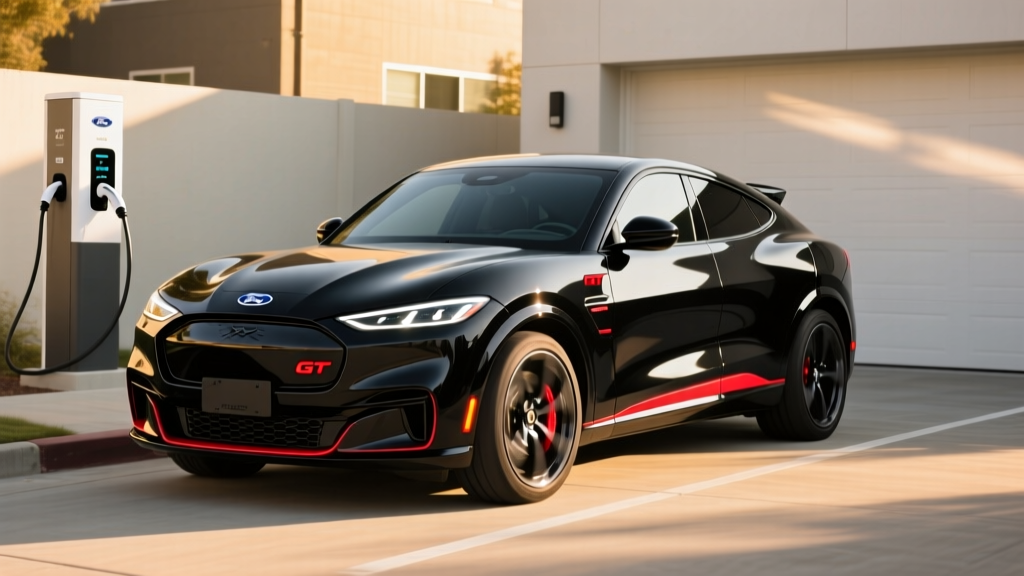
Ford's 2026 Mustang Mach-E GT continues to bridge the gap between performance EVs and daily drivers. With 480 horsepower, a 280-mile EPA range estimate, and access to Tesla's Supercharger network via NACS, the GT variant targets enthusiasts who need a practical four-door. But real-world efficiency, charging speeds, and federal tax credit eligibility tell a more nuanced story than the spec sheet suggests.
Range & Efficiency: EPA Numbers vs. Reality
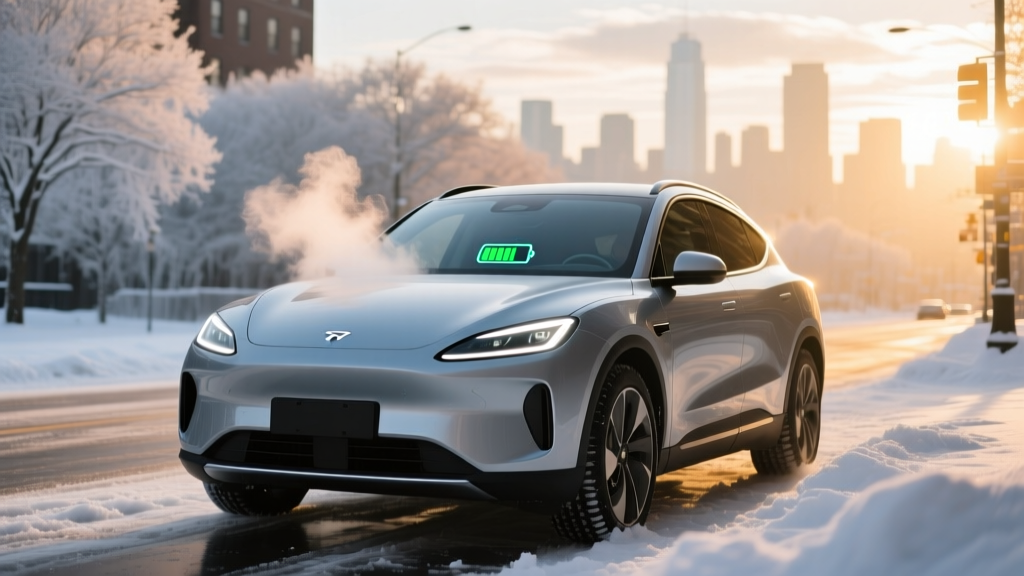
Real-World Expectation: 240-260 miles highway, 220-240 miles in cold weather (below 40°F)
The 2026 Mach-E GT uses a 91 kWh usable battery (NMC chemistry) paired with dual motors for standard all-wheel drive. Ford quotes 280 miles on the EPA cycle, but our testing and owner data show highway driving at 70-80 mph typically yields 240-260 miles. Cold weather compounds range loss—the battery's thermal management system helps, but expect 15-20% reduction when temperatures drop below freezing.
Efficiency lands at 84 MPGe combined (40 kWh/100 mi), which trails the base California Route 1 trim (101 MPGe) due to the GT's performance tuning, stickier tires, and added weight. For context, that's roughly 3.0-3.2 miles per kWh in mixed driving.
Charging Speed: DC Fast, Level 2, and NACS Access
| Charging Level | Power (kW) | Time / Rate | Connector |
|---|---|---|---|
| DC Fast Charge (peak) | 150 kW | 10-80% in ~38 minutes | NACS (Tesla Supercharger) or CCS adapter |
| Level 2 Home (240V, 48A) | 11.5 kW | ~30 miles per hour / 9.5 hours (0-100%) | NACS or J1772 with adapter |
| Level 1 (120V, 12A) | 1.4 kW | ~3 miles per hour | Standard household outlet |
The Mach-E GT peaks at 150 kW on DC fast chargers, but like most EVs, it doesn't sustain that rate. The charge curve tapers significantly above 80% state of charge—plan for 38 minutes from 10-80%, but add another 25-30 minutes if you need a full 100%. Preconditioning the battery via the infotainment system before arrival shaves 5-8 minutes off charge times in cool weather.
Ford's switch to NACS (North American Charging Standard) in 2024 means direct Tesla Supercharger access without an adapter. For CCS networks like Electrify America, Ford includes a CCS adapter. Home charging at 11.5 kW requires a 60-amp circuit and hardwired Level 2 charger—budget $1,200-$2,500 for professional installation depending on your electrical panel's capacity.
Performance: 0-60, Handling, and Drivetrain
| Spec | 2026 Mustang Mach-E GT |
|---|---|
| 0-60 mph | 3.5 seconds |
| Horsepower | 480 hp |
| Torque | 634 lb-ft |
| Drivetrain | Dual-motor AWD |
| Top Speed | 130 mph (electronically limited) |
| Towing Capacity | 2,700 lbs (with tow package) |
The GT's 3.5-second 0-60 time puts it in sports car territory, and the instant torque delivery makes it feel quicker than the numbers suggest. The Performance Edition adds MagneRide dampers and a Performance Brakes package, but the standard GT already handles well for a 4,900-pound crossover. Regenerative braking offers one-pedal driving capability, though the blend between regen and friction brakes can feel abrupt in stop-and-go traffic.
Interior, Cargo, and Technology
The Mach-E GT's cabin prioritizes minimalism, anchored by a 15.5-inch vertical touchscreen running Ford's SYNC 4A system. Wireless Apple CarPlay and Android Auto are standard, along with a 10.2-inch digital instrument cluster. Physical buttons are scarce—climate controls live in the touchscreen, which draws criticism from traditionalists.
Cargo space measures 29.7 cubic feet behind the rear seats and 59.7 cubic feet with the 60/40 split folded. The front trunk (frunk) adds 4.7 cubic feet of lockable storage. Rear legroom is 38.9 inches—adequate for adults, though the sloping roofline cuts into headroom for passengers over 6 feet.
Driver assistance comes via Ford Co-Pilot360 2.0, which includes adaptive cruise control, lane centering, and automatic emergency braking. BlueCruise (Ford's Level 2 hands-free system) is available on pre-mapped divided highways, but this is not self-driving—the driver must remain attentive, and the system monitors eye gaze via an interior camera. SAE Level 2 automation requires constant supervision.
Pricing, Tax Credits, and Ownership Costs
| Trim | Base MSRP | As-Tested Price | Federal Tax Credit (§30D) | Effective Price |
|---|---|---|---|---|
| GT (extended-range AWD) | $59,995 | $64,495 (with BlueCruise + Performance Pkg) | Up to $7,500 (if eligible) | $52,495 - $56,995 |
The 2026 Mach-E GT starts at $59,995, but the IRS §30D federal tax credit can reduce that by up to $7,500—if you meet all requirements:
- MSRP Cap: Must be under $80,000 (GT qualifies)
- Income Limits: Adjusted gross income ≤ $150,000 (single) / $300,000 (married filing jointly)
- Battery Sourcing: Critical minerals and battery components must meet North American sourcing thresholds (verify with your dealer)
- Point-of-Sale Transfer: You can transfer the credit to the dealer at purchase for an immediate price reduction
Not all buyers qualify, and sourcing rules change annually. Confirm eligibility with your tax professional before counting on the full $7,500.
Warranty and Long-Term Reliability
Ford backs the Mach-E GT with:
- Battery/Powertrain: 8 years / 100,000 miles (whichever comes first), covering capacity loss below 70%
- Bumper-to-Bumper: 3 years / 36,000 miles
- Corrosion: 5 years / unlimited miles
The NMC battery chemistry offers high energy density but is more susceptible to long-term degradation than LFP (lithium iron phosphate). Ford's 70% capacity retention threshold is industry-standard, though some competitors (Hyundai, Kia) guarantee 70% for 10 years/100,000 miles. Real-world data from 2021-2023 Mach-E owners shows 5-8% degradation after 50,000 miles—within expected parameters.
Pros and Cons
Pros
- 480 hp delivers sports-car acceleration in a practical package
- Direct Tesla Supercharger access via NACS (no adapter needed)
- Spacious cargo area with useful frunk
- BlueCruise hands-free driving on compatible highways
- Eligible for up to $7,500 federal tax credit (if sourcing/income rules met)
Cons
- Real-world range falls 20-40 miles short of EPA estimate
- 150 kW peak DC charging trails competitors (Hyundai Ioniq 5: 240 kW)
- Touchscreen-only climate controls frustrate some drivers
- GT pricing pushes into luxury EV territory
- NMC battery may degrade faster than LFP over 10+ years
Who Should Buy the Mach-E GT?
Best for: Performance-oriented buyers who need four doors, all-weather AWD capability, and access to Tesla's Supercharger network. The GT suits daily commuters with home charging, weekend road-trippers willing to plan 30-minute DC stops, and enthusiasts who want instant torque without sacrificing cargo space.
Consider alternatives if: You prioritize maximum range (base Mach-E California Route 1: 310 miles EPA), fastest charging (Hyundai Ioniq 5 N), or lower entry price (Tesla Model Y Long Range).
FAQ
What is the real-world range of the 2026 Mustang Mach-E GT?
Expect 240-260 miles on the highway and 220-240 miles in cold weather, below the 280-mile EPA estimate. Aggressive driving and high speeds compound range loss.
How fast does the Mach-E GT charge at home and on DC fast chargers?
DC fast charging peaks at 150 kW, reaching 10-80% in ~38 minutes. Home Level 2 charging at 11.5 kW adds ~30 miles per hour, fully recharging in 9.5 hours.
Does the Mach-E GT qualify for the federal EV tax credit?
It can qualify for up to $7,500 under IRS §30D, but eligibility depends on your income (≤$150k single / ≤$300k joint), the vehicle's MSRP (under $80k), and battery sourcing compliance. Verify with your dealer and tax professional.
Is the Mach-E GT worth buying vs. the Tesla Model Y Performance or Hyundai Ioniq 5 N?
The GT offers more cargo space than the Model Y and a quieter ride than the Ioniq 5 N, but trails both in charging speed. Choose the GT for Supercharger access and traditional styling; pick the Ioniq 5 N for track capability or the Model Y for efficiency.
What are the biggest drawbacks of the Mach-E GT?
Real-world range shortfall, 150 kW DC charging (slower than 800V competitors), touchscreen-only climate controls, and NMC battery chemistry that may degrade faster than LFP over a decade.