Tesla Sonar Sensors: The Hardware Behind Automated Parking
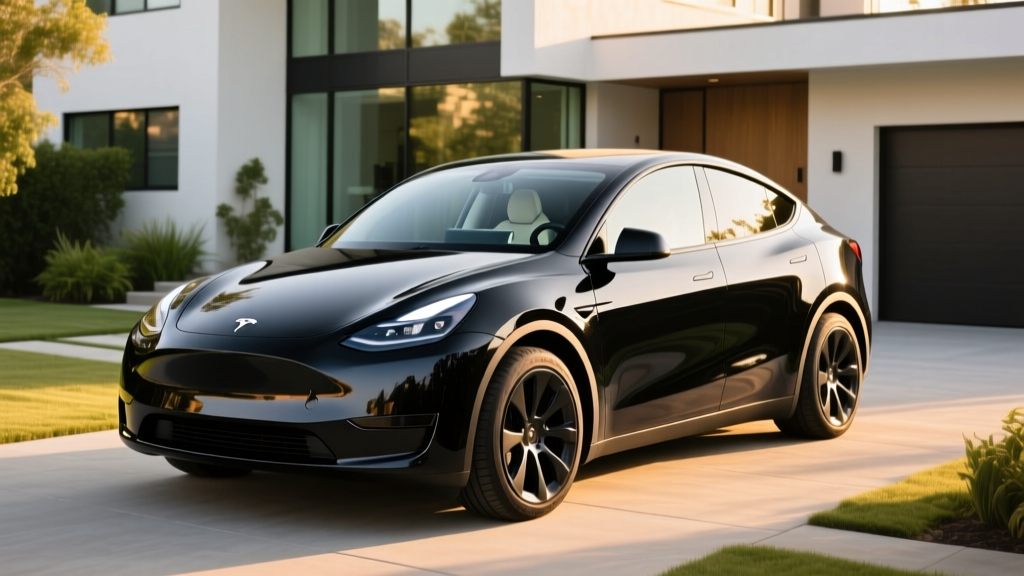
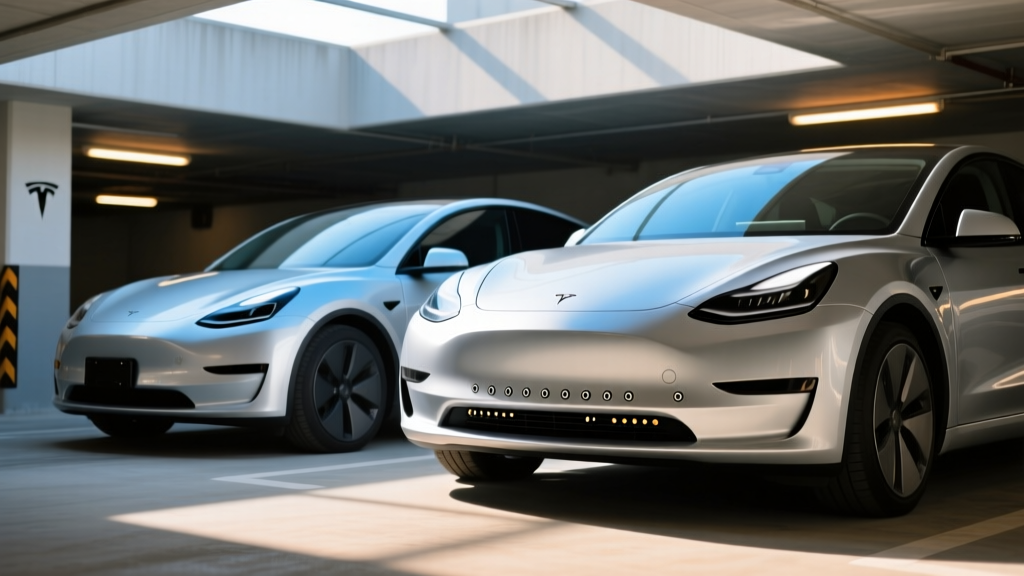
If you've watched a Tesla Model 3 or Model Y parallel park itself, you've seen Tesla's sonar sensors in action. These ultrasonic proximity sensors — embedded in the front and rear bumpers — emit high-frequency sound waves to map nearby obstacles in real time. For 2026, Tesla continues to refine its sensor suite, combining ultrasonic data with its camera-based Tesla Vision system to deliver parking assist, obstacle alerts, and Summon functionality.
This review covers the full 2026 Tesla Model 3 and Model Y lineup, with a focus on how sonar sensors integrate into the ownership experience — plus every spec you need to decide if either EV fits your garage and your budget.
2026 Tesla Model 3: Range, Battery, and Efficiency
The 2026 Model 3 is offered in three trims, each with distinct battery chemistry and range profiles. Tesla uses both LFP (lithium iron phosphate) and NMC (nickel manganese cobalt) cells depending on trim, a choice that directly affects longevity, charging habits, and cold-weather performance.
| Trim | Drivetrain | Battery (kWh usable) | Chemistry | EPA Range | MPGe (combined) | kWh/100 mi | 0-60 mph | Horsepower |
|---|---|---|---|---|---|---|---|---|
| RWD | Rear-Wheel Drive | 57.5 | LFP | 272 mi | 132 MPGe | 25 | 5.8 sec | 271 hp |
| Long Range AWD | Dual-Motor AWD | 75.0 | NMC | 341 mi | 134 MPGe | 25 | 4.2 sec | 384 hp |
| Performance | Dual-Motor AWD | 75.0 | NMC | 315 mi | 125 MPGe | 27 | 2.9 sec | 510 hp |
2026 Tesla Model Y: The Family Crossover Benchmark
The refreshed 2026 Model Y (internally dubbed "Juniper") carries over the sonar-sensor array from the prior generation but pairs it with updated Tesla Vision processing. It remains Tesla's best-selling vehicle for good reason: crossover utility with sedan-like efficiency.
| Trim | Drivetrain | Battery (kWh usable) | Chemistry | EPA Range | MPGe (combined) | 0-60 mph | Horsepower |
|---|---|---|---|---|---|---|---|
| RWD | Rear-Wheel Drive | 57.5 | LFP | 260 mi | 125 MPGe | 6.6 sec | 295 hp |
| Long Range AWD | Dual-Motor AWD | 75.0 | NMC | 320 mi | 127 MPGe | 4.8 sec | 384 hp |
| Performance | Dual-Motor AWD | 75.0 | NMC | 295 mi | 119 MPGe | 3.5 sec | 480 hp |
Source: EPA Fuel Economy
Charging Speed: DC Fast, Level 2, and the Charge Curve Reality
Tesla's sonar sensors help you navigate into tight charging stalls, but once you're plugged in, charge speed is what matters. Both Model 3 and Model Y support the NACS (North American Charging Standard) connector natively, giving them access to Tesla's 35,000+ Supercharger network plus a growing number of third-party networks adopting the standard.
| Charging Level | Model 3 LR AWD | Model 3 RWD (LFP) | Model Y LR AWD | Miles Added per Hour |
|---|---|---|---|---|
| Level 1 (120V, 12A) | 1.4 kW | 1.4 kW | 1.4 kW | ~3–4 mi/hr |
| Level 2 (240V, 48A) | 11.5 kW | 7.6 kW | 11.5 kW | ~30–44 mi/hr |
| DC Fast Charge (peak) | 250 kW | 170 kW | 250 kW | N/A (see 10-80% times) |
| 10-80% DCFC Time | ~25 min | ~30 min | ~27 min | — |
Charge curve reality check: The 250 kW peak on Long Range trims only sustains from roughly 5–30% State of Charge. Above 50%, the rate tapers to ~100 kW, and above 80%, it drops below 50 kW. This is normal lithium-ion behavior driven by thermal management and cell-protection protocols. LFP batteries in the RWD trims accept a lower peak (170 kW) but can be charged to 100% regularly without degradation concerns — a practical advantage for daily drivers who need full capacity.
Tesla Sonar Sensors and Autopark: How It Works
Tesla's parking system fuses data from ultrasonic sonar sensors (typically six units — two front, four rear, though configurations vary by build date) with the vehicle's surround camera array. Here's what this means in practice:
- Obstacle Detection: Sonar sensors provide centimeter-level proximity alerts at speeds below 5 mph, displayed on the touchscreen with distance readouts.
- Autopark: The system identifies parallel and perpendicular spaces using sonar mapping, then autonomously steers, brakes, and accelerates into the spot. The driver must monitor and can interrupt at any time.
- Summon: Using the Tesla app, you can move the car forward or backward out of tight spaces — sonar sensors handle close-quarter obstacle avoidance.
- Smart Summon: The car navigates a parking lot to reach you, using sonar for near-field object detection and cameras for path planning.
Pricing, Trims, and Federal Tax Credit Eligibility
Both Model 3 and Model Y qualify for the §30D federal EV tax credit, but eligibility depends on your income, the vehicle's MSRP, and battery-sourcing requirements that tighten each year under current IRS rules.
| Model / Trim | Base MSRP | As-Tested (typical) | §30D Credit (max) | Effective Price (w/ credit) |
|---|---|---|---|---|
| Model 3 RWD | $38,990 | $40,490 | Up to $7,500 | ~$32,990 |
| Model 3 Long Range AWD | $45,990 | $48,490 | Up to $7,500 | ~$40,990 |
| Model 3 Performance | $53,990 | $55,490 | Up to $7,500 | ~$47,990 |
| Model Y RWD | $41,990 | $43,990 | Up to $7,500 | ~$36,490 |
| Model Y Long Range AWD | $47,990 | $50,490 | Up to $7,500 | ~$42,990 |
| Model Y Performance | $53,990 | $56,490 | Up to $7,500 | ~$48,990 |
- Income caps: AGI ≤ $150,000 (single) / $300,000 (joint) / $225,000 (head of household)
- MSRP caps: ≤ $55,000 for sedans (Model 3) / ≤ $80,000 for SUVs (Model Y)
- Battery sourcing: Critical minerals and battery components must meet escalating domestic/FTEA-sourcing thresholds — Tesla's US-built cells generally qualify, but verify at point of sale
- Point-of-sale transfer: You can apply the credit as a down-payment reduction at purchase instead of waiting for tax filing
Consult a tax professional before relying on credit eligibility — sourcing rules change annually and individual circumstances vary.
Cargo, Passenger Space, and Daily Practicality
The Model 3 is a compact sedan with 23 cu ft of trunk space (plus a small frunk) and adequate rear legroom (35.3 in) for adults on shorter trips. It suits singles, couples, and commuters who prioritize efficiency and handling over interior volume.
The Model Y crossover delivers 30.2 cu ft behind the second row (76.2 cu ft with seats folded) and 40.5 in of rear legroom. The optional third row is best reserved for small children. For families with car seats, strollers, and road-trip gear, the Model Y's hatchback form factor is meaningfully more practical.
Warranty and Battery Longevity
| Coverage | Term |
|---|---|
| Basic Vehicle | 4 years / 50,000 miles |
| Battery & Drive Unit (RWD/LFP) | 8 years / 100,000 miles (min 70% retention) |
| Battery & Drive Unit (LR/Performance/NMC) | 8 years / 120,000 miles (min 70% retention) |
Tesla's 70% capacity retention threshold over 8 years is industry-standard. Real-world data from high-mileage Teslas suggests NMC packs typically degrade 10–15% over 150,000 miles, while LFP packs show slightly less degradation but lower energy density. The sonar sensor hardware carries the basic 4-year warranty; replacement sensors cost approximately $150–$300 each if out of warranty.
Pros, Cons, and the Verdict
- Class-leading Supercharger network access (35,000+ stalls globally)
- Sonar + Vision parking system works reliably in tight urban spaces
- Over-the-air updates continuously improve functionality
- LFP option allows daily 100% charging without degradation worry
- Strong §30D credit eligibility across most trims
- Model Y cargo versatility leads the compact EV SUV segment
- No Apple CarPlay or Android Auto — Tesla's proprietary infotainment only
- Ride quality firm on Performance trims with larger wheels
- LFP range drops significantly in sub-freezing weather
- Autopark/FSD (Supervised) still requires full driver attention — not autonomous
- Insurance premiums 15–25% higher than segment average
- Sonar sensor coverage limited to low-speed scenarios; not a substitute for camera awareness at speed
Who Should Buy — and Who Should Look Elsewhere
Choose Tesla Model Y if: You need family-friendly cargo space, car-seat accessibility, and all-weather AWD capability. The Long Range AWD at ~$42,990 after credit competes directly with the Hyundai Ioniq 5 and Ford Mustang Mach-E but wins on charging infrastructure.
Look elsewhere if: You require Apple CarPlay, prefer traditional dealer service, or live in an area with limited Supercharger coverage and no home charging option.
Frequently Asked Questions
What is the real-world range of the 2026 Tesla Model 3 and Model Y?
For the Model 3 Long Range AWD, expect ~280–300 miles on highway trips and ~310+ in city driving with regen braking. The Model Y Long Range AWD delivers ~265–285 miles highway. Cold weather (below 32°F) reduces these figures by 15–30% depending on chemistry — LFP models are hit hardest.
How fast do Tesla Model 3 and Model Y charge?
On a 250 kW Supercharger, Long Range trims charge 10–80% in roughly 25–27 minutes. The RWD LFP trims peak at 170 kW and take ~30 minutes. Home Level 2 charging at 48A adds 30–44 miles per hour depending on trim — a full overnight charge is easily achievable.
How much do the Model 3 and Model Y cost after the federal tax credit?
The Model 3 RWD starts at ~$32,990 and the Model Y RWD at ~$36,490 after the maximum $7,500 §30D credit — assuming you meet income and sourcing requirements. Point-of-sale transfer lets you apply this as a down-payment reduction.
Are Tesla sonar sensors reliable for parking?
Yes, in typical conditions. Tesla's ultrasonic sensors accurately detect obstacles within ~8 feet at low speeds. They work well for parallel parking, garage navigation, and Summon. However, heavy rain, mud, or ice on the bumper can reduce accuracy — keep sensor surfaces clean.
Is the Tesla Model Y worth buying vs. the Hyundai Ioniq 5 or Ford Mach-E?
The Model Y wins on Supercharger network access, software updates, and cargo volume. The Ioniq 5 offers faster 800V charging (10–80% in ~18 min) and a more comfortable ride. The Mach-E provides a more traditional driving feel and Ford dealer service. If charging infrastructure and software are priorities, Tesla leads.
Does the 2026 Model 3 or Model Y qualify for the $7,500 federal EV tax credit?
Most trims qualify, subject to IRS §30D rules: buyer AGI must be ≤ $150K (single) / $300K (joint), MSRP must be under $55K (sedan) or $80K (SUV), and battery components must meet domestic-sourcing thresholds. Tesla's US-manufactured battery cells generally satisfy these requirements. Verify at purchase and consult a tax professional.