Quick Verdict: The 2023 Hyundai Ioniq 5 SEL in 2026
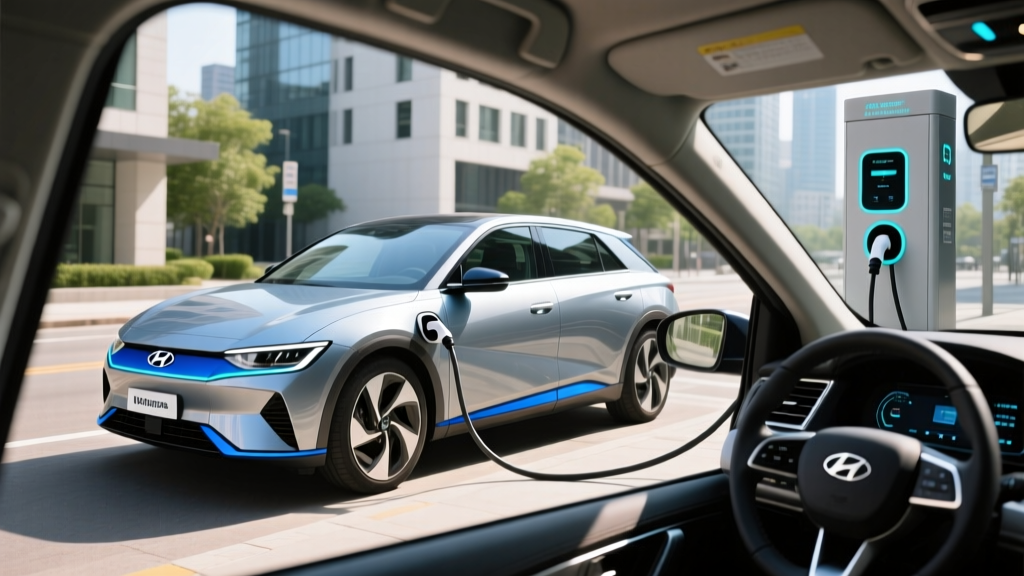
The 2023 Hyundai Ioniq 5 SEL remains one of the most compelling used EV crossovers on the market in 2026. Built on Hyundai's E-GMP platform with an 800V electrical architecture, it delivers class-leading DC fast-charging speeds that still rival newer competitors. The SEL trim — the volume seller — strikes a practical balance: you get the larger 77.4 kWh battery pack, heated seats, and a full suite of driver assists without stepping up to the Limited's premium price. For buyers navigating the used EV market or comparing remaining new-old-stock inventory, the Ioniq 5 SEL's combination of range, charging speed, and interior space makes it a benchmark in the midsize electric crossover segment.
| Spec | RWD (Standard Range) | RWD (Long Range) | AWD (Long Range) |
|---|---|---|---|
| EPA Range | 220 mi | 303 mi | 266 mi |
| Battery (usable) | 58.0 kWh | 77.4 kWh | 77.4 kWh |
| Battery Chemistry | NMC (SK On) | NMC (SK On) | NMC (SK On) |
| Horsepower | 168 hp | 225 hp | 320 hp |
| 0–60 mph | ~7.0 sec | ~7.0 sec | ~5.0 sec |
| Max DC Fast Charge | ~175 kW | ~235 kW | ~235 kW |
| 10–80% DC Time | ~18 min | ~18 min | ~18 min |
| Level 2 (240V) | 10.9 kW | 10.9 kW | 10.9 kW |
| MPGe (combined) | 110 MPGe | 114 MPGe | 110 MPGe |
| Efficiency | 30 kWh/100 mi | 29 kWh/100 mi | 31 kWh/100 mi |
| Original MSRP (SEL) | ~$45,500 | ~$47,550 | ~$51,050 |
| Battery Warranty | 10 years / 100,000 miles | ||
Source: EPA / fueleconomy.gov
Real-World Range: What to Actually Expect
The 2023 Ioniq 5 SEL RWD carries an EPA-estimated 303 miles on a full charge. In real-world mixed driving, expect roughly 270–285 miles. Sustained highway driving at 70–75 mph drops that to around 240–260 miles due to aerodynamic drag. In freezing temperatures (below 30°F), plan for 20–30% range reduction — putting you closer to 190–230 miles on a cold winter day.
The SEL with the Long Range 77.4 kWh battery is the configuration most buyers want. The 303-mile EPA figure (verified by EPA data) is competitive with the Tesla Model Y Long Range and Ford Mustang Mach-E Extended Range. However, the Ioniq 5's boxy, retro-futuristic styling creates more aerodynamic drag than the sleeker Model Y, which matters at highway speeds.
The AWD SEL drops to 266 miles EPA — a 37-mile penalty for the dual-motor setup's added weight and friction. In our experience, the AWD model's real-world highway range hovers around 220–235 miles in moderate weather, which is adequate for most commutes but requires more planning on road trips.
The Standard Range RWD (58.0 kWh battery, 220 miles EPA) was available on the base SE trim but was less common on the SEL. If you find a Standard Range SEL, understand that real-world range will be closer to 185–200 miles mixed, making it best suited for urban commuting rather than road trips.
Charging Speed: 800V Architecture Pays Off
| Charging Level | Power / Voltage | Speed | Typical Use Case |
|---|---|---|---|
| Level 1 (120V) | ~1.4 kW | ~3–4 mi/hr | Emergency / overnight trickle |
| Level 2 (240V, 48A) | 10.9 kW | ~35–40 mi/hr | Home / workplace daily charging |
| DC Fast (800V, 350 kW station) | Peak ~235 kW | 10–80% in ~18 min | Road-trip fast charging |
| DC Fast (400V, 150 kW station) | Peak ~135 kW | 10–80% in ~25 min | Older / lower-power stations |
The Ioniq 5's headline feature is its 800V electrical architecture, which allows it to accept up to ~235 kW on a 350 kW-capable DC fast charger (like Electrify America's latest stalls or Tesla Superchargers with a NACS adapter). This means a 10–80% charge in approximately 18 minutes under ideal conditions — among the fastest in its class.
Here's what that looks like in practice: on a 350 kW charger with a preconditioned battery, the Ioniq 5 pulls near its peak rate from roughly 10% to 55% State of Charge (SoC), then tapers progressively. You'll add about 180 miles of range in that 18-minute window. Above 80% SoC, the charge rate drops sharply to protect the battery — expect 80–100% to take another 20+ minutes. Plan your road-trip stops around the 10–80% sweet spot.
On a 150 kW (400V) station, the Ioniq 5 uses an onboard boost converter to step up the voltage, but you'll see peak rates around 100–135 kW. That's still respectable — 10–80% in roughly 25 minutes.
For home charging, the onboard 10.9 kW AC charger fully replenishes the 77.4 kWh battery in about 7.5–8 hours on a Level 2 (240V/48A) circuit. This is a straightforward overnight charge for most owners. A qualified electrician will typically install a 60A breaker circuit for a 48A continuous draw — budget $500–$1,500 for a standard installation, more if your electrical panel needs an upgrade.
Connector note: The 2023 Ioniq 5 shipped with a CCS1 (Combined Charging System) port. Hyundai began transitioning to NACS (Tesla's connector) for the 2025 model year. If you buy a 2023 model in 2026, you'll use CCS natively and can access Tesla Superchargers using Hyundai's official CCS-to-NACS adapter, which was made available to existing owners.
Performance and Driving Dynamics
The SEL Long Range RWD produces 225 horsepower and 258 lb-ft of torque from its single rear motor. The 0–60 mph time of approximately 7.0 seconds feels quick in daily driving, with instant electric torque providing confident highway merging and passing. The RWD layout gives the Ioniq 5 a playful character that's uncommon among electric crossovers.
The AWD dual-motor SEL bumps output to 320 hp and 446 lb-ft, dropping the 0–60 to around 5.0 seconds. The acceleration is genuinely brisk, though most buyers will find the RWD more than sufficient unless you regularly face snow or need the extra traction.
Ride quality is a strong suit. The E-GMP platform's low center of gravity (battery pack under the floor) keeps body roll minimal, and the suspension tuning leans toward comfort. Road noise is well-suppressed at city speeds, though the boxy shape generates noticeable wind noise above 70 mph — something to consider if you log heavy highway miles.
Hyundai's SmartSense suite is standard on the SEL: adaptive cruise control with stop-and-go, lane-keeping assist, blind-spot monitoring, rear cross-traffic collision avoidance, and highway driving assist. This is SAE Level 2 driver assistance — it can manage speed and steering on marked highways, but you must keep your hands on the wheel and eyes on the road. It is not autonomous driving.
Interior Space, Tech, and Daily Livability
The Ioniq 5's flat floor and 118.1-inch wheelbase create interior volume that punches above its weight class:
- Rear legroom: 39.4 inches — more than most midsize SUVs, and enough for tall adults on long trips
- Cargo (rear seats up): 27.2 cu ft
- Cargo (rear seats folded): 59.3 cu ft
- Front trunk (frunk): 0.85 cu ft (RWD) — enough for a charging cable kit, not much more
The SEL's dual 12.3-inch displays (instrument cluster and infotainment) run Hyundai's responsive software with wireless Apple CarPlay and Android Auto. Physical climate controls are a welcome addition — no digging through menus to adjust temperature. The center console slides fore and aft (the "Universal Island"), giving front-seat passengers flexible storage and the ability to exit through the passenger side in tight parking spots.
Notable SEL features include: heated front seats, a heated steering wheel, proximity key with push-button start, a hands-free power liftgate, and vehicle-to-load (V2L) capability, which lets you power devices or even a small appliance from the car's battery via an outlet adapter.
Drawbacks: The Ioniq 5 lacks a rear wiper — a real annoyance in rain and snow. The frunk is disappointingly small on AWD models. And the SEL's cloth seats, while comfortable, feel less premium than the Limited's leatherette. There's also no single-pedal driving mode as aggressive as what Nissan or Tesla offer; the Ioniq 5's regenerative braking is adjustable via steering-wheel paddles but doesn't quite bring the car to a full stop in its strongest setting without brake pedal input.
Pricing, Tax Credits, and Used Market Value
| Configuration | Original MSRP | §30D Credit (New) | Used EV Credit (if eligible) |
|---|---|---|---|
| SEL RWD (Long Range) | ~$47,550 | Up to $7,500 | Up to $4,000 (30% of sale price) |
| SEL AWD (Long Range) | ~$51,050 | Up to $7,500 | Up to $4,000 |
When sold new, the 2023 Ioniq 5 SEL was eligible for the full IRS §30D federal tax credit of up to $7,500 — provided the buyer met income caps ($150,000 single / $300,000 joint modified adjusted gross income) and the vehicle met critical-mineral and battery-component sourcing thresholds, which the 2023 Ioniq 5 did for that model year.
In 2026, most 2023 Ioniq 5 SELs are purchased as used vehicles. The used clean vehicle credit (§25E) offers up to $4,000 or 30% of the sale price (whichever is less), subject to income caps ($75,000 single / $150,000 joint) and a sale price cap of $25,000. The vehicle must be at least two model years old (the 2023 model qualifies) and purchased from a licensed dealer. Verify current eligibility with your tax professional and the IRS, as sourcing and program rules evolve.
On the used market in 2026, expect a 2023 Ioniq 5 SEL Long Range RWD to list between $27,000 and $34,000 depending on mileage and condition. The AWD commands a $2,000–$4,000 premium. These prices reflect typical EV depreciation of 35–45% over three years.
Pros and Cons
- Class-leading DC fast-charging speed (~235 kW peak, 18 min 10–80%)
- Spacious rear seat (39.4" legroom) and flat floor
- 10-year/100,000-mile battery warranty
- Standard V2L capability for powering devices
- Smooth ride quality and composed handling
- Physical climate controls alongside touchscreen
- No rear wiper — poor rear visibility in rain/snow
- Small frunk (0.85 cu ft RWD, essentially none AWD)
- Boxy shape creates highway wind noise above 70 mph
- CCS1 connector (needs adapter for Tesla Superchargers)
- Regen braking doesn't achieve true one-pedal stop
- Real-world highway range ~15–20% below EPA sticker
Who Should Buy the 2023 Ioniq 5 SEL?
- You want the fastest DC charging in its class for road-trip flexibility
- You need generous rear-seat space for family or carpool duty
- You commute 30–80 miles daily and can charge at home overnight
- You value a comprehensive 10-year battery warranty on a used EV
- You regularly drive in heavy rain/snow and need a rear wiper (look at the Ford Mach-E)
- You want native NACS access to Tesla Superchargers without an adapter (2025+ models or Tesla Model Y)
- You need maximum cargo space — the Model Y offers 76 cu ft with seats folded vs. the Ioniq 5's 59.3 cu ft
- You tow — the Ioniq 5 is not rated for towing, while the Rivian R1S or F-150 Lightning handle heavy loads
The 2023 Hyundai Ioniq 5 SEL occupies a practical sweet spot in the 2026 used EV market. Its 800V charging architecture remains a genuine advantage, the interior is thoughtfully designed, and Hyundai's 10-year battery warranty provides confidence for second-owners. If you can charge at home and your daily driving stays under 80 miles, the SEL Long Range RWD is the trim to target — it offers the best range, efficiency, and value in the lineup.
Frequently Asked Questions
What is the real-world range of the 2023 Hyundai Ioniq 5 SEL?
The Long Range RWD SEL is EPA-rated at 303 miles. In real-world mixed driving, expect 270–285 miles. Highway-only driving at 70+ mph yields around 240–260 miles, and cold weather (below 30°F) can drop range to 190–230 miles. The AWD version is EPA-rated at 266 miles, with real-world figures proportionally lower.
How fast does the Ioniq 5 SEL charge at home and on the road?
At home on a Level 2 (240V/48A) charger, the 77.4 kWh battery charges at 10.9 kW, taking about 7.5–8 hours from empty to full. On a 350 kW DC fast charger, it peaks at ~235 kW and charges from 10–80% in approximately 18 minutes. On a 150 kW station, expect 10–80% in about 25 minutes.
Does the 2023 Ioniq 5 SEL qualify for the federal EV tax credit?
When new, it qualified for up to $7,500 under IRS §30D (subject to income and sourcing rules). As a used purchase in 2026, it may qualify for the §25E used clean vehicle credit of up to $4,000, provided the sale price is under $25,000, the buyer meets income caps, and the car is purchased from a licensed dealer. Always verify current rules with the IRS and a tax professional.
Is the 2023 Ioniq 5 SEL worth buying vs. the Tesla Model Y or Ford Mach-E?
The Ioniq 5 SEL charges faster than both the Model Y and Mach-E on DC fast chargers, and its rear seat is more spacious. However, the Model Y offers more cargo volume, native Supercharger access, and a more mature software ecosystem. The Mach-E provides a rear wiper and sportier handling. Your choice depends on priorities: charging speed and interior comfort favor the Ioniq 5; cargo space and charging network favor the Model Y.
What is the battery warranty on a used 2023 Ioniq 5 SEL?
Hyundai covers the battery and powertrain for 10 years or 100,000 miles from the original in-service date. For a 2023 model, that coverage extends to approximately 2033. Hyundai guarantees the battery will retain at least 70% of its original capacity during the warranty period. This warranty is transferable to subsequent owners.