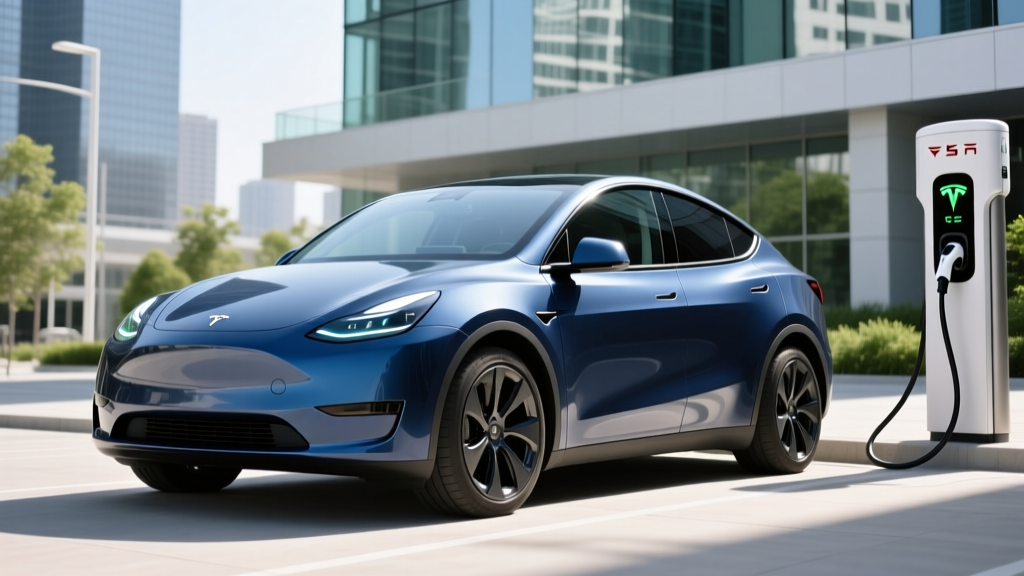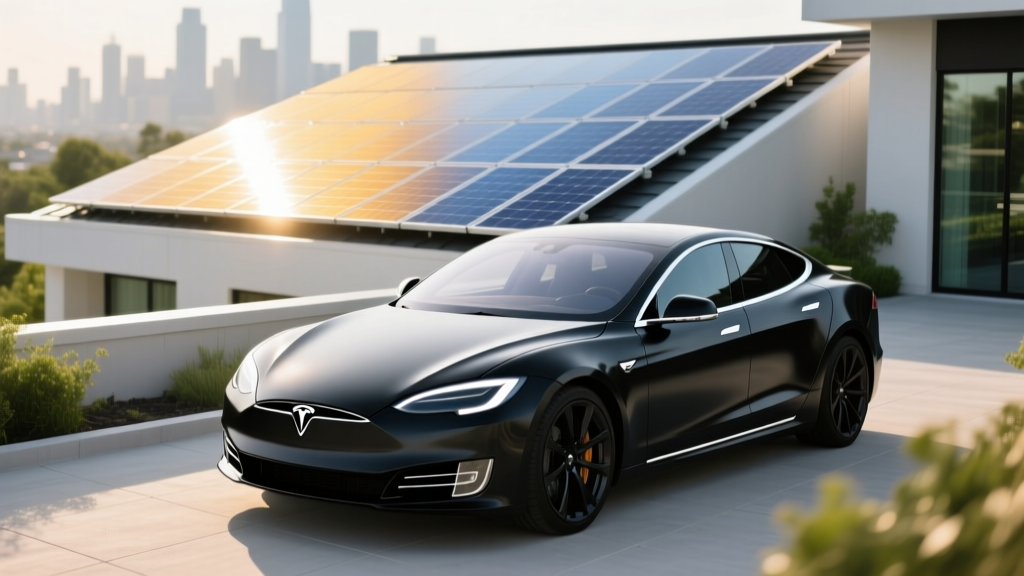
For electric-vehicle owners looking to offset home charging costs, the idea of a solar-integrated roof is compelling. Tesla's Solar Roof — the product most people search for when they type cost Tesla roof tiles — blends photovoltaic cells into tempered glass tiles that replace your existing roofing material entirely. But with installed prices often exceeding $40,000 to $70,000, the real question is whether the math works out for EV drivers who want to charge on sunshine. This guide breaks down the 2026 pricing, energy production, incentives, and ownership economics so you can decide if Tesla's Solar Roof belongs on your home — and in your EV charging strategy.
What Tesla Solar Roof Tiles Actually Are
Unlike conventional rack-mounted solar panels bolted on top of shingles, Tesla's Solar Roof replaces your entire roof surface with interlocking glass tiles. Some tiles contain monocrystalline photovoltaic cells (the "active" tiles), while others are purely aesthetic "inactive" tiles that match in appearance but generate no electricity. The ratio of active to inactive tiles depends on your energy needs, roof orientation, and budget.
The tiles use tempered glass rated for Class F fire resistance and UL 2218 Class 4 impact resistance — meaning they can withstand a 2-inch steel ball dropped from 20 feet without cracking. Tesla warrants the tiles against weatherization defects for 25 years and guarantees power output at no less than 95% of nameplate capacity at year 5, declining no more than 0.5% per year thereafter through year 25.
Tesla Solar Roof Cost Breakdown (2026 Pricing)
The most common search around this product — cost Tesla roof tiles — doesn't have a single sticker-price answer because every installation is custom. However, based on recent Tesla quotes and third-party solar industry data, here is a realistic pricing framework for 2026:
| Home Size (sq ft roof) | System Size (kW) | Active + Inactive Tiles | Estimated Installed Cost | Cost per Watt (before incentives) |
|---|---|---|---|---|
| 1,200 | 5.0 kW | ~60% active | $32,000 – $40,000 | $6.40 – $8.00/W |
| 1,800 | 8.0 kW | ~55% active | $48,000 – $58,000 | $6.00 – $7.25/W |
| 2,500 | 12.0 kW | ~50% active | $65,000 – $78,000 | $5.40 – $6.50/W |
| 3,500 | 16.0 kW | ~45% active | $82,000 – $100,000 | $5.10 – $6.25/W |
Several factors push Tesla Solar Roof costs above conventional solar panels:
- Full roof replacement: You're paying for demolition of your existing roof, structural prep, and the inactive glass tiles that serve no electrical purpose but maintain visual uniformity.
- Complexity premium: Multi-plane roofs, skylights, chimneys, and steep pitches add labor hours. Tesla's installation crews typically spend 5–7 days on-site for an average home, compared to 1–2 days for rack-mounted panels.
- Powerwall bundling: Most Tesla Solar Roof installations include at least one Powerwall 3 battery ($12,000–$15,000 installed), which enables time-of-use arbitrage and backup power but adds substantially to the total contract price.
Solar Roof vs. Conventional Panels: The Real Cost Comparison
If your primary goal is offsetting EV home-charging electricity, it's critical to compare the Solar Roof against standard rack-mounted panels on a per-watt and per-kWh-produced basis:
| Metric | Tesla Solar Roof | Conventional Panels (e.g., REC, Panasonic) |
|---|---|---|
| Installed cost (before incentives) | $48,000 – $58,000 | $20,000 – $28,000 |
| Cost per watt | $6.00 – $7.25/W | $2.50 – $3.50/W |
| Annual production (avg US) | ~10,400 kWh | ~10,400 kWh |
| Tile/module warranty | 25 years | 25 years (performance) |
| Roof replacement included? | Yes — full tear-off | No — panels mount on existing roof |
| Aesthetic integration | Seamless glass look | Visible rack and modules |
The energy output is essentially identical for equivalent kilowatt ratings. The premium you pay with Tesla Solar Roof tiles is for aesthetics, integrated roof replacement, and brand — not for additional electricity generation. If your existing roof is near end-of-life (15+ years old, significant granule loss, curling shingles), the Solar Roof's cost becomes more competitive because you'd otherwise spend $12,000–$20,000 on a conventional re-roof anyway.
Federal Tax Credits and Incentives for Tesla Solar Roof
The IRS Residential Clean Energy Credit (§25D) applies to Tesla Solar Roof installations, providing a 30% federal tax credit on the total installed cost — including the active tiles, inactive tiles, labor, and Powerwall battery (if installed in the same tax year). This credit has no annual cap and rolls forward if it exceeds your tax liability in a single year.
| Line Item | Cost |
|---|---|
| Solar Roof installation (8 kW, ~1,800 sq ft home) | $52,000 |
| Powerwall 3 (installed) | $13,500 |
| Total project cost | $65,500 |
| 30% federal tax credit (§25D) | –$19,650 |
| Net cost after federal credit | $45,850 |
Important caveats: The §25D credit is non-refundable — you must have sufficient federal tax liability to claim it. Unlike the §30D EV credit, there is no income cap or MSRP cap for solar, but you should consult a tax professional to confirm your eligibility. Some states and utilities offer additional rebates or SREC (Solar Renewable Energy Certificate) income, which can shave another $2,000–$8,000 off net cost depending on your jurisdiction. Check the DSIRE database for state-specific programs.
Charging Your EV on Tesla Solar Roof: The Economics
For EV owners, the most compelling argument for a Solar Roof is generating your own "fuel." Here's how the math works for a typical EV-driving household:
- Annual driving: 12,000 miles
- Vehicle efficiency: 3.5 miles/kWh (e.g., Tesla Model Y, Hyundai Ioniq 5)
- Annual charging demand: ~3,430 kWh
- Grid electricity cost (US avg, 2026): $0.17/kWh
- Annual EV charging cost from grid: ~$583
An 8 kW Solar Roof in a moderate-sun state (e.g., Virginia, Colorado) produces roughly 10,400 kWh annually. Your EV charging represents about 33% of that production, with the remainder offsetting household loads (HVAC, appliances, lighting). If your total annual electricity bill is $2,400, the Solar Roof could reduce it to near zero — effectively making your EV charging free after the system payback period.
Who Should Consider Tesla Solar Roof Tiles?
The Solar Roof is not the cheapest way to generate solar electricity — conventional panels win on pure economics. But it makes sense for a specific buyer profile:
- Your roof needs replacing anyway. If you're facing a $15,000–$20,000 re-roof in the next 2–3 years, bundling it into a Solar Roof installation narrows the cost gap with conventional panels significantly.
- HOA or aesthetic restrictions. Some neighborhoods restrict visible rack-mounted panels. Tesla's glass tiles look like a premium architectural roof, often bypassing HOA objections.
- You plan to stay in the home 10+ years. The longer payback period requires long-term ownership to recoup. Homes with Solar Roofs may also see a resale premium — research from Lawrence Berkeley National Lab suggests solar installations add roughly 4% to home value.
- You drive an EV and want energy independence. Pairing a Solar Roof with a Powerwall and an EV means you can charge, power your home, and ride out grid outages with a single integrated ecosystem managed through the Tesla app.
Key Drawbacks to Weigh Before Buying
Honest assessment requires naming the limitations:
- Installation delays: Tesla's Solar Roof division has historically experienced long lead times — often 6–12 months from contract signing to installation. Permitting, supply chain, and crew availability all contribute.
- Lower efficiency per square foot: Because inactive tiles don't generate power, a Solar Roof system needs more total roof area to achieve the same kW rating as a conventional panel array. Homes with small or heavily shaded roofs may not be candidates.
- Repair complexity: If a tile cracks from a fallen branch, replacement requires a Tesla-certified technician. Conventional panel systems can often be serviced by any licensed solar installer.
- Cost premium is substantial: Even after the 30% tax credit, you'll typically pay $15,000–$30,000 more for a Solar Roof than for equivalent conventional panels plus a standalone re-roof.
Frequently Asked Questions
How much do Tesla roof tiles cost per square foot?
Installed Tesla Solar Roof tiles typically cost $25–$35 per square foot of total roof area (including both active and inactive tiles), compared to $8–$15 per square foot for a premium architectural shingle re-roof. The per-watt cost ranges from $5.10 to $8.00 depending on system size and roof complexity.
Does the Tesla Solar Roof qualify for the 30% federal tax credit?
Yes. Under IRS §25D (Residential Clean Energy Credit), the full installed cost — including active tiles, inactive tiles, labor, and a Powerwall battery — qualifies for a 30% non-refundable federal tax credit through 2032. There is no income cap or dollar cap. Consult a tax professional for your specific situation.
Can a Tesla Solar Roof fully power my EV charging?
An 8 kW system produces roughly 10,000–12,000 kWh per year depending on location. A typical EV driver covering 12,000 miles at 3.5 mi/kWh uses about 3,400 kWh annually for charging. So yes — a properly sized Solar Roof generates enough surplus to cover EV charging and household loads in most US climates.
How long does Tesla Solar Roof installation take?
The physical installation typically takes 5–7 days for an average home. However, the total timeline from contract to commissioning is often 6–12 months due to permitting, utility interconnection agreements, and Tesla's installation crew scheduling.
Is Tesla Solar Roof worth it compared to regular solar panels?
On pure cost-per-watt economics, conventional panels are 40–55% cheaper. The Solar Roof is worth the premium if you need a full roof replacement, prioritize aesthetics, face HOA restrictions, or want a single-vendor ecosystem integrated with a Tesla Powerwall and EV charger. For budget-focused buyers, conventional panels plus a standard re-roof deliver the same electricity at significantly lower cost.
What is the Tesla Solar Roof tile warranty?
Tesla warrants the glass tiles against defects for 25 years, the power output at ≥95% at year 5 with ≤0.5% annual degradation through year 25, and the Powerwall battery for 10 years or 100% depth-of-discharge cycling. The inverter is covered for 12.5 years.