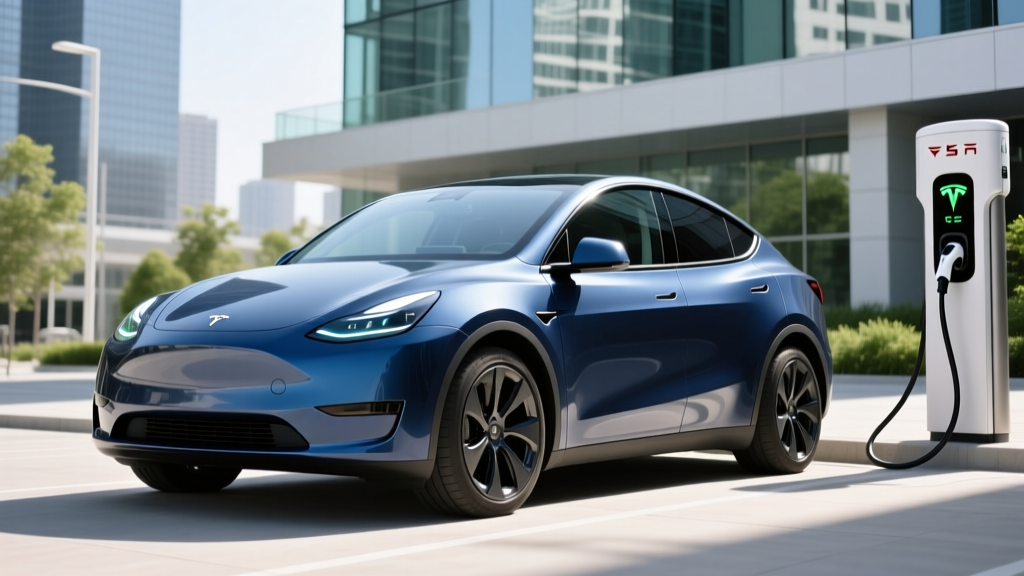
The Tesla Model Y remains the best-selling electric vehicle in the United States for good reason — but the 2026 refresh (internally called "Juniper") has reshaped the value proposition significantly. With updated styling, a revised interior, improved ride quality, and competitive pricing, the question isn't whether the Model Y is capable. It's whether it still makes the strongest case for Tesla ownership in an increasingly crowded midsize electric SUV segment. After spending time with the 2026 Model Y Long Range AWD and testing its charging, range, and daily usability, here's the data-driven verdict.
2026 Tesla Model Y: Quick Verdict
The refreshed Model Y sharpens what was already a compelling package. The Juniper update brings a more refined cabin, ventilated front seats, a rear touchscreen, ambient lighting, and a slightly retuned suspension that absorbs road imperfections better than the outgoing model. Range and charging remain best-in-class for the segment, and access to the Supercharger network — now largely unnecessary as a differentiator since most competitors have NACS adapters — still offers the most seamless plug-and-charge experience. The Model Y Long Range AWD starts at $44,990 before incentives, positioning it against the Hyundai Ioniq 5, Ford Mustang Mach-E, and Chevrolet Equinox EV.
| Spec | 2026 Model Y Long Range AWD | 2026 Model Y Performance |
|---|---|---|
| EPA Range | 320 miles | 293 miles |
| Battery (usable) | ~78 kWh, NMC | ~78 kWh, NMC |
| Drivetrain | Dual-Motor AWD | Dual-Motor AWD |
| Horsepower | 384 hp | 456 hp |
| 0–60 mph | 4.8 sec | 3.5 sec |
| Max DC Fast Charge | 250 kW | 250 kW |
| 10–80% DC Time | ~25 min | ~25 min |
| Level 2 Charge Rate | 11.5 kW (~44 mi/hr) | 11.5 kW (~44 mi/hr) |
| MPGe (combined) | 111 MPGe | 102 MPGe |
| Efficiency | 30 kWh/100 mi | 33 kWh/100 mi |
| Cargo (rear seats up) | 30.2 cu ft | 30.2 cu ft |
| Cargo (rear seats folded) | 72.1 cu ft | 72.1 cu ft |
| Base MSRP | $44,990 | $51,490 |
| Battery Warranty | 8 yr / 120,000 mi | 8 yr / 120,000 mi |
Real-World Range: What the EPA Number Doesn't Tell You
The EPA rates the 2026 Model Y Long Range AWD at 320 miles of combined range. That figure is competitive and realistic for mixed city/suburban driving in mild weather. But as with every EV, real-world results vary based on conditions.
EPA Estimate: 320 miles (Long Range AWD)
Real-World Highway (70–75 mph, mild weather): ~265–280 miles
Real-World Highway (cold weather, 30°F or below): ~225–245 miles
City/Commuter (with regen braking): ~300–315 miles
At sustained highway speeds above 70 mph, aerodynamic drag reduces efficiency noticeably. In winter conditions, expect a 20–28% range reduction due to cabin heating demands and increased battery resistance, even with the Model Y's heat pump system. Preconditioning the battery while plugged in mitigates some cold-weather loss.
Tesla's energy efficiency remains among the best in the segment at roughly 30 kWh per 100 miles (Long Range), which translates to about 3.3 miles per kWh. That efficiency advantage means you spend less on electricity per mile compared to heavier, less aerodynamic competitors — a factor that compounds over years of ownership.
Charging Speed and Infrastructure
Charging is where the Model Y continues to deliver a strong ownership experience. The Long Range and Performance trims support up to 250 kW peak DC fast charging on V3 Superchargers and compatible third-party stations with a NACS connector (native on Tesla vehicles).
| Charging Level | Power | Speed (approx.) | Best For |
|---|---|---|---|
| Level 1 (120V household) | ~1.4 kW | ~5 miles/hour | Emergency/overnight trickle |
| Level 2 (240V home, 48A) | 11.5 kW | ~44 miles/hour | Daily home charging |
| DC Fast Charge (V3 Supercharger) | Up to 250 kW | 10–80% in ~25 min | Road trips, rapid top-ups |
| DC Fast Charge (V4 Supercharger) | Up to 250 kW* | 10–80% in ~25 min | Newer Supercharger stations |
*The Model Y Juniper architecture supports 250 kW peak; Tesla has not yet enabled higher charge rates on this platform, though V4 stalls can deliver more to compatible future vehicles.
Understanding the charge curve: The 250 kW figure is a peak rate, not sustained. The Model Y charges fastest between roughly 10% and 40% State of Charge (SoC), where it can pull close to peak power. Above 60%, the rate tapers progressively, and above 80%, charging slows dramatically to protect battery longevity. This is why the 10–80% metric (~25 minutes) is more useful than peak kW alone.
For home charging, a Level 2 wall connector on a 60-amp circuit delivers the full 11.5 kW (48 amps continuous). That's roughly 44 miles of range per hour of charging, meaning a full overnight session easily replenishes daily driving. Installation typically requires a 240V/60A circuit; expect $800–$2,000 for professional installation depending on your electrical panel's capacity and distance from the panel to the charging location. Always consult a licensed electrician for a site-specific quote.
Performance, Ride Quality, and Daily Driving
The 2026 Model Y Long Range AWD produces 384 horsepower from its dual-motor setup and hits 0–60 mph in 4.8 seconds. That's genuinely quick for a family SUV and provides effortless highway merging and passing. The Performance trim drops that to 3.5 seconds with 456 hp — sports-car territory in a vehicle with over 72 cubic feet of cargo space.
The Juniper refresh brought meaningful ride-quality improvements. Tesla retuned the suspension, added acoustic glass, and improved sound deadening. The result is a noticeably quieter cabin at highway speeds and less harshness over expansion joints and rough pavement. It's still firm compared to a Hyundai Ioniq 5 or Kia EV6 — Tesla prioritizes handling precision over plush comfort — but the gap has closed considerably.
One-pedal driving via regenerative braking remains excellent. Tesla's regen system is strong and predictable, allowing most daily driving without touching the brake pedal. The steering is quick and precise, though some drivers find it artificially heavy even in Comfort mode.
Interior, Tech, and Cargo Practicality
The 2026 Model Y interior is the most refined Tesla has produced. The minimalist design language remains, but material quality has improved with soft-touch surfaces, textile dashboard accents, and ambient lighting strips. The 15.4-inch center touchscreen handles all infotainment, climate, and vehicle controls — there are no physical buttons for climate or audio, which continues to divide opinion.
What's new for 2026:
- Ventilated front seats (a frequent request addressed)
- 8-inch rear touchscreen for passengers (climate, media, gaming)
- Power-folding second-row seats
- Improved cabin quietness with acoustic laminated glass
- Ambient lighting throughout the cabin
- Updated premium audio with improved bass response
Cargo and passenger space:
- Rear legroom: 41.6 inches
- Front headroom: 41.0 inches
- Cargo behind rear seats: 30.2 cu ft
- Cargo with rear seats folded: 72.1 cu ft
- Front trunk (frunk): 4.1 cu ft
The cargo area is one of the Model Y's strongest practicality arguments. The hatchback design with a wide opening and low load floor makes it easier to load bulky items than many competing SUVs. The frunk adds useful space for charging cables, groceries, or a small bag.
Autopilot, FSD, and Driver Assistance
SAE Automation Level: Level 2
Tesla Autopilot and Full Self-Driving (Supervised) are Level 2 driver-assistance systems. The driver must remain fully engaged, hands on the wheel (or providing torque input), and eyes on the road at all times. These systems do not make the vehicle self-driving. Only Level 4 robotaxi services like Waymo operate without a human driver in defined geographic areas.
Standard Autopilot includes Traffic-Aware Cruise Control and Autosteer (lane centering) and is included with every Model Y. It performs well on well-marked highways but requires constant supervision.
Full Self-Driving (Supervised) is an $8,000 add-on (or $99/month subscription as of 2026) that adds automatic lane changes, Navigate on Autopilot (highway on/off-ramp navigation), Autopark, Summon, and traffic light/stop sign recognition. FSD has improved substantially with Tesla's vision-only neural network approach, but it still makes errors in construction zones, complex intersections, and adverse weather. It is not a substitute for an attentive driver.
What Autopilot/FSD does NOT do:
- Drive autonomously without supervision
- Handle all weather conditions (heavy rain, snow, fog impair cameras)
- Navigate unmapped or poorly marked roads reliably
- Replace the need for driver attention and intervention
Pricing, Tax Credits, and Ownership Cost
| Trim | Base MSRP | Est. After §30D Credit* | Destination |
|---|---|---|---|
| Long Range AWD | $44,990 | ~$37,490 | $1,390 |
| Performance AWD | $51,490 | ~$43,990 | $1,390 |
*Assumes full $7,500 federal tax credit eligibility. Actual credit depends on buyer income, battery sourcing, and MSRP cap compliance. See eligibility details below.
Federal tax credit eligibility (§30D): The Model Y qualifies for up to $7,500 under the current IRS rules, but eligibility is not automatic. Key requirements per IRS guidelines:
- MSRP Cap: Vehicle MSRP must not exceed $80,000 for SUVs — the Model Y clears this easily.
- Buyer Income Cap: Modified Adjusted Gross Income (MAGI) must not exceed $150,000 (single), $225,000 (head of household), or $300,000 (joint filers).
- Battery Sourcing: Critical minerals and battery components must meet phased-in domestic sourcing thresholds that tighten annually through 2030. Tesla's supply chain has adapted, but verify current-year compliance on the IRS eligible vehicle list before purchase.
- Point-of-Sale Transfer: As of 2024, buyers can transfer the credit to the dealer at purchase, reducing the out-of-pocket cost immediately rather than waiting for tax filing.
- Final Assembly: Must occur in North America — the Model Y is assembled in Fremont, CA, and Austin, TX.
Always verify eligibility at the time of purchase by checking the IRS clean vehicle credit page and consulting a tax professional. Rules change annually, particularly around battery sourcing requirements.
Five-year ownership economics: According to fueleconomy.gov, the Model Y Long Range consumes approximately 30 kWh per 100 miles. At the national average electricity rate of ~$0.16/kWh, that's roughly $4.80 per 100 miles. A comparable gas SUV at 25 MPG and $3.50/gallon costs $14.00 per 100 miles. Over 60,000 miles, the fuel savings alone approach $5,500 — before factoring in reduced maintenance (no oil changes, fewer brake replacements thanks to regen, no spark plugs or timing belts).
Warranty Coverage
Tesla's warranty package is competitive but not class-leading:
- Basic Vehicle Limited Warranty: 4 years / 50,000 miles
- Battery & Drive Unit Warranty: 8 years / 120,000 miles (Long Range & Performance)
- Battery Capacity Retention Threshold: Tesla warrants that the battery will retain at least 70% of its original capacity during the warranty period. If capacity drops below 70%, Tesla will repair or replace the battery.
Real-world data from high-mileage Tesla owners suggests NMC batteries in the Model Y typically degrade 8–12% over the first 100,000 miles, with the steepest loss occurring in the first 20,000 miles before stabilizing. This is consistent with industry norms for liquid-cooled NMC packs. For context, Hyundai and Kia offer 10-year/100,000-mile battery warranties, which is more generous on duration.
Pros, Cons, and the Competition
Pros
- Best-in-class efficiency (~30 kWh/100 mi)
- Extensive Supercharger network with native plug-and-charge
- Strong real-world range (320 mi EPA)
- Excellent cargo capacity (72.1 cu ft max)
- Quick 0–60 performance (4.8s Long Range)
- Over-the-air updates continuously add features
- Improved ride quality and cabin refinement for 2026
- Strong resale value relative to EV segment average
Cons
- No physical buttons — all controls via touchscreen
- FSD ($8,000) remains Level 2 despite the name
- Ride still firmer than some competitors
- 250 kW peak charge rate trails Hyundai/Kia 800V platforms (350 kW capable)
- Basic warranty only 4yr/50k — shorter than Hyundai/Kia
- Visibility compromised by thick rear pillars
- No Apple CarPlay or Android Auto
Key competitors to cross-shop:
- Hyundai Ioniq 5: Faster DC charging (350 kW capable on 800V architecture), more physical controls, competitive range. Slightly less cargo space.
- Ford Mustang Mach-E: Sportier styling, BlueCruise hands-free highway driving, CarPlay support. Lower efficiency and range.
- Kia EV6: Shares Ioniq 5's 800V fast-charging platform, striking design. Tighter rear seat.
- Chevrolet Equinox EV: Lower starting price, good range (315+ mi on 3RS). Less performance, slower DC charging.
Choose the Model Y if: You prioritize efficiency, Supercharger convenience, maximum cargo space, and Tesla's software ecosystem. It's the best all-around choice for road-trippers and daily commuters who want minimal charging hassle.
Choose a competitor if: You want faster peak DC charging (Ioniq 5/EV6), physical buttons, Apple CarPlay (Mach-E, Equinox EV), or a longer basic warranty (Hyundai/Kia).
Who the 2026 Model Y Suits Best
The Model Y Long Range AWD is ideal for:
- Daily commuters who can charge at home and want minimal operating cost
- Families needing practical cargo space and strong safety ratings (5-star NHTSA overall)
- Road-trippers who value Supercharger network reliability and fast 250 kW charging
- Tech-forward buyers who prefer software-defined vehicles with OTA updates
It's less ideal for buyers who refuse to forgo CarPlay, want a softer ride, or need the absolute fastest DC charging available.
Frequently Asked Questions
What is the real-world range of the 2026 Tesla Model Y?
The EPA rates the Long Range AWD at 320 miles. In real-world highway driving at 70–75 mph in mild weather, expect 265–280 miles. In cold weather (below 30°F), highway range drops to approximately 225–245 miles. City driving with regenerative braking can approach the EPA figure.
How fast does the Model Y charge at home and on road trips?
At home on a Level 2 (240V, 48A) charger, the Model Y adds about 44 miles of range per hour at 11.5 kW. A full overnight charge easily covers daily needs. On DC fast chargers (V3 Supercharger), it peaks at 250 kW and charges from 10–80% in approximately 25 minutes, though the rate tapers significantly above 80% SoC.
Does the 2026 Model Y qualify for the federal EV tax credit?
The Model Y is eligible for up to $7,500 under IRS §30D, provided the buyer meets income caps ($150k single / $300k joint MAGI), the vehicle MSRP is under $80,000 (it is), and battery sourcing requirements are met for the current model year. The credit can be transferred at point of sale to reduce the purchase price immediately. Verify current eligibility on irs.gov before purchasing.
Is the Model Y worth buying over the Hyundai Ioniq 5 or Ford Mach-E?
It depends on priorities. The Model Y wins on efficiency, cargo space, Supercharger convenience, and software. The Ioniq 5 wins on DC charging speed (350 kW capable) and has physical controls. The Mach-E offers CarPlay and hands-free BlueCruise. Cross-shop all three and prioritize what matters most for your driving pattern.
How long will the Model Y battery last?
Tesla warrants the battery for 8 years or 120,000 miles with a 70% capacity retention threshold. Real-world data from high-mileage owners suggests NMC batteries in Teslas typically lose 8–12% capacity over 100,000 miles. Many Tesla batteries are reaching 150,000–200,000 miles before needing replacement. A full battery replacement (if out of warranty) currently costs approximately $12,000–$16,000 depending on the pack.
Is Tesla Autopilot or FSD self-driving?
No. Both Autopilot and Full Self-Driving (Supervised) are SAE Level 2 driver-assistance systems. The driver must remain fully engaged with hands on the wheel and eyes on the road. FSD adds features like automatic lane changes and navigation assistance but does not eliminate the need for active supervision. Only Level 4 services like Waymo operate without a human driver.