Tesla Solar Roof: Quick Verdict for 2026
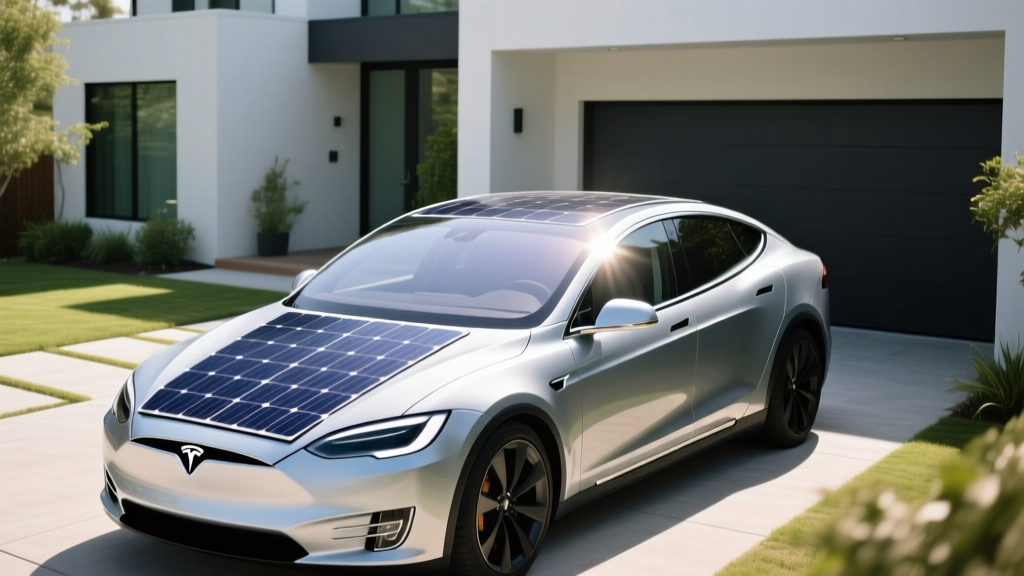
If you've searched "cost Tesla roof" hoping for a simple number, here's the honest answer: a Tesla Solar Roof on an average 2,000-square-foot home typically lands between $40,000 and $70,000 before incentives, depending on roof complexity, local labor rates, and the system size you need. That's roughly 2–3× the cost of conventional rack-mounted solar panels on the same home. The trade-off is aesthetics — Tesla's tempered-glass tiles replace your existing roof entirely, rather than bolting panels on top of it.
For EV owners charging at home, pairing a Solar Roof with a Powerwall battery and a Level 2 wall connector can meaningfully offset electricity costs and provide backup power during outages. But the math only works if you understand exactly what you're paying for — and where cheaper alternatives deliver the same electrons at a fraction of the price.
How Much Does a Tesla Solar Roof Actually Cost?
Tesla's pricing has historically been opaque, shifting with material costs, regional installer availability, and system configuration. Based on recent customer reports, installer estimates, and Tesla's own configurator data through early 2026, here's what buyers are seeing:
| Component | Estimated Cost | Notes |
|---|---|---|
| Solar Roof tiles (active + inactive) | $20,000–$35,000 | Varies by roof size and solar tile percentage |
| Roof tear-off & structural prep | $5,000–$12,000 | Older homes, steep pitches, multi-story cost more |
| Installation labor | $8,000–$15,000 | Tesla-certified crews; regional variation significant |
| Inverter & electrical | $3,000–$5,000 | Microinverters integrated into system |
| Permits & utility interconnection | $1,500–$3,000 | Varies by municipality and utility |
| Powerwall 3 (optional, 13.5 kWh) | $9,000–$12,000 installed | Recommended for backup & TOU arbitrage |
| Total (no battery) | $37,500–$70,000 | Before federal/state incentives |
| Total (with Powerwall 3) | $46,500–$82,000 | Before federal/state incentives |
The single biggest variable is what percentage of your roof uses active solar tiles versus inactive (non-generating) glass tiles. Tesla uses inactive tiles on north-facing slopes, dormers, and areas with heavy shading to maintain visual uniformity. A simple, south-facing gable roof will have a higher active-tile ratio and better $/watt economics than a complex roof with many hips, valleys, and chimneys.
Cost per watt comparison
To compare apples to apples, solar professionals use cost per watt ($/W):
- Tesla Solar Roof: $2.50–$4.50/W (before incentives)
- Conventional rack-mounted panels: $1.50–$2.80/W (before incentives)
- Premium panels (SunPower/Maxeon, REC): $2.00–$3.20/W
The Solar Roof premium is real — typically $1.00–$1.70/W more than standard panels. Whether that premium is justified depends on whether you also need a new roof.
Federal Tax Credits & Incentives: What You Actually Pay
The federal Residential Clean Energy Credit (§25D) covers 30% of the total installed cost of solar energy property — including the Tesla Solar Roof tiles, labor, permitting, and a Powerwall battery — through 2032. There is no dollar cap and no income cap, unlike the EV §30D credit.
| Scenario | Gross Cost | 30% Credit | Net Cost |
|---|---|---|---|
| Roof only (no battery) | $55,000 | −$16,500 | $38,500 |
| Roof + Powerwall 3 | $67,000 | −$20,100 | $46,900 |
| Conventional 10 kW panels | $25,000 | −$7,500 | $17,500 |
Power Output, Efficiency & Real-World Energy Production
Tesla's Solar Roof tiles are less efficient than premium rack-mounted panels. The current-generation tiles produce approximately 70 watts per tile with a cell efficiency around 22–23% at the cell level, but system-level efficiency is lower because inactive tiles, suboptimal roof angles, and micro-shading reduce total output.
For a typical 8–10 kW system on a moderately complex roof:
- Estimated annual production: 10,000–14,000 kWh (varies heavily by latitude, shading, and tilt)
- Daily average: 27–38 kWh
- EV charging equivalent: Enough to drive a Tesla Model Y (~3.5 mi/kWh) roughly 35,000–49,000 miles per year on sun alone
For context, the average American household uses about 10,500 kWh/year (per the EIA). A properly sized Solar Roof can cover most or all of that — plus meaningful EV charging — but only if your roof has sufficient south- or west-facing, unshaded area.
Powerwall 3: Should You Add the Battery?
Tesla's Powerwall 3 stores 13.5 kWh usable, delivers up to 11.5 kW continuous output (enough to run most home circuits simultaneously), and includes a built-in DC solar inverter. At roughly $9,000–$12,000 installed, it's a significant add-on — but it unlocks two capabilities a grid-tied solar roof alone cannot provide:
- Backup power during outages: A grid-tied solar system shuts down when the grid goes down (a safety requirement called anti-islanding). The Powerwall keeps your lights, fridge, and EV charger running.
- Time-of-use (TOU) arbitrage: Store cheap midday solar and discharge it during expensive evening peak hours (typically 4–9 PM), maximizing savings if your utility has TOU rates.
If you live in an area with frequent outages (Texas, California, Florida) or aggressive TOU rate structures, the Powerwall pays for itself faster. If your grid is reliable and your utility offers strong net metering (full retail credit for exported solar), the battery ROI is weaker.
Tesla Solar Roof vs. Conventional Solar Panels
| Factor | Tesla Solar Roof | Conventional Panels |
|---|---|---|
| Cost per watt | $2.50–$4.50/W | $1.50–$2.80/W |
| Aesthetics | Seamless, replaces roof | Visible rack-mounted panels |
| Roof replacement included? | Yes — new roof is the product | No — requires adequate existing roof |
| Panel/tile efficiency | ~22–23% (cell), lower system-level | 21–24% (premium), 18–20% (standard) |
| Install timeline | 1–3 weeks on-site + long lead times | 1–3 days on-site, faster permitting |
| Warranty | 25-yr power, 25-yr weatherization | 25-yr performance (tier-1 brands) |
| Repairability | Individual tile replacement possible | Panel-level swap, widely serviceable |
Choose Tesla Solar Roof if:
- Your existing roof needs replacement within 2–5 years
- Aesthetics are a priority (HOA restrictions, historic districts, personal preference)
- You want a single vendor for solar + battery + EV charging
- Your roof is complex and panels would look awkward
Choose Conventional Panels if:
- Your roof is in good condition (5+ years of life remaining)
- You want maximum energy output per dollar
- You need the system installed quickly
- Simple roof geometry makes panels look clean anyway
Installation Timeline & What to Expect
Tesla Solar Roof installations have a reputation for long timelines. The typical process:
- Online estimate & deposit: Instant quote via Tesla's website; $1,000 refundable deposit to hold your place.
- Site survey & design: A Tesla technician visits to measure, assess structural integrity, and finalize tile layout. (4–8 weeks after deposit.)
- Permitting: Tesla handles permits; timeline varies wildly by jurisdiction — 2 weeks in fast-track cities, 3+ months in backlogged ones.
- Installation: 5–15 business days on-site for the roof itself, plus 1–2 days for electrical/Powerwall.
- Utility interconnection & PTO: Permission to Operate from your utility can take 2–6 weeks after installation.
Total timeline from deposit to generating electrons: 4–9 months in most markets, occasionally longer. Conventional solar installers typically complete the same cycle in 6–12 weeks.
Warranty & Long-Term Durability
Tesla backs the Solar Roof with three warranty components:
- Power warranty: 25 years — guarantees minimum power output degradation curve (typically ≥80% of nameplate at year 25)
- Weatherization warranty: 25 years — covers the roof's function as a weather barrier (leaks, wind uplift, hail)
- Tile warranty: 25 years — covers defects in the glass tiles themselves
The tiles carry a Class 4 hail rating (UL 2218) — the highest available — and a Class F wind rating (up to 110 mph). In practice, Tesla's tempered glass tiles are more impact-resistant than asphalt shingles but can crack under extreme point-impact (e.g., a falling tree branch). Individual tile replacement is possible without disturbing the entire roof.
✓ Pros
- Replaces your roof — no separate roofing contractor needed
- Seamless appearance; no visible panels or rails
- Class 4 hail + Class F wind ratings
- Integrated ecosystem with Powerwall & Tesla EV charging
- 25-year comprehensive warranty
- 30% federal tax credit applies to full system cost
✗ Cons
- 2–3× more expensive per watt than conventional panels
- Long, unpredictable installation timelines
- Lower system efficiency due to inactive tiles & suboptimal tilt
- Limited installer network; service delays in some markets
- Customer service complaints around communication & scheduling
- Not ideal if your existing roof is relatively new
Who Should Buy a Tesla Solar Roof?
The Tesla Solar Roof makes the most financial sense for a specific buyer profile:
- You need a new roof anyway. If you're already facing a $15,000–$25,000 roof replacement, the incremental cost of upgrading to Solar Roof narrows significantly versus panels + new shingles.
- You charge an EV at home. A 10 kW Solar Roof producing ~13,000 kWh/year can offset roughly 37,000 miles of Model Y driving annually — essentially fueling your car with sunlight.
- Aesthetics matter. Historic districts, strict HOAs, or personal preference for a clean roofline justify the premium for some homeowners.
- You want backup power. Pairing Solar Roof + Powerwall 3 keeps critical circuits (and your EV charger) running during grid outages without a gas generator.
The Solar Roof is a harder sell if your existing roof is less than 10 years old, your budget is tight, or you simply want maximum solar kWh per dollar. In those cases, conventional panels from a reputable local installer will save you $15,000–$30,000+ while generating the same (or more) electricity.
Frequently Asked Questions
Does the Tesla Solar Roof qualify for the federal solar tax credit?
Yes. Under IRS §25D, the Solar Roof qualifies for a 30% federal tax credit on the total installed cost — tiles, labor, permitting, and Powerwall battery. There is no income cap and no dollar cap, unlike the EV §30D credit. The credit is non-refundable but carries forward. Consult a tax professional to confirm your eligibility.
How long does a Tesla Solar Roof last?
Tesla warrants the tiles for 25 years against power degradation, weatherization failure, and manufacturing defects. The tempered glass tiles are designed to outlast standard asphalt shingles (which typically last 15–20 years). Tesla claims the tiles are three times stronger than standard roofing tiles.
Can I install a Tesla Solar Roof myself or use my own roofer?
No. Tesla requires installation through its certified installer network. The system uses proprietary connectors, mounting hardware, and inverter integration that standard roofing crews are not trained to handle. This is also true for warranty validity — DIY or third-party installation voids the warranty.
How much can a Tesla Solar Roof save on EV charging?
If your system produces 13,000 kWh/year and your utility charges $0.16/kWh (national average), that's roughly $2,080/year in avoided electricity costs. If most of that offsets EV charging (at ~3.5 miles per kWh for a Model Y), you're effectively driving ~45,000 miles per year on free solar electrons. Over 25 years, cumulative savings can reach $50,000+ depending on utility rate inflation.
Is the Tesla Solar Roof worth it compared to regular solar panels?
Strictly on a $/W basis, no — conventional panels deliver the same energy for 40–60% less cost. The Solar Roof becomes competitive when you factor in a needed roof replacement ($15,000–$25,000), aesthetic value, and the integrated Powerwall/charging ecosystem. If your roof is new and you don't care about panel visibility, conventional panels are the financially rational choice.
What happens to the Solar Roof if I sell my home?
The Solar Roof transfers with the home at sale. Studies from NREL and Lawrence Berkeley National Laboratory suggest solar installations add approximately 4% to home resale value. The Tesla Solar Roof's aesthetic integration may command a slight premium over visible rack-mounted panels in design-conscious markets.