If you own a Tesla EV and charge at home, the idea of powering your car with sunlight from your own roof is compelling. But the question most buyers ask first is practical: how much for a Tesla roof? The answer depends on your home's size, energy needs, and whether you pair the system with a Powerwall battery. This guide breaks down real 2026 pricing, system specs, and how a Tesla Solar Roof stacks up against conventional solar panels for EV owners.
Important scope note: AutoEdgeView focuses on electric vehicles and charging. This guide covers the Tesla Solar Roof specifically as it relates to EV home-charging economics — not as a general home-improvement product. For structural roofing questions, consult a licensed roofing contractor.
Tesla Solar Roof at a Glance: 2026 Specs and Pricing
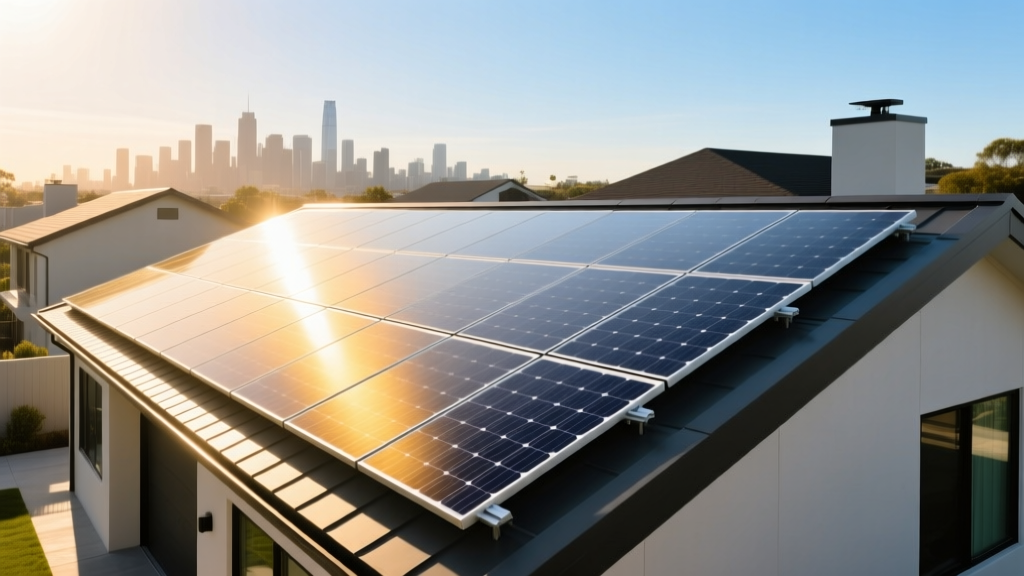
The Tesla Solar Roof replaces your existing roof with a mix of active solar tiles (which generate electricity) and inactive architectural tiles (which match aesthetically but don't produce power). It's a premium product aimed at homeowners who want solar without the look of traditional rack-mounted panels.
| Attribute | Specification |
|---|---|
| System sizes offered | ~4 kW to ~25+ kW (custom to home) |
| Tile type | Tempered glass solar + architectural (non-solar) tiles |
| Typical 10 kW system cost (before incentives) | $40,000 – $55,000+ |
| Typical 15 kW system cost (before incentives) | $58,000 – $80,000+ |
| Powerwall 3 (required for new installs) | ~$12,000 – $15,000 installed (13.5 kWh usable) |
| Federal solar ITC (IRC §25D) | 30% of total system cost (no cap) |
| Warranty | 25-year tile / 25-year power / 25-year weatherization |
| Estimated install timeline | 1–3 weeks on-site (after permitting, which can take months) |
Prices vary significantly by roof complexity — steep pitches, multiple stories, dormers, and skylights all push costs higher. Tesla provides online estimates, but the final contract price often differs from the initial quote. Always get the binding agreement in writing before committing.
Breaking Down the Cost: How Much for a Tesla Roof Really?
To give a concrete answer, let's model two common scenarios for EV-owning households.
Scenario A: Average Home, 10 kW System + 1 Powerwall 3
| Line Item | Estimated Cost |
|---|---|
| Solar Roof (10 kW, moderate complexity) | $45,000 – $55,000 |
| Powerwall 3 (13.5 kWh, installed) | $12,000 – $15,000 |
| Permitting & utility interconnection | $1,000 – $3,000 |
| Total before incentives | $58,000 – $73,000 |
| 30% Federal ITC (§25D) | –$17,400 to –$21,900 |
| Net cost after federal credit | $40,600 – $51,100 |
Scenario B: Larger Home, 15 kW System + 2 Powerwalls
| Line Item | Estimated Cost |
|---|---|
| Solar Roof (15 kW, complex roof) | $65,000 – $80,000 |
| 2× Powerwall 3 (27 kWh total, installed) | $24,000 – $30,000 |
| Permitting & utility interconnection | $1,500 – $4,000 |
| Total before incentives | $90,500 – $114,000 |
| 30% Federal ITC (§25D) | –$27,150 to –$34,200 |
| Net cost after federal credit | $63,350 – $79,800 |
For context on the federal solar credit: the IRS Residential Clean Energy Credit (IRC §25D) covers 30% of solar and battery storage costs with no dollar cap through 2032. Unlike the EV purchase credit (§30D), there are no income limits or MSRP caps for the solar credit. Consult a tax professional to confirm your eligibility.
Tesla Solar Roof vs. Conventional Solar Panels: The Real Comparison
Most homeowners comparing "how much for a Tesla roof" should also compare it against traditional rack-mounted solar panels, which cost significantly less per watt.
| Factor | Tesla Solar Roof | Conventional Panels |
|---|---|---|
| Typical cost (before incentives) | $45,000 – $55,000 | $22,000 – $30,000 |
| Cost per watt | $4.50 – $5.50/W | $2.20 – $3.00/W |
| Aesthetics | Integrated, looks like a premium roof | Visible panels on rack mount |
| Roof replacement included? | Yes — replaces entire roof | No — mounts on existing roof |
| Efficiency (tile-level) | ~20–22% (varies by tile generation) | ~20–23% (tier-1 panels) |
| Install complexity | High (full roof tear-off) | Moderate (rack + panels) |
| Powerwall required? | Yes (for new installs) | Optional |
| Warranty | 25 years comprehensive | 25 years (panel) + 10–15 years (inverter) |
Choose Tesla Solar Roof if: Your roof needs replacement anyway (within 5 years), aesthetics are a priority (HOA restrictions, historic district, personal preference), and you want a single-vendor ecosystem (roof + Powerwall + EV charging in the Tesla app).
Choose conventional panels if: Your roof is in good shape and doesn't need replacing, you want the lowest cost per watt, or you need the system installed quickly (panel installs typically take 1–3 days vs. weeks for Solar Roof).
Powering Your EV: Solar Roof Output and Home Charging Economics
For EV owners, the key question is whether a Tesla Solar Roof can realistically cover your charging needs. Let's run the numbers.
Energy Production Estimates
A 10 kW Tesla Solar Roof in a sun-rich state (Arizona, California, Texas) produces roughly 14,000 – 16,000 kWh/year. In cloudier regions (Pacific Northwest, Northeast), expect 10,000 – 12,000 kWh/year. These figures account for the system's capacity factor, shading losses, and inverter efficiency.
EV Charging Demand
A typical EV driven 12,000 miles/year at 3–4 miles/kWh consumes 3,000 – 4,000 kWh/year for charging. That's roughly 25–35% of a 10 kW system's annual output in sunny climates, leaving the remainder for household use.
| Charging Method | Power (kW) | Miles Added per Hour | Notes |
|---|---|---|---|
| Level 1 (120V outlet) | ~1.4 kW | 3–5 mi/hr | Slowest; works with any outlet |
| Tesla Wall Connector (Level 2, 48A) | ~11.5 kW | 30–44 mi/hr | Requires 60A circuit; fastest home option |
| Level 2 (generic, 32A) | ~7.7 kW | 20–30 mi/hr | Requires 40A circuit |
| Powerwall 3 continuous output | 11.5 kW | — | Can sustain Level 2 charging during outage |
Real-world solar charging reality: Your Solar Roof produces energy during daylight hours. If your EV is parked at home during the day, you can charge directly from solar (especially with Tesla's "Charge on Solar" feature in the app). If you charge overnight, you're drawing from the Powerwall or grid. Net metering policies in your state determine whether excess daytime production offsets nighttime grid draw — check with your utility. A single Powerwall 3 (13.5 kWh) can add roughly 40–50 miles of range to a Model Y overnight, depending on efficiency.
Tesla Solar Roof + Powerwall + EV: The Integrated Ecosystem
Tesla's unique selling proposition is the integrated experience. The Tesla app shows solar production, Powerwall state of charge, household consumption, and EV charging status in one interface. Features like Charge on Solar automatically direct excess solar production to your EV rather than exporting it to the grid at low utility buyback rates.
The Powerwall 3 includes a built-in inverter (no separate inverter needed), delivers 11.5 kW continuous output (enough for simultaneous EV charging and household loads), and supports whole-home backup during outages. For EV owners in areas with frequent grid interruptions (California PSPS events, Texas freeze events, hurricane-prone coasts), this backup capability has real value beyond simple economics.
Notable Drawbacks
- Install delays: Tesla Solar Roof projects have historically faced long permitting and scheduling delays. Some customers report 6–12 months from deposit to completed install. Factor this into your timeline.
- Roof complexity penalties: Steep pitches, multiple roof planes, and skylights increase cost and can reduce the ratio of active-to-inactive tiles, lowering total output.
- Single-vendor lock-in: The Powerwall is required for new Solar Roof installs. You can't mix in a third-party battery without voiding parts of the warranty.
- Resale value uncertainty: While solar panels have documented home-value uplift, the Solar Roof's premium cost may not fully recoup at resale compared to conventional panels.
Federal and State Incentives: What You Actually Save
The primary incentive for a Tesla Solar Roof is the federal Residential Clean Energy Credit (IRC §25D), which provides a 30% tax credit on the total installed cost (roof tiles + Powerwall + labor + permitting) through 2032. This credit steps down to 26% in 2033 and 22% in 2034 before expiring for residential use in 2035.
- No income cap: Unlike the EV purchase credit (§30D), the solar ITC has no modified adjusted gross income limits.
- No dollar cap: 30% of your total system cost — a $70,000 system yields a $21,000 credit.
- Battery storage included: Standalone batteries ≥3 kWh qualify, and the Powerwall 3 (13.5 kWh) is bundled into the same credit.
- Must own the system: Leased systems or PPAs do not qualify — you must purchase.
- Nonrefundable credit: Can reduce your tax liability to zero but won't generate a refund. Excess credit carries forward to future tax years.
- State incentives vary: Many states offer additional rebates, SRECs, or property tax exemptions. Check your state energy office or DSIRE database for local programs.
Is a Tesla Solar Roof Worth It for EV Owners?
The math depends on your situation. Here's a practical framework:
The Solar Roof makes financial sense when:
- Your roof needs replacement within the next 3–5 years (you'd spend $15,000–$30,000 on a new roof anyway)
- You live in a state with high electricity rates (California, Hawaii, Northeast) and/or poor net-metering policies that make self-consumption valuable
- You want whole-home backup for your EV and household during outages
- Aesthetics matter (HOA rules, historic home, personal preference)
Conventional panels are the better call when:
- Your roof is relatively new and in good condition
- You want the fastest payback period (panels at $2.50/W vs. Solar Roof at $5.00/W)
- You need the system installed within weeks, not months
- You're comfortable with the look of rack-mounted panels
Pros
- Seamless aesthetic — looks like a premium roof, not an add-on
- 25-year comprehensive warranty (tiles, power, weatherization)
- Integrated Tesla app ecosystem (solar + battery + EV charging)
- Powerwall 3 enables whole-home backup and Charge on Solar
- 30% federal tax credit with no cap reduces effective cost
- Replaces roof and generates power in one project
Cons
- 2× the cost per watt vs. conventional solar panels
- Long and unpredictable install timelines (6–12 months common)
- Powerwall required for new installs — no third-party battery option
- Complex roofs dramatically increase cost and reduce active-tile ratio
- Premium price may not fully recoup at home resale
- Customer service and communication complaints are well-documented
Frequently Asked Questions
How much for a Tesla roof on an average 2,000 sq ft home?
For a 2,000 sq ft home needing roughly a 10 kW system plus one Powerwall 3, expect $58,000–$73,000 before incentives. After the 30% federal tax credit, the net cost falls to approximately $40,600–$51,100. Your actual price depends on roof pitch, complexity, number of stories, and local permitting costs.
Can a Tesla Solar Roof fully power my EV charging?
Yes, in many cases. A 10 kW system produces 10,000–16,000 kWh/year depending on location. An EV driven 12,000 miles/year typically needs 3,000–4,000 kWh for charging. That leaves 6,000–12,000 kWh for household use. Pairing with a Powerwall lets you store daytime solar for overnight charging.
Does the Tesla Solar Roof qualify for the $7,500 EV tax credit?
No. The Solar Roof qualifies for a different credit — the Residential Clean Energy Credit (IRC §25D), which provides 30% of total system cost with no dollar cap. The $7,500 EV credit (§30D) applies to vehicle purchases only. You can claim both credits in the same tax year if you buy a qualifying EV and install solar.
How long does a Tesla Solar Roof installation take?
The physical installation typically takes 1–3 weeks. However, the total timeline from contract signing to completed system is often 6–12 months due to permitting, utility interconnection agreements, HOA approvals, and Tesla's scheduling backlog. Plan accordingly.
What happens if my Tesla Solar Roof needs repairs?
Tesla provides a 25-year warranty covering tile durability, power output, and weatherization. If individual tiles fail, Tesla dispatches a crew for replacement. However, owner reports indicate that warranty service response times can be slow — weeks to months in some cases. This is a known pain point worth considering.
Is the Tesla Solar Roof worth it compared to regular panels + a Powerwall?
If your roof doesn't need replacing, conventional panels + Powerwall will cost roughly 40–50% less for similar energy output. The Solar Roof justifies its premium primarily when you need a new roof anyway, when aesthetics are critical, or when you value the single-vendor integrated experience. For pure economics, panels win.