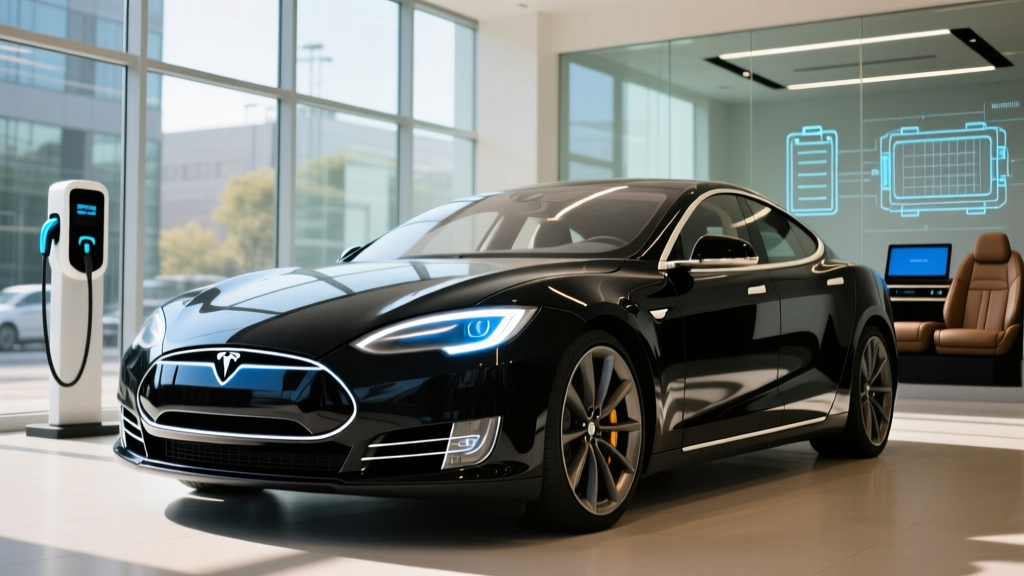
When Tesla delivered the first Model S sedans to customers in June 2012, the electric vehicle landscape was dominated by compliance cars with 80-mile ranges and golf-cart aesthetics. The Model S didn't just move the goalposts — it redefined what an electric car could be. Now, over a decade later, we're looking back at the 2012 Tesla Model S to understand what made it significant, how its original specs hold up in 2026, and whether a first-generation Model S makes sense as a used EV purchase today.
The 2012 Model S: Original Specs That Shocked the Auto Industry
The 2012 Model S launched with three battery configurations: a 40 kWh base model (quickly discontinued), a 60 kWh mid-tier, and the flagship 85 kWh version that captured headlines. It was the 85 kWh variant that achieved the landmark 265-mile EPA range — nearly triple what competitors like the Nissan Leaf (73 miles) offered at the time.
| Specification | Model S 60 | Model S 85 | Model S P85 (Performance) |
|---|---|---|---|
| EPA Range | 208 miles | 265 miles | 265 miles |
| Battery Capacity (usable) | ~60 kWh (NMC) | ~85 kWh (NMC) | ~85 kWh (NMC) |
| 0-60 mph | 5.9 sec | 5.4 sec | 4.2 sec |
| Horsepower | 302 hp | 362 hp | 416 hp |
| Drivetrain | RWD (single motor) | RWD (single motor) | RWD (single motor) |
| Top Speed | 120 mph | 125 mph | 130 mph |
| Original MSRP | $59,900 | $69,900 | $79,900 |
| EPA Efficiency | 95 MPGe | 89 MPGe | 89 MPGe |
All 2012 variants used NMC (nickel manganese cobalt) lithium-ion cells in Tesla's proprietary skateboard platform — a flat battery pack integrated into the floor. This architecture gave the Model S its signature low center of gravity and class-leading interior volume. LFP (lithium iron phosphate) chemistry would not appear in Tesla vehicles until years later.
Real-World Range in 2026: What to Expect From a 12-Year-Old Battery
The original 2012 Model S 85 carried an EPA rating of 265 miles when new. In 2026, a well-maintained example with original battery pack may show 180–220 miles of range at full charge depending on degradation. Battery State of Health (SoH) typically falls between 70–85% for 2012 packs that haven't been replaced. Cold weather (below 32°F) can reduce available range by an additional 20–30%, meaning a winter highway drive might yield 140–170 miles before needing a charge.
NMC chemistry in the 2012 pack is energy-dense but more susceptible to calendar degradation than modern LFP cells. The primary degradation drivers for these early packs include:
- Calendar aging: Even low-mileage examples lose capacity over 12+ years
- High SoC storage: Owners who routinely charged to 100% and left the car sitting accelerated degradation
- Thermal stress: The 2012 Model S lacked the sophisticated heat pump and active thermal management of later Tesla models, relying on a simpler liquid cooling loop
- DC fast-charge frequency: Heavy Supercharger use without battery preconditioning (a feature added in later software updates) contributed to faster cell wear
Buyers evaluating a used 2012 Model S should request a battery health diagnostic through a Tesla Service Center or third-party EV specialist. The in-car range estimate at 100% charge (displayed as "Rated Range") compared to the original 265-mile figure gives a reasonable SoH proxy.
Charging Speed: 2012 Hardware Meets 2026 Infrastructure
The 2012 Model S was designed for Tesla's original Supercharger network, which initially delivered up to 90 kW (later upgraded to 120 kW at V2 stalls). Here's how charging breaks down across levels:
| Charge Level | Power / Rate | Estimated Time (10-80%) | Notes |
|---|---|---|---|
| Level 1 (120V outlet) | ~1.4 kW (~3 mi/hr) | ~48+ hours | Emergency/trickle only |
| Level 2 (240V, single charger) | 10 kW (~29 mi/hr) | ~8 hours | Standard onboard charger |
| Level 2 (240V, dual charger option) | 20 kW (~58 mi/hr) | ~4 hours | $3,600 original option |
| DC Fast Charge (Tesla Supercharger V2) | Up to 120 kW peak | ~40–50 minutes | Peak rate only below 50% SoC; tapers significantly above 80% |
| DC Fast Charge (CHAdeMO w/ adapter) | Up to 50 kW | ~90 minutes | Requires third-party adapter |
Important context for 2026 buyers: The 2012 Model S uses Tesla's proprietary connector (pre-NACS standardization). Tesla has since opened its Supercharger network to other brands using the NACS standard, and the 2012 Model S can use most modern Supercharger stalls, though its older battery management system limits peak charge rates compared to contemporary EVs. Expect a realistic 10-80% session to take 45–55 minutes at a V2 Supercharger, as the charge curve tapers aggressively past 60% SoC to protect the aging NMC cells.
For home charging, a Level 2 wall connector on a 60-amp circuit delivers the best overnight experience, replenishing roughly 200+ miles in 6–7 hours with the single onboard charger. According to fueleconomy.gov, Level 2 home charging remains the most cost-effective and battery-friendly method for daily use.
Performance and Driving Dynamics
The 2012 Model S P85's 4.2-second 0-60 mph time was extraordinary for a luxury sedan in 2012 — rivaling the BMW M5 at a fraction of the price. Even the base 60 kWh model's 5.9-second sprint outpaced most V6 sedans. The single rear-mounted AC induction motor delivered instant torque with zero lag, a characteristic that won over automotive journalists accustomed to turbo spool-up and transmission shift delays.
Key driving characteristics that defined the 2012 experience:
- Regenerative braking: The Model S offered aggressive regen that enabled early one-pedal driving, though it lacked the blended friction-regen refinement of modern EVs
- Ride quality: The air suspension (optional on 85, standard on P85) provided a comfortable highway ride, though early units were prone to failure and costly replacement
- Steering feel: Electric power steering was criticized as numb compared to BMW or Audi competitors — a common trait of early EVs
- NVH: Without a combustion engine, road and wind noise became the dominant sound sources, noticeable at highway speeds
Interior, Cargo, and Technology
The 2012 Model S introduced the now-iconic 17-inch portrait touchscreen that consolidated nearly all vehicle controls — climate, navigation, media, and vehicle settings — into a single interface. While revolutionary, the 2012 hardware is slow by 2026 standards, and the touchscreen is prone to delamination and failure (the "yellowing" issue that plagued early units). Tesla addressed many of these under warranty, but replacement screens for out-of-warranty vehicles cost $2,000–$3,500.
Interior dimensions remain generous:
- Front legroom: 42.7 inches
- Rear legroom: 35.4 inches
- Cargo volume (rear trunk): 26.3 cu ft
- Front trunk (frunk): 5.3 cu ft
- Total cargo with rear seats folded: 58.1 cu ft
- Optional rear-facing third row: Added two small child seats (discontinued after 2014 model year for safety reasons)
Driver assistance in 2012: It's critical to note that the 2012 Model S launched without Autopilot hardware. Tesla began installing the Autopilot sensor suite (cameras, radar, ultrasonics) in September 2014. A 2012 Model S has only basic cruise control, ABS, stability control, and parking sensors. There is no lane-keeping, no adaptive cruise, no automatic emergency braking. This is an SAE Level 0 vehicle in terms of automation — the driver is fully responsible at all times. For context on automation levels, see NHTSA's guidance on automated vehicles.
Used Pricing and Tax Credit Considerations in 2026
The 2012 Model S is no longer eligible for the new-vehicle federal tax credit (IRS §30D) since it's well outside production. However, it may qualify for the Used Clean Vehicle Credit (IRC §25E), which provides up to $4,000 or 30% of the sale price (whichever is less) for qualifying pre-owned EVs.
| Configuration | Typical Used Price Range | After §25E Used Credit |
|---|---|---|
| Model S 60 (original battery) | $10,000–$14,000 | $7,000–$11,200 |
| Model S 85 (original battery) | $13,000–$18,000 | $9,000–$14,000 |
| Model S 85 (replacement battery) | $18,000–$24,000 | $14,000–$20,000 |
| Model S P85 (Performance) | $16,000–$22,000 | $12,000–$18,000 |
§25E Used EV Credit eligibility requirements (per IRS.gov):
- Sale price must be $25,000 or less
- Buyer income caps: $75,000 single / $112,500 head of household / $150,000 joint (modified AGI)
- Vehicle must be at least two model years old (2012 qualifies)
- Must purchase from a licensed dealer (private-party sales do not qualify)
- Credit equals 30% of sale price, capped at $4,000
- Can only be claimed once per buyer every three years
Given that most 2012 Model S examples sell below $25,000, many buyers will qualify for the full $4,000 credit if they meet income requirements and purchase through a dealer. This can bring a solid Model S 85 down to the $9,000–$14,000 range — exceptional value for a vehicle with this much space and performance.
Warranty Status and Battery Replacement Costs
The original 2012 Model S battery and drive unit warranty was 8 years / unlimited miles for the 85 kWh pack and 8 years / 125,000 miles for the 60 kWh pack. As of 2026, all factory warranties on 2012 vehicles have expired.
This is the single biggest financial risk of buying a 2012 Model S today. If the battery pack fails or degrades below a usable threshold, replacement options include:
- Tesla remanufactured pack: $12,000–$16,000 installed (availability varies; Tesla prioritizes newer vehicles)
- Third-party replacement: $8,000–$12,000 from independent EV shops using refurbished cells
- Used pack from a salvage vehicle: $4,000–$7,000 plus $1,500–$3,000 installation — a gamble on unknown SoH
The rear drive motor (AC induction) is generally robust, but inverter failures have been documented and cost $3,000–$5,000 to replace. The 12V auxiliary battery (a standard lead-acid unit) should be replaced every 3–4 years and costs $200–$350.
Pros and Cons: The Honest 2026 Assessment
Pros
- Still spacious — 26+ cu ft trunk plus frunk beats most modern EV sedans
- Supercharger network access (with proprietary connector, no adapter needed at Tesla stalls)
- Strong performance even by 2026 standards (P85's 4.2-sec 0-60)
- Over-the-air updates added features Tesla didn't originally ship (though 2012 hardware limits what's possible)
- Extremely low used pricing with potential $4,000 §25E credit
- Premium materials (aluminum body, leather, panoramic roof) still feel upscale
Cons
- No modern driver assistance — SAE Level 0, no AEB, no lane-keeping, no adaptive cruise
- Battery degradation risk with expensive out-of-warranty replacement ($8K–$16K)
- Slow charging by 2026 standards (120 kW peak vs. 250–350 kW on modern EVs)
- Outdated MCU1 infotainment hardware — sluggish, prone to screen failure
- No battery preconditioning for optimized DC fast charging
- Air suspension failures are common and costly ($2,500–$4,000 per corner)
- Insurance costs can be high relative to vehicle value due to repair complexity
Who Should Consider a 2012 Model S in 2026?
Decision Framework
Buy a 2012 Model S if:
- You want a spacious, fast EV sedan on a sub-$20K budget and can absorb potential battery replacement costs
- You have reliable home Level 2 charging and mostly drive under 150 miles round-trip
- You value Supercharger access for occasional road trips and accept longer charge stops
- You're an EV enthusiast who appreciates owning a piece of automotive history
Look elsewhere if:
- You need modern driver-assistance features (AEB, adaptive cruise, lane-keeping) — consider a 2018+ Model 3 or a used Chevrolet Bolt EUV
- You regularly drive in extreme cold where degraded range becomes a serious limitation
- You want fast DC charging (250 kW+) for frequent long-distance travel — a used 2021+ Model 3/Y or Hyundai Ioniq 5 is a better fit
- You cannot afford a potential $10K–$16K battery replacement within the next 2–3 years
Frequently Asked Questions
What is the real-world range of a 2012 Tesla Model S today?
Expect 180–220 miles in mild weather for an 85 kWh model with typical battery degradation (75–85% SoH). Highway driving at 70+ mph reduces this to 150–190 miles. In freezing temperatures, plan for 140–170 miles. The 60 kWh variant delivers roughly 130–160 miles real-world.
How fast does the 2012 Model S charge at home and on the road?
At home on Level 2 (240V, single charger), expect about 29 miles of range per hour — a full overnight charge takes 7–8 hours. On Tesla Superchargers, peak rate is 120 kW but tapers quickly; a 10-80% session takes approximately 45–55 minutes. This is roughly half the speed of modern 250 kW-capable EVs.
Does a used 2012 Model S qualify for any federal tax credit?
Not the new-vehicle §30D credit, but it can qualify for the §25E Used Clean Vehicle Credit: up to $4,000 if the sale price is $25,000 or less, purchased from a dealer, and the buyer meets income caps ($75K single / $150K joint). Verify current rules at IRS.gov as regulations may change.
Is a 2012 Model S worth buying versus a newer used EV?
It depends on budget and risk tolerance. A 2012 Model S 85 at $14,000 (after the $4,000 credit) offers more space, performance, and Supercharger access than a same-price 2018 Chevrolet Bolt or 2019 Nissan Leaf. However, you accept significant battery replacement risk and zero driver-assistance tech. A 2020 Model 3 at $22,000–$26,000 offers modern Autopilot hardware, faster charging, and likely less degradation — but less cargo space and a higher entry price.
What are the most expensive things that can go wrong?
Battery pack replacement ($12,000–$16,000 from Tesla, $8,000–$12,000 third-party) is the worst-case scenario. Air suspension struts ($2,500–$4,000 each), the 17-inch touchscreen ($2,000–$3,500), and the drive unit inverter ($3,000–$5,000) are the other major cost risks. Budget $3,000–$5,000 annually for maintenance and potential repairs on a vehicle of this age.
Can I still use Tesla Superchargers with a 2012 Model S?
Yes. The 2012 Model S uses Tesla's proprietary connector, which is compatible with all Tesla Supercharger stalls (V1, V2, V3, and V4). However, the car's battery management will limit charge rates well below what V3/V4 stalls can deliver. You'll peak around 120 kW at best and taper early. Tesla has not restricted older vehicles from the network.