Tesla's Biggest Software Drop of 2025: Grok Comes to the Dashboard
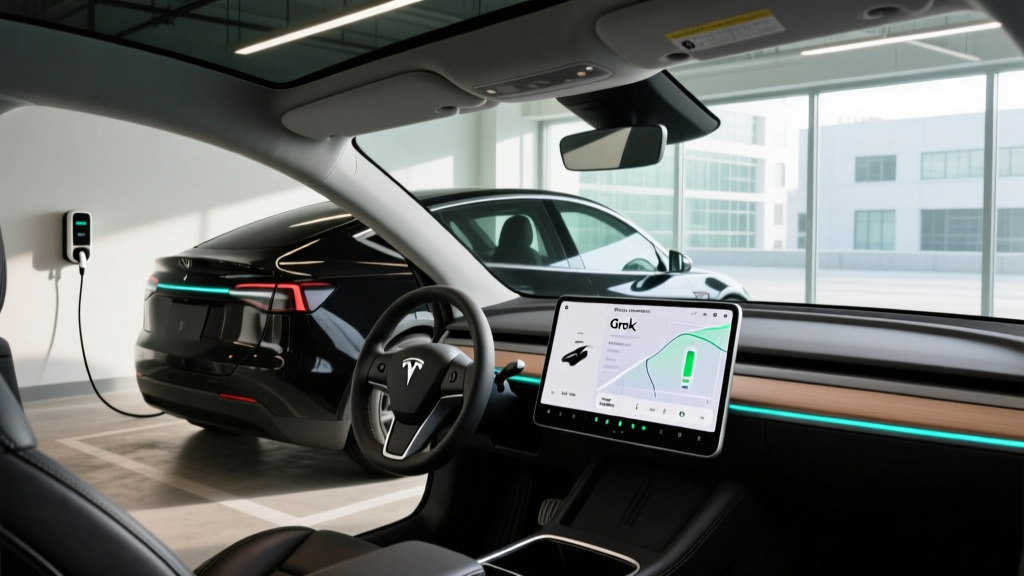
Tesla software update 2025.26 is more than a routine over-the-air patch. It marks the first deep integration of xAI's Grok conversational AI into Tesla's vehicle infotainment stack, replacing the legacy voice-command layer with a context-aware assistant that can navigate settings, plan routes with natural-language queries, summarize trip data, and even answer vehicle-spec questions while you drive. For the 2025 Model Y — Tesla's volume leader and the best-selling EV in the U.S. — this update is the most significant cabin-experience change since the refreshed interior arrived in early 2024.
But software doesn't change the physics of the battery pack or the chemistry of the cells. Below, we pair a full breakdown of what Grok actually does behind the wheel with the hard numbers every buyer still needs: real-world range, charging curves, pricing after federal tax credits, and how the 2025 Model Y stacks up against the Hyundai Ioniq 5, Ford Mustang Mach-E, and Kia EV6 in 2026.
2025 Tesla Model Y: Core Specs at a Glance
| Spec | Value |
|---|---|
| EPA Range | 320 miles |
| Battery (usable) | ~75 kWh, NMC (2170 cells) |
| Drivetrain | Dual-motor AWD |
| Horsepower | 384 hp (combined) |
| 0–60 mph | 4.8 seconds |
| Peak DC Fast Charge | 250 kW (V3 Supercharger) |
| 10–80% DC Charge Time | ~27 minutes |
| Level 2 Home Charge Rate | 11.5 kW (~44 mi/hr) |
| Efficiency | 122 MPGe combined / 28 kWh/100 mi |
| Cargo Volume (rear seats up / down) | 30.2 / 72.1 cu ft |
| Rear Legroom | 38.4 in |
| Battery & Drive Unit Warranty | 8 years / 120,000 miles |
| Base MSRP (Long Range AWD) | $44,990 |
| Performance Trim MSRP | $48,990 |
The Long Range AWD remains the volume trim. The Performance variant drops range to an EPA-estimated 293 miles but cuts the 0–60 time to 3.5 seconds and adds track-oriented suspension tuning. Both trims receive software update 2025.26 with full Grok functionality.
Real-World Range: What the EPA Sticker Doesn't Tell You
EPA Estimate: 320 miles (Long Range AWD)
Real-World Highway (70–80 mph, moderate climate): ~260–280 miles
Real-World Cold Weather (below 30°F, mixed driving): ~220–250 miles
City / Commuter Driving (with regen): ~300–315 miles
The Model Y's 320-mile EPA figure is achievable in mild conditions at moderate speeds with regenerative braking doing heavy lifting in stop-and-go traffic. However, sustained highway driving at 75+ mph pushes energy consumption to roughly 32–35 kWh/100 mi, trimming practical range to around 260–280 miles. In freezing temperatures, the NMC pack loses 15–25% of its usable capacity even with Tesla's heat pump and battery preconditioning active. If your commute is a 40-mile round trip in Minnesota in January, you'll still have plenty of buffer — but a 300-mile winter road trip will require a mid-route Supercharger stop.
According to fueleconomy.gov, the 2025 Model Y Long Range AWD achieves 122 MPGe combined, placing it among the most efficient crossover SUVs in its class, though the lighter Hyundai Ioniq 5 (114 MPGe combined with AWD) and Kia EV6 (117 MPGe combined RWD) compete closely.
Charging Speed: Supercharger Network vs. Home Level 2
| Charging Level | Power | Miles Added per Hour | Typical Use Case |
|---|---|---|---|
| Level 1 (120V household) | ~1.4 kW | ~4–5 mi/hr | Emergency / trickle top-off |
| Level 2 (240V, Wall Connector) | 11.5 kW | ~44 mi/hr | Overnight home charging (~7 hrs 10–80%) |
| DC Fast (V3 Supercharger) | 250 kW peak | ~200 mi in 15 min | Road trips, 10–80% in ~27 min |
| DC Fast (V4 Supercharger) | Up to 350 kW (future) | TBD — vehicle limited to ~250 kW acceptance | Next-gen stations; Model Y caps at 250 kW |
Tesla's V3 Supercharger network remains the gold standard for reliability in public charging. The Model Y peaks at 250 kW between roughly 10–30% state of charge, then tapers progressively — holding around 150 kW through 50%, dropping to under 100 kW past 60%, and crawling below 40 kW after 80%. This charge-curve taper is why the 10–80% time of ~27 minutes is the meaningful metric, not the peak kW number alone.
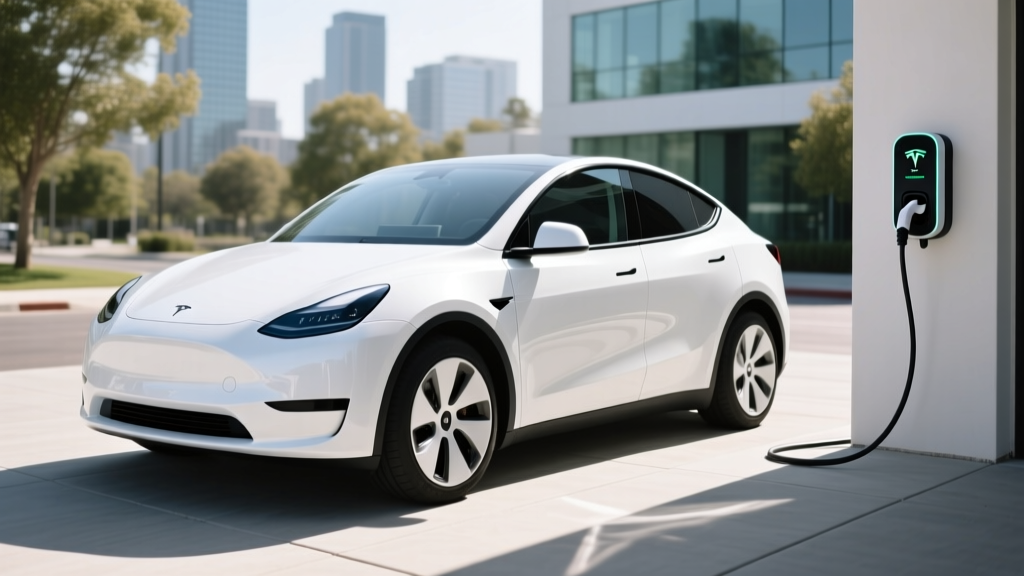
At home, the Tesla Wall Connector on a 48-amp circuit delivers 11.5 kW, adding roughly 44 miles of range per hour. A full overnight session easily replenishes a day's driving for most owners. Installation typically runs $800–$2,000 depending on whether your electrical panel needs an upgrade to support a 60-amp dedicated circuit.
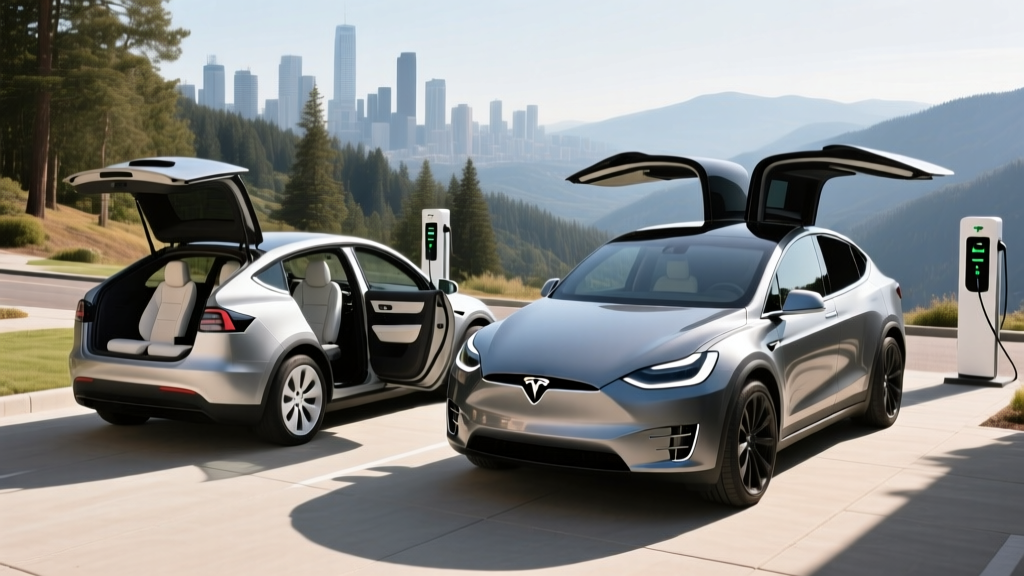
One important note for 2025–2026: Tesla has opened the Supercharger network to non-Tesla EVs via the built-in NACS adapter program, which means popular stalls may see increased wait times at peak travel corridors. Tesla owners still get priority pricing and native plug-and-charge integration.
Grok AI in the Cabin: What Software Update 2025.26 Actually Does
Software update 2025.26 replaces Tesla's previous voice-command system with Grok, the large language model developed by xAI. The integration goes well beyond "set navigation to home." Here's what it enables in practice:
- Natural-language trip planning: "Find a Supercharger near a good sushi restaurant on the way to Sacramento" — Grok cross-references charging stops with third-party POI data and suggests optimized route segments.
- Vehicle diagnostics in plain English: "Why is my range lower today?" — Grok pulls real-time data on tire pressure, ambient temperature, recent driving efficiency, and battery preconditioning status to give a contextual answer.
- Settings navigation: "Turn on cabin overheat protection and set it to activate above 105 degrees" — no more digging through nested touchscreen menus.
- Summarized trip reports: After a road trip, Grok can generate a summary of energy consumption, Supercharger stops, and cost-per-mile for the journey.
- General knowledge queries: Parked-mode access to Grok's broader knowledge base for questions about destinations, weather, or general information.
Grok runs via Tesla's LTE/5G connection and requires an active Premium Connectivity subscription ($9.99/month or $99/year). The assistant is available hands-free while driving, though complex queries that return long text responses are restricted to park mode for safety. Grok does not interact with Autopilot or Full Self-Driving (Supervised) — those systems remain SAE Level 2 driver-assistance features that require continuous driver engagement and hands-on-wheel supervision.
Pricing, Trims, and Federal Tax Credit Eligibility
| Trim | Base MSRP | Est. Destination | Max §30D Credit | Effective Price (if eligible) |
|---|---|---|---|---|
| Long Range AWD | $44,990 | $1,390 | Up to $7,500 | ~$38,880 |
| Performance AWD | $48,990 | $1,390 | Up to $7,500 | ~$42,880 |
The 2025 Model Y is priced below the IRS §30D MSRP cap of $80,000 for SUVs, which is the first hurdle. However, qualifying for the full $7,500 federal tax credit depends on several factors that change frequently:
- Buyer income caps: Modified adjusted gross income must not exceed $150,000 (single), $225,000 (head of household), or $300,000 (joint filers).
- Battery component sourcing: A percentage of battery components must be manufactured or assembled in North America, and critical minerals must be sourced from the U.S. or free-trade-agreement partners. These thresholds increase annually under the Inflation Reduction Act.
- Point-of-sale transfer: As of 2024, eligible buyers can transfer the credit to the dealer at purchase, reducing the out-of-pocket price immediately rather than waiting for a tax refund.
Tesla's battery supply chain has shifted significantly toward North American and FTA-partner sourcing, and the Model Y has consistently qualified for at least a partial credit. However, the exact credit amount ($3,750 vs. $7,500) depends on the current critical-minerals and battery-component thresholds for the delivery date. Always verify current eligibility on IRS.gov or via Tesla's checkout page before purchasing. State incentives (California, Colorado, New York, and others) may stack on top — check your state's energy office for current programs.
Interior, Cargo, and Daily Livability
The 2025 Model Y's cabin remains minimalist: a single 15.4-inch touchscreen handles all infotainment, climate, and vehicle controls. The refresh added ventilated front seats, ambient lighting, a rear-seat touchscreen for passengers, and improved sound insulation. Build quality has closed much of the gap with legacy automakers, though panel consistency still varies by factory (Austin vs. Shanghai-sourced vehicles).
Cargo space is a genuine strength: 30.2 cubic feet behind the second row and 72.1 cubic feet with seats folded makes the Model Y one of the most practical crossovers in its class, rivaled only by the Hyundai Ioniq 5 (with its sliding rear bench) and the slightly larger Kia EV9. The front trunk (frunk) adds 4.1 cubic feet for charging cables or a small bag.
Rear legroom at 38.4 inches is adequate for adults on longer trips, though the sloping roofline cuts into headroom for passengers over 6 feet. The panoramic glass roof provides an airy feel but contributes to cabin heat in summer — Tesla's cabin overheat protection (now voice-activatable via Grok) helps mitigate this when parked.
How It Compares: Model Y vs. Key Rivals
| Spec | Tesla Model Y LR AWD | Hyundai Ioniq 5 Limited AWD | Ford Mustang Mach-E ER AWD | Kia EV6 GT-Line AWD |
|---|---|---|---|---|
| EPA Range | 320 mi | 290 mi | 308 mi | 282 mi |
| Battery (usable) | ~75 kWh NMC | 77.4 kWh NMC | 91 kWh NMC | 77.4 kWh NMC |
| Peak DC Charge | 250 kW | 350 kW | 150 kW | 350 kW |
| 10–80% Time | ~27 min | ~18 min | ~45 min | ~18 min |
| 0–60 mph | 4.8 sec | 5.1 sec | 5.1 sec | 5.2 sec |
| Base MSRP (comparable trim) | $44,990 | $52,600 | $48,995 | $51,900 |
| Charging Network | NACS (Supercharger native) | CCS → NACS adapter | CCS → NACS adapter | CCS → NACS adapter |
The Model Y's advantages remain pricing, Supercharger network access, efficiency, and now Grok integration. The Ioniq 5 and EV6 charge significantly faster on 800V architecture (18 minutes 10–80% vs. 27 minutes), which matters on road trips with multiple stops. The Mach-E offers a more conventional interior layout that some buyers prefer, but its slower 150 kW peak charge rate is a notable weakness for highway travel.
- Best-in-class Supercharger network (native NACS)
- Top efficiency — 122 MPGe combined
- Grok AI adds genuinely useful voice control
- Strong cargo capacity (72.1 cu ft max)
- Competitive pricing before incentives
- OTA updates continuously add features
- 250 kW peak charge rate trails 800V rivals
- Minimalist interior not for everyone
- Requires Premium Connectivity for full Grok
- Rear headroom limited by roofline
- No Apple CarPlay / Android Auto
- Insurance costs above segment average
Who Should Buy the 2025 Model Y (and Who Shouldn't)
Choose the Model Y if:
- You rely on road-trip charging and value Supercharger reliability above all else
- You want the most efficient crossover in the segment for daily commuting
- Tech-forward features like Grok AI and OTA updates appeal to you
- You need strong cargo space for family gear, bikes, or camping equipment
- You want a price point under $40K after federal tax credit
Look elsewhere if:
- Fastest possible DC charging is your priority (Ioniq 5 / EV6 at 18 min 10–80%)
- You prefer physical buttons, a traditional instrument cluster, or CarPlay
- You regularly carry tall rear passengers who need headroom
- You tow frequently (3,500-lb capacity is adequate but not class-leading)
Frequently Asked Questions
What is the real-world range of the 2025 Tesla Model Y?
The EPA rates the Long Range AWD at 320 miles. In real-world highway driving at 70–80 mph, expect 260–280 miles. In freezing winter conditions, range drops to approximately 220–250 miles due to battery chemistry limitations and cabin heating demands, even with Tesla's heat pump system.
How fast does the Model Y charge at home and on the road?
On a Level 2 home charger (Tesla Wall Connector at 11.5 kW), the Model Y adds about 44 miles of range per hour, fully replenishing overnight. On a V3 Supercharger at 250 kW peak, it charges from 10–80% in approximately 27 minutes, though the charge curve tapers significantly above 60% SoC.
How much does the Model Y cost after federal tax credits?
The Long Range AWD starts at $44,990 plus destination. If you meet all IRS §30D requirements (income caps, battery sourcing thresholds), the effective price can drop to approximately $38,880 via point-of-sale credit transfer. Verify current eligibility at IRS.gov as sourcing rules tighten annually.
Does the Model Y qualify for the full $7,500 federal EV tax credit?
The Model Y is under the $80,000 SUV MSRP cap. Full credit eligibility depends on the buyer's income (under $150K single / $300K joint) and Tesla's current battery-component and critical-minerals sourcing compliance. The credit amount can be $3,750 or $7,500 depending on which sourcing thresholds are met at the time of delivery. Tesla's checkout page and IRS guidance provide real-time eligibility info.
What does Grok AI do in software update 2025.26?
Grok replaces the legacy voice-command system with a conversational AI that handles natural-language trip planning, vehicle diagnostics queries, settings adjustments, and trip summaries. It requires Premium Connectivity ($9.99/month) and operates hands-free while driving, though complex text responses are restricted to park mode. Grok does not control or interact with Autopilot or FSD (Supervised).
Is the Model Y worth buying vs. the Ioniq 5 or Mach-E?
The Model Y wins on efficiency, Supercharger network access, cargo space, and pricing. The Ioniq 5 and EV6 win on DC charging speed (18 min vs. 27 min 10–80%) thanks to 800V architecture. The Mach-E appeals to buyers who want a more traditional cabin layout. If road-trip charging reliability is your top priority, the Model Y's native NACS Supercharger integration remains the strongest advantage in 2026.
What is the battery warranty on the 2025 Model Y?
Tesla covers the battery pack and drive units for 8 years or 120,000 miles (whichever comes first) with a minimum 70% capacity retention threshold. This is competitive with Hyundai/Kia's 10-year/100,000-mile battery warranty, though Tesla's mileage limit is higher. Real-world degradation data from Tesla's fleet shows most packs retain 85–90% capacity at 100,000 miles.