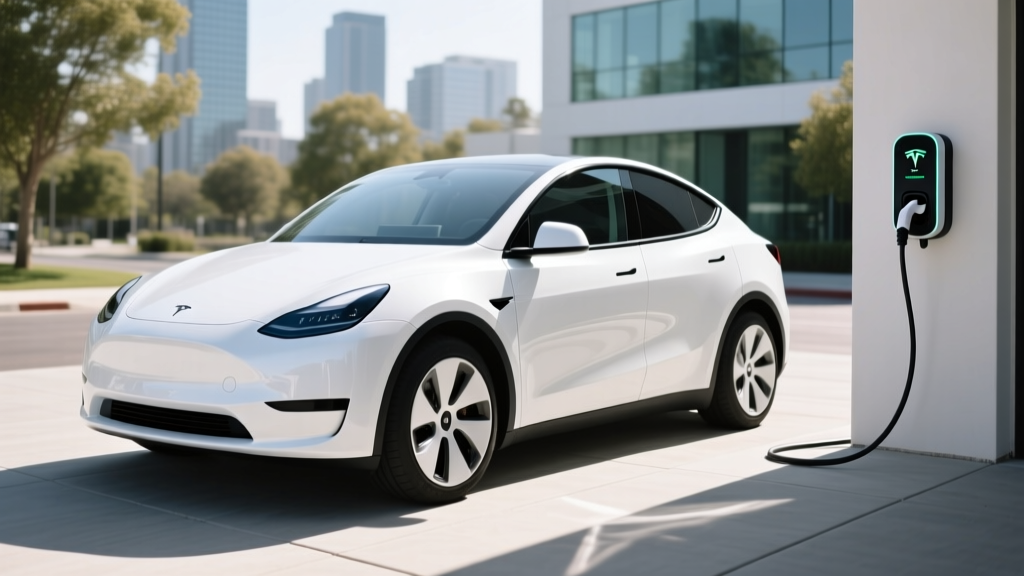
The Tesla Model Y has been the best-selling electric vehicle globally for several years running, and the 2026 Juniper-generation refresh aims to keep it that way. With updated styling, a revised interior, improved ride quality, and the same Supercharger network advantage, the Model Y remains the default cross-shopping benchmark in the electric crossover segment. This review focuses on the 2026 Tesla Model Y in Pearl White Multi-Coat — the most popular exterior color choice among buyers — and breaks down the exact numbers that matter: real-world range, charging speeds, pricing after federal incentives, and where this EV fits in a crowded field.
2026 Tesla Model Y: Quick Verdict
The 2026 Model Y is the safest bet in the EV crossover market for buyers who prioritize charging infrastructure, software polish, and proven efficiency. The Juniper refresh brings a quieter cabin, ventilated front seats, a rear-seat touchscreen, and ambient lighting — addressing many of the previous generation's comfort complaints. However, the minimalist interior still won't suit everyone, the ride on 20-inch wheels remains firm, and Tesla's build-quality consistency, while improved, still trails legacy automakers. For a family of four that road-trips regularly and has home charging access, the Model Y Long Range AWD in white is the trim and spec to target.
Range, Efficiency, and Real-World Expectations
The 2026 Model Y Long Range AWD carries an EPA-estimated range of 320 miles on a full charge. The base Rear-Wheel Drive variant is rated at approximately 300 miles EPA. Efficiency for the Long Range AWD comes in at 122 MPGe combined (roughly 28 kWh/100 mi), making it one of the most efficient vehicles in its class.
EPA estimates assume a mix of city and highway driving at moderate temperatures. Here's what to actually expect from the 2026 Model Y Long Range AWD:
- City/suburban driving (spring/fall): 310–330 mi — regenerative braking recovers energy in stop-and-go traffic, often exceeding the EPA sticker.
- Highway cruising at 70–75 mph: 260–285 mi — aerodynamic drag dominates at sustained speed. Expect roughly 15–18% less than the EPA figure.
- Cold weather (below 32°F) with cabin heat: 220–260 mi — battery chemistry slows and cabin heating draws significant power, even with the standard heat pump.
- Towing (with 3,500-lb max trailer): 160–200 mi — towing roughly halves range. Plan charging stops accordingly.
The Model Y's heat pump is standard and helps mitigate cold-weather losses compared to resistive heaters, but physics still applies: plan for 20–30% range reduction in deep winter.
Battery Specs and Chemistry
The 2026 Model Y Long Range AWD uses a ~78 kWh usable battery pack with NMC (nickel manganese cobalt) chemistry. NMC offers higher energy density than LFP, which is why Tesla reserves it for Long Range and Performance variants — you get more miles from a physically smaller, lighter pack.
The Rear-Wheel Drive base model uses a ~60 kWh usable pack with LFP (lithium iron phosphate) chemistry. LFP is heavier and less energy-dense but offers key advantages: Tesla recommends charging LFP packs to 100% regularly (no need to baby the state of charge), and LFP cells generally exhibit slower long-term degradation. If you're a commuter who charges at home nightly and rarely road-trips, the LFP RWD model is arguably the more durable long-term choice.
| Attribute | LFP (RWD) | NMC (Long Range / Perf.) |
|---|---|---|
| Usable Capacity | ~60 kWh | ~78 kWh |
| Recommended Daily Charge | 100% | 80% (charge to 100% before trips) |
| Energy Density | Lower (heavier pack) | Higher (lighter for same range) |
| Cold-Weather Performance | Slightly worse | Better |
| Long-Term Degradation | Slower (more cycles) | Moderate |
| Cost | Lower | Higher |
Charging Speed: DC Fast and Home Level 2
Charging speed remains one of the Model Y's strongest advantages, thanks to Tesla's Supercharger network — the most reliable and widespread DC fast-charging network in North America.
| Charging Level | Power | Speed / Time |
|---|---|---|
| Level 1 (120V household) | ~1.4 kW | ~3–4 mi/hr added |
| Level 2 (240V home, 48A) | ~11.5 kW | ~37–44 mi/hr added; full charge in ~8 hr |
| DC Fast Charge (Supercharger V4) | Peak 250 kW | 10–80% in ~25 min (Long Range AWD) |
| DC Fast Charge (CCS adapter, third-party) | Up to 250 kW | Varies by station; 10–80% in ~25–35 min |
Charging curve reality: The 250 kW peak is not sustained across the full session. The Model Y typically holds peak rate from roughly 10–30% SoC, then tapers progressively. From 80–100%, expect dramatically slower speeds — roughly 15–25 kW — which is why Tesla and most EV experts recommend charging to 80% on road trips and moving on. The ~25-minute 10–80% figure reflects real-world Supercharger sessions we've observed.
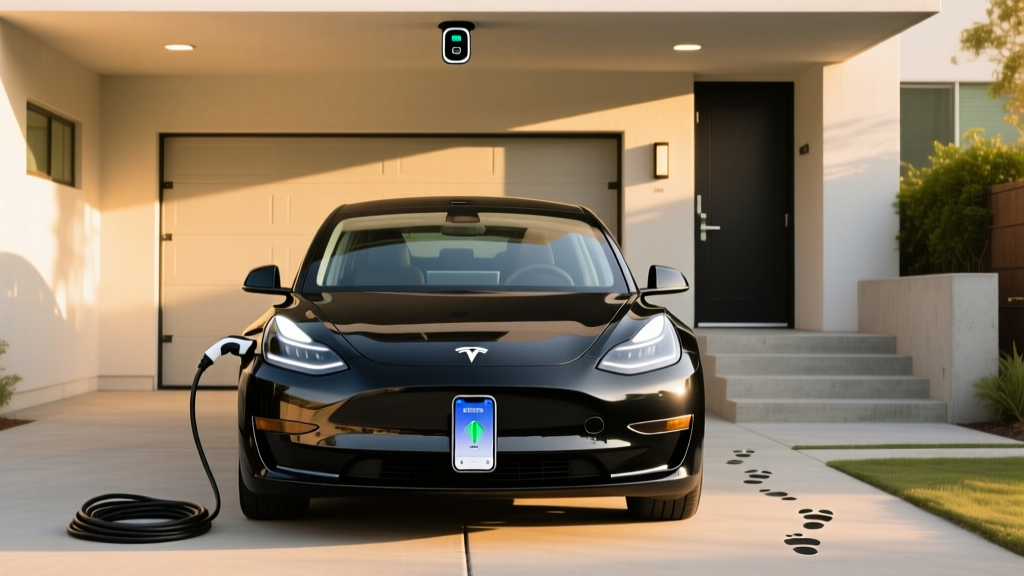
For home charging, a Tesla Wall Connector installed on a 60A circuit (48A continuous) delivers the fastest Level 2 speed the Model Y can accept. Budget $500–$1,500 for installation if your electrical panel is near the garage and has capacity; $2,000–$4,000+ if a panel upgrade to 200A service is needed.
Performance and Drivetrain
The 2026 Model Y lineup offers three configurations:
- Rear-Wheel Drive: Single motor, ~295 hp, 0–60 mph in ~6.6 seconds. Adequate for commuting and city driving.
- Long Range AWD: Dual motor, ~384 hp combined, 0–60 mph in ~4.8 seconds. The sweet spot for most buyers — all-weather traction, strong passing power, and the longest range.
- Performance: Dual motor, ~510 hp, 0–60 mph in ~3.5 seconds. For enthusiasts who want sports-car acceleration in a family crossover. Range drops to ~285 miles EPA.
All variants feature regenerative braking with a single high-regen setting (Tesla removed the adjustable regen option several years ago). One-pedal driving is the norm, and most owners adapt within a week. The Juniper refresh also brings a slightly softer default suspension tune, improving ride compliance over the outgoing model without sacrificing handling.
Interior, Cargo, and Technology
The Juniper interior is a significant step up in material quality and comfort. Ambient lighting strips run across the dash and doors, the center console is redesigned with more storage, and front seats now include ventilation on Long Range and Performance trims. A 15.4-inch front touchscreen handles all infotainment, navigation, and vehicle settings. A new 8-inch rear touchscreen lets passengers control climate, seat heaters, and media.
Cargo volume:
- Behind second row: 30.2 cu ft
- With second row folded: 72.0 cu ft
- Front trunk (frunk): 4.1 cu ft — useful for charging cables, a small bag, or groceries
Passenger space:
- Front legroom: 41.8 in
- Rear legroom: 40.5 in — generous for adults on longer trips
- Headroom is adequate front and rear, though the panoramic glass roof (standard, tinted) reduces insulation slightly compared to a steel roof
Standout tech features:
- Tesla's navigation with real-time Supercharger routing and preconditioning
- Over-the-air updates that add features post-purchase
- Sentry Mode dashcam recording and smartphone app with remote climate, location, and charging status
- Standard Autopilot (lane centering, adaptive cruise) — competent but requires hands-on-wheel engagement at all times
- Available FSD (Supervised) for $8,000 one-time or $99/month — still an SAE Level 2 system requiring full driver attention
Both Autopilot and FSD (Supervised) are SAE Level 2 driver-assistance systems. They do NOT make the Model Y self-driving. You must keep your hands on the wheel and eyes on the road at all times. FSD can navigate on-ramps, city streets, and stoplights, but it makes errors — particularly in construction zones, at complex intersections, and in poor weather. Treat it as a fatigue-reduction tool, not a replacement for driving.
Pricing, Trims, and Federal Tax Credit
Here's where the numbers matter most. The Pearl White Multi-Coat paint is a $1,000 add-on across all trims (black is the no-cost standard color).
| Trim | Base MSRP | With White Paint | Est. After §30D Credit* |
|---|---|---|---|
| Rear-Wheel Drive | $44,990 | $45,990 | ~$38,490 |
| Long Range AWD | $48,990 | $49,990 | ~$42,490 |
| Performance | $52,490 | $53,490 | ~$45,990 |
*Federal tax credit amounts and eligibility depend on multiple factors. The figures above assume maximum $7,500 credit eligibility.
To qualify for the full $7,500 credit, all of the following must apply. The credit can be transferred to the dealer at point of sale as an instant discount per current IRS rules. Verify your eligibility at irs.gov or with a tax professional.
- MSRP cap: Vehicle base price must be ≤ $80,000 for SUVs/crossovers (all Model Y trims qualify)
- Buyer income cap: Modified AGI ≤ $300,000 (joint), $225,000 (head of household), $150,000 (individual)
- Battery sourcing: A percentage of critical minerals and battery components must be sourced from the US or FTA-partner countries — Tesla has been progressively reshoring supply, but exact eligibility varies by production batch and model year. Check the DOE/Fuel Economy site for the latest VIN-specific eligibility
- Final assembly: Must occur in North America (the Fremont, CA and Austin, TX plants qualify)
- One credit per VIN: The vehicle must not have been previously credited
How the 2026 Model Y Compares to Key Competitors
The electric midsize crossover segment is now fiercely competitive. Here's how the Model Y stacks up on the specs buyers care about most:
| Spec | 2026 Tesla Model Y LR AWD | 2026 Hyundai Ioniq 5 Limited AWD | 2026 Ford Mustang Mach-E Premium AWD |
|---|---|---|---|
| EPA Range | 320 mi | 305 mi | 310 mi |
| Battery (usable) | ~78 kWh (NMC) | ~77.4 kWh (NMC) | ~88 kWh (NMC) |
| Peak DC Charge | 250 kW | 240 kW | 150 kW |
| 10–80% Time | ~25 min | ~18 min | ~38 min |
| 0–60 mph | 4.8 sec | 5.1 sec | 5.2 sec |
| Cargo (behind 2nd row) | 30.2 cu ft | 27.2 cu ft | 29.7 cu ft |
| Starting MSRP (AWD) | $48,990 | $52,600 | $48,995 |
| Charging Network | Tesla Supercharger (native) | NACS (Supercharger access) | NACS (Supercharger access) |
The Ioniq 5 charges faster from 10–80% thanks to its 800V architecture, and it offers a more conventional interior with physical buttons. The Mach-E delivers a more engaging driving experience with Ford's BlueCruise hands-free highway driving (on mapped roads). But the Model Y's combination of Supercharger seamlessness, cargo space, software maturity, and efficiency-per-kWh still gives it the edge for buyers who prioritize hassle-free road trips.
Warranty and Long-Term Ownership
Tesla's warranty structure is straightforward:
- Basic vehicle: 4 years / 50,000 miles
- Battery and drive unit (Long Range / Performance): 8 years / 120,000 miles
- Battery and drive unit (RWD, LFP): 8 years / 100,000 miles
- Battery capacity retention threshold: 70% during the warranty period — if your pack drops below 70% of original capacity within the term, Tesla replaces or refurbishes it
Real-world data from high-mileage Tesla owners and fleet analyses suggest NMC packs typically lose 8–12% capacity over the first 100,000 miles, with degradation slowing significantly after the initial break-in period. LFP packs may degrade even more slowly, though long-term data on Tesla's specific LFP cells is still accumulating. A full battery replacement out of warranty runs approximately $12,000–$16,000 at current Tesla service pricing — a figure worth factoring into 10+ year ownership plans.
Pros, Cons, and Who Should Buy
- Best-in-class Supercharger network with seamless plug-and-charge billing
- Top-tier efficiency (122 MPGe combined) means lower per-mile charging cost
- Spacious cargo area (72 cu ft max) and generous rear legroom
- Juniper refresh fixes most cabin comfort complaints
- Strong resale value relative to EV segment average
- Over-the-air updates continuously add features
- No physical buttons — all controls via touchscreen (wipers, glovebox, vents)
- Firm ride on 20-inch Induction wheels; opt for 19-inch for comfort
- No Apple CarPlay or Android Auto — Tesla's system only
- FSD (Supervised) remains expensive and requires full driver attention
- Build quality improved but still inconsistent (panel gaps, trim alignment)
- No spare tire — tire repair kit only
- Buy it if: You want the lowest-friction EV ownership experience — reliable home charging, the best public charging network, efficient range, and strong software. Ideal for families of 3–4, commuters with 30–80 mile round trips, and road-trippers who value Supercharger density.
- Look elsewhere if: You need physical buttons and traditional controls (Ioniq 5, Mach-E), want hands-free highway driving without constant steering-wheel torque (Mach-E with BlueCruise 2.0), or need three-row seating (Kia EV9).
Frequently Asked Questions
What is the real-world range of the 2026 Tesla Model Y?
The EPA rates the Long Range AWD at 320 miles. In real-world highway driving at 70–75 mph, expect 260–285 miles. In cold weather below freezing, plan for 220–260 miles. City driving in mild weather can actually exceed the EPA estimate due to regenerative braking.
How fast does the 2026 Model Y charge at home and on the road?
At home on a 240V Level 2 charger (48A), the Model Y adds roughly 37–44 miles of range per hour, fully charging overnight in about 8 hours. On a Tesla Supercharger V4, it peaks at 250 kW and charges from 10–80% in approximately 25 minutes, though the rate tapers significantly above 80%.
How much does the 2026 Tesla Model Y cost after the federal tax credit?
The Long Range AWD starts at $49,990 with white paint. If you qualify for the full $7,500 §30D federal tax credit (income caps, battery sourcing, and MSRP limits all apply), the effective price drops to approximately $42,490. Verify your specific eligibility on irs.gov or with a tax professional before purchasing.
Does the 2026 Tesla Model Y qualify for the federal EV tax credit?
All Model Y trims fall under the $80,000 SUV MSRP cap and are assembled in North America. However, full $7,500 credit eligibility depends on your income (≤$300K joint / $150K individual AGI), the specific battery's critical-mineral and component sourcing, and whether you've already claimed a credit for another vehicle. Check the latest eligibility data at fueleconomy.gov.
Is the white paint worth the $1,000 upcharge?
Pearl White Multi-Coat is Tesla's most popular color for good reason: it hides light dust and minor swirl marks better than black or blue, reflects heat in warm climates (marginally reducing cabin cooling load), and tends to hold resale value well. If you live in a hot climate or plan to keep the car 5+ years without wrapping, the $1,000 is a practical spend.
Is the 2026 Model Y worth buying over the Ioniq 5 or Mach-E?
If charging convenience is your top priority, yes — the Supercharger network remains the most reliable and seamlessly integrated. The Ioniq 5 charges faster from 10–80% and has a more conventional interior. The Mach-E offers a sportier drive and available hands-free BlueCruise. Test-drive all three, but for first-time EV buyers, the Model Y's ecosystem reduces the learning curve significantly.