Why Tesla Snow Driving Deserves a Closer Look
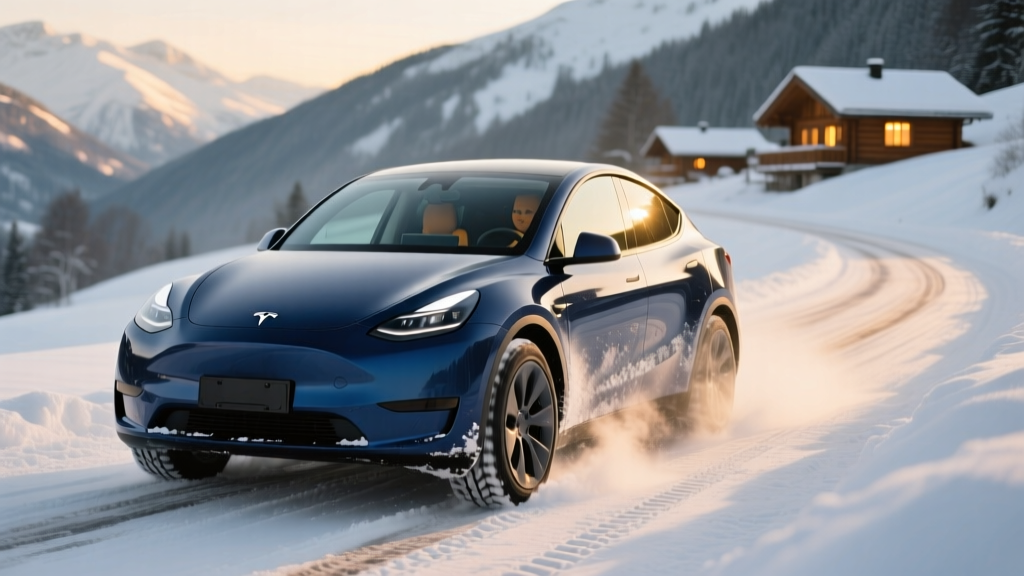
Search forums or EV owner groups in January and you'll find the same question repeating: Can I actually drive a Tesla in snow? The short answer is yes — but with significant caveats that Tesla's marketing materials gloss over. Winter changes everything about EV ownership: range contracts, charging slows, regenerative braking behaves differently on ice, and the margin for error shrinks.
This guide evaluates the current Tesla lineup — Model 3, Model Y, Model S, Model X, and Cybertruck — through the lens of real-world snow and cold-weather performance. We'll cover traction systems, actual winter range loss (not just EPA stickers), how cold temperatures affect DC fast charging, and which model makes the most sense if you live above the 37th parallel.
Which Tesla Models Handle Snow Best?
Tesla offers dual-motor all-wheel drive across its lineup, but not all AWD systems are created equal for winter conditions. Here's how the current lineup stacks up for snow-bound drivers.
| Model | AWD Type | Ground Clearance | EPA Range (AWD) | 0-60 mph | Base MSRP |
|---|---|---|---|---|---|
| Model 3 Long Range AWD | Dual Motor | 5.5 in | 363 mi | 4.2 sec | $47,740 |
| Model Y Long Range AWD | Dual Motor | 6.6 in | 320 mi | 4.8 sec | $48,630 |
| Model S Long Range | Dual Motor | 5.0 in | 402 mi | 3.1 sec | $79,990 |
| Model X Long Range | Dual Motor | 8.1 in | 335 mi | 3.8 sec | $79,990 |
| Cybertruck AWD | Dual Motor | 16.0 in (Extract Mode) | 340 mi | 4.1 sec | $79,990 |
The traction advantage: Tesla's dual-motor AWD uses independent front and rear motors with no mechanical linkage. Torque distribution adjusts in milliseconds — faster than any mechanical transfer case. In practice, this means excellent traction from a stop and strong hill-climbing ability. The low center of gravity from the floor-mounted battery pack further aids stability.
The ground clearance problem: Sedans (Model 3, Model S) sit low. If your area gets more than 6-8 inches of unplowed accumulation, you'll be scraping. The Model Y's 6.6 inches is adequate for most suburban winter driving. The Cybertruck's adjustable air suspension in Extract Mode offers 16 inches — genuinely capable in deep snow — but at an $80K+ price point that prices out most buyers.
Best overall for snow: The Model Y Long Range AWD hits the sweet spot: adequate ground clearance, strong range buffer for winter losses, reasonable pricing, and cargo space for winter gear. If budget allows and you face serious snow depth, the Model X or Cybertruck's air suspension is a meaningful advantage.
Real-World Winter Range: What the EPA Sticker Doesn't Tell You
EPA range estimates are calculated at roughly 72°F with climate control in a moderate setting. Winter breaks those assumptions entirely. Battery chemistry slows, cabin heating draws substantial power (especially without a heat pump), and increased rolling resistance from snow and slush compounds the problem.
Cold-Weather Range Reality Check
Model Y Long Range AWD — EPA: 320 miles
- Mild winter (40-50°F, dry roads): ~270-290 miles (10-15% loss)
- Cold winter (20-30°F, mixed highway/city): ~230-260 miles (20-28% loss)
- Severe cold (below 15°F, highway speeds, heater on): ~190-220 miles (30-40% loss)
- Extreme cold (below 0°F, short trips): Potentially 40-50% loss due to repeated cabin warm-up cycles
Source: Aggregated owner data from fueleconomy.gov and real-world testing by EV owners in northern US and Canadian climates.
Why the loss is so large: Lithium-ion batteries operate less efficiently in cold temperatures because the electrolyte becomes more viscous, increasing internal resistance. Simultaneously, heating the cabin in an EV draws 3-6 kW continuously — energy that a gas car gets "free" from waste engine heat. Tesla's heat pump (standard on all current models) improves this dramatically over resistive heating, cutting cabin heating energy by roughly 30-50%, but the draw is still significant.
Short-trip penalty: If your commute is 10 miles each way in 10°F weather, the car spends most of its energy warming the cabin and battery, not moving you. Range loss on short winter trips can exceed 50%. This is physics, not a Tesla flaw — it affects all EVs — but it matters for planning.
Battery Chemistry and Cold Performance: LFP vs. NMC
Tesla uses two battery chemistries across its lineup, and this matters for winter:
| Factor | LFP (Standard Range/RWD) | NMC/NCA (Long Range/Performance) |
|---|---|---|
| Models using it | Model 3 RWD, Model Y RWD | Model 3 LR, Model Y LR, Model S, Model X, Cybertruck |
| Energy density | Lower (~160 Wh/kg) | Higher (~250 Wh/kg) |
| Cold range loss | Slightly worse (LFP more sensitive to cold) | Better cold retention |
| Charging to 100% | Recommended regularly (helps BMS calibration) | Daily limit 80% for longevity |
| Winter charging speed impact | More pronounced taper in cold | Moderate taper in cold |
| Overall winter suitability | Adequate but more range loss | Better choice for cold climates |
Bottom line for snow-country buyers: Choose a Long Range (NMC/NCA) model over the Standard Range (LFP) if winter is a major concern. The higher energy density gives you a larger buffer, and NMC chemistry handles cold charging more gracefully. The RWD-only Standard Range models also lack the dual-motor AWD you'll want in snow.
Cold-Weather Charging: How Winter Slows You Down
Charging speed is not a fixed number. The peak kW rating on Tesla's spec sheet is achieved only with a warm battery at an optimal state of charge. In winter, the battery arrives at a Supercharger cold — and cold lithium-ion cells cannot accept charge as quickly without risking lithium plating (permanent damage). Tesla's Battery Management System (BMS) throttles charge rate to protect the pack.
Preconditioning: The Single Most Important Winter Charging Feature
When you navigate to a Supercharger using the Tesla's built-in navigation, the car automatically begins preconditioning — warming the battery to an optimal temperature (roughly 95-105°F) before you arrive. This is critical. Without preconditioning, a cold-soaked battery at 20°F might accept only 30-50 kW at a 250 kW Supercharger, turning a 20-minute stop into a 50-minute ordeal.
Always navigate to the Supercharger using the car's nav system, even if you know the route. This triggers preconditioning. If you drive to a charger without the nav routing you there, the battery will arrive cold and charging will be painfully slow.
| Charging Method | Peak Power | Warm Battery 10-80% | Cold Battery (no precondition) 10-80% |
|---|---|---|---|
| Tesla V3 Supercharger (250 kW) | 250 kW | ~15-20 min (Model 3/Y LR) | 40-60+ min (severely throttled) |
| Tesla V4 Supercharger (newer stalls) | Up to 350 kW (compatible models) | ~12-18 min (where supported) | Still throttled without preconditioning |
| Home Level 2 (Tesla Wall Connector, 48A/11.5 kW) | 11.5 kW | ~44 mi/hr (Model Y) | Similar speed (Level 2 less affected by cold) |
| Level 1 (120V household outlet) | ~1.4 kW | ~3-5 mi/hr | ~3-5 mi/hr (negligible cold impact at this rate) |
Real-world Supercharger winter experience: With proper preconditioning (navigating via the car's system), expect 10-80% charges in roughly 20-28 minutes at a V3 Supercharger in freezing temperatures — about 20-30% slower than ideal conditions. Without preconditioning, expect double or more.
Home charging in winter: Level 2 charging speed is far less affected by cold temperatures because the charge rate is low enough that the BMS doesn't need to throttle. If you have a garage, you're largely unaffected. If your charger is outdoors in sub-zero temps, expect the first 10-20 minutes of a charge session to be slower as the battery warms itself using grid power.
Tesla's Winter-Specific Tech: What Helps and What Doesn't
Features That Genuinely Help in Snow
- Dual Motor AWD with traction control: Independent motor torque vectoring reacts faster than mechanical AWD systems. Excellent for maintaining traction on packed snow and ice from a stop.
- Heat pump (all current models): Dramatically more efficient than resistive cabin heating. Draws roughly 1-3 kW for cabin heat versus 4-6 kW for resistive elements. This alone saves 15-25% of winter range versus older Teslas without heat pumps.
- Preconditioning and scheduled departure: Set a departure time and the car warms the battery and cabin while still plugged in — using grid power, not battery. You leave with a warm car and full range.
- Heated seats and steering wheel (all trims): Heated seats draw far less power (~100W per seat) than heating the entire cabin air. Using seat heaters and lowering the cabin temp to 65°F instead of 72°F can reclaim 10-15 miles of range on a cold commute.
- Slip Start mode: Available in the vehicle settings, this allows a small amount of wheel slip to help dig out of deep snow or ice — useful when traction control is too aggressive for the conditions.
- Chill Mode (performance models): Limits acceleration, which can be helpful on icy roads where instant EV torque is a liability.
Features With Limitations in Winter
⚠ Autopilot & FSD in Winter Conditions
Tesla's Autopilot and Full Self-Driving (Supervised) are SAE Level 2 driver-assistance systems. They require continuous driver supervision at all times. In winter conditions, their limitations are amplified:
- Snow-covered lane markings: The vision system relies on visible lane lines. Fresh snow covering lanes will cause Autopilot to disengage or behave unpredictably.
- Sensor obstruction: Heavy snow, slush spray, and ice buildup on cameras degrade system performance. Tesla's camera-only approach (no radar or lidar since 2022) is more vulnerable to weather obstruction than sensor-fused competitors.
- Reduced following distance judgment: On icy roads, the car's standard following distance may not account for dramatically increased stopping distances.
- Regenerative braking on ice: Strong regen can cause the rear wheels to lose traction on ice. Tesla allows you to reduce regen strength — set it to "Low" in winter for smoother deceleration.
Never rely on Autopilot or FSD as a substitute for attentive winter driving. You are the driver. Keep hands on the wheel and eyes on the road.
Winter Efficiency and Operating Costs
Efficiency drops noticeably in cold weather. Here's what to expect from the most popular snow-driving Tesla, the Model Y Long Range AWD:
| Metric | Summer (70°F) | Winter (25°F) |
|---|---|---|
| EPA Combined MPGe | 111 MPGe | N/A (EPA does not rate cold separately) |
| Real-world kWh/100 mi | ~28-30 kWh/100 mi | ~35-42 kWh/100 mi |
| Cost per mile (at $0.15/kWh home rate) | ~$0.042/mi | ~$0.056/mi |
| Cost per mile (at $0.35/kWh Supercharger rate) | ~$0.098/mi | ~$0.130/mi |
Even with winter efficiency penalties, home-charged Tesla driving remains significantly cheaper per mile than gasoline. At $3.50/gallon and 25 MPG combined, a comparable gas SUV costs roughly $0.14/mile — comparable to Supercharger rates in summer, but substantially more expensive than home charging even in winter.
Tire note: Tesla ships with all-season or summer performance tires from the factory. If you drive in snow regularly, budget $800-$1,400 for a set of dedicated winter tires (e.g., Nokian Hakkapeliitta, Michelin X-Ice). Winter tires transform a Tesla from "adequate in snow" to "genuinely confident." The AWD system can only work with the grip the tires provide.
Pricing, Tax Credits, and Total Cost for Snow-Country Buyers
| Model / Trim | Base MSRP | §30D Credit Eligible? | Effective Price (if eligible) |
|---|---|---|---|
| Model 3 RWD | $38,990 | Yes — up to $7,500 (subject to income + sourcing rules) | ~$31,490 |
| Model 3 Long Range AWD | $47,740 | Yes — up to $7,500 | ~$40,240 |
| Model Y RWD | $44,990 | Yes — up to $7,500 | ~$37,490 |
| Model Y Long Range AWD | $48,630 | Yes — up to $7,500 | ~$41,130 |
| Model S Long Range | $79,990 | No — exceeds $55,000 sedan MSRP cap | $79,990 |
| Model X Long Range | $79,990 | Yes — SUV MSRP cap is $80,000 | ~$72,490 |
| Cybertruck AWD | $79,990 | Yes — classified as truck ($80,000 cap) | ~$72,490 |
Federal tax credit (§30D) rules to know: Per IRS guidelines, eligibility depends on multiple factors:
- Buyer income caps: Modified AGI cannot exceed $300,000 (joint), $225,000 (head of household), or $150,000 (single).
- MSRP caps: $55,000 for sedans; $80,000 for SUVs, vans, and trucks.
- Battery sourcing: The $7,500 credit splits into $3,750 for critical minerals sourcing and $3,750 for battery component manufacturing. Sourcing requirements tighten annually. Verify current-year compliance on Tesla's website and fueleconomy.gov.
- Point-of-sale transfer: As of 2024, you can transfer the credit to the dealer at purchase, reducing your out-of-pocket cost immediately rather than waiting for a tax refund.
Tax rules change. Consult a tax professional and verify eligibility at purchase time.
Spec Table: Tesla Model Y Long Range AWD — The Snow-Country Pick
| Specification | Value |
|---|---|
| EPA Range | 320 miles |
| Real-World Winter Range (25°F) | ~230-260 miles |
| Battery Capacity | ~75 kWh usable (NMC/NCA chemistry) |
| Drivetrain | Dual Motor AWD |
| Horsepower | 384 hp (combined) |
| 0-60 mph | 4.8 seconds |
| Max DC Fast Charge | 250 kW (V3 Supercharger) |
| 10-80% DC Charge (warm) | ~20 minutes |
| 10-80% DC Charge (cold, preconditioned) | ~25-28 minutes |
| Level 2 Home Charging | 11.5 kW / 48A (~44 mi/hr) |
| MPGe (combined) | 111 MPGe |
| kWh/100 mi (EPA) | 30 kWh/100 mi |
| Cargo Volume (rear seats up) | 30.2 cu ft |
| Cargo Volume (rear seats folded) | 72.1 cu ft |
| Ground Clearance | 6.6 inches |
| Base MSRP | $48,630 |
| Battery Warranty | 8 years / 120,000 miles (70% capacity retention) |
| Basic Vehicle Warranty | 4 years / 50,000 miles |
Pros and Cons: Tesla for Snow Driving
✅ Pros
- Excellent dual-motor AWD with millisecond torque response
- Heat pump standard on all current models — significant winter efficiency gain
- Supercharger network is the most reliable DC fast-charging network in the US
- Preconditioning and scheduled departure make winter mornings painless
- Low center of gravity enhances stability on snow and ice
- Over-the-air updates continuously improve features
- Strong real-world range buffer even with 20-30% winter loss
- Heated seats, steering wheel, and all glass surfaces standard
❌ Cons
- Camera-only Autopilot/FSD struggles in snow, slush, and whiteout conditions
- Low ground clearance on Model 3 and Model S limits deep-snow capability
- DC fast charging slows significantly in cold without preconditioning
- No physical buttons — glove adjustment, mirror control, and wiper settings all require touchscreen
- Regenerative braking can cause rear-end slip on ice (must be reduced manually)
- Factory tires are not winter-rated — aftermarket winter tires are essential for serious snow
- Model S and Model X do not qualify for federal credit (MSRP cap for sedans)
- Panel gaps and build quality remain inconsistent versus legacy luxury competitors
Is a Tesla Worth It for Snow Driving vs. Competitors?
Tesla isn't the only EV with strong winter chops. Here's how the Model Y LR AWD compares to key alternatives for snow-country buyers:
- Hyundai Ioniq 5 AWD: Comparable range (290 mi EPA), 800V architecture charges faster when preconditioned, more physical controls. Slightly less range, but excellent winter usability. ~$52,000 MSRP.
- Ford Mustang Mach-E AWD Extended Range: 312 mi EPA, BlueCruise Level 2 assist, traditional SUV ergonomics. Charging network access improving via Ford's Tesla Supercharger adapter. ~$53,000 MSRP.
- Rivian R1S (Dual Motor): Genuine off-road capability, 14.9 inches ground clearance, 352 mi EPA. Far more capable in deep snow but starts at ~$75,900 — different price class.
- Subaru Solterra / Toyota bZ4X AWD: Lower range (~222-228 mi EPA), making winter range loss more stressful. Better suited to mild-winter climates.
Choose a Tesla for Snow If:
- You want the most reliable DC fast-charging network for winter road trips
- You can install a Level 2 home charger (ideally in a garage)
- You prioritize efficiency and low per-mile operating costs
- You're comfortable with a minimalist, touchscreen-heavy interior
Look at Alternatives If:
- You need serious ground clearance for unplowed roads (consider Rivian R1S or a PHEV like the Toyota RAV4 Prime)
- You prefer physical buttons and conventional controls (Hyundai Ioniq 5, Ford Mach-E)
- You want a more proven Level 2 highway assist in winter (GM Super Cruise on the Cadillac Lyriq handles some conditions more conservatively)
Frequently Asked Questions
Do Teslas lose a lot of range in the snow?
Yes. Expect 20-30% range loss in typical freezing temperatures (20-32°F) during mixed driving, and up to 40% in severe cold below 15°F with highway speeds and cabin heating. A Model Y Long Range with a 320-mile EPA rating will realistically deliver 230-260 miles in a cold winter. Plan charging stops accordingly.
Should I get a Tesla with AWD for snow, or is RWD okay?
For any area that gets regular snowfall, AWD (dual motor) is strongly recommended. The RWD models are lighter on the rear axle and more prone to fishtailing on ice and packed snow. The $5,000-$8,000 premium for dual motor AWD pays for itself in confidence and safety during winter months.
Do I need winter tires on a Tesla?
If you drive in snow more than a few times per winter, yes. Tesla ships with all-season or summer tires that harden below 45°F and provide inadequate snow grip. A dedicated winter tire (look for the Three-Peak Mountain Snowflake symbol) transforms winter handling. Budget $800-$1,400 for a set of four, plus mounting and balancing.
How does regenerative braking affect driving on ice?
Strong regenerative braking can cause the drive wheels to lose traction on ice, particularly on downhill grades. Tesla allows you to set regen to "Low" in the vehicle settings, which reduces the deceleration force and makes the car behave more like a conventional vehicle coasting. Always set regen to Low in icy conditions.
Can I charge my Tesla at home in freezing temperatures?
Yes. Level 2 home charging is largely unaffected by cold temperatures because the charge rate is low enough that the BMS doesn't need to throttle. If your charger is outdoors in extreme cold, the car may spend the first 10-20 minutes of a session warming the battery before accepting full Level 2 power. A garage-mounted charger eliminates this entirely.
Does Autopilot work in snow?
Autopilot and FSD (Supervised) are SAE Level 2 driver-assist systems, and their capability degrades significantly in winter. Snow-covered lane markings, camera obstruction from slush and ice, and reduced visibility all cause disengagements or erratic behavior. You must remain fully engaged and prepared to take over at any moment. Do not treat these systems as "self-driving" in any conditions.
Which Tesla is best for someone who lives in heavy snow country?
For most buyers, the Model Y Long Range AWD offers the best balance of range buffer, ground clearance (6.6 in), cargo space, and price for snow-country living. If you face extreme snow depth or unplowed roads, the Model X or Cybertruck with air suspension provides significantly more ground clearance — but at roughly double the price.