What Is the Tesla Snapplate and Why Does It Matter?
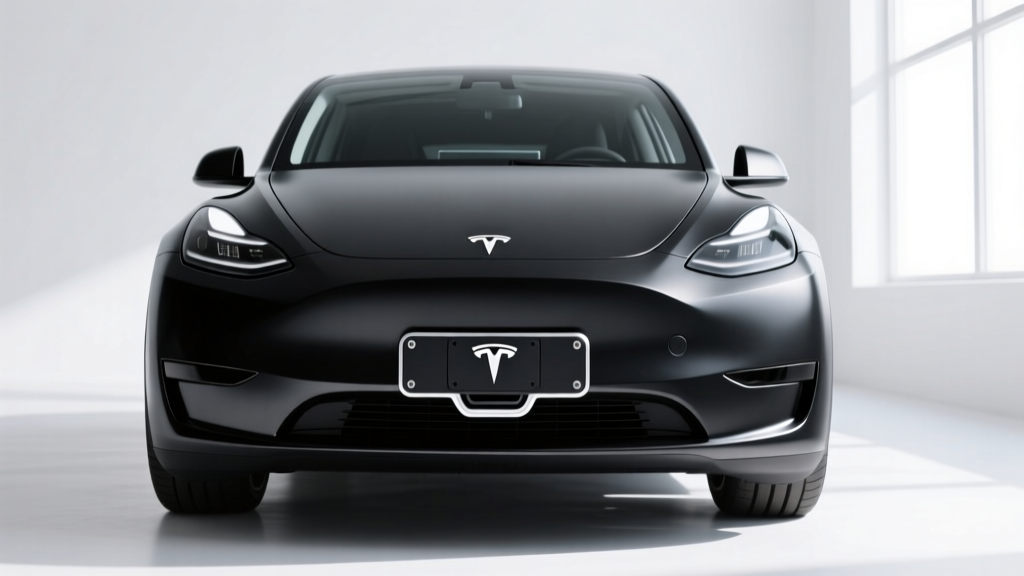
If you own or are considering a Tesla Model Y in a U.S. state that requires a front license plate, you've likely encountered the Tesla snapplate — the OEM front license plate mounting bracket that Tesla includes with new vehicles or sells separately through its accessories store. The snapplate is a small but consequential piece of hardware: it's the plastic mounting frame that clips or screws into the front bumper fascia to hold your state-issued front plate.
For years, Tesla owners have debated whether to install the snapplate at all. Some leave it off for aesthetic reasons (the car's front-end design is cleaner without it) or aerodynamic efficiency (marginal but measurable at highway speeds). However, in the 31 U.S. states that require a front plate, skipping installation can result in a fix-it ticket or fine. The snapplate is Tesla's factory-intended solution to that legal requirement.
In this review, we'll cover the snapplate's installation and fitment for the current-generation Model Y, then provide a full 2026 Tesla Model Y profile — including EPA range, charging speeds, battery specs, pricing, and tax credit eligibility — so you have the complete ownership picture.
The Snapplate: Fitment, Installation, and Aerodynamic Impact
The Tesla snapplate for the 2025-2026 Model Y (Juniper refresh) is a redesigned bracket compared to the pre-2025 version. It uses an adhesive-backed mounting pad combined with two self-tapping screws that go into pre-marked dimples on the lower front bumper. Here's what to know:
- Compatibility: Designed specifically for the refreshed Model Y (2025+). The pre-refresh (2020-2024) snapplate does not fit the Juniper bumper geometry.
- Installation: Tesla includes the snapplate in the trunk at delivery (in front-plate states). Installation takes approximately 10-15 minutes. You align the bracket to the bumper dimples, drill pilot holes (or use the self-tapping screws directly), and secure with the included hardware.
- Aftermarket alternatives: Third-party options like the StoNik snap-on plate holder or various no-drill adhesive mounts exist, but the OEM snapplate remains the most secure fit for highway-speed driving.
- Aerodynamic penalty: Independent testing by EV efficiency trackers has shown a front plate mount adds roughly 1-3 miles of range loss on a full charge at highway speeds (70+ mph). On a 320-mile EPA-rated vehicle, this is negligible but real.
- Removal: If you move to a state without front-plate requirements, the snapplate can be removed, but the screw holes remain. Some owners fill them with color-matched plugs.
2026 Tesla Model Y: Full Vehicle Profile
The snapplate question only matters if you're buying the car. Here's the complete spec breakdown for the 2026 Tesla Model Y, which carries forward the Juniper refresh introduced for the 2025 model year.
| Attribute | Long Range AWD | Performance |
|---|---|---|
| EPA Range | 320 miles | 293 miles |
| Battery Capacity | ~78.1 kWh usable (NMC) | ~78.1 kWh usable (NMC) |
| Drivetrain | Dual Motor AWD | Dual Motor AWD |
| Horsepower | 384 hp | 456 hp |
| 0-60 mph | 4.8 seconds | 3.5 seconds |
| DC Fast Charge (peak) | 250 kW | 250 kW |
| 10-80% DC Charge Time | ~25 minutes | ~25 minutes |
| Level 2 Charge Rate | 11.5 kW (~44 mi/hr) | 11.5 kW (~44 mi/hr) |
| MPGe (combined) | 111 MPGe | 102 MPGe |
| Energy Consumption | 28 kWh/100 mi | 31 kWh/100 mi |
| Cargo Volume (rear seats up) | 30.2 cu ft | 30.2 cu ft |
| Cargo Volume (rear seats folded) | 72.1 cu ft | 72.1 cu ft |
| Frunk Volume | 4.1 cu ft | 4.1 cu ft |
| Rear Legroom | 40.5 in | 40.5 in |
| Base MSRP | $46,630 | $52,130 |
| Battery Warranty | 8 yr / 120,000 mi | 8 yr / 120,000 mi |
Source: EPA fueleconomy.gov and Tesla.com Model Y specs.
Real-World Range: What the EPA Number Doesn't Tell You
The 2026 Model Y Long Range AWD carries an EPA-estimated 320 miles of range. That number is achievable in moderate temperatures (60-75°F) on a mix of city and suburban driving with moderate climate control use. But real-world conditions rarely match the EPA test cycle exactly.
- City/suburban, mild weather: 310-330 miles (regen braking helps in stop-and-go)
- Highway (70 mph, mild weather): 275-295 miles
- Highway (75+ mph, mild weather): 255-275 miles
- Cold weather (below 30°F), mixed driving: 220-260 miles (battery heating and cabin HVAC draw significant energy)
- Cold weather highway (below 20°F, 70 mph): 200-230 miles
The Model Y's NMC (nickel manganese cobalt) battery chemistry provides strong energy density but is more sensitive to cold-weather range loss than LFP (lithium iron phosphate). Tesla's heat pump — standard on all Model Y trims — mitigates some of this loss by efficiently heating the cabin without relying solely on resistive heating, but physics still applies: cold batteries have higher internal resistance, and heating the cabin costs energy.
For context, the RWD Standard Range Model Y (which uses an LFP battery and carries a lower 280-mile EPA rating) actually shows slightly less percentage-based cold-weather loss because LFP chemistry maintains voltage stability better in cold temps, even though its absolute range is lower.
Charging Speed and Infrastructure
Charging speed is where the Model Y's Supercharger network access remains its strongest ownership advantage. Here's the full charging picture:
| Charging Level | Power | Miles Added Per Hour | Notes |
|---|---|---|---|
| Level 1 (120V standard outlet) | ~1.4 kW | ~4-5 mi/hr | Emergency/trickle only; ~65+ hours for full charge |
| Level 2 (240V home, NACS connector) | 11.5 kW | ~44 mi/hr | Full charge in ~7 hours; ideal for overnight |
| DC Fast Charge (Tesla Supercharger V3) | Up to 250 kW | ~1,000+ mi/hr (peak) | 10-80% in ~25 min; peak rate tapers above 50% SoC |
| DC Fast Charge (V4 Supercharger) | Up to 250 kW (current Model Y) | ~1,000+ mi/hr (peak) | Same vehicle-side limit; V4 cabinet supports higher rates for future vehicles |
| Non-Tesla DC Fast (CCS via adapter) | Up to ~150 kW typical | Varies | Tesla CCS adapter included; Electrify America, EVgo compatible |
Charging curve reality check: The 250 kW peak rate is only sustained at low states of charge (roughly 10-30% SoC) and when the battery is properly preconditioned — which happens automatically when you navigate to a Supercharger in the Tesla app or in-car navigation. Above 50% SoC, the rate tapers to roughly 100-120 kW. Above 80%, it drops further to protect battery health. This is why the 10-80% time (~25 minutes) is the more useful metric than the peak kW number.
For home charging, a Level 2 wall connector on a 60-amp circuit (48-amp continuous) delivers the full 11.5 kW. Most owners install a Tesla Wall Connector or a compatible NACS (North American Charging Standard) unit. Installation cost typically runs $500-$2,000 depending on panel capacity and run length, per licensed electrician estimates.
Pricing, Trims, and Federal Tax Credit Eligibility
The 2026 Model Y is available in two primary trims for the U.S. market. Here's the pricing breakdown, including how the federal §30D EV tax credit applies:
| Trim | Base MSRP | Destination Fee | Total Before Credit | Est. After §30D Credit |
|---|---|---|---|---|
| Long Range AWD | $46,630 | $1,390 | $48,020 | ~$40,520* |
| Performance | $52,130 | $1,390 | $53,520 | ~$46,020* |
*Estimated after-credit prices assume full $7,500 §30D eligibility. Actual credit amount depends on your individual tax situation and vehicle sourcing compliance.
- MSRP cap: Vehicle must have an MSRP at or below $55,000 for SUVs (both Model Y trims qualify)
- Buyer income cap: Modified AGI must not exceed $150,000 (single), $225,000 (head of household), or $300,000 (married filing jointly)
- Battery sourcing: Critical minerals and battery components must meet escalating domestic-sourcing thresholds — Tesla's U.S. battery production gives the Model Y a strong compliance position, but exact eligibility can shift with IRS guidance updates
- Point-of-sale transfer: As of 2024, the credit can be transferred to the dealer at purchase, reducing your out-of-pocket cost immediately rather than waiting for a tax refund — Tesla supports this at checkout
- Final assembly: Vehicle must undergo final assembly in North America (the Model Y is assembled in Fremont, CA, and Austin, TX — both qualify)
Important caveat: Battery-sourcing rules tighten each year. Always verify current-year eligibility on the fueleconomy.gov tax credit lookup tool before purchasing, as a vehicle's credit status can change mid-year based on IRS supply-chain determinations.
Tech, Driver Assistance, and Interior
The Juniper-refreshed Model Y carries Tesla's current-generation interior and tech stack:
- Infotainment: 15.4-inch center touchscreen with Tesla's proprietary OS, integrated navigation, streaming (Netflix, YouTube, Spotify), and over-the-air updates. No Apple CarPlay or Android Auto — Tesla's ecosystem is self-contained.
- Rear screen: 8-inch rear-seat touchscreen for climate and entertainment controls (new with the Juniper refresh).
- Autopilot (standard): SAE Level 2 driver-assistance suite including adaptive cruise control, lane centering, automatic emergency braking, and blind-spot monitoring. The driver must remain engaged at all times.
- Full Self-Driving (Supervised): Optional $8,000 upgrade (or $99/month subscription) adding Navigate on Autopilot, autosteer on city streets, traffic light/stop sign control, and Smart Summon. Despite the name, FSD is SAE Level 2 — not autonomous. The driver is legally and practically responsible for all vehicle operation.
- Ventilated front seats: New with the Juniper refresh, addressing one of the most common complaints about pre-2025 Model Y.
- Power-folding second row: Available configuration for expanded cargo flexibility.
- Ambient lighting and acoustic glass: Significantly improved cabin quietness over pre-refresh models.
Pros, Cons, and Who the Model Y Suits Best
- Supercharger network access — the most reliable and extensive DC fast-charging network in North America
- Strong efficiency: 28 kWh/100 mi (Long Range) is among the best in its class
- 320-mile EPA range covers most daily and road-trip needs
- Spacious cargo area (72.1 cu ft with seats folded) plus frunk
- Over-the-air updates continuously add features
- Competitive 0-60 performance even in non-Performance trim
- Point-of-sale tax credit transfer reduces upfront cost
- No Apple CarPlay or Android Auto
- FSD (Supervised) remains Level 2 despite its $8,000 price tag
- NMC battery experiences notable cold-weather range loss (20-30%)
- Firm ride quality on rough pavement (improved but still present post-refresh)
- Insurance costs tend to be higher than competitors (average $2,100-$2,600/yr depending on state and driver profile)
- Minimal physical controls — climate, mirrors, and glovebox all require the touchscreen
- Snapplate front-plate mount requires drilling into the bumper
Who the 2026 Model Y Is For
- Daily commuters (20-80 miles round trip): Ideal. Home Level 2 charging covers all daily needs; you'll rarely visit a Supercharger for local driving.
- Families (2 kids, gear-heavy): Strong fit. The cargo volume and rear-seat space compete with mid-size SUVs, and the frunk adds stroller/grocery space.
- Road trippers: The Supercharger network makes long-distance travel genuinely practical, though plan for cold-weather range reduction on winter trips.
- Towing: Not the best choice. The Model Y can tow up to 3,500 lbs, but towing cuts range by 30-50%. Consider a Rivian R1S or F-150 Lightning for serious towing.
- Solo urban drivers: The Model 3 may be a better value if you don't need the cargo height and SUV seating position.
Frequently Asked Questions
What is the real-world range of the 2026 Tesla Model Y?
The EPA rates the Long Range AWD at 320 miles. In real-world driving, expect 275-295 miles at 70 mph highway speeds in mild weather, and 220-260 miles in sub-freezing conditions. City driving with regenerative braking can match or slightly exceed the EPA number.
How fast does the Model Y charge at home and on DC fast chargers?
On a Level 2 home charger (11.5 kW), the Model Y adds roughly 44 miles of range per hour, reaching a full charge in about 7 hours. On a Tesla V3 or V4 Supercharger, it peaks at 250 kW and charges from 10-80% in approximately 25 minutes, though the rate tapers significantly above 50% state of charge.
How much does the 2026 Model Y cost after the federal tax credit?
The Long Range AWD starts at $48,020 (including destination) and can drop to approximately $40,520 if you qualify for the full $7,500 §30D credit. Eligibility depends on your income (under $150K single / $300K joint), the vehicle's MSRP being under $55K (both trims qualify), and battery-sourcing compliance. The credit can be applied at point of sale.
Is the Tesla Model Y worth buying vs. competitors like the Hyundai Ioniq 5 or Ford Mustang Mach-E?
The Model Y wins on Supercharger network access, efficiency (kWh/100mi), and cargo volume. The Hyundai Ioniq 5 offers faster peak charging (350 kW on 800V architecture) and a more conventional interior with physical controls. The Ford Mustang Mach-E offers a more engaging driving feel. If Supercharger reliability and Tesla's software ecosystem are priorities, the Model Y remains the benchmark. If you want faster DC charging or CarPlay, look at Hyundai.
Does the Tesla Model Y qualify for the full $7,500 federal EV tax credit?
As of the 2026 model year, the Model Y qualifies for the full $7,500 credit for eligible buyers, per the IRS clean vehicle credit page. However, eligibility depends on your income, the vehicle's battery-sourcing compliance (which can change with IRS updates), and the MSRP cap ($55K for SUVs — both Model Y trims fall under this). Always verify on fueleconomy.gov before purchasing.
Do I need to install the Tesla snapplate?
Legally, yes — if you live in one of the 31 states requiring a front license plate. The snapplate is Tesla's OEM mounting solution. Skipping it risks a citation. If you live in a front-plate-optional state (like Florida, Arizona, or Pennsylvania), you can leave it off without legal concern.
What battery chemistry does the Model Y use?
The 2026 Model Y Long Range AWD and Performance use NMC (nickel manganese cobalt) battery chemistry with approximately 78.1 kWh of usable capacity. The Standard Range RWD variant uses LFP (lithium iron phosphate), which offers longer cycle life and can be charged to 100% daily without degradation concern, but has lower energy density.