Quick Verdict: The ID.4 Is a Practical Compact EV SUV — With Modest Towing
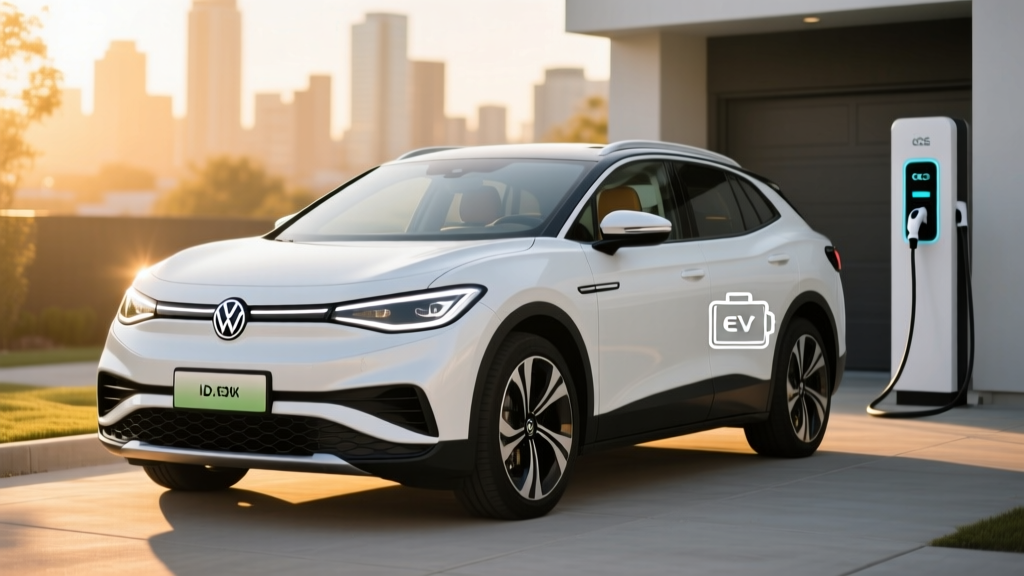
The 2026 Volkswagen ID.4 occupies a pragmatic middle ground in the compact electric SUV segment: adequate range, competitive cargo volume, and a VW ID.4 towing capacity of 2,700 lbs (AWD) that covers light utility duty but won't haul a large camper. It's not the longest-range EV in its class, nor the fastest-charging, but its combination of interior space, composed ride, and strong warranty make it a rational pick for families and commuters who need occasional tow capability without stepping up to a full-size electric truck.
For 2026, VW has refined the ID.4's software stack — addressing earlier infotainment complaints — while maintaining the 82 kWh (gross) battery pack and available dual-motor AWD powertrain. Below we break down every spec a buyer needs, with real-world caveats the sticker doesn't show.
| Spec | RWD (Standard/Pro S) | AWD (Pro S / Pro S Plus) |
|---|---|---|
| EPA Range | 291 mi (Standard) / 275 mi (Pro S) | 263 mi (Pro S AWD) |
| Battery (gross / usable) | 82 kWh / ~77 kWh usable, NMC chemistry | |
| Drivetrain | Rear-Wheel Drive | Dual-Motor AWD |
| Horsepower | 282 hp | 335 hp |
| 0–60 mph | ~7.7 sec | ~5.4 sec |
| Max DC Fast Charge | 175 kW (peak) | |
| 10–80% DC Charge Time | ~28 min (with preconditioning) | |
| Level 2 Home Charge Rate | 11 kW (~37 mi/hr) | |
| Towing Capacity | 2,200 lbs | 2,700 lbs |
| MPGe (combined) | 107 MPGe | 101 MPGe |
| Cargo (behind rear seats) | 30.3 cu ft | |
| Cargo (seats folded) | 64.2 cu ft | |
| Base MSRP | $40,790 (Standard) | $49,190 (Pro S AWD) |
| Battery/Powertrain Warranty | 8 yr / 100,000 mi | |
Real-World Range vs. EPA Sticker: What to Actually Expect
Real-World Expectation: ~230–255 mi highway (70 mph, mild weather); ~195–220 mi highway in freezing temps; city/regenerative driving can match or slightly exceed EPA.
The ID.4's EPA range figures are achievable in mixed suburban driving at moderate speeds with regenerative braking doing heavy lifting. On highway road trips at sustained 70–75 mph, expect to lose roughly 10–15% from the sticker number in warm weather and 20–30% in sub-freezing conditions. Cold weather hits NMC chemistry harder than LFP in terms of temporary range loss, and the ID.4's heat pump (standard on Pro S trims and above) mitigates cabin energy draw but can't fully offset battery chemistry effects.
According to fueleconomy.gov, the RWD ID.4 Pro S achieves 107 MPGe combined (31 kWh/100 mi), while the AWD drops to 101 MPGe combined (33 kWh/100 mi). For context, the Hyundai Ioniq 5 RWD posts 114 MPGe combined and the Tesla Model Y Long Range achieves 120 MPGe — both more efficient per mile, though the ID.4 prioritizes ride comfort over aero optimization.
If your commute is under 40 miles round-trip with home charging, the ID.4's real-world range is a non-issue. For road trips exceeding 200 miles between DC fast chargers, plan conservatively — especially in winter or mountainous terrain where elevation changes and speed compound range loss.
Towing Capacity Deep Dive: What 2,700 Lbs Gets You
The headline number — 2,700 lbs for the AWD ID.4 — requires the factory-installed tow hitch (a $450 option on most trims). The RWD models max out at 2,200 lbs. Both figures assume a properly equipped vehicle with a weight-distributing hitch for loads above 1,500 lbs and trailer brakes for anything over 1,000 lbs.
What fits within 2,700 lbs?
- Small utility trailers (loaded) — yes
- Pop-up campers (most under 2,500 lbs dry) — yes, but check loaded tongue weight
- Light boat trailers (14–16 ft aluminum boats) — yes
- Single-axle motorcycle/ATV trailers — yes
- Mid-size travel trailers (3,500+ lbs) — no, exceeds capacity
- Horse trailers — no
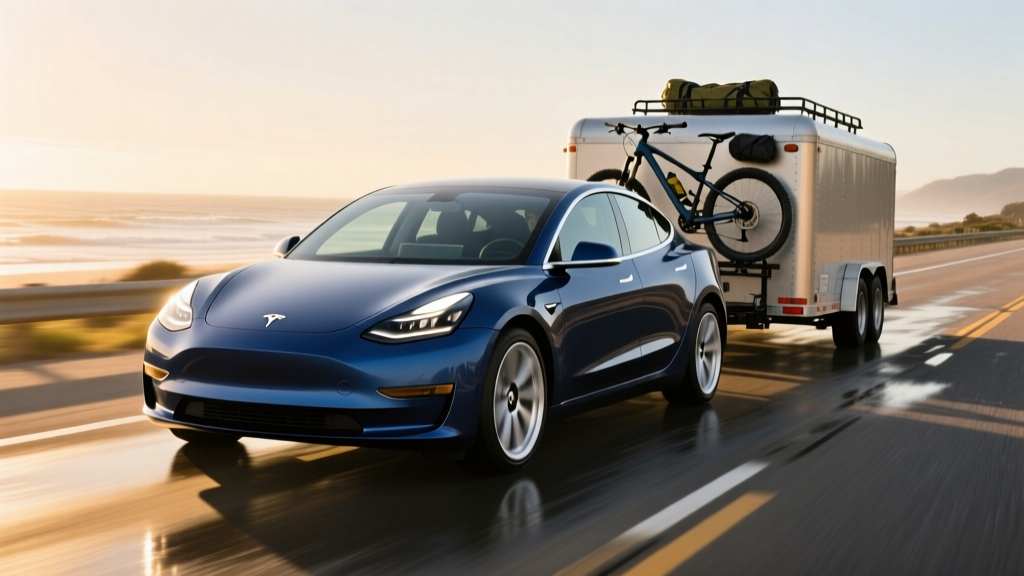
Critical towing caveat: range drops dramatically under tow load. Expect 40–55% range reduction when towing near max capacity at highway speeds. That 263-mile AWD range becomes roughly 120–155 miles per charge with a 2,500-lb trailer. Plan charging stops accordingly and verify DC fast charger availability along your route — not all stations accommodate vehicles with attached trailers.
Compared to segment rivals: the Ford Mustang Mach-E is not rated for towing at all. The Hyundai Ioniq 5 offers 2,300 lbs (AWD). The Tesla Model Y tows up to 3,500 lbs. If towing is a primary use case, the Model Y or stepping up to a Rivian R1S or Ford F-150 Lightning makes more sense.
Charging Speed: DC Fast, Level 2, and the Curve Reality
The ID.4 peaks at 175 kW on DC fast chargers — respectable but not class-leading. The Hyundai Ioniq 5 and Kia EV6 hit 230+ kW, and the Tesla Model Y (on NACS Superchargers) sustains roughly 250 kW at peak. Here's how the ID.4 performs across charging levels:
| Charging Level | Power (kW) | Rate | Notes |
|---|---|---|---|
| Level 1 (120V household) | ~1.3 kW | ~4–5 mi/hr | Emergency/top-up only |
| Level 2 (240V, 48A) | 11 kW | ~37 mi/hr | Full charge in ~7.5 hrs |
| DC Fast Charge (peak) | 175 kW | ~200+ mi/hr at peak | 10–80% in ~28 min |
| DC Fast Charge (sustained avg) | ~110–130 kW | ~130 mi/hr avg | Average across 10–80% session |
Preconditioning matters. The ID.4's navigation-routed battery preconditioning warms the pack before arrival at a DC fast charger. Without it — for example, if you drive to a charger without entering it in the nav — peak charge rates drop significantly, sometimes to under 100 kW until the pack warms. In cold weather, always route through the nav to a charger, even if you know the way.
The charge curve tapers hard above 80% State of Charge (SoC). Charging from 80–100% can take nearly as long as 10–80%. For road trips, the optimal strategy is short, frequent stops keeping the battery between 15–80% rather than one long session to full. This is standard EV charging behavior, not unique to VW, but it catches new EV owners off guard.
For home Level 2 charging, VW recommends a 48-amp circuit on a 60-amp breaker. Installation costs typically run $800–$2,000 depending on panel proximity and local permitting, on top of $400–$700 for a quality Level 2 EVSE (ChargePoint Home Flex, Emporia Level 2, or Volkswagen's branded Wallbox). Expect a full overnight charge to take about 7.5 hours from near-empty — more than adequate for daily use.
Battery Chemistry, Degradation, and Warranty Coverage
The ID.4 uses an NMC (nickel manganese cobalt) lithium-ion battery pack. NMC offers higher energy density than LFP (lithium iron phosphate), which is why the ID.4 fits 82 kWh gross in a compact SUV footprint. The trade-off: NMC degrades slightly faster over time and is more sensitive to sustained high SoC and extreme heat.
VW's battery warranty covers 8 years / 100,000 miles against defects and capacity loss below 70% of original capacity. This matches the industry standard (Tesla, Hyundai, Kia all offer similar terms). Independent long-term data from European ID.4 fleets (which launched in 2021) suggests degradation of roughly 5–8% over the first 60,000 miles under normal use — well within warranty thresholds.
To maximize battery longevity:
- Set daily charge limit to 80% (configurable in the ID.4's charging menu)
- Avoid leaving the vehicle at 100% SoC for extended periods
- Use DC fast charging for road trips, not daily routine (Level 2 is gentler on cells)
- In extreme cold, plug in when parked so the thermal management system can maintain pack temperature on shore power
Out-of-warranty battery replacement for the ID.4 is estimated at $12,000–$18,000 based on current VW parts pricing — a figure that will likely decline as the battery supply chain matures, but one worth acknowledging for long-term ownership planning.
Pricing, Trims, and Federal Tax Credit Eligibility
The 2026 ID.4 lineup spans five trims. Pricing below includes destination charge:
| Trim | Drivetrain | MSRP | Est. After §30D Credit* |
|---|---|---|---|
| Standard | RWD | $40,790 | $33,290 |
| Pro | RWD | $43,790 | $36,290 |
| Pro S | RWD | $47,190 | $39,690 |
| Pro S | AWD | $49,190 | $41,690 |
| Pro S Plus | AWD | $53,590 | $46,090 |
*Assumes full $7,500 IRS §30D credit. Actual eligibility depends on buyer income, battery sourcing, and MSRP caps. See IRS rules below.
The ID.4 qualifies for up to $7,500 in federal tax credits under IRS §30D — and since 2024, this can be transferred to the dealer as a point-of-sale discount, reducing your out-of-pocket cost at purchase rather than waiting for a tax return. However, eligibility is not automatic. Per IRS guidelines, you must meet all of the following:
- Income caps: Modified AGI ≤ $150,000 (single) / ≤ $300,000 (joint filing)
- MSRP cap: Vehicle MSRP must not exceed $80,000 for SUVs (all ID.4 trims qualify)
- Battery sourcing: Minimum percentages of critical minerals and battery components must be sourced from the US or FTA-partner countries — VW sources ID.4 batteries from facilities that currently meet partial thresholds, with the credit amount potentially split ($3,750 for minerals + $3,750 for components)
- Final assembly: Vehicle must be assembled in North America — the ID.4 for the US market is built in Chattanooga, Tennessee, meeting this requirement
- No FEOC restriction: Battery must not contain components from a Foreign Entity of Concern (China-based suppliers above threshold trigger phase-out)
Because §30D sourcing requirements tighten annually, the exact credit amount available for the ID.4 can change mid-year. Always verify current eligibility on the IRS Clean Vehicle credit page or with your tax professional before relying on the full $7,500 in purchase planning.
Interior Space, Technology, and Daily Livability
The ID.4's cabin is where it makes a strong case against more expensive rivals. Rear legroom measures 37.6 inches — more than the Model Y (35.2 in) and competitive with the Ioniq 5 (39.4 in). Cargo volume behind the second row is 30.3 cu ft, expanding to 64.2 cu ft with seats folded. There's no front trunk (frunk), which is a missed opportunity for cable storage.
VW's 12.9-inch center touchscreen (standard on Pro and above) runs the updated ID.Software 4.x in 2026, which has resolved the lag and unresponsive slider complaints that plagued early 2021–2023 models. Wireless Apple CarPlay and Android Auto are standard. A 10.25-inch digital driver display handles speed, range, and navigation prompts.
Driver assistance comes via VW's IQ.DRIVE suite, which includes adaptive cruise control with stop-and-go, lane-keeping assist, and Travel Assist (a combined lane-centering + ACC system). This is an SAE Level 2 driver-assist system — the driver must remain attentive and keep hands on or near the wheel at all times. It is not autonomous driving.
Notable drawbacks persist: the ID.4 lacks a one-pedal driving mode (it has regenerative braking via a "B" gear setting, but it doesn't bring the vehicle to a complete stop like a Nissan Leaf or Tesla). Rear drum brakes (on RWD models) are an efficiency decision that some buyers perceive as a cost-cutting measure, though they're adequate for the vehicle's weight and regen handles most braking duty. The panoramic fixed glass roof (Pro S and above) has no shade — a problem in hot climates where solar gain heats the cabin noticeably.
Pros
- Spacious rear seat and cargo area for the class
- Comfortable, compliant ride quality
- Strong 8-yr/100,000-mi battery warranty
- AWD towing capacity (2,700 lbs) exceeds most compact EV SUV rivals
- Significantly improved infotainment software for 2026
- Eligible for up to $7,500 §30D credit (verify sourcing annually)
- US-built (Chattanooga, TN)
Cons
- DC fast charging (175 kW) trails Ioniq 5/EV6/Model Y
- No frunk for charging cable storage
- Real-world highway range below EPA sticker, especially in cold
- No true one-pedal driving mode
- Fixed glass roof lacks shade (heat issue in summer)
- 2,700-lb tow capacity adequate but not exceptional vs Model Y (3,500 lbs)
- Rear drum brakes on RWD may concern some buyers
Who Should Buy the ID.4 — And Who Should Look Elsewhere
Choose the VW ID.4 if:
- You prioritize ride comfort and cabin space over maximum range or charging speed
- Your daily commute is under 60 miles round-trip with reliable home charging
- You need light tow capability (pop-up camper, small boat) without a truck
- You value a strong warranty and a mainstream dealer network for service
- You qualify for the §30D credit and want to bring effective pricing under $40K
Look elsewhere if:
- You regularly road-trip 300+ miles and want the fastest DC charging (→ Hyundai Ioniq 5 / Kia EV6)
- You need 3,500+ lbs of tow capacity (→ Tesla Model Y or Rivian R1S)
- You want maximum efficiency per mile (→ Tesla Model Y Long Range at 120 MPGe)
- You need a frunk or one-pedal driving (→ Ford Mustang Mach-E or Tesla Model Y)
- You want hands-free highway driving assist (→ GM Equinox EV with Super Cruise or Ford Mustang Mach-E with BlueCruise)
The ID.4 isn't the flashiest EV in its segment, but it doesn't try to be. It's the sensible, well-built, comfortable option for buyers who want an electric compact SUV that feels like a normal car — not a tech statement. For the majority of American households with home charging and commutes under 50 miles, it delivers on the fundamentals.
Frequently Asked Questions
What is the VW ID.4 towing capacity?
The 2026 VW ID.4 tows up to 2,700 lbs when equipped with the AWD powertrain and factory tow hitch. RWD models are rated for 2,200 lbs. Both figures require proper hitch equipment and trailer brakes for heavier loads. Expect 40–55% range reduction when towing near maximum capacity.
What is the real-world range of the ID.4?
The EPA rates the RWD ID.4 at 291 miles (Standard trim) and 275 miles (Pro S), with AWD at 263 miles. In real-world highway driving at 70 mph, expect 230–255 miles in mild weather and 195–220 miles in freezing temperatures. City driving with regenerative braking can match or slightly exceed EPA estimates.
How fast does the ID.4 charge?
On a DC fast charger, the ID.4 peaks at 175 kW and charges from 10–80% in approximately 28 minutes with battery preconditioning active. At home on a Level 2 (240V, 48A) charger, it charges at 11 kW, adding about 37 miles of range per hour and reaching a full charge in roughly 7.5 hours.
Does the VW ID.4 qualify for the $7,500 federal tax credit?
The ID.4 is assembled in Chattanooga, TN and meets the MSRP cap (under $80,000 for SUVs). Eligibility for the full $7,500 under IRS §30D depends on your income (≤$150K single / ≤$300K joint), battery critical-mineral sourcing, and component origin — all of which can shift annually. Check the IRS Clean Vehicle credit page for current-year rules. The credit can be applied as a point-of-sale discount through participating dealers.
Is the ID.4 worth buying over the Tesla Model Y or Hyundai Ioniq 5?
The ID.4 trades range and charging speed for ride comfort, cabin space, and a mainstream dealer experience. The Model Y offers longer range (320 mi), faster Supercharging, and 3,500-lb towing but a firmer ride and panel-gap quality concerns. The Ioniq 5 charges faster (230 kW peak) and has a more distinctive design, but tows only 2,300 lbs and has less rear cargo space. Choose based on your priority: comfort and value (ID.4), range and charging infrastructure (Model Y), or charging speed and design (Ioniq 5).
What battery chemistry does the ID.4 use?
The ID.4 uses NMC (nickel manganese cobalt) lithium-ion cells in an 82 kWh gross / ~77 kWh usable pack. NMC provides higher energy density than LFP but degrades slightly faster over time. VW's battery warranty guarantees at least 70% capacity retention over 8 years / 100,000 miles.
Can I install a Level 2 charger at home for the ID.4?
Yes. A 48-amp Level 2 charger on a 60-amp 240V circuit will charge the ID.4 at its maximum 11 kW AC rate. Installation costs typically range from $800 to $2,000 depending on electrical panel capacity and run distance. Consult a licensed electrician to confirm your panel can support the additional load — a panel upgrade (to 200A service) can add $1,500–$3,000 if needed.