Why Does My Tesla Smell Like Rotten Eggs?
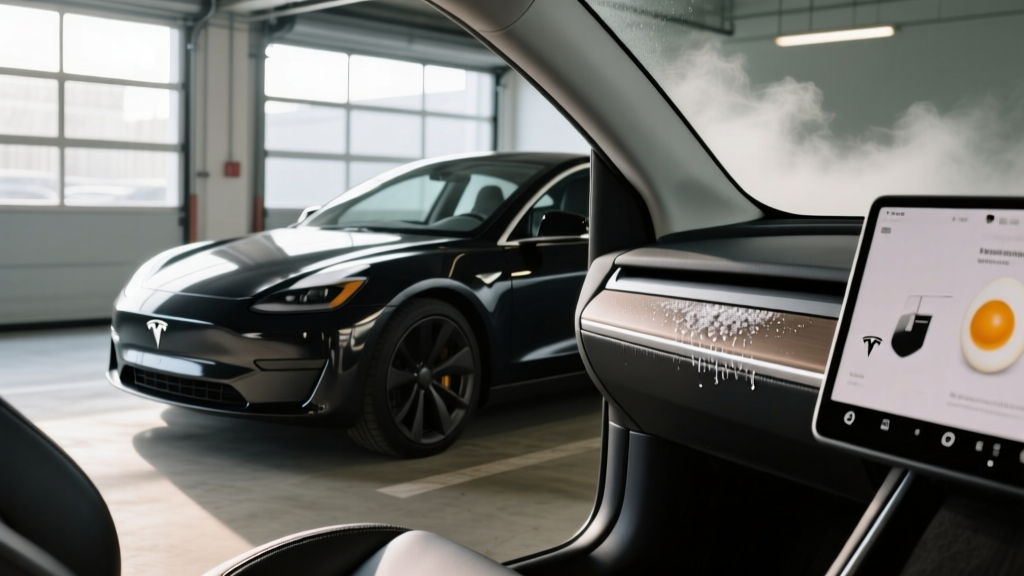
If you've climbed into your Tesla and been greeted by a distinct sulfur or rotten-egg odor, you're not alone—and you're not imagining things. This is a documented phenomenon among Tesla owners, particularly those with Model 3 and Model Y vehicles. The keyword search "tesla smells like rotten eggs" pulls up hundreds of forum threads, Reddit posts, and service-center discussions. But unlike a gas car where a sulfur smell usually points to a failing catalytic converter, the root cause in a Tesla is almost always environmental, not mechanical.
The short answer: the smell is almost certainly coming from outside the car being pulled in through the HVAC system, not from the vehicle itself. Teslas have no internal combustion engine, no exhaust system, no catalytic converter, and no sulfur-bearing fluids that could produce this odor internally. When you detect rotten eggs, you're almost always smelling hydrogen sulfide (H₂S) or sulfur dioxide (SO₂) from an external source that your cabin air filtration is struggling to block.
The Most Common Causes of Sulfur Odor in Teslas
1. Industrial or Agricultural Emissions Near Your Route
Hydrogen sulfide is emitted by wastewater treatment plants, paper mills, oil refineries, landfills, and concentrated animal feeding operations (CAFOs). If your commute or a regular route passes near any of these, the Tesla's HVAC system—especially when set to external air intake mode—will pull those odors directly into the cabin. Teslas are particularly noticeable for this because the cabin is otherwise so quiet and odor-free that any intrusion stands out sharply.
2. Cabin Air Filter Saturation
The Tesla Model 3 and Model Y use a standard cabin air filter (and, on higher trims and newer model years, a HEPA filter with activated carbon). Over time, the activated carbon layer becomes saturated with pollutants and loses its ability to adsorb sulfur compounds. Tesla recommends replacing the cabin air filter every 2 years under normal conditions, or sooner if you frequently drive in polluted or high-odor environments. A saturated filter doesn't just fail to block odors—it can begin to release trapped compounds, especially in hot weather when the car has been sitting.
3. Heat-Soaked Cabin Off-Gassing
When a Tesla sits in direct sunlight with a hot cabin, volatile organic compounds (VOCs) from interior materials—adhesives, plastics, synthetic leather—can off-gas and combine with residual odors trapped in the filter media. This can produce a sulfurous or chemical smell on first entry, particularly in newer vehicles or after a filter that's nearing end of life. Running the climate control on high with fresh air for 2-3 minutes usually clears it.
4. 12V Battery Issues (Rare but Possible)
In rare cases, a failing 12V auxiliary battery (not the main traction battery) can emit hydrogen sulfide gas as its lead-acid chemistry degrades. Tesla transitioned to lithium-ion 12V batteries in the Model 3 refresh (2021+) and Model Y, which largely eliminated this risk. If you own an older Model S or Model X with a lead-acid 12V battery and notice a persistent sulfur smell from the front trunk area, have the 12V battery tested immediately—a swollen or venting lead-acid battery is a safety concern.
Tesla Model 3 (2026): Full Spec Refresher
Since many owners searching for this issue drive a Model 3, here's a complete spec reference for the current 2026 model year—the vehicle most commonly associated with this complaint.
| Spec | RWD (Base) | Long Range AWD | Performance |
|---|---|---|---|
| EPA Range | 272 mi | 363 mi | 315 mi |
| Battery (usable) | ~57.5 kWh (LFP) | ~79 kWh (NMC) | ~79 kWh (NMC) |
| Max DC Fast Charge | 170 kW | 250 kW | 250 kW |
| 10–80% DC Time | ~30 min | ~25 min | ~25 min |
| Level 2 Charge Rate | 11.5 kW (~44 mi/hr) | 11.5 kW (~44 mi/hr) | 11.5 kW (~44 mi/hr) |
| 0–60 mph | 5.8 sec | 4.2 sec | 2.9 sec |
| Horsepower | ~271 hp | ~384 hp | ~510 hp |
| Drivetrain | RWD (single motor) | AWD (dual motor) | AWD (dual motor) |
| MPGe (combined) | 132 MPGe | 134 MPGe | 113 MPGe |
| Efficiency | 25 kWh/100 mi | 25 kWh/100 mi | 30 kWh/100 mi |
| Base MSRP | $38,990 | $45,990 | $52,990 |
| Cargo Volume | 23 cu ft (rear trunk + frunk combined) | ||
| Rear Legroom | 35.2 in | ||
| Battery Warranty | 8 yr / 100,000 mi | 8 yr / 120,000 mi | |
Source: fueleconomy.gov and Tesla official specifications. Prices and specs reflect 2026 model year and are subject to change.
The EPA estimates above assume mixed driving. In real-world highway use at 75 mph, expect roughly 10–15% less range than the EPA sticker (e.g., the Long Range AWD delivers ~310–325 miles on a full charge at sustained highway speed). In cold weather (below 32°F / 0°C), range can drop an additional 15–30% depending on cabin heating demand. LFP batteries in the RWD trim are slightly more resistant to cold-weather degradation but still lose meaningful range. Always precondition your battery before highway trips for optimal efficiency.
Charging Speed: What to Expect at Home and on the Road
Charging speed is one of the top concerns for any EV buyer. Here's how the 2026 Model 3 lineup performs across charging levels:
| Charging Level | Power | Miles Added per Hour | Notes |
|---|---|---|---|
| Level 1 (120V) | ~1.4 kW | ~5 mi/hr | Emergency/trickle only |
| Level 2 (240V, 48A) | 11.5 kW | ~44 mi/hr | Full overnight charge in 7–9 hours |
| DC Fast (RWD) | Peak 170 kW | N/A (timed) | 10–80% in ~30 min; LFP can charge to 100% regularly |
| DC Fast (LR/Perf) | Peak 250 kW | N/A (timed) | 10–80% in ~25 min; tapers sharply above 80% |
Charging-curve reality: The 250 kW peak on Long Range and Performance trims is only sustained between roughly 10–35% State of Charge (SoC). Above 50%, the charge rate drops to ~120 kW, and above 80%, it falls to ~40 kW or lower. This is normal lithium-ion behavior to protect battery health. The LFP battery in the RWD trim has a flatter charge curve and can be charged to 100% daily without degradation concerns—a significant advantage for commuters who need every mile of range.
Tesla's NACS (North American Charging Standard) connector is now the industry standard, with Ford, GM, Rivian, and most major automakers adopting it. Model 3 owners have access to the full Tesla Supercharger network, which remains the most reliable public DC fast-charging network in the U.S. based on uptime and plug-and-charge simplicity.
Pricing, Tax Credits, and Total Cost
| Trim | Base MSRP | Est. Federal Credit (§30D) | Effective Price* |
|---|---|---|---|
| RWD | $38,990 | Up to $7,500 | ~$31,490 |
| Long Range AWD | $45,990 | Up to $7,500 | ~$38,490 |
| Performance | $52,990 | Up to $7,500 | ~$45,490 |
*Effective price assumes full §30D credit eligibility. Destination fees, options, and state/local incentives not included. Verify eligibility with a tax professional.
- Vehicle MSRP cap: Sedans must be ≤ $55,000 (all Model 3 trims qualify)
- Buyer income cap: AGI ≤ $150,000 (single) / $300,000 (married filing jointly)
- Battery sourcing: Critical minerals and battery components must meet phased-in domestic-content thresholds per the Inflation Reduction Act—Tesla's U.S. production gives Model 3 a strong advantage here
- Point-of-sale transfer: As of 2024+, you can transfer the credit to the dealer for an immediate price reduction at purchase
- Filing requirement: Must file IRS Form 8936 with your tax return
Rules change frequently. Verify current-year eligibility at irs.gov or consult a tax professional.
How to Fix the Rotten Egg Smell: Step-by-Step
- Switch to recirculate mode. On the Tesla touchscreen, tap the climate control icon and switch from fresh air to recirculation. This immediately stops pulling outside air (and outside odors) into the cabin. Use this when driving near known odor sources.
- Replace the cabin air filter. If your filter is over 2 years old or you frequently drive in areas with industrial/agricultural smells, replace it. Tesla sells OEM replacement filters through the Tesla Shop. The HEPA filter upgrade (available on some trims) includes a larger activated-carbon layer that significantly improves odor filtration. DIY replacement takes 20–30 minutes with basic tools; a service center will charge roughly $80–$120 for parts and labor.
- Run the climate system on high with A/C. If the smell is already in the cabin, set the fan to maximum, temperature to cool, and A/C on for 3–5 minutes. The A/C evaporator helps dehumidify and the high airflow flushes residual odor from the ducts.
- Use Bioweapon Defense Mode (if equipped). Model 3 vehicles equipped with the HEPA filtration system have a "Bioweapon Defense Mode" that pressurizes the cabin and runs air through the HEPA filter at maximum flow. Activating this for 2–3 minutes rapidly scrubs odors from the cabin air.
- Check your 12V battery (older models only). If you drive a pre-2021 Model S or Model X with a lead-acid 12V battery and the smell is persistent and location-independent, have the battery inspected. A venting lead-acid battery produces hydrogen sulfide and is a safety hazard. Tesla's newer lithium-ion 12V batteries do not have this failure mode.
- Use Cabin Overheat Protection. Enable this feature in your Tesla's safety settings. It runs the A/C when the parked car exceeds a set temperature, reducing VOC off-gassing and preventing odor buildup in a hot, closed cabin.
Tech, Safety, and Ownership Experience
The 2026 Model 3 (the "Highland" refresh and its subsequent updates) includes a 15.4-inch center touchscreen, ventilated front seats, ambient lighting, power-folding mirrors, and acoustic glass on all windows—a meaningful upgrade in cabin quietness over the pre-2024 model. Rear-seat passengers now have an 8-inch touchscreen for climate and entertainment controls.
Driver assistance: Tesla's Autopilot (standard) provides adaptive cruise control and lane-keeping. Full Self-Driving (Supervised), available as a $8,000 add-on or subscription, adds automated lane changes, traffic-light recognition, and city-street navigation. Important: FSD is an SAE Level 2 driver-assist system—the driver must remain fully attentive and is legally responsible for the vehicle at all times. It is not autonomous driving.
Tesla Autopilot and FSD (Supervised) are SAE Level 2 systems. The vehicle can manage steering, acceleration, and braking in certain conditions, but the driver must continuously supervise, keep hands available, and be prepared to take over instantly. True self-driving (Level 4) currently exists only in limited robotaxi services like Waymo. Never treat any Tesla driver-assist feature as a substitute for an attentive driver.
Safety ratings: The Model 3 earned a 5-Star Overall Safety Rating from NHTSA and a Top Safety Pick+ designation from IIHS across all crash-test categories.
Pros, Cons, and Who This EV Suits Best
- Class-leading efficiency (25 kWh/100 mi on LR)
- Access to the Tesla Supercharger network (most reliable in U.S.)
- LFP battery option (RWD) can charge to 100% daily without degradation
- Over-the-air updates continuously add features
- Strong resale value relative to EV segment average
- Excellent safety ratings (NHTSA 5-star, IIHS TSP+)
- Acoustic glass makes cabin exceptionally quiet
- Cabin air filter can saturate quickly in high-odor environments
- No physical stalks (turn signals on steering wheel buttons)
- Rear-seat headroom tight for passengers over 6'2"
- FSD (Supervised) is expensive and still requires full driver attention
- RWD trim limited to 170 kW DC fast charging
- Insurance premiums above segment average in many states
- Choose the RWD ($38,990) if: You commute under 50 miles daily, can charge at home, and want the lowest entry price with an LFP battery you can charge to 100% without worry.
- Choose the Long Range AWD ($45,990) if: You take regular road trips, live in a cold-weather climate (AWD + 363-mi range is ideal), or need the 250 kW peak charging speed for frequent DC fast charging.
- Choose the Performance ($52,990) if: You want 2.9-second 0–60 acceleration and track-capable handling and are willing to trade ~50 miles of range for it.
- Look elsewhere if: You need SUV cargo space (consider Model Y), need three rows (Kia EV9, Rivian R1S), or prefer traditional physical controls and dealership service.
Model 3 vs. Key Competitors: Quick Comparison
| Attribute | Tesla Model 3 LR | Hyundai Ioniq 6 SEL | BMW i4 eDrive40 |
|---|---|---|---|
| EPA Range | 363 mi | 361 mi | 307 mi |
| Max DC Charge | 250 kW | 235 kW | 205 kW |
| 10–80% Time | ~25 min | ~18 min | ~31 min |
| Base MSRP | $45,990 | ~$42,500 | ~$52,200 |
| Charging Network | Supercharger (NACS) | NACS adapter / CCS | NACS adapter / CCS |
| Cabin Air Filtration | HEPA available | Standard carbon | Standard carbon |
The Hyundai Ioniq 6 charges faster (18-minute 10–80% on 350 kW chargers) and costs slightly less, but lacks Tesla's Supercharger network access without an adapter. The BMW i4 offers a more premium interior and traditional driving dynamics but at a significant price premium and with slower charging. For odor-sensitive buyers, the Model 3's optional HEPA filtration with Bioweapon Defense Mode is a genuine differentiator.
Frequently Asked Questions
Is the rotten egg smell in my Tesla dangerous?
In the vast majority of cases, no. The smell is hydrogen sulfide from an external source (industrial facilities, agricultural operations, wastewater treatment) being drawn into the cabin. It's unpleasant but not a vehicle defect. The exception: if you own an older Model S or Model X with a lead-acid 12V battery and the smell is persistent and not location-dependent, a venting 12V battery is a genuine safety concern and should be inspected immediately.
How often should I replace the Tesla cabin air filter?
Tesla recommends replacement every 2 years under normal driving conditions. If you regularly drive near odor sources (farms, refineries, landfills) or in heavy urban pollution, consider annual replacement. The HEPA filter, where equipped, has a longer service life due to its larger activated-carbon volume but should still be inspected at the 2-year mark.
Does the Tesla Model 3 qualify for the $7,500 federal tax credit in 2026?
All three Model 3 trims fall under the $55,000 sedan MSRP cap for the IRS §30D credit. However, eligibility also depends on your adjusted gross income (≤ $150K single / ≤ $300K joint), battery critical-mineral and component sourcing requirements, and whether you've already claimed the credit for another vehicle in the same tax year. Tesla's U.S. manufacturing gives the Model 3 a strong position on sourcing compliance, but always verify at irs.gov before purchasing.
Will switching to recirculate mode affect cabin air quality?
Short-term use of recirculate mode is perfectly fine and is the recommended immediate response to outside odors. For extended use (over 30–45 minutes), CO₂ levels in the cabin can rise, which causes drowsiness. Tesla's climate system will occasionally introduce fresh air even in recirculate mode to manage CO₂ levels. If you're on a long drive through an odor-heavy area, alternate between recirculate and fresh air periodically.
Does the LFP battery in the Model 3 RWD smell different from NMC?
No. Battery chemistry (LFP vs. NMC) has no bearing on cabin odor. The difference is in charging behavior and longevity: LFP batteries can be charged to 100% regularly without accelerated degradation, while NMC batteries are best kept between 20–80% for daily use and charged to 100% only before long trips.
Can I install an aftermarket cabin air filter with better odor protection?
Third-party cabin filters with enhanced activated-carbon layers are available from vendors like Bosch and EcoGard. Some owners report improved odor filtration, but ensure any aftermarket filter matches Tesla's airflow specifications to avoid reducing HVAC efficiency or triggering error codes. OEM Tesla filters are the safest choice for warranty compatibility.
Bottom Line
If your Tesla smells like rotten eggs, the cause is almost certainly external hydrogen sulfide being drawn into the cabin through a saturated or overwhelmed cabin air filter—not a defect in the vehicle. The fix is straightforward: replace the cabin air filter on schedule (every 2 years, or annually in high-odor areas), use recirculate mode proactively near known odor sources, and take advantage of Bioweapon Defense Mode if your trim includes the HEPA filtration system. The only scenario warranting immediate service attention is a persistent sulfur smell in an older Model S/X with a lead-acid 12V battery.
The 2026 Model 3 remains one of the most efficient, well-charging, and tech-forward sedans in the EV market—whether you're dealing with the occasional sulfur whiff on your commute or evaluating it as your next purchase.