What Is the "Tesla Small" and Why Does It Matter?
Search interest around the Tesla small EV — a rumored compact, sub-$30,000 battery-electric vehicle from Tesla — has persisted since Elon Musk first referenced a next-generation, lower-cost platform in 2023. As of early 2026, Tesla has not officially launched a dedicated small car for the U.S. market. What we do have are: Tesla's confirmed next-gen vehicle platform announcements, supply-chain reporting from battery partners, and a growing competitive landscape that makes a compact Tesla increasingly plausible.
This article consolidates every credible data point available — from Tesla's official communications to industry battery sourcing reports — while clearly distinguishing announced/estimated specifications from confirmed ones. If and when Tesla releases a compact model, this page will be updated with verified EPA and manufacturer data.
Projected Spec Snapshot: Tesla Next-Gen Compact (Estimated)
| Status | Announced platform — not yet on sale in the U.S. |
| Projected Base Price | ~$25,000–$30,000 MSRP (pre-incentive) |
| Est. EPA Range | 250–300 miles (target, unconfirmed) |
| Battery Chemistry | Likely LFP (lithium iron phosphate) |
| Est. Battery Capacity | 50–60 kWh usable (estimated) |
| Drivetrain | Single-motor RWD (base), possible AWD variant |
| Charging Architecture | Expected 400V (unconfirmed if 800V) |
| Connector | NACS (native Tesla / North American Charging Standard) |
| Federal Tax Credit | Eligibility uncertain — depends on battery sourcing and MSRP at launch |
All specs above are estimated based on available reporting. Final EPA and manufacturer data will differ.
Range and Efficiency: What a Compact Tesla Could Deliver
Tesla's next-gen platform is designed around radical cost reduction — smaller battery, lighter unibody casting, and a more efficient inverter. The result, based on supply-chain leaks and Tesla's own investor-day disclosures, points toward a vehicle in the 250–300 mile EPA range bracket.
If the Tesla small EV achieves a ~275-mile EPA sticker, expect approximately 220–240 miles on highway road trips at 70+ mph, and potentially 180–200 miles in sub-freezing winter conditions. LFP batteries are slightly more sensitive to cold-weather range loss than NMC chemistries due to internal resistance characteristics — though Tesla's heat pump system (standard on recent models) mitigates this significantly. City driving with regenerative braking may actually exceed the EPA combined figure, as is typical for EVs.
For context, Tesla's current most efficient sedan — the Model 3 Rear-Wheel Drive — achieves 132 MPGe combined and 26 kWh/100mi on the EPA cycle (per fueleconomy.gov). A smaller, lighter compact should match or slightly improve on that efficiency figure, potentially reaching 135–140 MPGe combined. That translates to roughly 24–26 kWh per 100 miles — meaning a full charge from a typical $0.14/kWh home electricity rate would cost around $7.50–$8.50 for ~275 miles of range.
Battery Chemistry: LFP Makes Sense for a Budget Tesla
Every credible report points to Tesla using LFP (lithium iron phosphate) cells in its next-gen compact. This is the same chemistry Tesla already sources from CATL for the Model 3 RWD built at Giga Shanghai and, increasingly, for base Model 3 units sold in North America.
LFP vs. NMC: Why Chemistry Matters for a Small EV
| Attribute | LFP (Likely for Tesla Small) | NMC (Used in Long Range/Performance) |
|---|---|---|
| Energy Density | Lower (~160 Wh/kg cell-level) | Higher (~250+ Wh/kg cell-level) |
| Cost | ~20–30% cheaper per kWh | Higher due to cobalt/nickel |
| Cycle Life | 3,000+ cycles (excellent longevity) | 1,000–2,000 cycles typical |
| Cold Performance | Moderate range loss in freezing temps | Slightly better cold-weather retention |
| Charging to 100% | Tesla recommends periodic 100% charges for calibration | 80% daily limit recommended for longevity |
| Safety | Higher thermal runaway threshold | Good, but lower thermal stability than LFP |
For a budget-oriented compact, LFP is the logical choice: lower cost per kWh, exceptional cycle life (meaning the battery will likely outlast the vehicle), and no cobalt or nickel supply-chain dependency. The trade-off is slightly lower energy density, which means Tesla needs to compensate with aerodynamic efficiency and a lighter chassis — both goals of the next-gen "unboxed" manufacturing process.
Charging Speed: What to Expect at Home and on the Road
Tesla has not confirmed the DC fast-charging architecture for its next-gen compact, but based on the current Model 3 RWD (LFP) charging profile, we can make informed estimates.
Estimated Charging Speeds
| Charging Level | Power (kW) | Estimated Speed | Notes |
|---|---|---|---|
| Level 1 (120V household) | ~1.2 kW | ~4–5 miles/hour | Emergency/trickle only |
| Level 2 (240V home, 48A) | ~11.5 kW | ~35–40 miles/hour | Full charge in ~7–8 hours |
| DC Fast Charge (est. peak) | ~170–200 kW peak | 10–80% in ~25–30 min (est.) | LFP charge curve tapers above 80% |
Understanding the charge curve: Peak kW is not sustained kW. A 170 kW peak on an LFP pack typically holds for the 10–50% state-of-charge window, then tapers progressively. Expect the 10–80% session to average around 120–140 kW. LFP batteries also benefit from preconditioning — navigating to a Supercharger via the car's built-in navigation will warm the battery for faster charging, a feature already present in all current Teslas.
On the home front, a Level 2 Wall Connector ($475 for the Tesla unit, plus $500–$2,000 for professional electrician installation depending on panel capacity and run length) remains the practical daily charging solution. Most owners charge overnight and wake up to a full battery every morning — the cheapest and most convenient way to own any EV.
Performance and Driving Dynamics
A compact Tesla is unlikely to chase performance records, but Tesla's single-motor RWD powertrains are inherently quick thanks to instant electric torque. Based on the current Model 3 RWD as a benchmark:
- Estimated 0–60 mph: 5.8–6.5 seconds (single-motor RWD base)
- Estimated horsepower: 250–280 hp
- Drivetrain: Rear-wheel drive standard; dual-motor AWD possible as a higher trim
- Top speed: Likely electronically limited to ~125 mph
These figures would place the Tesla small EV firmly in the "quick for its class" category, outpacing most compact ICE vehicles and rivaling the Hyundai Ioniq 5 RWD (5.3s to 60) and Chevrolet Equinox EV FWD (~8.0s). A potential Performance or dual-motor variant could drop the 0–60 into the low 4-second range, though Tesla may reserve that for margin reasons.
Pricing, Tax Credits, and Total Cost of Ownership
The most anticipated aspect of the Tesla small EV is its price. Tesla has repeatedly referenced a next-generation vehicle at approximately $25,000. However, U.S. pricing at launch could realistically land between $25,000 and $30,000 before incentives, depending on tariff structures, battery sourcing, and trim configuration.
Federal Tax Credit (§30D) Eligibility — Critical Caveats
Whether the Tesla small EV qualifies for the up-to-$7,500 federal EV tax credit depends on several factors at the time of purchase, per IRS §30D rules:
- MSRP cap: Sedans/hatchbacks must be ≤$55,000 MSRP — a compact Tesla would easily clear this threshold.
- Buyer income cap: Modified AGI must not exceed $150,000 (single), $225,000 (head of household), or $300,000 (joint filers).
- Battery sourcing: Critical minerals and battery components must meet escalating percentage thresholds from U.S. free-trade-agreement partners. If Tesla sources LFP cells from CATL (China), the vehicle may not qualify for the full credit — or potentially any credit — depending on the year's sourcing requirements and any applicable foreign-entity-of-concern (FEOC) restrictions.
- Point-of-sale transfer: If eligible, the credit can be applied as an instant rebate at the dealer, reducing the purchase price directly.
Bottom line: Do not assume the Tesla small EV will qualify for the full $7,500 credit. Battery sourcing is the wildcard. Consult a tax professional and check fueleconomy.gov's credit tracker at time of purchase.
Projected Cost After Potential Incentives
| Scenario | Base MSRP | Fed. Credit | Effective Price |
|---|---|---|---|
| Full credit eligible | $27,000 | −$7,500 | $19,500 |
| Partial credit ($3,750 minerals only) | $27,000 | −$3,750 | $23,250 |
| No credit (sourcing ineligible) | $27,000 | $0 | $27,000 |
Illustrative only. Actual pricing and credit eligibility determined at time of sale. State/local incentives may apply additionally.
On the total cost of ownership front, a compact Tesla would benefit from Tesla's industry-leading efficiency (low kWh/mile), minimal maintenance (no oil changes, brake pad longevity via regen), and access to the Supercharger network — still the most reliable DC fast-charging ecosystem in North America. Insurance costs for Teslas tend to run 15–25% above class average, however, which buyers should factor into their monthly budget.
Interior, Tech, and Practicality
Expect Tesla's minimalist interior philosophy: a single central touchscreen (likely 15.4" landscape), no instrument cluster, and a flat floor maximizing interior volume. Based on Tesla's current design language and the manufacturing simplification goals:
- Seating: 5 passengers (2+3 layout)
- Cargo (estimated): ~18–22 cu ft rear trunk + possible small frunk (~3–5 cu ft)
- Infotainment: Tesla OS with streaming, gaming, over-the-air updates, and app ecosystem
- Driver assistance: Basic Autopilot standard (adaptive cruise + lane centering); FSD (Supervised) available as a paid add-on — note that this is an SAE Level 2 system requiring full driver attention, not autonomous driving
- Notable features: Sentry Mode, Dog Mode, camp mode, phone-as-key, OTA feature updates
Drawbacks to anticipate: Tesla's panel-gap consistency has improved but still draws criticism; the absence of physical buttons (climate, mirrors, glovebox all screen-controlled) polarizes buyers; and rear visibility in compact fastback designs tends to be compromised. Apple CarPlay and Android Auto remain absent from Tesla vehicles — a dealbreaker for some buyers accustomed to phone projection.
Warranty Coverage
Based on Tesla's current warranty structure for LFP-equipped vehicles:
- Basic vehicle: 4 years / 50,000 miles
- Battery & drive unit: 8 years / 100,000 miles (minimum 70% capacity retention over warranty period)
The 70% retention threshold is standard across the industry, though Tesla's LFP packs have demonstrated strong long-term degradation curves in real-world fleet data — many Model 3 RWD owners report 90%+ state of health after 100,000 miles.
How the Tesla Small EV Compares to Current Rivals
Even before launch, the competitive set for a compact Tesla is well-defined. Here's how the projected specs stack up against currently available models:
Side-by-Side: Tesla Small (Est.) vs. Key Competitors
| Spec | Tesla Small (Est.) | Chevy Equinox EV 2LT | Hyundai Ioniq 5 SE RWD |
|---|---|---|---|
| Base MSRP | ~$27,000 | ~$33,000 | ~$42,600 |
| EPA Range | 250–300 mi (est.) | 319 mi | 303 mi |
| Battery | ~55 kWh LFP | 85 kWh NMC | 77.4 kWh NMC |
| DC Fast Charge Peak | ~170–200 kW | ~150 kW | ~240 kW (10–80% in ~18 min) |
| 0–60 mph | ~6.0s | ~8.0s | 5.3s |
| Charging Network | Tesla Supercharger (native) | NACS (Supercharger access) | NACS (Supercharger access) |
Competitor specs from manufacturer data and fueleconomy.gov. Tesla Small figures are projected estimates.
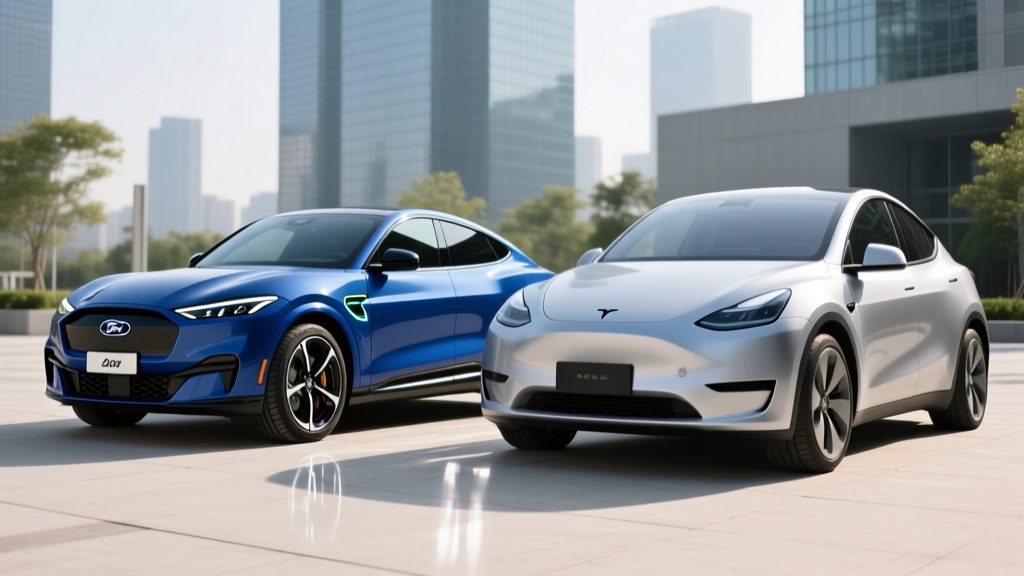
The Tesla small EV's primary advantage, if it hits its price target, is cost. No current EV undercuts $27,000 with 250+ miles of range and access to the Supercharger network. The Equinox EV offers more range and cargo space but at a higher price; the Ioniq 5 charges faster and offers a more conventional interior but starts $15,000+ higher.
✓ Projected Pros
- Sub-$30K price (if achieved) — most affordable Tesla ever
- Native Supercharger network access — best public charging reliability
- LFP battery longevity — likely 3,000+ cycle life
- Tesla OTA updates and software ecosystem
- Strong efficiency (low kWh/mile) = cheap home charging
- Minimal maintenance costs
✗ Projected Cons
- Tax credit eligibility uncertain (LFP/China sourcing risk)
- Smaller battery = less range than Model 3 or competitors
- Minimalist interior not for everyone (no physical buttons)
- No Apple CarPlay / Android Auto
- Tesla insurance premiums tend to be above-average
- Unconfirmed availability timeline for U.S. market
- Potential build-quality variability at production ramp
Who Should Wait for the Tesla Small EV — and Who Shouldn't?
Decision Framework
Wait for the Tesla small EV if:
- Your budget is firmly under $30,000 and you want a new EV
- You prioritize Supercharger network access for road trips
- You're a tech-forward buyer who values OTA updates and software integration
- You have reliable home Level 2 charging and mostly commute under 50 miles/day
- You're willing to wait — potentially into late 2026 or 2027 — for U.S. availability
Buy something else now if:
- You need a vehicle immediately — the Tesla small is not yet on sale
- You need 300+ miles of range for frequent long-distance driving
- You require a spacious family crossover with substantial cargo room
- Federal tax credit certainty is critical to your purchase math (consider a currently qualifying model)
- You prefer physical controls, Apple CarPlay, or a traditional dealer service experience
Frequently Asked Questions
What is the real-world range of the Tesla small EV?
Since the vehicle is not yet on sale, there is no EPA-confirmed figure. Based on projected ~55 kWh LFP battery and Tesla's efficiency, a 250–300 mile EPA estimate is reasonable. Real-world highway range would likely be 220–240 miles, dropping to 180–200 miles in freezing temperatures. We will update this with verified data upon official release.
How fast does it charge at home and on DC fast chargers?
Estimated DC fast charging peaks at 170–200 kW, yielding a 10–80% session in roughly 25–30 minutes. Home Level 2 charging at 11.5 kW (48A, 240V) should add approximately 35–40 miles per hour of charging, with a full charge taking 7–8 hours. These figures are estimates based on comparable Tesla LFP platforms.
How much will the Tesla small EV cost after tax credits?
If the base MSRP lands around $27,000 and the vehicle qualifies for the full $7,500 federal credit, the effective price could be as low as $19,500. However, LFP battery sourcing from China may disqualify it from part or all of the §30D credit due to FEOC restrictions. State incentives (e.g., California's CVRP, Colorado's $5,000 credit) may stack on top. Always verify eligibility at point of purchase.
Is the Tesla small EV worth waiting for vs. buying a competitor now?
If price is your top priority and you can wait, yes — a sub-$30K Tesla with Supercharger access would be compelling. If you need a car now, the Chevrolet Equinox EV (~$33K, 319 mi range), Hyundai Ioniq 5 (faster charging, more interior space), or a used Tesla Model 3 (eligible for the $4,000 used-EV credit) are strong alternatives that are available today with confirmed specs and tax-credit eligibility.
Does the Tesla small EV qualify for the federal EV tax credit?
This cannot be confirmed until the vehicle is on sale and the IRS verifies its battery-sourcing compliance. The MSRP and buyer income thresholds should not be barriers for a compact budget EV. The critical-mineral and battery-component sourcing requirements — and FEOC restrictions on Chinese-sourced materials — are the determining factors. Check IRS.gov and fueleconomy.gov at time of purchase for definitive eligibility.
When will the Tesla small EV be available in the United States?
Tesla has not announced a firm U.S. launch date. Production timelines referenced in earnings calls and industry reporting suggest initial manufacturing could begin at a new or retooled facility in late 2026 or 2027, with U.S. deliveries potentially following in 2027. This timeline is subject to change based on factory readiness, regulatory approvals, and market conditions.
Will it have Autopilot and Full Self-Driving?
Yes, the Tesla small EV is expected to include Basic Autopilot (traffic-aware cruise control and lane centering) as standard, with FSD (Supervised) available as a paid upgrade. Importantly, both are SAE Level 2 driver-assistance systems — the driver must remain fully attentive and keep hands on the wheel at all times. These are not autonomous or self-driving systems.
This article reflects information available as of early 2026. Tesla has not officially released a compact "small" EV for the U.S. market. All specifications marked as estimated are based on industry reporting, Tesla's next-gen platform disclosures, and analysis of comparable vehicles. This page will be updated with verified EPA, manufacturer, and IRS data upon official launch. Consult tesla.com for the latest official information.