Why EV Owners Are Searching for Tesla Shingles Cost Data
If you drive a Tesla—or any EV—and you're paying $0.14 to $0.22 per kWh at home, you've likely wondered whether generating your own electricity makes financial sense. That curiosity inevitably leads to one question: what is the actual Tesla shingles cost in 2026, and does the Tesla Solar Roof deliver enough energy to offset daily EV charging?
This guide isn't a solar panel review. It's a practical breakdown for EV owners weighing whether Tesla's integrated solar shingle product justifies its premium, how the economics change when you factor in home charging loads, and what alternatives exist. We'll cover installed pricing, energy production, tax incentives, and how a Solar Roof pairs with real-world EV electricity consumption.
Tesla Solar Roof Quick Specs (2026)
| Attribute | Detail |
|---|---|
| Product Type | Integrated solar + non-solar glass shingles |
| Solar Shingle Efficiency | ~22-23% per active tile |
| Typical System Size (Residential) | 8 kW – 15 kW DC |
| Average Installed Cost (10 kW system) | $42,000 – $62,000 before incentives |
| Cost Per Watt (Installed) | $4.20 – $6.20/W |
| Warranty (Weatherization) | 25 years |
| Warranty (Power Output) | 25 years (≥80% retention) |
| Powerlink Gateway + Powerwall | Optional; adds ~$12,000–$16,000 per Powerwall 3 |
| Federal Tax Credit (ITC §25D) | 30% of total installed cost (through 2032) |
Breaking Down the Tesla Shingles Cost in 2026
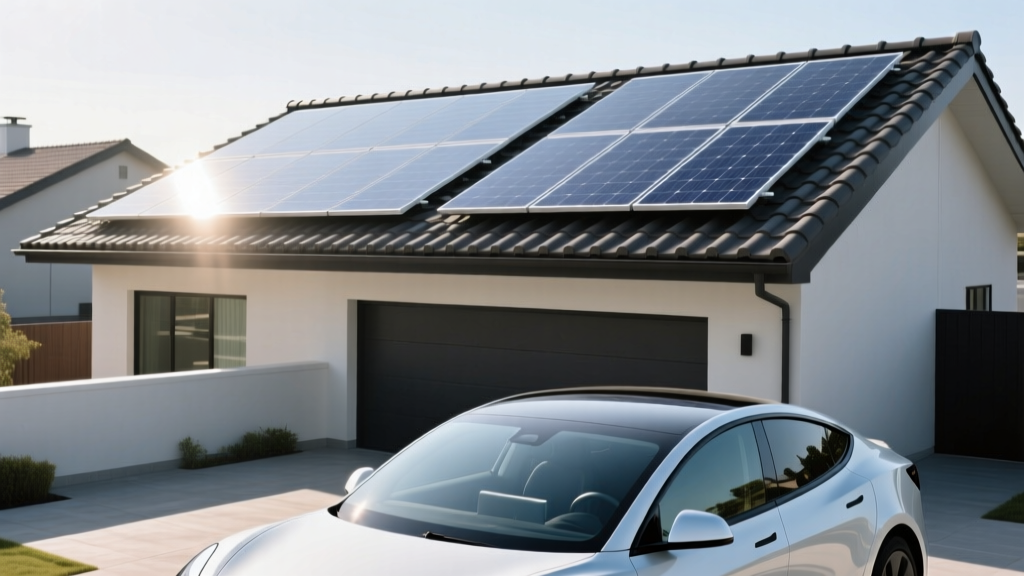
Tesla's Solar Roof is not a conventional rack-mounted solar panel system. It replaces your entire roof with a mix of active (energy-producing) and inactive (appearance-matching) tempered glass tiles. That full-roof replacement is the primary driver of its higher cost compared to traditional solar panels.
Installed Cost by System Size
Based on 2025–2026 Tesla quotes aggregated across homeowner forums, EnergySage data, and SolarReviews reporting, here is what buyers are paying:
| System Size | Roof Sq Ft (Approx) | Pre-Incentive Cost | Cost After 30% ITC |
|---|---|---|---|
| 6 kW | ~1,200 | $33,000 – $44,000 | $23,100 – $30,800 |
| 10 kW | ~1,800 | $42,000 – $62,000 | $29,400 – $43,400 |
| 15 kW | ~2,500 | $58,000 – $85,000 | $40,600 – $59,500 |
| 20 kW | ~3,200 | $74,000 – $110,000 | $51,800 – $77,000 |
Key context: A conventional rack-mounted 10 kW solar panel system averages $27,000–$32,000 installed nationally in 2026, according to EnergySage. The Tesla Solar Roof premium—roughly 40-90% higher—pays for aesthetics and roof integration, not additional energy output per watt.
What Drives the Cost Variance
- Roof complexity: Multi-plane roofs with valleys, dormers, and steep pitches require more custom cutting and labor.
- Active vs. inactive tile ratio: Tesla uses non-producing "dummy" tiles on north-facing or shaded sections. A roof that needs more active tiles costs more.
- Existing roof condition: If your current roof needs structural reinforcement or full tear-off, that adds $5,000–$15,000.
- Powerwall addition: Most EV owners opt for at least one Powerwall 3 (~$12,000–$16,000 installed) for backup power and overnight charging.
- Permitting and utility interconnection: Varies by state; typically $1,000–$3,000.
Energy Production vs. EV Charging Demand
The financial case for Tesla shingles hinges on whether the system produces enough surplus energy to cover your EV's electricity consumption. Let's run real numbers.
Typical EV Charging Load
| EV Model | Annual Miles | Efficiency (kWh/100mi) | Annual kWh Needed |
|---|---|---|---|
| Tesla Model Y LR AWD | 12,000 | 27 | 3,240 kWh |
| Tesla Model 3 RWD | 12,000 | 25 | 3,000 kWh |
| Ford F-150 Lightning | 12,000 | 47 | 5,640 kWh |
| Hyundai Ioniq 5 RWD | 12,000 | 28 | 3,360 kWh |
A typical single-EV household adds 3,000–5,600 kWh per year to their electricity bill. A two-EV household with an F-150 Lightning could easily push past 8,000 kWh annually just for driving.
What a 10 kW Tesla Solar Roof Produces
Production depends heavily on location and roof orientation. Using NREL PVWatts averages:
- Phoenix, AZ: ~15,500 kWh/year (excellent solar resource)
- Los Angeles, CA: ~14,200 kWh/year
- Austin, TX: ~13,800 kWh/year
- New York, NY: ~11,500 kWh/year
- Seattle, WA: ~10,200 kWh/year
In most U.S. climates, a 10 kW system generates enough energy to cover a typical household's base electric load plus one EV's charging needs—with surplus in sunnier regions. In cloudy northern climates, you may need a 15 kW system to fully offset two EVs.
Real-World Charging Economics
Scenario: 10 kW Tesla Solar Roof in Austin, TX, charging a Model Y LR (3,240 kWh/year). Household base load: 9,000 kWh/year. Total demand: 12,240 kWh. System produces ~13,800 kWh. Result: Net surplus of ~1,560 kWh—enough to bank credits for winter months via net metering (if your utility offers it). Your marginal EV charging cost drops to near zero after system payback.
Federal Tax Credits and Incentives for Tesla Shingles
The Tesla Solar Roof qualifies for the federal Residential Clean Energy Credit (IRC §25D), which provides a 30% tax credit on the total installed cost—including labor, permitting, and any paired Powerwall battery—through December 31, 2032.
Net Cost After Federal ITC (30%)
| Configuration | Pre-Credit Cost | ITC Credit | Net Cost |
|---|---|---|---|
| 10 kW Solar Roof only | $52,000 | –$15,600 | $36,400 |
| 10 kW + 1 Powerwall 3 | $66,000 | –$19,800 | $46,200 |
| 15 kW + 2 Powerwall 3 | $102,000 | –$30,600 | $71,400 |
Important caveats per IRS guidelines:
- The credit is non-refundable—it reduces your federal tax liability to zero but won't generate a refund for the excess.
- Unused credit can be carried forward to future tax years.
- The credit applies only to your primary residence (not rental properties).
- If you lease the system or use a PPA (power purchase agreement), the tax credit goes to the lessor, not you.
- State and utility rebates may stack on top—check DSIRE for your jurisdiction.
Tesla Solar Roof vs. Conventional Solar Panels: An EV Owner's Comparison
For most EV owners, the decision comes down to whether the aesthetic premium of integrated shingles is worth the added cost. Here's how the two approaches compare head-to-head:
| Factor | Tesla Solar Roof (Shingles) | Conventional Rack-Mounted Panels |
|---|---|---|
| Installed Cost (10 kW) | $42,000 – $62,000 | $27,000 – $32,000 |
| Cost After 30% ITC | $29,400 – $43,400 | $18,900 – $22,400 |
| Energy Output (per kW) | Comparable | Comparable |
| Aesthetics | Flush, integrated look | Visible rack + panels |
| Roof Replacement Included | Yes (full roof) | No (existing roof required) |
| Installation Timeline | 1–3 weeks (plus permitting) | 1–3 days (plus permitting) |
| Payback Period (avg) | 12–18 years | 7–10 years |
| Best For | New roof needed + aesthetics priority | Cost optimization priority |
Pros of Tesla Solar Roof for EV Owners
- Eliminates or drastically reduces EV charging electricity cost after payback
- Full roof replacement included—no separate roofer needed
- Clean aesthetic; no visible rack hardware
- Seamless integration with Tesla app, Powerwall, and Wall Connector
- 25-year weatherization and power warranty
- 30% federal ITC applies to entire system cost
Cons of Tesla Solar Roof for EV Owners
- 40–90% cost premium over conventional panels for same energy output
- Longer payback period (12–18 years vs. 7–10 years)
- Installation delays and scheduling issues reported by some customers
- Repair complexity if individual tiles fail (specialized service required)
- Not cost-effective if your roof is new or recently replaced
- Powerwall adds $12K–$16K per unit for backup/overnight charging capability
Who Should Consider Tesla Shingles (And Who Shouldn't)
Decision Framework
Choose the Tesla Solar Roof if:
- Your existing roof is 20+ years old and needs replacement anyway (bundling the costs improves economics)
- You prioritize aesthetics and HOA compliance over pure cost optimization
- You live in a high-solar-resource state (AZ, CA, TX, NV, CO, FL)
- You already own or plan to buy a Tesla vehicle and want unified app control
- You plan to stay in the home 10+ years to capture the payback
Choose conventional solar panels if:
- Your roof is relatively new (under 10 years old)
- You want the shortest payback period and lowest cost per kWh generated
- You're adding solar primarily to offset EV charging costs
- You may move within 5–7 years
Pairing Solar with Home EV Charging: Setup Recommendations
If you do invest in Tesla shingles, optimizing your home charging setup maximizes the return:
- Tesla Wall Connector (48A / 11.5 kW): Pairs natively with the Tesla app. Schedule charging for midday solar peak production (10am–3pm) to use direct solar energy rather than grid power.
- Powerwall 3 (13.5 kWh usable, 11.5 kW continuous): Stores midday solar surplus for overnight EV charging. One Powerwall can fully charge a Model 3 RWD (~57.5 kWh battery) from 10% to ~34% overnight; two units cover a near-full charge.
- Time-of-use (TOU) optimization: In states with TOU rates (CA, TX, NY), program the Powerwall to discharge during peak evening hours and charge the EV during off-peak or solar-surplus windows.
- Panel upgrade consideration: A 10 kW solar system + Powerwall + Level 2 charger may require a 200A electrical panel. Budget $1,500–$3,500 for a panel upgrade if your home currently has 100A service.
Frequently Asked Questions
What is the real installed Tesla shingles cost in 2026?
For a typical 10 kW system on a 1,800 sq ft roof, expect $42,000–$62,000 before the 30% federal tax credit. After the ITC, the net cost drops to roughly $29,400–$43,400. Adding a Powerwall 3 increases total cost by $12,000–$16,000 but is also eligible for the 30% credit.
Does the Tesla Solar Roof produce enough energy to charge my EV for free?
In sunny climates (Southwest, Southeast, California), a 10 kW system typically produces 13,000–15,500 kWh annually—enough to cover a household's base load plus one EV's ~3,000–3,500 kWh annual charging need. In cloudier northern climates, a larger system (15 kW) may be needed for full offset.
Is the Tesla Solar Roof eligible for the federal EV tax credit?
No. The Solar Roof qualifies for the Residential Clean Energy Credit (IRC §25D), not the EV purchase credit (IRC §30D). The §25D credit provides 30% of total installed cost through 2032 with no dollar cap, but it is non-refundable and applies to your primary residence only.
How long does Tesla Solar Roof installation take?
Physical installation typically takes 5–15 business days depending on roof size and complexity. However, the full timeline from contract to activation—including engineering review, permitting, and utility interconnection approval—often spans 3–6 months. Some customers report longer waits during peak demand periods.
Is the Tesla Solar Roof worth it compared to regular solar panels?
From a pure economics standpoint, conventional rack-mounted panels deliver the same energy at 40–50% lower cost and a faster payback (7–10 years vs. 12–18 years). The Tesla Solar Roof makes financial sense primarily when you need a full roof replacement anyway—bundling roofing and solar costs narrows the premium gap. It also appeals to homeowners in strict HOA areas where visible panels are restricted.
Can I charge my non-Tesla EV with a Tesla Solar Roof system?
Yes. The solar system feeds energy into your home's electrical panel, which powers any Level 2 charger regardless of brand. You can use a ChargePoint Home Flex, Emporia Vue, or any J1772/NACS charger with Tesla solar energy. The Tesla app tracks production and consumption regardless of which EV you drive.
Sources: Tesla Solar Roof product specifications (tesla.com/solarroof), IRS Residential Clean Energy Credit guidance (irs.gov), NREL PVWatts Calculator (pvwatts.nrel.gov), EnergySage 2025–2026 solar pricing data, EPA fueleconomy.gov efficiency ratings.