Tesla Service in Seattle's SoDo District: What 2026 Owners Need to Know
If you own a Tesla in the Pacific Northwest, you've likely searched for Tesla service Seattle-SoDo at least once. The SoDo service center — located near Seattle's industrial core — is Tesla's primary repair and maintenance hub for the greater Seattle metro area, handling everything from routine tire rotations to high-voltage battery diagnostics. But what does the service experience actually look like in 2026, and how does it factor into the total cost and practicality of Tesla ownership?
This guide goes beyond the service bay. We'll break down real-world range expectations for Tesla's most popular models in Seattle's unique climate, detail exact charging speeds you can expect, map out pricing after federal tax credits, and give you an honest assessment of whether a Tesla — serviced through the SoDo center or via mobile technicians — is the right electrified vehicle for your Pacific Northwest lifestyle.
Real-World Range in Seattle: EPA vs. Reality
EPA Sticker: 2026 Model Y Long Range AWD — 310 miles (75 kWh usable, NMC chemistry)
Seattle Real-World Expectation: 260–285 miles in mild weather (45–65°F); 220–245 miles in winter (30–40°F) with cabin heating and rain. Highway driving at 70+ mph on I-5 or I-90 reduces range by 10–15% versus city/regen-heavy commuting. Expect roughly 250 miles as a practical daily planning number year-round.
2026 Tesla Model Y Long Range: Full Specification Breakdown
The Model Y Long Range AWD remains Tesla's highest-volume vehicle and the one most frequently serviced at the SoDo location. Here are the exact numbers that matter for ownership decisions:
| Specification | 2026 Model Y Long Range AWD |
|---|---|
| EPA Range | 310 miles |
| Battery (Usable) | ~75 kWh, NMC (nickel manganese cobalt) |
| Drivetrain | Dual Motor AWD |
| Horsepower | 384 hp combined |
| 0–60 mph | 4.8 seconds |
| Peak DC Fast Charge | 250 kW (Supercharger V3/V4) |
| 10–80% DC Charge Time | ~27 minutes |
| Level 2 Home Charge (11.5 kW) | ~44 miles per hour of charging |
| Efficiency | 122 MPGe combined / 27 kWh per 100 miles |
| Cargo Volume | 30.2 cu ft (rear seats up) / 72.1 cu ft (folded) |
| Rear Legroom | 41.6 inches |
| Battery Warranty | 8 years / 120,000 miles (70% minimum retention) |
| Base MSRP | $44,990 |
For the Model Y Performance trim ($48,990 MSRP), expect 285 miles EPA, a 3.5-second 0–60, and 456 hp — but a stiffer ride and slightly higher tire wear, which matters when you're booking service appointments for replacement rubber.
Charging Speeds: Supercharger Network and Home Setup in Seattle
Charging infrastructure is where Tesla ownership still carries a meaningful advantage. The Supercharger network in the Seattle area includes stations in SoDo, Bellevue, Lynnwood, and along I-5 and I-90 corridors — critical for Cascades crossing and trips to Portland or Vancouver, BC.
| Charging Level | Power (kW) | Miles Added Per Hour | Typical Use Case |
|---|---|---|---|
| Level 1 (120V standard outlet) | ~1.4 kW | ~4–5 miles/hr | Emergency/trickle only |
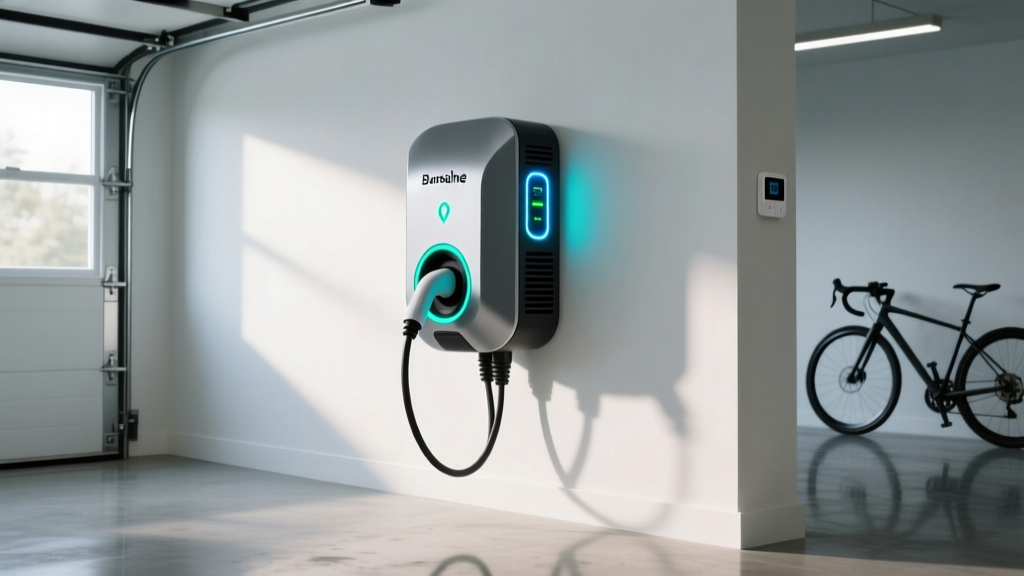
| Level 2 (240V, 48A Wall Connector) | 11.5 kW | ~44 miles/hr | Primary home charging |
| Level 2 (240V, 32A mobile connector) | 7.7 kW | ~30 miles/hr | Apartment/limited panel |
| DC Fast (Supercharger V3) | 250 kW peak | ~180 miles in 15 min | Road trips, rapid top-ups |
| DC Fast (Supercharger V4) | Up to 325 kW peak* | ~200+ miles in 15 min | Newer stations; Model Y caps at ~250 kW |
*V4 peak rates apply to vehicles supporting higher charge acceptance; the 2026 Model Y architecture peaks around 250 kW regardless of station capability.
Charge curve reality: The Model Y sustains peak 250 kW only between roughly 10–30% state of charge. From 30–60%, expect 150–175 kW. Above 80%, the rate drops sharply to under 50 kW to protect the NMC cells. This is why Tesla navigation preconditions the battery when routing to a Supercharger — arriving with a cold battery in Seattle's 40°F winter mornings can cut your peak charge rate in half without preconditioning.
For home Level 2 installation in the Seattle area, budget $800–$2,500 total: the Tesla Wall Connector runs $475, licensed electrician labor is $500–$1,500 depending on panel proximity, and permits in King County typically cost $100–$200. If your home has a 200-amp panel with spare capacity, expect the lower end. Older Seattle homes with 100-amp service may need a panel upgrade ($2,000–$4,000) — factor this into your purchase decision.
Federal Tax Credit Eligibility: 2026 IRS §30D Rules
The federal EV tax credit under IRS §30D remains a pivotal factor in Tesla pricing, but eligibility is not universal. Here's the current framework for the 2026 tax year:
| 2026 Model Y Trim | MSRP | Max §30D Credit | Effective Price (if eligible) |
|---|---|---|---|
| Long Range AWD | $44,990 | Up to $7,500 | $37,490 |
| Performance AWD | $48,990 | Up to $7,500 | $41,490 |
| Long Range RWD (if available) | $42,990 | Up to $7,500 | $35,490 |
Eligibility requirements you must meet:
- MSRP cap: SUVs/vans/pickups must be under $80,000 — the Model Y clears this easily.
- Income cap: Modified AGI must not exceed $150,000 (single), $225,000 (head of household), or $300,000 (joint filing).
- Battery sourcing: A percentage of critical minerals and battery components must be sourced from the US or FTA partners. Tesla's supply chain has progressively met these thresholds, but the exact credit amount ($3,750 or $7,500) depends on whether both the mineral and component tests are satisfied for your specific VIN's build date.
- Point-of-sale transfer: As of 2024, you can transfer the credit to the dealer at purchase, reducing your out-of-pocket cost immediately rather than waiting for a tax refund.
Always verify your specific vehicle's eligibility at fueleconomy.gov before purchasing, as battery sourcing compliance can shift between production batches.
Tesla Service Seattle-SoDo: What the Experience Actually Looks Like
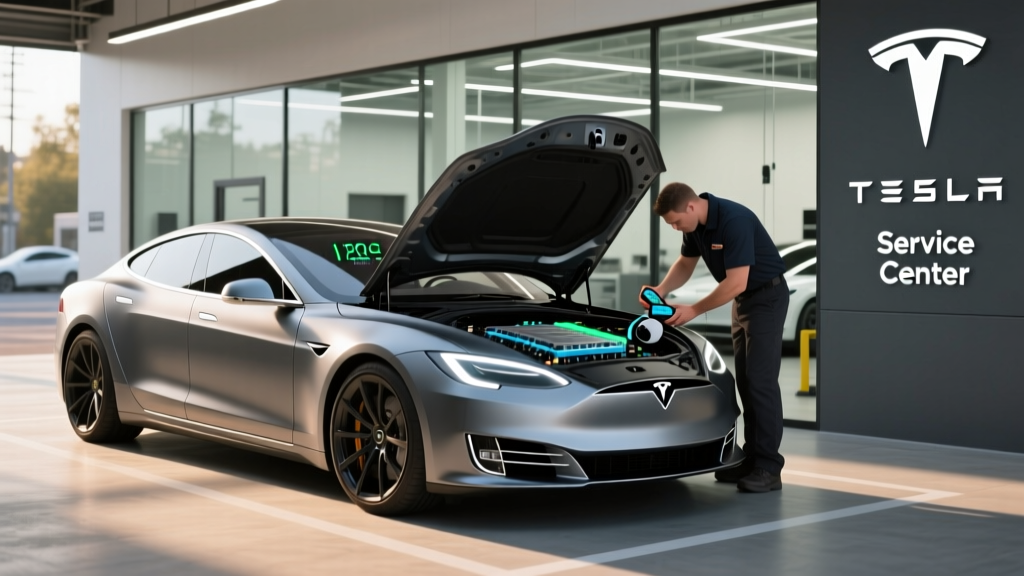
The SoDo service center (located on or near South Royal Brougham Way) handles the bulk of Tesla's Seattle-area physical repairs. Here's what 2026 owners report and what you should expect:
Common Service Needs for Seattle Tesla Owners
- Tire replacement and rotation: EV torque and Seattle's wet roads accelerate tire wear. Expect replacements every 25,000–35,000 miles. Tesla recommends rotation every 6,250 miles.
- Cabin air filter / HEPA filter: Every 2–3 years; the HEPA filtration system (standard on Model Y) requires more expensive filter media.
- Brake fluid check: Every 2 years. Regen braking preserves pads, but Seattle's humidity demands fluid inspection for moisture contamination.
- 12V battery replacement: The auxiliary lithium 12V battery typically lasts 4–6 years. Failure leaves the vehicle inoperable even with a full traction battery.
- Suspension components: Control arm bushings and strut mounts may need attention past 60,000 miles, especially on Seattle's rougher streets and speed bumps.
- Software/hardware recalls: Tesla handles recall-related updates (e.g., camera replacements, seatbelt tensioner checks) at no cost during service visits.
Service Wait Times and Mobile Service
In 2026, Tesla SoDo appointment availability for non-urgent work (tire rotations, inspections) typically ranges from 1–3 weeks out. For urgent issues (drive unit warnings, battery alerts), Tesla prioritizes scheduling, often within 3–5 business days. Mobile service technicians cover much of the greater Seattle area for simpler jobs — tire work, 12V battery swaps, minor trim and hardware replacements — saving you the trip to SoDo entirely.
Pro tip: Use the Tesla app to request service rather than calling. The app provides estimated wait times, lets you upload photos of damage, and often triggers a mobile-service dispatch for straightforward fixes without ever requiring a SoDo visit.
Standout Technology and Notable Drawbacks
Pros
- Supercharger network remains the most reliable DC fast-charging ecosystem in the US — critical for PNW road trips over Snoqualmie or Stevens Pass
- Over-the-air updates continuously add features; 2026 models include improved adaptive cruise and lane-centering refinement
- Heat pump standard — dramatically reduces winter range loss versus resistive heating (relevant to Seattle's 35–45°F winters)
- Class-leading cargo volume for the crossover segment (72.1 cu ft with seats folded)
- Low scheduled maintenance cost — no oil changes, minimal brake wear, cabin filter swaps only
- NACS connector native — no adapter needed at Superchargers, and growing third-party network compatibility (Ford, GM, Rivian, and others have adopted NACS)
Cons
- No Apple CarPlay or Android Auto — Tesla's proprietary infotainment is capable but a dealbreaker for some
- Ride quality on 20" wheels can be firm on Seattle's uneven pavement; 19" wheels recommended for comfort
- Visibility compromised by thick rear pillars; backup camera and mirrors are essential
- Insurance premiums run 15–30% higher than comparable ICE crossovers in Washington State
- Service center capacity can bottleneck during high-demand periods (post-hailstorm, recall campaigns)
- Minimal physical controls — HVAC, glovebox, and mirror adjustments all require touchscreen interaction
Driver Assistance: Autopilot and FSD (Supervised)
SAE Automation Level: Level 2. Tesla Autopilot and Full Self-Driving (Supervised) require continuous driver attention and hands-on-wheel engagement. These are not autonomous systems. The driver is legally and operationally responsible at all times. Only Level 4 services like Waymo operate without a driver in the loop — and Waymo is not available in Seattle.
Autopilot (included) provides adaptive cruise control and lane centering on highways — competent for I-5 commuting. FSD (Supervised), currently priced at $8,000 one-time or $99/month, adds city-street navigation, traffic light/stop sign response, and autosteer on surface streets. Real-world performance in Seattle's rain, construction zones, and unprotected left turns remains inconsistent. Most owners find Autopilot sufficient; FSD is a convenience upgrade, not a necessity.
Is the 2026 Tesla Model Y Worth It vs. Competitors?
The Model Y Long Range competes directly with the Hyundai Ioniq 5, Ford Mustang Mach-E, Chevrolet Equinox EV, and the refreshed BMW iX3. Here's how it stacks up on the metrics that matter:
| Metric | Tesla Model Y LR | Hyundai Ioniq 5 LR | Ford Mach-E ER |
|---|---|---|---|
| EPA Range | 310 mi | 305 mi | 305 mi |
| Peak DC Charge | 250 kW | 350 kW (800V) | 150 kW |
| 10–80% Time | ~27 min | ~18 min | ~41 min |
| Cargo (rear up) | 30.2 cu ft | 27.2 cu ft | 29.7 cu ft |
| Base MSRP | $44,990 | $46,000 | $43,495 |
| Native NACS | Yes | No (adapter avail.) | No (adapter avail.) |
The Ioniq 5 charges faster thanks to its 800-volt architecture — a meaningful advantage on road trips. The Model Y wins on cargo space and Supercharger access without adapters. The Mach-E lags in charging speed but offers a more traditional crossover interior feel and Apple CarPlay.
Who Should Buy the Tesla Model Y?
Choose the Model Y if: You rely on the Supercharger network for road trips over Cascade passes, value maximum cargo space, prefer native NACS charging without adapters, and want the lowest routine-maintenance cost in the segment.
Look elsewhere if: You prioritize the fastest possible DC charging (Ioniq 5/Porsche Macan EV), demand Apple CarPlay, want a more traditional dealership service experience, or prefer a softer ride without switching to smaller wheels.
Frequently Asked Questions
What is the real-world range of the 2026 Tesla Model Y in Seattle?
The EPA rates the Model Y Long Range AWD at 310 miles. In Seattle's climate — with winter temperatures in the 30s–40s, frequent rain, and highway driving on I-5 or I-90 — expect 250–285 miles in practice. The heat pump helps mitigate winter losses compared to older EVs with resistive heaters, but cold and rain still reduce efficiency by 10–20%.
How fast does the Model Y charge at home and on the road?
At home on a Level 2 Tesla Wall Connector (11.5 kW / 48 amps), you'll add roughly 44 miles of range per hour — a full overnight charge from 20–90% takes about 7 hours. On Supercharger V3 stations, the peak rate is 250 kW, delivering 10–80% in approximately 27 minutes. Charging slows significantly above 80% to protect battery health.
How much does the Model Y cost after the federal tax credit?
The 2026 Model Y Long Range AWD starts at $44,990. If you meet all IRS §30D requirements (income under $300,000 joint / $150,000 single, vehicle meets battery sourcing thresholds), you may qualify for up to $7,500 — bringing the effective price to approximately $37,490. You can transfer the credit at point of sale to reduce your upfront cost. Always confirm eligibility at fueleconomy.gov for your specific VIN.
Does the 2026 Tesla Model Y qualify for the federal EV tax credit?
The Model Y generally qualifies for up to $7,500 under §30D, as it is assembled in the US, falls under the $80,000 SUV MSRP cap, and Tesla has progressively met critical-mineral and battery-component sourcing requirements. However, the exact credit amount can vary by production batch and build date. Verify current eligibility on the IRS clean vehicle credit page before purchasing.
How long is the Tesla battery warranty?
The 2026 Model Y Long Range carries an 8-year / 120,000-mile battery and drive unit warranty. Tesla guarantees the battery will retain at least 70% of its original capacity during the warranty period. NMC chemistry in the Long Range degrades slightly faster than LFP (used in the base RWD model) but offers higher energy density. Real-world data from high-mileage owners suggests 5–10% degradation over the first 100,000 miles under normal use.
Is Tesla's SoDo service center reliable for major repairs?
The SoDo center handles the full range of Tesla service work, including high-voltage diagnostics, drive unit replacement, and body repair coordination. Wait times for non-urgent appointments average 1–3 weeks in 2026. For simpler issues, Tesla's mobile service covers most of King County and can resolve tire, 12V battery, and minor hardware issues at your home or workplace — often faster than scheduling a SoDo visit.
What are the biggest ongoing costs of owning a Tesla in Seattle?
Beyond the purchase price, budget for: home Level 2 charger installation ($800–$2,500 one-time); electricity at roughly $0.12–$0.16/kWh in Seattle City Light territory (about $450–$600/year for 12,000 miles of driving); tire replacement every 25,000–35,000 miles ($800–$1,400 for a set of EV-rated tires); and insurance premiums that run 15–30% above gas-powered equivalents. There are no oil changes, transmission fluid services, or emissions inspections.
Sources: EPA range and efficiency data from fueleconomy.gov; federal tax credit rules from IRS §30D guidance; vehicle specifications from Tesla's official 2026 model documentation.