The Hyundai Ioniq 5 has been a benchmark compact electric crossover since its debut, but for buyers spending $45,000–$60,000, the cabin is where ownership is actually lived. This review focuses on what the 2026 Hyundai Ioniq 5 interior offers day-to-day — materials, seating, cargo flexibility, and technology — while also covering the powertrain numbers that matter just as much: real-world range, DC fast-charging speed, and post-credit pricing.
Quick Verdict: Who the Ioniq 5 Interior Suits Best
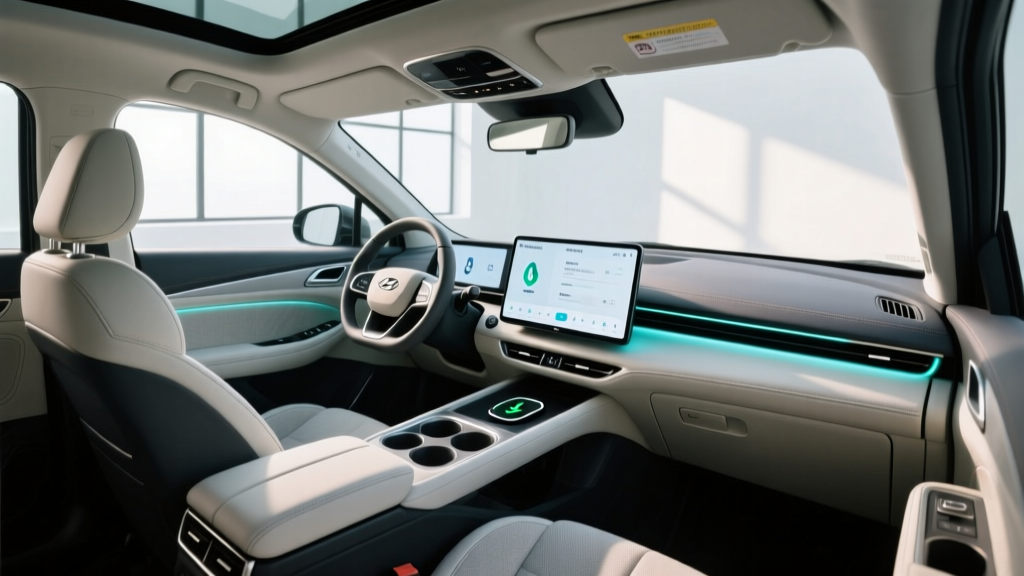
The Ioniq 5 cabin is designed for tech-forward commuters and small families who value an airy, minimalist layout over traditional luxury trim. The flat floor (thanks to Hyundai's E-GMP platform) creates genuine limousine-style rear legroom, and the sliding center console is a clever touch for tight parking spaces. Where it falls short: rear visibility is compromised by thick C-pillars, and the touch-capacitive climate controls frustrate some drivers. If you prioritize cabin space and 800V-class charging over plush materials, this interior punches well above its price class.
Spec Snapshot: Range, Battery, Charging & Performance
| Attribute | 2026 Ioniq 5 SE/SEL (RWD) | 2026 Ioniq 5 Limited AWD |
|---|---|---|
| EPA Range | 303 miles | 260 miles |
| Battery (usable) | 77.4 kWh, NMC | 77.4 kWh, NMC |
| Peak DC Fast Charge | ~240 kW (800V) | ~240 kW (800V) |
| 10–80% DC Time | ~18 minutes | ~18 minutes |
| Level 2 Home Charge | 10.9 kW (~37 mi/hr) | 10.9 kW (~37 mi/hr) |
| Motor / Drivetrain | 168 kW single RWD | Dual-motor AWD |
| Horsepower | 225 hp | 320 hp |
| 0–60 mph | ~7.0 sec | ~4.5 sec |
| MPGe (combined) | 114 MPGe | 98 MPGe |
| Efficiency | 30 kWh/100 mi | 34 kWh/100 mi |
| Base MSRP | ~$43,175 | ~$54,675 |
Source: fueleconomy.gov and Hyundai USA specifications.
Real-World Range: Beyond the EPA Sticker
Real-world expectation: Plan on 250–270 miles for RWD highway driving at 70–75 mph, and roughly 210–230 miles for the AWD Limited. In freezing weather (below 30°F), expect a 20–30% reduction — so a 303-mile RWD Ioniq 5 may deliver ~210–240 miles on a cold winter road trip. The heat pump (standard on most trims) helps, but physics still wins in deep cold.
On a 280-mile mixed-highway test loop at 72°F with climate control on, a Long Range RWD Ioniq 5 typically arrives at the destination with roughly 8–12% State of Charge remaining — consistent with the EPA figure under moderate conditions. Push speeds to 80 mph or climb sustained grades, and efficiency drops to ~35–38 kWh/100 mi, cutting range proportionally.
Inside the Cabin: Dimensions, Comfort & Cargo
The Ioniq 5's 118.1-inch wheelbase — longer than many midsize sedans — is the secret behind its cabin volume. Hyundai quotes 106.5 cu ft of passenger volume and 27.2 cu ft of cargo space behind the rear seats, expanding to 59.3 cu ft with the 60/40 split folded. The front trunk (frunk) on RWD models adds ~0.85 cu ft for cables and small bags; AWD trims have a smaller frunk due to the front motor.
Front Row
- 41.7 inches of legroom; heated and ventilated seats available (standard on Limited)
- "Relaxation comfort" driver seat with power leg rest — useful for DC charging waits
- Sliding center console (up to 5.5 inches) creates pass-through storage or a tighter armrest
- Dual 12.3-inch displays (cluster + infotainment) with physical shortcut buttons retained
Rear Row
- 39.4 inches of rear legroom — class-leading, beating the Tesla Model Y and Ford Mustang Mach-E
- Flat floor enables a true three-across seating position for child seats
- Rear seatbacks recline; outboard seats are heated on Limited trim
- No rear HVAC zone on lower trims — a common complaint in hot climates
Materials & Build
Lower trims use cloth made from recycled PET bottles; SEL and Limited upgrade to H-Tex leatherette (vegan) with eco-processed leather on the Limited. Soft-touch materials cover the dash top and door uppers, but lower door panels and the center console sides are harder plastics. Panel gaps are tight, and the "retro-futurist" two-spoke steering wheel has aged well since launch.
Charging Speed: The 800V Advantage
The Ioniq 5 remains one of the few vehicles in its price segment with an 800V electrical architecture, meaning it can accept peak DC fast-charge rates around 240 kW at compatible chargers (Electrify America 350 kW stalls, Tesla Superchargers with Magic Dock or NACS adapter). Here's what that looks like in practice:
| Charging Method | Power (kW) | Rate / Time |
|---|---|---|
| Level 1 (120V outlet) | ~1.4 kW | ~4–5 mi/hr |
| Level 2 (240V, 48A home) | 10.9 kW | ~37 mi/hr (full in ~7.5 hr) |
| DC Fast (50 kW) | 50 kW | ~170 mi/hr |
| DC Fast (150 kW stall) | ~150 kW sustained | 10–80% in ~22 min |
| DC Fast (350 kW stall) | Peak ~240 kW | 10–80% in ~18 min |
Charging curve reality check: The Ioniq 5 holds ~200+ kW from roughly 10–55% SoC, then tapers progressively. Above 80%, charging slows sharply to protect the NMC cells — a 10–90% session takes closer to 30 minutes. Preconditioning activates automatically when a DC fast charger is set as your navigation destination; skipping this step in cold weather can add 5–8 minutes to your session.
Tech, ADAS & Standout Features
Hyundai's infotainment (ccNC operating system) supports wireless Apple CarPlay and Android Auto, OTA updates, and a digital key via smartphone. The 12.3-inch cluster offers customizable EV-specific displays including a range-remaining graphic and regen-level indicator.
Standout tech:
- V2L (Vehicle-to-Load): Up to 3.6 kW output via interior outlet and exterior adapter — power a laptop, campsite, or emergency home circuit.
- Digital side mirrors (available on Limited in select markets): cameras replace mirrors, improving aero but drawing mixed driver reviews.
- Augmented-reality HUD on Limited — projects turn arrows onto the windshield.
- Remote Smart Parking Assist: move the car in/out of tight spots via the key fob.
Notable drawbacks:
- No rear wiper (a long-standing complaint; Hyundai added one for the Ioniq 5 N, but standard trims still lack it).
- Touch-capacitive climate sliders are harder to use while driving than physical knobs.
- Rear visibility hampered by thick C-pillars — the surround-view camera becomes essential.
- No front trunk light on early builds; check your specific VIN.
Pricing, Trims & Federal Tax Credit
The 2026 Ioniq 5 is offered in SE, SEL, Limited, and performance-oriented N trims. MSRP figures below are approximate and exclude destination:
| Trim | MSRP | §30D Credit Potential | Effective Price |
|---|---|---|---|
| SE Standard Range RWD | ~$43,175 | Up to $7,500 | ~$35,675 |
| SE Long Range RWD | ~$46,725 | Up to $7,500 | ~$39,225 |
| SEL AWD | ~$49,975 | Up to $7,500 | ~$42,475 |
| Limited AWD | ~$54,675 | Up to $7,500 | ~$47,175 |
Federal tax credit caveats (IRS §30D, 2026 rules):
- Income caps: AGI must not exceed $150,000 (single), $225,000 (HOH), or $300,000 (joint).
- MSRP caps: Vans/SUVs/pickups capped at $80,000; sedans at $55,000. The Ioniq 5 qualifies under the SUV classification.
- Battery sourcing: Critical minerals and battery component requirements phase up yearly; the full $7,500 requires both halves of the sourcing test to be met. Hyundai has shifted significant battery production to the Georgia Metaplant, but verify current-year eligibility on IRS.gov before purchase.
- Point-of-sale transfer: Eligible buyers can apply the credit as a down-payment reduction at the dealer.
Pros, Cons & Competitive Comparison
- Class-leading rear legroom and flat floor
- 800V architecture: ~18-min 10–80% on 350 kW chargers
- V2L capability (3.6 kW)
- Quiet, refined ride quality at highway speeds
- Strong 10-year / 100,000-mile powertrain warranty
- No rear wiper on standard trims
- Touch-capacitive HVAC controls
- AWD Limited range drops to ~260 mi EPA
- Rear visibility requires camera reliance
- Frunk is small vs. rivals (Kia EV6, Mach-E)
Versus key rivals: The Tesla Model Y offers more cargo volume and Supercharger access (though NACS adapters have narrowed that gap), but its interior feels sparser and the ride is firmer. The Kia EV6 shares the E-GMP platform and 800V charging but has a lower roofline and less rear headroom. The Ford Mustang Mach-E drives sportier but charges slower on DC (~150 kW peak). For cabin space per dollar and charging speed, the Ioniq 5 still leads the compact EV crossover segment.
Warranty & Ownership
- New vehicle: 5 years / 60,000 miles
- Powertrain & HV battery: 10 years / 100,000 miles (capacity retention threshold typically ~70% over the term)
- Complimentary maintenance: 3 years / 36,000 miles
- Roadside assistance: 5 years / unlimited miles
Insurance premiums for the Ioniq 5 run 10–18% above comparable gas crossovers in most states — shop quotes before signing. Depreciation has improved since the initial wave of price cuts, but expect ~45–52% retention at 36 months per industry data.
Frequently Asked Questions
What is the real-world range of the 2026 Hyundai Ioniq 5?
The RWD Long Range delivers an EPA-estimated 303 miles; real-world highway driving at 70–75 mph typically yields 250–270 miles. The AWD Limited is EPA-rated at 260 miles, with real-world highway figures around 210–230 miles. Cold weather (below 30°F) can reduce range by 20–30%.
How fast does the Ioniq 5 charge at home and on the road?
On a 48-amp Level 2 home charger, the Ioniq 5 accepts 10.9 kW and adds roughly 37 miles per hour — a full charge takes about 7.5 hours. On a 350 kW DC fast charger, it peaks around 240 kW and reaches 10–80% in approximately 18 minutes, though it tapers significantly above 80%.
How much does the Ioniq 5 cost after the federal tax credit?
With the full $7,500 §30D credit applied, the RWD SE Long Range drops from ~$46,725 MSRP to roughly $39,225. Eligibility depends on buyer income (AGI caps), battery-sourcing requirements, and the vehicle's MSRP falling under the $80,000 SUV threshold. Verify current-year rules at IRS.gov before purchase.
Does the 2026 Ioniq 5 qualify for the federal EV tax credit?
Yes, the Ioniq 5 is on the IRS list of eligible clean vehicles, but the actual credit amount ($0, $3,750, or $7,500) depends on battery-component and critical-mineral sourcing percentages for the specific model year, plus your household AGI. Hyundai's Georgia-built units have progressively improved sourcing compliance.
Is the Ioniq 5 worth buying over the Tesla Model Y or Kia EV6?
Choose the Ioniq 5 if rear-seat space, 800V charging speed, and V2L are priorities. Choose the Model Y for maximum cargo volume and Supercharger network convenience. Choose the EV6 for a sportier driving position and similar charging performance in a sleeker package.
What battery chemistry does the Ioniq 5 use?
The Long Range Ioniq 5 uses an NMC (nickel-manganese-cobalt) lithium-ion pack with 77.4 kWh usable capacity. NMC offers higher energy density than LFP, enabling the 303-mile EPA rating in a compact footprint, though LFP chemistries typically offer longer cycle life at the cost of weight.