Quick Verdict: Does a Tesla Service Plan Make Sense?
Tesla does not sell a traditional prepaid maintenance plan the way legacy automakers do, and that reality shapes every discussion around a Tesla service plan. Instead, Tesla's ownership model is built on low scheduled-maintenance needs, mobile service, and out-of-warranty repair costs that can sting if a major component fails after the basic warranty expires. For most 2026 Model Y buyers, the smart play is to understand what Tesla's factory warranties already cover, budget for the few recurring consumables, and weigh an extended service agreement only if you plan to keep the vehicle well past 50,000 miles.
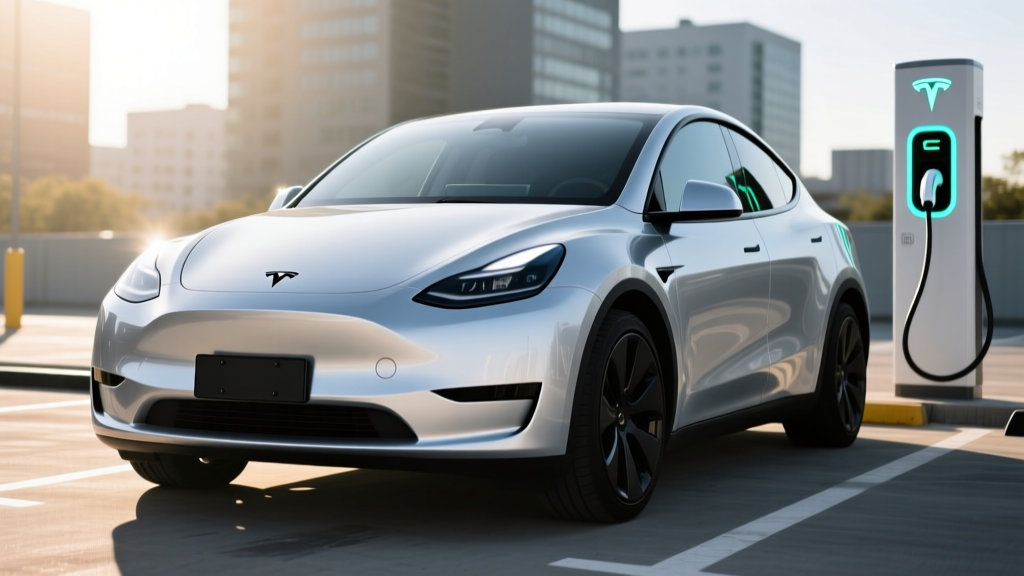
In this review, we'll use the 2026 Tesla Model Long Range AWD as our reference vehicle — the best-selling EV in America and the model most likely to prompt service-plan questions — and walk through the real costs you'll face as an owner.
2026 Tesla Model Y Long Range: Core Specs at a Glance
| Spec | 2026 Model Y Long Range AWD |
|---|---|
| EPA Range | 330 miles |
| Battery (usable) | ~78.1 kWh, NMC chemistry |
| Drivetrain | Dual-motor AWD |
| Horsepower | ~384 hp combined |
| 0-60 mph | 4.8 seconds |
| Max DC Fast Charge | 250 kW (peak) |
| 10-80% DC Time | ~25 minutes |
| Level 2 Home Charge | 11.5 kW (~44 mi/hr) |
| Efficiency | 122 MPGe combined / 27 kWh/100mi |
| Cargo (rear seats up) | 30.2 cu ft |
| Cargo (rear seats folded) | 72.0 cu ft |
| Base MSRP | $47,990 (before incentives) |
| Basic Warranty | 4 years / 50,000 miles |
| Battery & Drive Unit Warranty | 8 years / 120,000 miles |
Source: fueleconomy.gov, Tesla specifications.
Real-World Range: What the EPA Sticker Doesn't Tell You
Real-World Highway (70-80 mph): ~260-285 miles
Cold Weather (below 32°F, mixed driving): ~210-250 miles
The Model Y Long Range's 330-mile EPA estimate is achievable in mild conditions at city speeds with moderate climate use. But on real highway road trips — where aerodynamic drag dominates and efficiency drops — expect roughly 260 to 285 miles before you're hunting for a Supercharger. In sustained sub-freezing temperatures, battery resistance increases and cabin heating draws heavily from the pack, shaving range to 210-250 miles depending on how aggressively you precondition.
Tesla's heat pump (standard on the 2026 Model Y) helps mitigate cold-weather losses compared to older resistive-heater EVs, but the physics of lithium-ion cells in cold weather are unavoidable. Preconditioning the battery while plugged in before departure is the single most effective habit for preserving range in winter.
Charging Speed: DC Fast, Level 2, and the Supercharger Advantage
| Charging Level | Power | Miles Added Per Hour | Notes |
|---|---|---|---|
| Level 1 (120V) | ~1.4 kW | ~4-5 miles | Emergency/trickle only |
| Level 2 (240V, 48A) | 11.5 kW | ~44 miles | Full overnight charge in ~8 hrs |
| DC Fast (Supercharger V3) | 250 kW peak | ~175 miles in 15 min | Tapers significantly above 80% |
The Model Y's 250 kW peak DC charge rate is competitive but not class-leading. The charge curve is the critical detail: the vehicle sustains near-peak power only between roughly 10-40% state of charge, then progressively tapers. A 10-80% session takes approximately 25 minutes at a V3 Supercharger, but charging from 80-100% can add another 20+ minutes due to cell-balancing protocols. For road trips, the practical strategy is to charge to 80% and move on — the time penalty for the last 20% rarely justifies the added range.
At home, an 11.5 kW Level 2 wall connector on a 60-amp circuit replenishes the full battery in about 8 hours. Most owners with daily commutes under 60 miles will rarely need a full charge, making home Level 2 the backbone of Tesla ownership. Installation typically runs $800-$2,000 depending on panel proximity and local permitting — a one-time cost that eliminates fuel stops entirely for daily driving.
Tesla Service Plan Reality: What Maintenance Actually Costs
Unlike BMW, Toyota, or Hyundai, Tesla does not offer a factory prepaid maintenance or service plan at purchase. The term "Tesla service plan" in online searches often reflects buyer confusion — people expect a packaged deal similar to what legacy dealerships offer. Here's what Tesla ownership actually requires:
Routine Maintenance (Annual or As-Needed)
- Cabin air filter: Replace every 2-3 years (~$50-80 DIY, ~$150 at service)
- HEPA filter (if equipped): Every 3 years (~$100-180)
- Tire rotation: Every 6,250 miles (~$50-80; EVs wear tires faster due to instant torque and vehicle weight)
- Brake fluid check: Every 2 years (rarely needs replacement due to regen braking)
- Windshield washer fluid: Owner responsibility
- 12V lithium auxiliary battery: Typically lasts 4-6 years; replacement ~$300-500
What Tesla's Factory Warranties Already Cover
Before purchasing any third-party extended warranty, understand what Tesla already provides:
- Basic Vehicle Limited Warranty: 4 years / 50,000 miles — covers most vehicle components excluding wear items
- Battery & Drive Unit Warranty: 8 years / 120,000 miles — covers battery degradation below 70% retention and drive unit failures
The 8-year battery warranty is substantial and is the single most important protection EV buyers need. Tesla's NMC packs have demonstrated strong longevity, with fleet data showing average degradation of approximately 10-12% at 100,000 miles. Full battery replacement outside warranty runs $12,000-$16,000 — a figure that drives the extended-warranty conversation.
Third-Party Extended Service Agreements
Several third-party providers (such as Xcelerate Auto, EV Guardian, and Endurance Warranty) offer Tesla-specific extended service agreements that function similarly to a "Tesla service plan." Typical pricing ranges from $2,500 to $5,000 for coverage extending to 100,000-150,000 miles. These plans generally cover:
- Drive unit (motor) replacement
- Touchscreen / MCU failure
- Heat pump and HVAC compressor
- Power window regulators, door handles, and electronic components
They typically do not cover battery degradation (that's already under Tesla's 8-year warranty), tires, brake pads, cosmetic damage, or software issues. The decision to buy one hinges on your risk tolerance and how long you plan to keep the vehicle. If you trade in at 40,000 miles, the factory warranty covers you entirely. If you plan to drive to 120,000 miles, an extended agreement can provide financial predictability.
Pricing, Tax Credits, and Total Ownership Cost
| Item | Amount |
|---|---|
| Base MSRP (Long Range AWD) | $47,990 |
| Federal §30D Tax Credit (if eligible) | Up to $7,500 |
| Effective Price After Credit | ~$40,490 |
| Estimated Home Charger Install | $800 - $2,000 |
| Annual Electricity Cost (12,000 mi/yr, $0.16/kWh) | ~$518 |
| Annual Gas Equivalent (25 MPG, $3.50/gal) | ~$1,680 |
| Annual Fuel Savings vs. Gas | ~$1,162 |
Federal Tax Credit Eligibility (§30D Rules for 2026)
The 2026 Model Y may qualify for the full $7,500 federal tax credit under IRS §30D, but eligibility is not automatic. Requirements include:
- MSRP Cap: SUVs must be under $80,000 (Model Y qualifies)
- Buyer Income Cap: AGI ≤ $150,000 (single) / $300,000 (joint)
- Battery Sourcing: Critical minerals and battery components must meet escalating North American/free-trade-partner thresholds — Tesla's Fremont and Austin-built vehicles have largely met these requirements, but verify at the point of sale
- Point-of-Sale Transfer: As of 2024+, you can transfer the credit to the dealer for an immediate price reduction rather than waiting for tax filing
Always confirm eligibility with your tax professional before purchase. Rules evolve, and battery-sourcing compliance can shift with supply chain changes.
Who the 2026 Model Y Suits Best
Think twice if: You lack reliable home or workplace charging, you regularly tow heavy loads (towing drops range by 30-40%), or you prefer traditional dealership service experiences with loaner cars and service lounges. Tesla's service model relies heavily on mobile technicians and app-based scheduling — efficient for minor issues but occasionally frustrating for complex diagnostics.
Pros and Cons
- Class-leading Supercharger network reliability
- 330-mile EPA range covers most daily needs for a week
- Minimal scheduled maintenance vs. gas vehicles
- 8-year/120,000-mile battery warranty
- Strong OTA update cadence adds features post-purchase
- Excellent cargo space (72 cu ft with seats folded)
- No factory prepaid service plan available
- Service center wait times can stretch weeks in some markets
- Tire wear is accelerated vs. ICE vehicles
- 250 kW peak charge rate trails Hyundai/Kia's 350 kW platforms
- Panel gaps and interior material quality still draw criticism
- Autopilot is Level 2 — requires active driver supervision
Frequently Asked Questions
Does Tesla offer an official service plan or prepaid maintenance package?
No. Tesla does not sell a factory prepaid maintenance plan. The company's position is that EVs require so little scheduled maintenance that a packaged plan is unnecessary. Third-party extended service agreements are available for buyers who want coverage beyond the factory warranty.
What does a Tesla service visit typically cost out of warranty?
Minor service (cabin filter, tire rotation, software diagnostics) runs $100-$250. Major out-of-warranty repairs — drive unit replacement, MCU/screen replacement, or heat pump service — can range from $1,500 to $5,000+. Full battery replacement outside warranty is $12,000-$16,000, though this scenario remains rare within typical ownership periods.
How does Tesla's mobile service work?
For many common issues — 12V battery replacement, cabin filter swaps, minor trim repairs, software resets — Tesla dispatches a mobile technician to your home or workplace. More complex diagnostics or drive-unit work require a service center visit. Mobile service is one of Tesla's strongest ownership differentiators and reduces the need for a traditional service plan.
Is the 2026 Model Y worth buying over the Hyundai Ioniq 5 or Ford Mustang Mach-E?
The Model Y wins on Supercharger network access, software integration, and cargo space. The Ioniq 5 charges faster (350 kW capable, 10-80% in ~18 minutes) and offers a more conventional interior. The Mach-E provides a more engaging driving experience. If Supercharger access matters to your road-trip habits and you value the Tesla app ecosystem, the Model Y remains the segment benchmark. If you prioritize faster DC charging or dealership service, the Ioniq 5 deserves serious consideration.
Does the Model Y qualify for the full $7,500 federal tax credit in 2026?
It can, provided you meet the IRS §30D income caps ($150K single / $300K joint AGI), the vehicle's MSRP is under $80,000 (it is), and the battery meets 2026 critical-mineral and component sourcing thresholds. Tesla's US-built vehicles have generally qualified, but always verify at point of sale and with your tax advisor — sourcing rules tighten annually.
Safety data sourced from NHTSA and IIHS. Always verify current ratings for the specific model year.