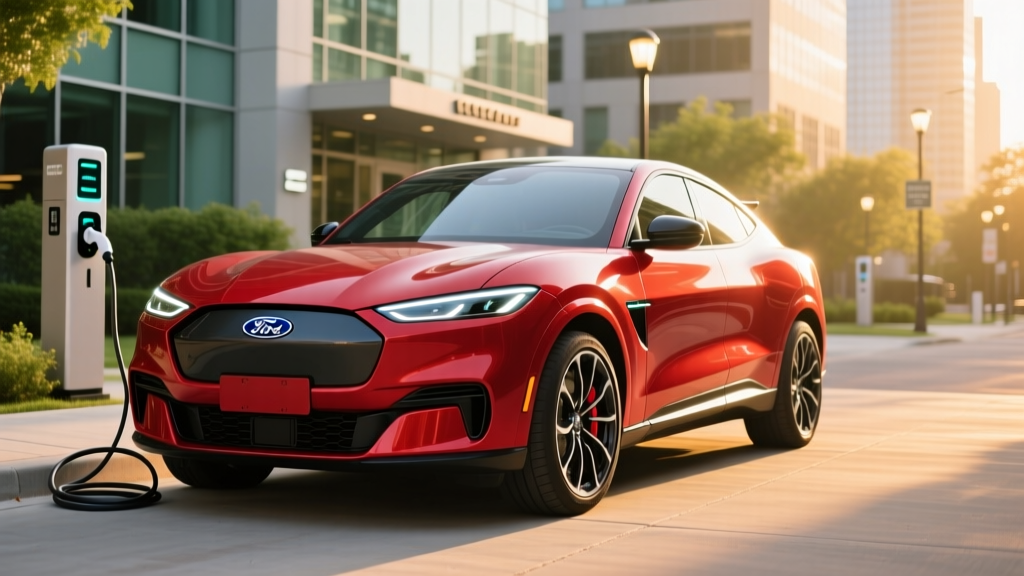
The Ford Mustang Mach-E has been a cornerstone of the mainstream electric crossover segment since its launch, and for 2026 it remains one of the most compelling options for buyers transitioning from gas-powered SUVs. But with a starting MSRP hovering around $38,000 and a complex web of federal and state incentives, understanding the true cost of ownership requires more than a glance at the window sticker.
This guide breaks down every number that matters — from real-world range and charging speeds to the specific IRS §30D requirements that determine whether you'll see a $7,500 point-of-sale reduction or walk away paying full price. If you're researching Ford Mach-E incentives, this is the data-driven deep dive you need before visiting a dealer.
2026 Ford Mustang Mach-E Quick Spec Overview
| Spec | Select (Std Range) | Premium (Ext Range RWD) | Premium (Ext Range AWD) | GT (Ext Range AWD) |
|---|---|---|---|---|
| EPA Range | 250 mi | 320 mi | 300 mi | 280 mi |
| Battery (usable) | 70 kWh (LFP) | 91 kWh (NMC) | 91 kWh (NMC) | 91 kWh (NMC) |
| Max DC Fast Charge | 115 kW | 150 kW | 150 kW | 150 kW |
| 10–80% DCFC Time | ~34 min | ~38 min | ~38 min | ~38 min |
| Level 2 Home Charge | 10.5 kW (~30 mi/hr) | 10.5 kW (~26 mi/hr) | 10.5 kW (~26 mi/hr) | 10.5 kW (~26 mi/hr) |
| 0–60 mph | 6.3 sec | 6.1 sec | 5.1 sec | 3.5 sec |
| Horsepower | 266 hp | 266 hp | 346 hp | 480 hp |
| Drivetrain | RWD | RWD | AWD (Dual Motor) | AWD (Dual Motor) |
| MPGe (combined) | 103 MPGe | 101 MPGe | 96 MPGe | 84 MPGe |
| Base MSRP | $38,495 | $43,495 | $46,495 | $54,995 |
Sources: EPA fueleconomy.gov, Ford Motor Company 2026 spec sheets. Prices exclude $1,395 destination charge. Specs reflect 2026 model year at time of publication.
Real-World Range: What the EPA Sticker Doesn't Tell You
The Extended Range RWD Mach-E carries an EPA-estimated 320 miles of range — among the best in its class. In real-world mixed driving at moderate temperatures (60–80°F), expect 280–305 miles. Sustained highway driving at 75+ mph drops this to roughly 250–270 miles. In cold weather (below 30°F), plan for a 20–30% reduction, bringing usable range to approximately 200–240 miles for the Extended Range pack. The Standard Range LFP model (EPA 250 mi) realistically delivers 210–230 miles in mild conditions and 160–185 miles in deep winter.
The Mach-E's thermal management system includes a heat pump on Extended Range trims, which helps mitigate cold-weather losses compared to resistive heating. However, LFP chemistry in the Standard Range pack is more sensitive to low temperatures, both in range retention and charge acceptance. If you live in a climate with regular sub-freezing winters, preconditioning the battery while plugged in is essential — it warms the pack using grid power rather than battery energy, preserving range for your commute.
The Extended Range models use NMC (nickel manganese cobalt) chemistry, which offers higher energy density and slightly better cold-weather performance. Ford's usable capacity of 91 kWh on Extended Range trims leaves a buffer above and below the displayed state of charge to protect long-term battery health — you'll never truly drain to zero or charge to a literal 100% at the cell level.
Charging Speed and Infrastructure: DC Fast, Level 2, and Home Setup
| Charging Level | Power | Connector | Miles Added per Hour | Best Use Case |
|---|---|---|---|---|
| Level 1 (120V) | ~1.4 kW | J1772 / NACS (adapter) | ~3–4 mi/hr | Overnight trickle; emergencies |
| Level 2 (240V, 48A) | 10.5 kW | J1772 / NACS | ~26–30 mi/hr | Daily home charging |
| DC Fast Charge | Up to 150 kW (peak) | CCS / NACS (2025+ native) | ~180–210 mi in 30 min (10–60%) | Road trips |
Starting with the 2025 model year, Ford equipped the Mach-E with a native NACS (North American Charging Standard) port, granting direct access to Tesla's Supercharger network — over 17,000 stalls across the US as of early 2026. This is a significant practical advantage over CCS-only competitors that still require adapters for Supercharger access. Earlier 2021–2024 Mach-E models with CCS ports can use a Ford-provided adapter, but native NACS on the 2026 model means faster plug-in, fewer adapter failures, and seamless Supercharger billing through the FordPass app.
On DC fast charging, the Mach-E's peak rate of 150 kW is respectable but not class-leading. The Hyundai Ioniq 5 peaks at 240 kW on an 800V architecture, and the Tesla Model Y can sustain higher rates on V3 Superchargers. The Mach-E's charge curve tapers noticeably above 80% state of charge — a 10–80% session takes approximately 38 minutes on Extended Range trims, but pushing from 80–100% can add another 25+ minutes. For road-trip efficiency, plan your stops around the 10–80% window and skip the top-off unless you need maximum range for the next leg.
At home on a 240V/48A Level 2 circuit, the Mach-E adds roughly 26–30 miles of range per hour. A full overnight charge (8 hours) replenishes approximately 208–240 miles — more than enough for daily driving. Installation of a 48A hardwired Level 2 charger typically requires a 60A dedicated circuit; expect $800–$2,000 for professional installation depending on your electrical panel's capacity and distance from the panel to the garage. Homes with older 100A service panels may need a $2,000–$4,000 panel upgrade to accommodate a dedicated EV circuit alongside existing loads.
Ford Mach-E Incentives: Federal Tax Credit and Beyond
The question most buyers search for — does the Mach-E qualify for the federal EV tax credit? The answer depends on your income, the specific trim, and battery component sourcing, all governed by IRS §30D rules.
- MSRP Cap: SUVs/crossovers must have an MSRP at or below $80,000. All Mach-E trims qualify on price.
- Buyer Income Cap: Modified adjusted gross income (MAGI) must not exceed $150,000 (single), $225,000 (head of household), or $300,000 (married filing jointly).
- Battery Sourcing: The full $7,500 credit requires meeting both critical minerals and battery component requirements. Partial credit of $3,750 is available if only one threshold is met. Sourcing requirements tighten annually — verify current-year compliance on the IRS clean vehicle credit page or with your dealer at point of sale.
- Point-of-Sale Transfer: As of 2024, you can transfer the credit to the dealer at purchase, reducing your out-of-pocket cost immediately rather than waiting for a tax refund. The dealer handles IRS reporting.
- Assembly: Vehicle must undergo final assembly in North America. The Mach-E is built in Cuautitlán, Mexico — which qualifies under USMCA trade provisions for final assembly.
| Trim | Base MSRP | Est. Credit | Effective Price | Notes |
|---|---|---|---|---|
| Select (Std Range RWD) | $38,495 | $7,500* | ~$30,995 | LFP battery; verify sourcing eligibility |
| Premium (Ext Range RWD) | $43,495 | $7,500* | ~$35,995 | Best range-for-dollar trim |
| Premium (Ext Range AWD) | $46,495 | $7,500* | ~$38,995 | Dual-motor, 300 mi range |
| GT (Ext Range AWD) | $54,995 | $7,500* | ~$47,495 | Performance-oriented; 480 hp |
*Credit amount assumes full §30D eligibility (both critical minerals and battery components). Actual credit may be $3,750 or $0 depending on current sourcing compliance. Confirm with dealer and consult a tax professional or IRS.gov before purchase. State and utility incentives may stack on top — check AFDC state incentive database for local programs.
Beyond the federal credit, many states offer additional rebates. California's Clean Fuel Reward, Colorado's innovative EV tax credit (up to $5,000), and various utility company rebates for off-peak charging can reduce the effective price by an additional $1,000–$5,000. These vary by jurisdiction and change frequently — always verify current availability through official state energy or environmental agency websites.
Performance, Efficiency, and Daily Driving
The Mach-E lineup covers a wide performance spectrum. The Standard Range RWD Select delivers 266 hp and a 6.3-second 0–60 — adequate for commuting and merging but not thrilling. The Premium AWD bumps output to 346 hp with a 5.1-second sprint, providing confident passing power and all-weather traction. The GT variant is a genuinely quick vehicle at 3.5 seconds to 60 mph with 480 hp, rivaling sports sedans at a fraction of their price.
Efficiency varies meaningfully across trims. The Standard Range Select achieves 103 MPGe combined (roughly 33 kWh/100 mi), while the GT drops to 84 MPGe (40 kWh/100 mi) due to its performance tuning and heavier dual-motor setup. For cost-conscious buyers, the Premium Extended Range RWD at 101 MPGe hits the sweet spot — 320 miles of EPA range with strong efficiency.
Ford's Co-Pilot360 Assist 2.0 includes adaptive cruise control with stop-and-go, lane centering, and evasive steering assist. Available BlueCruise enables hands-free driving on pre-mapped divided highways — currently covering over 130,000 miles of US roads. This is a SAE Level 2 system: the driver must remain attentive, and an infrared camera monitors eye gaze. It is not autonomous driving and will not navigate city streets or construction zones independently.
Ford BlueCruise is a Level 2 driver-assistance system. The vehicle controls steering and speed on qualified highways, but the driver must remain engaged, keep eyes on the road, and be prepared to take over instantly. This is fundamentally different from Level 4 robotaxi services like Waymo, which operate without a human driver in geofenced areas. Do not treat BlueCruise as self-driving.
Interior Space, Cargo, and Technology
The Mach-E's cabin accommodates five passengers with 43.3 inches of front legroom and 38.9 inches of rear legroom — competitive with the Tesla Model Y and Hyundai Ioniq 5. Rear headroom is slightly tighter than some rivals due to the sloping roofline, which may affect taller passengers on longer trips.
Cargo volume measures 29.7 cubic feet behind the rear seats and 59.7 cubic feet with the rear seats folded. The front trunk (frunk) adds 4.7 cubic feet of lockable, drainable storage — useful for charging cables, groceries, or wet gear. The frunk's drain plug is a practical detail that competitors like the Model Y lack.
Technology highlights include a 15.5-inch portrait-oriented touchscreen running Ford's SYNC 4A system, wireless Apple CarPlay and Android Auto, a 10.2-inch digital instrument cluster, and over-the-air (OTA) software updates that have meaningfully improved the vehicle since launch — including range optimization and BlueCruise feature expansion. The available B&O sound system with 10 speakers is a notable upgrade. One criticism: the removal of most physical buttons means climate and volume controls live on the touchscreen, which some drivers find distracting.
Warranty Coverage and Long-Term Battery Outlook
Ford backs the Mach-E with a 3-year/36,000-mile basic warranty and an 8-year/100,000-mile battery and electric powertrain warranty. The battery warranty guarantees that the high-voltage pack will retain at least 70% of its original capacity over the coverage period — if degradation exceeds 30%, Ford will repair or replace the battery at no cost.
Real-world data from Mach-E owners (tracked on platforms like Recurrent Auto) suggests that NMC Extended Range packs typically lose 5–8% capacity over the first 3 years of mixed use, with degradation slowing significantly after the initial break-in period. LFP packs in the Standard Range models show even slower degradation in moderate climates, though they are more sensitive to extreme cold. Ford's 70% retention threshold is industry-standard but less generous than Hyundai/Kia's 70% at 10 years/100,000 miles.
For long-term ownership, the Mach-E's modular battery design allows individual module replacement rather than full-pack swaps, which keeps out-of-warranty repair costs lower than some competitors. Estimated full-pack replacement (out of warranty) ranges from $12,000–$18,000 depending on pack size, though this cost is expected to decline as battery prices continue to fall.
Pros, Cons, and the Competition
- 320 mi EPA range on Premium Ext Range RWD — top of class
- Native NACS port with direct Tesla Supercharger access
- Competitive pricing after $7,500 federal credit
- BlueCruise hands-free highway driving (Level 2)
- Drainable frunk; practical cargo layout
- OTA updates continue to improve the vehicle post-purchase
- Strong dealer network for service and support
- 150 kW peak DC charging — slower than Ioniq 5 (240 kW)
- LFP Standard Range pack loses more range in cold weather
- Rear headroom tight for passengers over 6'2"
- Touchscreen-heavy controls; minimal physical buttons
- GT trim's 84 MPGe increases charging cost for performance
- Mexico assembly may concern some "Buy American" buyers
- Battery warranty threshold (70%) less generous than Hyundai/Kia
Against the Tesla Model Y, the Mach-E offers comparable range and more traditional styling, with the added advantage of Ford's dealer service network and available BlueCruise. The Model Y counters with faster Supercharging speeds and a more mature software ecosystem. The Hyundai Ioniq 5 charges significantly faster (240 kW peak, 10–80% in ~18 minutes) and offers V2L capability, but its EPA range tops out at 303 miles. The Chevrolet Blazer EV undercuts on price but has faced software reliability issues since launch. For buyers prioritizing range, charging access, and mainstream dealer support, the Mach-E remains a strong all-around pick.
Choose the Mach-E if: You want 300+ miles of range, native Supercharger access, BlueCruise for highway commuting, and a mainstream dealer for service. The Premium Extended Range RWD at ~$36,000 after the federal credit is the value sweet spot.
Look elsewhere if: You prioritize the fastest possible DC charging (consider the Ioniq 5), need three-row seating (look at the Kia EV9), or want maximum performance per dollar (the Tesla Model Y Performance is quicker at a similar price).
Frequently Asked Questions
What is the real-world range of the Ford Mustang Mach-E?
The Extended Range RWD model is EPA-rated at 320 miles. Real-world mixed driving in moderate temperatures yields approximately 280–305 miles. Sustained highway driving at 75+ mph drops this to 250–270 miles, and cold weather below 30°F can reduce range to 200–240 miles. The Standard Range LFP model (EPA 250 mi) delivers roughly 210–230 miles in mild conditions and 160–185 miles in winter.
How fast does the Mach-E charge at home and on DC fast chargers?
On a 240V/48A Level 2 home charger, the Mach-E charges at 10.5 kW, adding about 26–30 miles of range per hour — a full overnight session covers most daily needs. On DC fast chargers, Extended Range models peak at 150 kW and complete a 10–80% session in approximately 38 minutes. The Standard Range model peaks at 115 kW with a 10–80% time of about 34 minutes.
Does the 2026 Ford Mach-E qualify for the $7,500 federal EV tax credit?
The Mach-E meets the MSRP cap (all trims under $80,000) and North American final assembly requirement. However, the full $7,500 credit depends on your income (caps of $150K single / $300K joint) and current battery-sourcing compliance, which changes annually. Some trims may qualify for the full $7,500, a partial $3,750, or no credit depending on critical mineral and battery component thresholds. Verify current eligibility on IRS.gov and with your dealer at point of sale.
Is the Mach-E worth buying over the Tesla Model Y or Hyundai Ioniq 5?
The Mach-E excels in range (320 mi), native NACS/Supercharger access, and mainstream dealer service. The Model Y charges faster and has a more refined software experience. The Ioniq 5 offers the fastest DC charging in its class (240 kW) and V2L capability. If range, Supercharger access, and dealer support are your top priorities, the Mach-E is an excellent choice. If ultra-fast road-trip charging matters most, the Ioniq 5 has the edge.
What is the total cost of ownership compared to a gas SUV?
At the US average electricity rate of ~$0.16/kWh, charging a Mach-E Premium Ext Range (91 kWh) from empty costs roughly $14.56 for 320 miles — about $0.045 per mile. A comparable gas SUV averaging 25 MPG at $3.40/gallon costs $0.136 per mile. Over 15,000 annual miles, the Mach-E saves approximately $1,365 per year in fuel costs alone, before factoring in reduced maintenance (no oil changes, fewer brake replacements due to regenerative braking). Insurance premiums for the Mach-E run 10–20% higher than comparable gas vehicles, partially offsetting savings.
How long will the Mach-E battery last?
Ford warranties the battery for 8 years/100,000 miles with a 70% capacity retention guarantee. Real-world data suggests 5–8% degradation over the first 3 years for NMC packs, with slower losses thereafter. Most Mach-E batteries are projected to retain 80–85% capacity at 150,000 miles under normal use. LFP packs in Standard Range models may show even slower degradation in moderate climates. Out-of-warranty full-pack replacement is estimated at $12,000–$18,000, though individual module repairs cost significantly less.