The State of Tesla Sales in India: A 2026 Market Reality Check
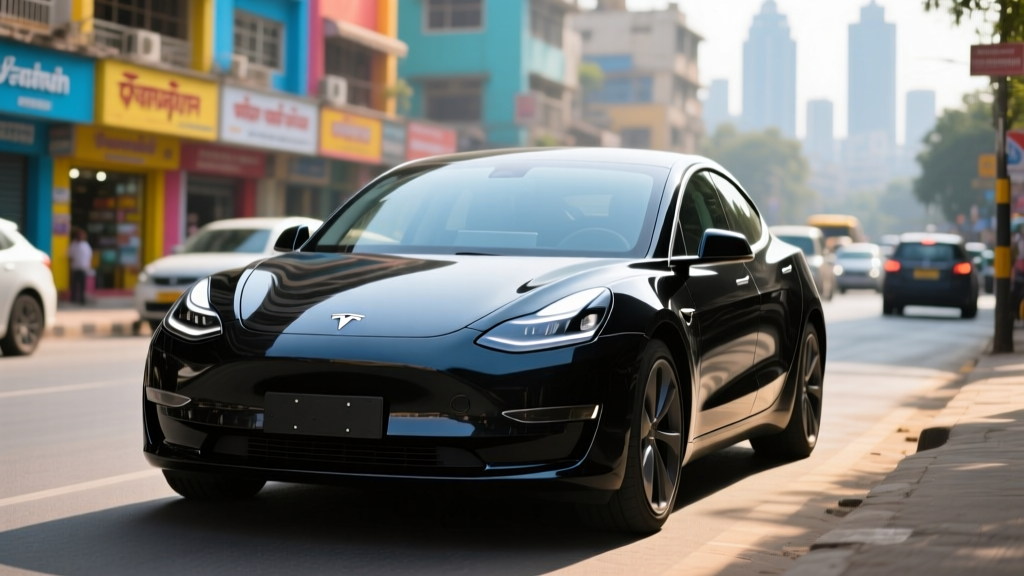
For years, the narrative around Tesla sales in India has been one of anticipation followed by delay. As of 2026, Tesla has not officially launched retail vehicle sales in the Indian market, despite persistent rumors and CEO Elon Musk's meetings with Indian government officials. The core friction points—high import tariffs on fully built vehicles, the lack of a localized Supercharger network, and Tesla's insistence on pricing flexibility—remain largely unresolved.
However, with India's EV adoption accelerating and competitors like BYD, Mercedes-Benz (EQ lineup), and BMW (iX, i4) establishing a foothold, the question isn't whether Tesla will enter, but how. To understand what Indian buyers might eventually get, we're conducting a full technical review of the 2026 Tesla Model 3 Long Range AWD—the most likely candidate for an Indian launch—evaluating its specs against the realities of the subcontinent's driving conditions.
| Specification | 2026 Tesla Model 3 Long Range AWD |
|---|---|
| EPA Estimated Range | 341 miles (549 km) |
| Battery Capacity / Chemistry | ~79 kWh (usable) / NMC (Nickel Manganese Cobalt) |
| Max DC Fast Charge | 250 kW (peak) |
| 10-80% DC Charge Time | ~27 minutes |
| Level 2 Charge Rate | 11.5 kW (~44 miles/hr) |
| 0-60 mph | 4.2 seconds |
| Horsepower | ~346 hp (dual motor) |
| Efficiency | 132 MPGe (25 kWh/100mi) |
| Base MSRP (US) | $47,740 (before incentives) |
| Battery Warranty | 8 years / 120,000 miles |
Range and Efficiency: How Would the Model 3 Perform on Indian Roads?
The EPA rates the 2026 Model 3 Long Range AWD at 341 miles. However, fueleconomy.gov data and real-world testing consistently show that highway driving at sustained speeds above 70 mph reduces this figure by roughly 10-15%. For Indian conditions—characterized by extreme heat, heavy traffic, and frequent use of cabin climate control—buyers should adjust expectations.
The 79 kWh NMC (Nickel Manganese Cobalt) battery pack offers excellent energy density, which is critical for maintaining a lighter curb weight and sharper handling. However, NMC chemistry is more sensitive to extreme heat than LFP (Lithium Iron Phosphate). In India's tropical climate, consistent use of DC fast charging combined with ambient temperatures above 100°F could accelerate long-term degradation compared to milder climates. Tesla's active liquid thermal management system is among the best in the industry, but chemistry is chemistry.
Charging Speed and Infrastructure Compatibility
The most significant barrier to Tesla sales in India remains charging infrastructure. Tesla's Supercharger network—the backbone of its ownership experience—does not exist in India. The Model 3 Long Range supports:
- DC Fast Charging (CCS2/NACS): Peaks at 250 kW, adding roughly 175 miles in 15 minutes under optimal conditions.
- Level 2 Home Charging: 11.5 kW onboard charger, requiring a 48-amp dedicated circuit for a full charge in ~8 hours.
- Level 1 Trickle: ~3-4 miles per hour on a standard 120V/15A outlet (not practical for daily use).
| Charging Level | Power (kW) | Miles Added per Hour | Full Charge Time (0-100%) |
|---|---|---|---|
| Level 1 (120V) | 1.4 kW | ~3-4 mi/hr | ~60+ hours |
| Level 2 (240V, 48A) | 11.5 kW | ~44 mi/hr | ~8 hours |
| DC Fast (Peak) | 250 kW | ~1,000 mi/hr (peak) | 10-80% in ~27 min |
Without a localized Supercharger network or a CCS2 adapter strategy (India uses the CCS2 standard), Indian buyers would rely on third-party networks like Tata Power or Fortum, which currently offer a patchwork of 50-150 kW chargers. A Model 3 on a 50 kW Indian public charger would take over an hour to reach 80%, fundamentally changing the road-trip proposition.
Performance, Tech, and Interior Practicality
The dual-motor AWD powertrain delivers 346 hp and a 4.2-second 0-60 mph time. While straight-line performance is thrilling, the Model 3's low center of gravity and near 50/50 weight distribution make it genuinely engaging on twisty roads. Regenerative braking is aggressive and adjustable, enabling true one-pedal driving in stop-and-go traffic—a significant advantage in congested Indian cities.
Interior Dimensions and Cargo
- Front Legroom: 42.7 inches
- Rear Legroom: 35.2 inches (tight for taller passengers on long journeys)
- Cargo Volume: 23 cu ft (trunk) + 3.1 cu ft (frunk) = 26.1 cu ft total
The 15.4-inch central touchscreen controls virtually every function, including the glovebox and mirror adjustments. While minimalist, the 2026 refresh includes ventilated front seats, ambient lighting, and rear-seat climate controls—features essential for the Indian luxury buyer. However, the absence of physical stalks for turn signals and gear selection (now on the steering wheel and touchscreen, respectively) remains a polarizing choice that may frustrate traditional luxury car switchers.
Driver Assistance: Autopilot and FSD Supervised
Tesla's Autopilot (standard) and Full Self-Driving Supervised (optional, ~$8,000) are SAE Level 2 systems. This means the driver must remain fully engaged, with hands on the wheel and eyes on the road. FSD is not autonomous; it is an advanced driver-assistance suite that handles highway lane changes, traffic light recognition, and city street navigation.
Pricing, Tax Credits, and the Indian Import Tariff Problem
In the United States, the 2026 Model 3 Long Range AWD starts at $47,740. Under current IRS §30D rules, it qualifies for the full $7,500 federal tax credit (subject to buyer income caps and battery sourcing requirements), bringing the effective price to ~$40,240.
| Market | Base Price (Est.) | Incentives | Effective Price |
|---|---|---|---|
| United States | $47,740 | -$7,500 (Federal §30D) | $40,240 |
| India (CBU Import) | ~$75,000+ (₹62L+) | None (100% import duty) | ~$75,000+ |
The math for Tesla sales in India collapses under current import duties. India levies up to 100% customs duty on fully built imported vehicles (CBUs) priced above $40,000. This would push the Model 3 Long Range into the ₹60-70 lakh ($72,000-$84,000) territory, placing it in direct competition with locally assembled Mercedes EQB and BMW iX1, which benefit from lower tariff structures. Tesla's refusal to commit to local manufacturing or a binding pricing structure has been the primary reason for the continued stalemate with India's Ministry of Heavy Industries.
Is the Model 3 Worth Waiting For vs. Competitors Available Today?
If Tesla resolves its India entry strategy, the Model 3 would compete against:
- BYD Seal: Similar size, LFP battery (better heat tolerance), potentially lower price.
- Hyundai Ioniq 6: Superior efficiency (140 MPGe), 800V architecture for faster charging on compatible Indian chargers.
- BMW i4: Brand prestige, local assembly, comparable performance.
Pros
- Best-in-class Supercharger network (if deployed in India)
- Class-leading software/OTA update capability
- Excellent efficiency (25 kWh/100mi)
- Strong resale value (in established markets)
Cons
- Prohibitive import pricing without local factory
- No CCS2 native port (requires adapter for Indian public chargers)
- FSD unlikely to be viable in Indian traffic conditions near-term
- Minimal rear-seat comfort vs. German luxury competitors
Frequently Asked Questions: Tesla in India
Does the Tesla Model 3 qualify for the federal EV tax credit in the US?
Yes, the 2026 Model 3 Long Range AWD qualifies for the $7,500 §30D credit, provided the buyer meets income caps ($150k single / $300k joint) and the vehicle's battery components meet North American sourcing requirements.
What is the real-world range of the Model 3 in hot climates?
Expect 260-290 miles (420-465 km) in mixed driving with air conditioning active. The heat pump minimizes climate-related losses, but high-speed highway driving remains the biggest range killer.
Why hasn't Tesla launched sales in India yet?
India's 100% import tariff on CBUs makes Tesla's direct-import model unprofitable. Tesla has demanded tariff reductions in exchange for market entry commitments, but no agreement has been finalized as of 2026.
Is the Model 3's battery LFP or NMC?
The Long Range AWD uses NMC chemistry for higher energy density. The base RWD model uses LFP, which is more durable in heat but offers less range.