Verdict: The Lucid Air Is a Premium Ride-Share Workhorse — With Caveats
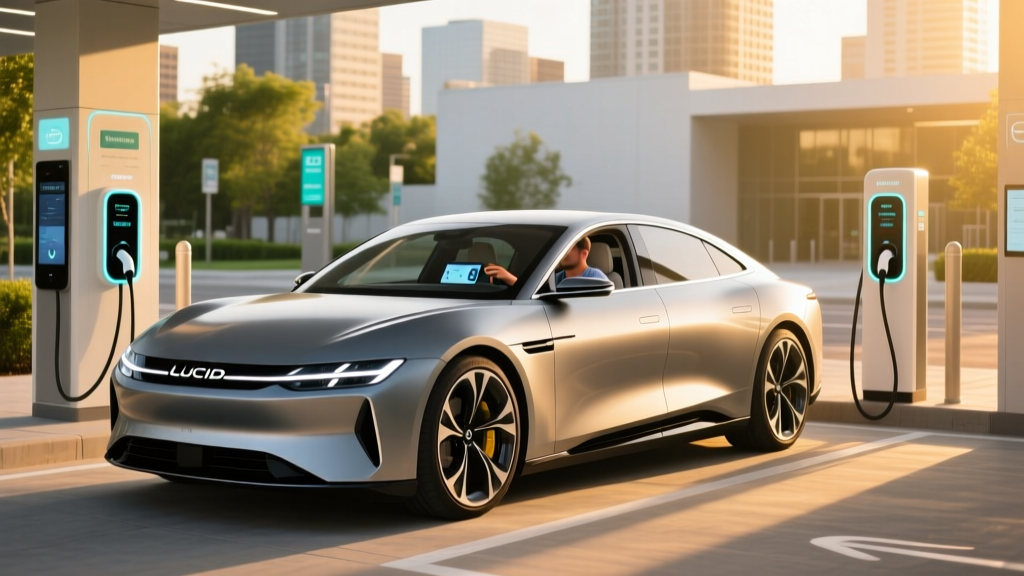
The partnership between Uber and Lucid Motors has put the Lucid Air squarely in the crosshairs of ride-share drivers looking to go electric. With a starting price that has come down significantly since launch and a partnership offering preferred pricing to Uber drivers, the Air presents an intriguing proposition: a luxury sedan with class-leading range and efficiency that could theoretically pay for itself through fuel savings and premium ride earnings. But does the math actually work for a full-time Uber or Lyft driver? We break down every number that matters.
Lucid Air Quick Specs at a Glance
| Spec | Pure (RWD) | Touring (RWD) | Grand Touring (AWD) |
|---|---|---|---|
| EPA Range | 420 mi | 420 mi | 516 mi |
| Battery (usable) | 88 kWh (NMC) | 88 kWh (NMC) | 112 kWh (NMC) |
| Horsepower | 430 hp | 620 hp | 1,050 hp |
| 0–60 mph | 5.0 sec | 3.4 sec | 3.0 sec |
| Drivetrain | RWD (single motor) | RWD (single motor) | AWD (dual motor) |
| Max DC Fast Charge | 220 kW | 250 kW | 300 kW |
| 10–80% DCFC Time | ~28 min | ~22 min | ~20 min |
| Level 2 Rate | 19.2 kW (~75 mi/hr) | 19.2 kW (~75 mi/hr) | 19.2 kW (~75 mi/hr) |
| Efficiency (MPGe) | 146 MPGe combined | 136 MPGe combined | 131 MPGe combined |
| Base MSRP | $69,900 | $87,400 | $125,600 |
| Battery/Powertrain Warranty | 8 yr / 100,000 mi | 8 yr / 100,000 mi | 8 yr / 100,000 mi |
Sources: EPA / fueleconomy.gov, Lucid Motors official specs.
Real-World Range: What the EPA Sticker Doesn't Tell You
Pure / Touring (420 mi EPA): Expect ~335–360 mi in mixed highway/city driving at 70 mph. In freezing temperatures (below 32°F), plan for 270–310 mi before needing a charger. City-heavy ride-share routes will push closer to the EPA number thanks to regenerative braking.
Grand Touring (516 mi EPA): Highway cruising at 70 mph yields ~400–430 mi. Cold weather drops this to ~340–380 mi. Stop-and-go urban driving can exceed 450 mi in mild weather.
Lucid's efficiency advantage is real. The Air Pure achieves roughly 28 kWh/100 mi in mixed driving — among the lowest consumption figures of any full-size luxury sedan on the market. The miniaturized drive units and 900V+ electrical architecture contribute to less energy wasted as heat. For a ride-share driver covering 200–250 miles per day, the Pure and Touring trims can typically complete a full shift on a single overnight charge, with the Grand Touring offering two full days between charges in urban duty.
Charging Speed: DC Fast Charging and Home Setup
| Charging Level | Power / Rate | Miles Added per Hour | Best Use Case |
|---|---|---|---|
| Level 1 (120V) | ~1.4 kW | ~5 mi/hr | Emergency trickle only |
| Level 2 (240V, 80A) | 19.2 kW | ~75 mi/hr | Overnight home / depot charging |
| DC Fast Charge (Grand Touring) | Peak 300 kW | ~300 mi in 20 min (10–80%) | Road trips, mid-shift top-up |
| DC Fast Charge (Touring) | Peak 250 kW | 10–80% in ~22 min | Road trips, mid-shift top-up |
| DC Fast Charge (Pure) | Peak 220 kW | 10–80% in ~28 min | Road trips, mid-shift top-up |
The Lucid Air uses a CCS1 connector natively, with a NACS adapter available for Tesla Supercharger access. The 900V+ architecture enables charge speeds that rival the best in the segment. However, the charge curve matters: peak 300 kW on the Grand Touring is sustained roughly between 10–40% SoC, after which it tapers progressively. Expect an average rate closer to 180–200 kW across the full 10–80% session.
For ride-share drivers, the critical number is Level 2 home charging. At 19.2 kW, the Air can fully replenish from 10% overnight in about 5–6 hours. This requires a hardwired 100-amp circuit and an 80-amp capable EVSE — a significant electrical upgrade for many homes. Budget $1,500–$3,500 for a professional Level 2 installation depending on your panel capacity and conduit run. Drivers without home charging access will need to rely on depot or public Level 2 chargers between shifts, which adds operational complexity.
Pricing, Trims, and Federal Tax Credit Eligibility
| Trim | Base MSRP | As-Tested (typical options) | Federal §30D Credit Eligibility | Effective Price (if eligible) |
|---|---|---|---|---|
| Pure | $69,900 | $72,000 | Eligible (under $55k sedan cap? — No; sedan cap is $55,000) | Not eligible — MSRP exceeds $55,000 sedan cap |
| Touring | $87,400 | $91,000 | Not eligible | $87,400+ |
| Grand Touring | $125,600 | $135,000 | Not eligible | $125,600+ |
The Uber-Lucid partnership has offered preferred pricing, lease incentives, and charging credits to qualifying Uber drivers at various points. These program details change frequently — check the Uber Vehicle Solutions portal or Lucid's fleet sales team for current offers. Some drivers may also benefit from state-level incentives (e.g., California's CVRP, Colorado's EV tax credit), which have their own MSRP and income rules. Always confirm with your state's energy or DMV office.
Interior Space, Tech, and Ride-Share Practicality
The Lucid Air is a full-size luxury sedan, and its interior dimensions reflect that. Rear-seat legroom measures approximately 41.5 inches — generous enough for adult passengers on longer Uber Black or Uber Comfort rides. The trunk offers 32 cubic feet of cargo space (with the frunk adding roughly 5 cu ft), enough for multiple airport suitcases.
The infotainment centers on a 34-inch curved glass cockpit display and a retractable lower touchscreen. Apple CarPlay and Android Auto are not natively supported — Lucid uses its own proprietary system. This is a notable drawback for drivers accustomed to mirroring their phone's navigation and music. The DreamDrive Pro ADAS suite includes adaptive cruise, lane centering, and automated parking, but it is a SAE Level 2 system requiring full driver attention at all times.
- Class-leading range (up to 516 mi EPA)
- Outstanding efficiency (~28 kWh/100 mi)
- Excellent rear-seat legroom for passengers
- 300 kW DC fast charging (Grand Touring)
- 19.2 kW Level 2 onboard charger (fastest in class)
- Spacious trunk + frunk for luggage
- Low operating cost per mile vs. gas equivalents
- No federal tax credit — MSRP above $55k sedan cap
- No Apple CarPlay / Android Auto
- Requires expensive 80A/100A home circuit for max L2 speed
- Limited service center network vs. Tesla
- CCS native — NACS adapter required for Superchargers
- Insurance premiums higher than average for the segment
- High mileage will accelerate battery degradation cost exposure
Who Is the Lucid Air Best For?
- Choose the Air Pure/Touring if: You drive Uber Black or Comfort in a metro area, have reliable overnight Level 2 charging access, and want a luxury sedan that can complete a full shift (200–250 mi) without mid-day charging. The efficiency and range reduce your cost-per-mile significantly vs. a gas luxury sedan.
- Choose the Grand Touring if: You do intercity airport runs or live in a region with sparse charging infrastructure and need the 516-mi buffer. The dual-motor AWD also matters in snow-belt markets.
- Look elsewhere if: You drive UberX or standard rides, need the $7,500 federal credit to make the math work, or don't have home charging access. A Tesla Model 3, Hyundai Ioniq 6, or Chevrolet Bolt EUV may offer better economics for high-volume, lower-fare ride-share work.
Lucid Air vs. Key Competitors for Ride-Share Use
| Attribute | Lucid Air Pure | Tesla Model S (LR) | BMW i5 eDrive40 | Mercedes EQE 350+ |
|---|---|---|---|---|
| EPA Range | 420 mi | 402 mi | 295 mi | 305 mi |
| Base MSRP | $69,900 | $74,990 | $57,900 | $74,900 |
| Federal §30D Credit | Not eligible | Not eligible (MSRP cap) | Eligible (if sourcing/income met) | Not eligible (MSRP cap) |
| Max DC Fast Charge | 220 kW | 250 kW | 205 kW | 170 kW |
| Supercharger Access | Via NACS adapter | Native | Via NACS adapter | Via NACS adapter |
| Rear Legroom | ~41.5 in | ~35.4 in | ~36.6 in | ~38.0 in |
| Efficiency | 146 MPGe | 124 MPGe | 97 MPGe | 95 MPGe |
For pure range and efficiency, the Lucid Air is unmatched in its class. The BMW i5 is the only competitor that may qualify for the federal credit, making its effective price significantly lower — but its range is substantially shorter. The Tesla Model S offers the best charging network access natively but trails on efficiency and rear-seat space.
Frequently Asked Questions
What is the real-world range of the Lucid Air for ride-share driving?
In urban stop-and-go conditions typical of Uber driving, the Air Pure/Touring can achieve 360–400 miles before needing a charge thanks to heavy regenerative braking. Highway-heavy airport runs at 70 mph drop this to 335–360 miles. In sub-freezing temperatures, expect a 20–30% reduction from EPA figures across all trims.
How fast does the Lucid Air charge at home and on DC fast chargers?
At home on a Level 2 (240V, 80A) charger, the Air adds roughly 75 miles of range per hour — the fastest onboard AC charging of any EV sedan. A full overnight charge from 10% takes 5–6 hours. On DC fast chargers, the Grand Touring peaks at 300 kW, achieving 10–80% in approximately 20 minutes, while the Pure takes about 28 minutes at its 220 kW peak.
How much does the Lucid Air cost after tax credits?
Unfortunately, no 2026 Lucid Air trim qualifies for the $7,500 federal §30D clean vehicle credit because the sedan MSRP cap is $55,000 and the cheapest Air Pure starts at $69,900. Your effective price is the MSRP plus destination and options, minus any applicable state or local incentives. Some Uber drivers may access fleet or partnership discounts — check with Lucid and Uber directly for current programs.
Does the Lucid Air qualify for the federal EV tax credit?
No. Under current IRS §30D rules, new sedans must have an MSRP at or below $55,000 to qualify. The Lucid Air's starting price of $69,900 exceeds this cap. Additionally, buyer income limits ($150k single, $300k joint) and battery-component/critical-mineral sourcing requirements apply to credit eligibility. Always consult a tax professional for your specific situation.
Is the Lucid Air worth buying vs. a Tesla Model S for Uber?
The Air wins on range (420 vs. 402 mi), efficiency (146 vs. 124 MPGe), rear-seat space, and AC charging speed. The Model S wins on Supercharger network access (native NACS), over-the-air update maturity, and a more established service network. If you can install a robust Level 2 home charger and your market has adequate CCS/NACS-adapted public charging, the Air's efficiency advantage translates to meaningful per-mile savings over 100,000+ miles of ride-share driving.
What is the battery warranty, and how does high mileage affect it?
Lucid provides an 8-year / 100,000-mile battery and powertrain warranty covering defects and capacity loss below a specified threshold (typically 70% state of health). Full-time ride-share drivers can hit 100,000 miles in 2–3 years, after which battery replacement costs (estimated at $15,000–$25,000+ depending on trim and pack size) become the owner's responsibility. This is a critical long-term cost to factor into your total ownership calculation.
Can I use Tesla Superchargers with the Lucid Air?
Yes, but only with a NACS adapter. The Lucid Air ships with a CCS1 inlet. Lucid offers a NACS adapter that enables access to Tesla's Supercharger network. For ride-share drivers, this significantly expands your charging options, especially in areas where Superchargers dominate. Confirm adapter availability and compatibility with Lucid before relying on it for daily operations.