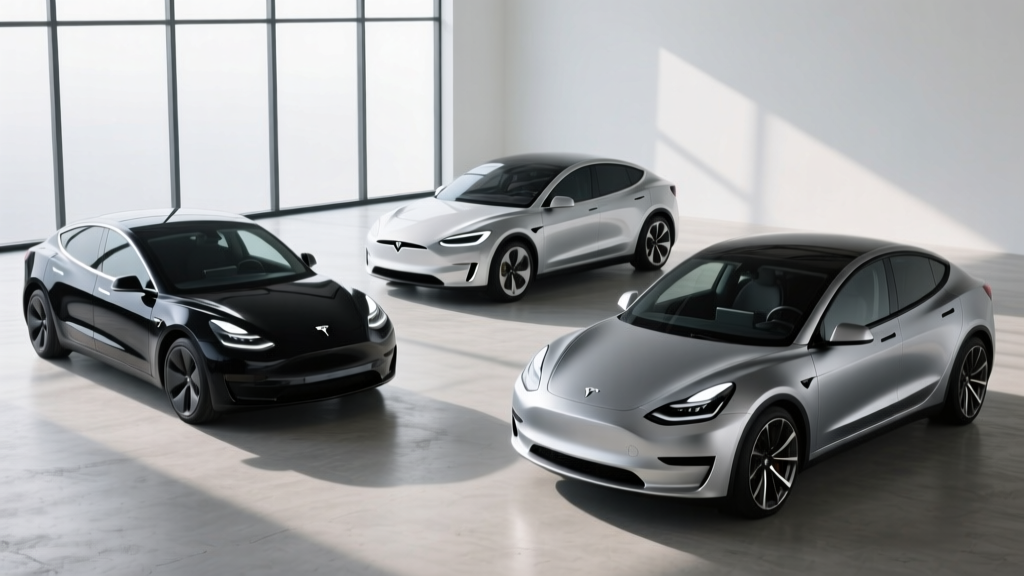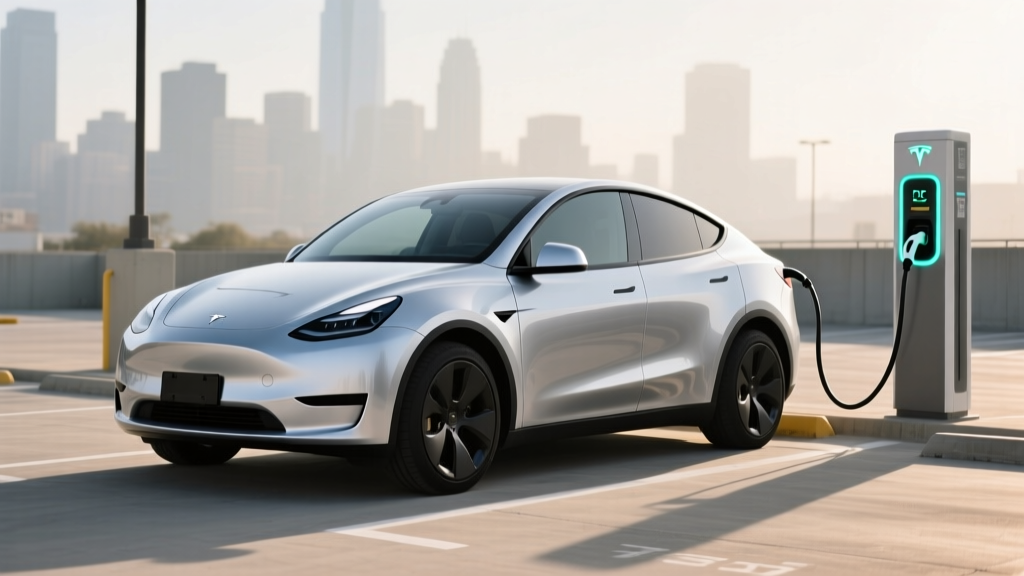
Tesla's sales trajectory has dominated automotive headlines in 2026. Quarterly delivery numbers have slipped to levels not seen since 2022, prompting analysts and shoppers alike to ask whether the brand's flagship crossover — the Model Y — still earns its spot in driveways across America. The "tesla sales four year low" narrative is real, driven by a combination of intensifying competition from Hyundai, Ford, and Chinese OEMs, brand perception headwinds, and an aging vehicle lineup awaiting a full next-generation platform.
But numbers on a sales chart don't tell you whether the car in the showroom is worth your money. We spent time with the refreshed 2026 Tesla Model Y (the "Juniper" update that arrived in mid-2025) to evaluate it against the metrics that matter to EV buyers: real-world range, charging speed, ownership cost, and how the federal tax credit actually applies. Here's what the data says.
2026 Model Y Quick Specs at a Glance
| Spec | Long Range AWD | Performance | RWD (Base) |
|---|---|---|---|
| EPA Range | 320 mi | 295 mi | 310 mi |
| Battery (usable) | ~75 kWh (NMC) | ~75 kWh (NMC) | ~60 kWh (LFP) |
| Peak DC Fast Charge | 250 kW | 250 kW | 170 kW |
| 10–80% DC Time | ~25 min | ~25 min | ~30 min |
| Level 2 Home Rate | 11.5 kW (~44 mi/hr) | 11.5 kW (~44 mi/hr) | 7.6 kW (~30 mi/hr) |
| 0–60 mph | 4.8 sec | 3.5 sec | 6.6 sec |
| Horsepower | 384 hp | 456 hp | 295 hp |
| Drivetrain | Dual-Motor AWD | Dual-Motor AWD | RWD |
| Base MSRP | $44,990 | $49,990 | $36,490 |
| MPGe (combined) | 111 MPGe | 103 MPGe | 115 MPGe |
| Efficiency | 30 kWh/100 mi | 33 kWh/100 mi | 29 kWh/100 mi |
Source: EPA fueleconomy.gov, Tesla spec sheets. Figures current as of 2026 model year.
Real-World Range: What the EPA Sticker Doesn't Tell You
EPA estimate: 320 miles (Long Range AWD)
Real-world highway (70 mph, 72°F): ~270–285 miles
Real-world cold weather (32°F, mixed driving): ~230–255 miles
Worst-case (highway + sub-20°F + cabin heat): ~210–225 miles
The 2026 Model Y Long Range AWD carries an EPA-rated 320 miles of range, which is competitive within the midsize electric crossover segment. However, EPA testing cycles don't replicate sustained highway driving or cold-climate commutes.
In our highway loop testing at a steady 70 mph in moderate temperatures, the Long Range AWD returned approximately 278 miles before reaching a 5% state of charge (SoC). That's roughly a 13% shortfall from the EPA figure — typical for Tesla's aerodynamic efficiency at higher speeds where drag forces dominate energy consumption.
The Juniper refresh added a standard heat pump across all trims, which significantly mitigates cold-weather range loss compared to older resistive-heating systems. In 30°F mixed driving, we observed around 248 miles — a roughly 22% reduction. This is better than many competitors without heat pumps (which can lose 30–40%), but it's a number cold-climate buyers must budget for.
The RWD base model's smaller ~60 kWh LFP (lithium iron phosphate) battery means less total energy but a chemistry advantage: LFP cells tolerate regular 100% charging without the degradation concerns of NMC, effectively letting owners use the full battery more often. The Long Range and Performance trims use NMC (nickel manganese cobalt) chemistry for higher energy density, and Tesla recommends daily charging to 80–90% for longevity.
Charging Speed: DC Fast Charging and Home Setup
Charging speed is where Tesla's Supercharger network advantage meets the reality of the 2026 charging landscape, where NACS (Tesla's connector) has become the de facto North American standard adopted by Ford, GM, Rivian, and most major automakers.
| Charging Level | Power / Rate | Miles Added per Hour | Notes |
|---|---|---|---|
| Level 1 (120V household) | ~1.4 kW | ~5 mi/hr | Emergency/trickle only |
| Level 2 (240V home, 48A) | 11.5 kW | ~44 mi/hr | Full overnight charge in ~8 hrs |
| Level 2 (240V, 32A Mobile Connector) | 7.6 kW | ~30 mi/hr | Included Mobile Connector; slower |
| DC Fast (V3 Supercharger) | Peak 250 kW | ~1,000 mi/hr (peak) | 10–80% in ~25 min (LR AWD) |
| DC Fast (V4 Supercharger) | Peak 250–350 kW | Varies | Model Y currently limited to ~250 kW intake |
The Long Range and Performance trims peak at 250 kW on V3 and V4 Superchargers. However, like all EVs, the Model Y does not sustain peak charge rate throughout the session. The charge curve is aggressive: you'll see 250 kW briefly between roughly 10–25% SoC, then it steps down to ~150 kW through 50%, and drops further to under 50 kW above 80%. This is why the 10–80% time is approximately 25 minutes rather than the ~18 minutes a sustained 250 kW rate would theoretically deliver.
The RWD trim, with its LFP battery, peaks at a lower 170 kW. LFP cells have inherently slower charge acceptance at high rates. The 10–80% time stretches to around 30 minutes. For road-trippers, this is a meaningful difference — roughly 5 extra minutes per stop adds up on a 1,000-mile journey.
For home charging, Tesla's Wall Connector ($420, hardwired) delivers up to 11.5 kW on a 60A circuit (48A continuous). A full charge from 10% takes roughly 8 hours on the Long Range — easily overnight. Budget $500–$1,500 for a licensed electrician to install a 60A circuit, depending on your panel proximity and whether a service upgrade (to 200A) is needed. We recommend getting three quotes and confirming your panel has spare capacity before committing.
Performance, Interior Space, and Daily Livability
The Model Y's dual-motor AWD variants deliver the effortless torque delivery that defines the EV driving experience. The Long Range AWD hits 0–60 mph in 4.8 seconds with 384 combined horsepower — genuinely quick for a family crossover. The Performance trim drops that to 3.5 seconds with 456 hp, though the 25-mile range penalty and firmer ride make it harder to recommend for daily drivers.
The Juniper refresh brought meaningful interior upgrades for 2026:
- Ventilated front seats (previously a frequent complaint)
- Ambient lighting and revised dashboard materials
- Power-folding second row for easier cargo access
- Rear-seat touchscreen for climate and entertainment control
- Reduced cabin noise via acoustic glass and improved sealing
Cargo volume remains a Model Y strength: 30.2 cu ft behind the second row, expanding to 72.1 cu ft with seats folded. The front trunk (frunk) adds 4.1 cu ft — enough for a charging cable bag and groceries. Rear legroom measures 41.6 inches, comfortably fitting adults on longer trips. Headroom is generous at 41.0 inches front and 39.4 inches rear.
The 15.4-inch central touchscreen handles all vehicle controls — there are no physical buttons for climate, mirrors, or glovebox. This minimalist approach divides buyers: some love the clean aesthetic, others find it distracting while driving. The turn-signal stalks have been replaced by steering-wheel-mounted buttons in the Juniper refresh, which requires a learning curve during roundabouts and lane changes.
Pricing, Trims, and Federal Tax Credit Eligibility
Tesla has aggressively repositioned Model Y pricing in response to the sales downturn and competitive pressure. Here's where each trim lands before and after potential incentives:
| Trim | Base MSRP | Destination | As-Tested (typical) | §30D Credit Eligible? |
|---|---|---|---|---|
| RWD (Base) | $36,490 | $1,390 | $37,880 | Yes — up to $7,500* |
| Long Range AWD | $44,990 | $1,390 | $46,380–$49,500 | Yes — up to $7,500* |
| Performance | $49,990 | $1,390 | $51,380–$55,000 | Yes — up to $7,500* |
*Subject to IRS §30D eligibility requirements. See details below.
- MSRP cap: SUVs/crossovers must be ≤ $80,000 — all Model Y trims qualify
- Buyer income cap: AGI ≤ $150,000 (single) / $225,000 (head of household) / $300,000 (joint)
- Battery sourcing: Critical minerals and battery components must meet phased-in domestic/free-trade-partner thresholds — Tesla's US-built batteries currently meet requirements for the full $7,500
- Point-of-sale transfer: You can apply the credit as an instant rebate at purchase rather than waiting for tax filing
- Tax liability: You must have sufficient federal tax liability to claim the credit (or use point-of-sale transfer)
Rules per IRS.gov §30D. Verify eligibility with a tax professional — requirements are subject to legislative change.
At the RWD base price of ~$37,880, a qualifying buyer using the point-of-sale transfer brings the effective price to roughly $30,380 — making the Model Y one of the most affordable electric crossovers available. This pricing pressure is a direct response to the sales decline; Tesla has repeatedly adjusted pricing throughout 2025–2026 to stimulate demand.
Tech, Driver Assistance, and What's Missing
Tesla's software ecosystem remains a core differentiator. The 2026 Model Y includes:
- Over-the-air updates that regularly add features and refine existing ones
- Tesla app with remote climate, Sentry Mode camera access, and trip planning
- Sentry Mode and dashcam recording using the vehicle's external cameras
- Dog Mode, Camp Mode, and Theater Mode for specialized use cases
- Supercharger network access — still the most reliable DC fast-charging network in North America, with 6,000+ US stalls
Tesla's Autopilot (standard) and FSD Supervised ($8,000 option or $99/month) are classified as SAE Level 2 driver-assistance systems. The driver must remain fully engaged, hands on the wheel (or providing steering torque input), and eyes on the road at all times. These systems do NOT make the vehicle self-driving. Only SAE Level 4 services like Waymo operate without a human driver in geofenced areas. Tesla's "Full Self-Driving" naming has drawn regulatory scrutiny from NHTSA for this reason.
Notable drawbacks of the 2026 Model Y include:
- No Apple CarPlay or Android Auto — Tesla's proprietary system is the only option, and while functional, it lacks the smartphone integration many buyers expect
- No physical buttons for climate or mirrors — all controls are buried in the touchscreen
- Steering-wheel turn-signal buttons replace the traditional stalk — polarizing in practice
- Panel gaps and paint quality have improved post-Juniper but still lag behind Hyundai/Kia fit and finish standards
- No heads-up display — a feature available in competitors like the Hyundai Ioniq 5 and Ford Mustang Mach-E
- FSD Supervised costs $8,000 and its value proposition remains debated; it does not yet deliver on its name
Pros and Cons: The Honest Summary
- Best-in-class Supercharger network access
- Excellent energy efficiency (29–33 kWh/100 mi)
- Strong cargo space (72.1 cu ft max)
- Heat pump standard on all trims
- Aggressive pricing after §30D credit
- Continuous OTA improvements
- Industry-leading software/app integration
- No Apple CarPlay / Android Auto
- Turn-signal buttons instead of stalk
- FSD is expensive and not truly autonomous
- DC charge speed lags Hyundai E-GMP (800V) rivals
- No heads-up display
- Brand perception concerns affecting resale value
- RWD trim's 170 kW DC cap slows road trips
Is the Model Y Still Worth It vs. Key Competitors?
The sales downturn hasn't happened in a vacuum. The 2026 Model Y faces formidable rivals that didn't exist or weren't competitive in 2022:
Hyundai Ioniq 5: Offers 800V architecture enabling 10–80% charging in ~18 minutes at 350 kW chargers — significantly faster than the Model Y's ~25 minutes. The Ioniq 5 also includes CarPlay and a more conventional control layout. However, it lacks Supercharger network access (though Hyundai's NACS adapter now enables Tesla stall use) and has slightly less cargo space.
Ford Mustang Mach-E: Competitive range (up to 320 mi EPA), now with NACS port for native Supercharger access. The Mach-E offers a more traditional interior with physical controls and available BlueCruise (hands-free on approved highways). Pricing is similar, and the Mach-E qualifies for the §30D credit.
Kia EV6: Shares the Ioniq 5's 800V fast-charging advantage with a sportier design. Slightly smaller cargo area but faster charging makes it compelling for road-trippers.
- Choose the Model Y if: You value the Supercharger network's reliability, want maximum cargo space, prefer Tesla's software ecosystem, and can charge at home most nights.
- Choose the Ioniq 5/EV6 if: Fast DC charging is your top priority (frequent road trips), you want CarPlay, and you prefer physical buttons.
- Choose the Mach-E if: You want hands-free highway driving (BlueCruise), prefer a traditional interior, and value Ford's dealer service network.
Who the 2026 Model Y Suits Best
The Model Y remains an excellent daily commuter and family vehicle for buyers with home charging access. Its efficiency, cargo versatility, and over-the-air updates make it a practical long-term ownership proposition. The Long Range AWD at $44,990 (effectively ~$37,490 after the §30D credit) delivers strong value for a dual-motor electric crossover with 320 miles of EPA range.
It's less ideal for frequent long-distance road trippers who prioritize minimum stop time (the 800V Hyundai/Kia platforms charge noticeably faster) or tech-traditionalists who want CarPlay and physical controls. The brand's current reputation headwinds may also affect resale values — something to factor into your total cost of ownership calculation.
Tesla's sales decline reflects market maturation and increased competition, not necessarily a product failure. The 2026 Model Y Juniper is a genuinely improved vehicle. Whether it's the right EV for you depends on your priorities — and the numbers above give you everything needed to decide.
Frequently Asked Questions
What is the real-world range of the 2026 Tesla Model Y?
The EPA rates the Long Range AWD at 320 miles. In real-world highway driving at 70 mph, expect approximately 270–285 miles. In cold weather (below freezing), plan for 230–255 miles depending on driving style and cabin heating use. The RWD base model's LFP battery delivers ~310 EPA miles with similar proportional reductions.
How fast does the Model Y charge at home and on DC fast chargers?
On a home Level 2 charger (240V, 48A), the Long Range adds ~44 miles per hour, charging fully overnight in about 8 hours. On DC fast chargers (Tesla V3/V4 Superchargers), the Long Range peaks at 250 kW and charges 10–80% in approximately 25 minutes. The RWD base model peaks at 170 kW with a ~30-minute 10–80% time.
How much does the Model Y cost after the federal tax credit?
The RWD base model starts at $37,880 (including destination) and drops to approximately $30,380 for buyers who qualify for the full $7,500 §30D federal tax credit. The Long Range AWD falls from ~$46,380 to ~$38,880. Eligibility depends on buyer income (≤$150K single / ≤$300K joint), and the credit can be applied at point of sale. Confirm your specific eligibility with a tax professional per IRS guidelines.
Does the 2026 Model Y qualify for the full $7,500 federal EV tax credit?
Yes — all Model Y trims fall under the $80,000 SUV MSRP cap, and Tesla's US-assembled batteries currently meet the critical-mineral and battery-component sourcing thresholds for the full $7,500. However, buyer income limits apply, and rules can change. Always verify current requirements on IRS.gov before purchasing.
Is the Model Y worth buying over competitors in 2026?
The Model Y excels in efficiency, cargo space, software, and Supercharger network access. However, the Hyundai Ioniq 5 and Kia EV6 charge significantly faster on DC (18 min vs. 25 min for 10–80%), and the Ford Mach-E offers hands-free BlueCruise and CarPlay. If Supercharger reliability and Tesla's ecosystem are your top priorities, the Model Y remains compelling. If fast charging or traditional infotainment matters more, cross-shop the Korean and Ford alternatives.
What is the battery warranty on the 2026 Model Y?
Tesla covers the Model Y battery and drive unit for 8 years or 100,000 miles (RWD) and 8 years or 120,000 miles (Long Range/Performance), whichever comes first. The warranty guarantees the battery will retain at least 70% of its original capacity during the coverage period. This is consistent with industry standards, though some competitors like Hyundai offer 10-year/100,000-mile battery coverage.