Why Tesla Sales by Month Matter for EV Buyers
Following Tesla sales by month is no longer just an exercise for investors and industry analysts. For prospective buyers, monthly delivery trends reveal when Tesla is most likely to discount inventory, adjust financing rates, or quietly update vehicle specs. In 2026, Tesla's sales cadence has become especially relevant as competition from Hyundai, Ford, Rivian, and Chinese automakers intensifies across every segment.
This guide breaks down what Tesla's 2026 monthly sales patterns mean for you as a buyer — which models are moving fastest, where pricing pressure is creating deals, and how current federal tax credit rules under IRS §30D affect your out-of-pocket cost. We'll also provide a complete spec-by-spec profile of the two highest-volume models: the refreshed Model Y and Model 3.
2026 Tesla Sales Trends: Monthly Delivery Patterns
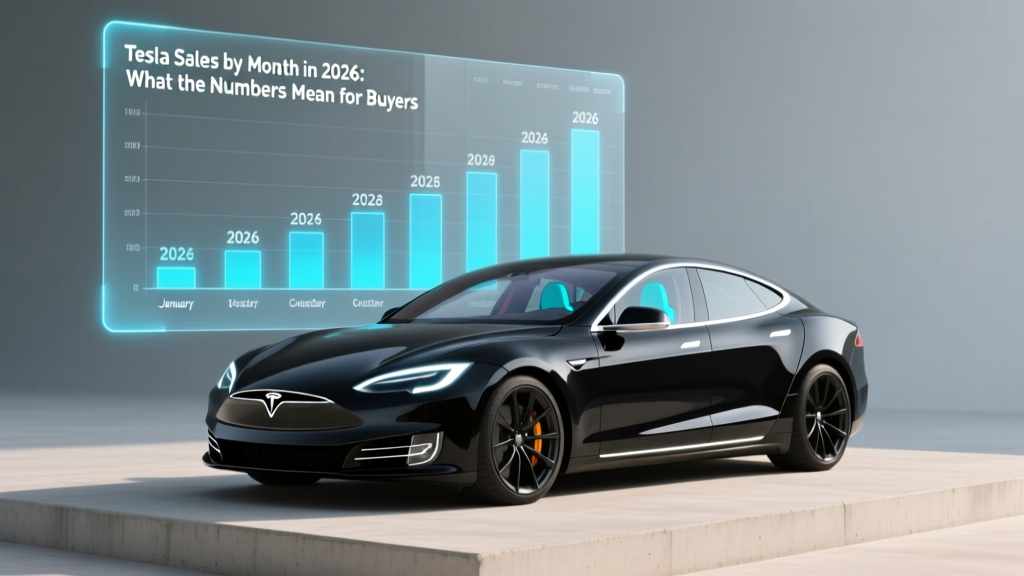
Tesla does not publish official monthly sales figures the way legacy automakers do. Instead, the company reports quarterly delivery totals. However, registration data from state DMVs and third-party trackers like Cox Automotive and Kelley Blue Book allow us to reconstruct approximate monthly volumes. Here is what the pattern looks like for 2026 so far:
- January–February: Historically the slowest delivery months. Tesla typically ships fewer vehicles as factories retool and manage end-of-year inventory transitions. Buyers who order in Q1 often face 4–6 week delivery windows.
- March: A sharp spike as Tesla pushes to close Q1 delivery targets. End-of-quarter incentives (reduced financing rates, free Supercharging credits, or complimentary FSD trials) frequently appear in the final two weeks of March.
- April–May: Moderate volumes with steady production. Inventory availability improves, especially for popular configurations like the Model Y Long Range AWD.
- June: Another end-of-quarter surge. Tesla historically delivers a disproportionate share of Q2 vehicles in the final weeks of June. This is often the best window for negotiating price or securing promotional APR financing.
- July–August: Mid-year lull, though 2026 has seen stronger-than-usual summer demand driven by the refreshed Model Y (codenamed "Juniper") reaching full production ramp.
- September: Q3 end-of-quarter push. Expect the heaviest discounting of the year as Tesla tries to beat analyst expectations ahead of Q3 earnings.
Buyer takeaway: If you can time your purchase for the last two weeks of March, June, or September, you are statistically more likely to benefit from Tesla's promotional pricing, reduced delivery fees, or bundled incentives.
Model Y 2026: The Volume Leader — Full Spec Profile
The Model Y remains Tesla's best-selling vehicle globally and the primary driver of monthly sales volume. The 2026 refresh brings updated styling, a revised interior, improved suspension tuning, and slightly improved efficiency. Here is the complete breakdown.
| Spec | Long Range AWD | Performance |
|---|---|---|
| EPA Range | 320 miles | 295 miles |
| Battery Capacity | 78.1 kWh usable (NMC) | 78.1 kWh usable (NMC) |
| Drivetrain | Dual-motor AWD | Dual-motor AWD |
| Horsepower | 384 hp | 456 hp |
| 0–60 mph | 4.8 seconds | 3.5 seconds |
| Peak DC Fast Charge | 250 kW | 250 kW |
| 10–80% DC Charge Time | ~25 minutes | ~25 minutes |
| Level 2 Home Charge Rate | 11.5 kW (~44 mi/hr) | 11.5 kW (~44 mi/hr) |
| MPGe (combined) | 122 MPGe | 111 MPGe |
| Efficiency | 28 kWh/100 mi | 30 kWh/100 mi |
| Cargo Volume | 72 cu ft (rear seats folded) | 72 cu ft (rear seats folded) |
| Rear Legroom | 41.6 inches | 41.6 inches |
| Base MSRP | $44,990 | $51,490 |
| Battery Warranty | 8 yr / 120,000 mi | 8 yr / 120,000 mi |
Charging: DC Fast and Home Level 2
The Model Y continues to use a 400-volt architecture (not the 800V systems found in the Hyundai Ioniq 5 or Kia EV6), which caps its peak charge rate at 250 kW on a V3 Supercharger. The charge curve is relatively flat between 10–50% SoC, then tapers progressively above 65%. A 10–80% session takes approximately 25 minutes under optimal battery preconditioning.
| Charging Level | Power | Miles Added per Hour | Typical Use Case |
|---|---|---|---|
| Level 1 (120V) | ~1.4 kW | ~5 mi/hr | Emergency / overnight trickle |
| Level 2 (240V, 48A) | 11.5 kW | ~44 mi/hr | Home daily charging |
| DC Fast (V3 Supercharger) | 250 kW peak | ~1,000 mi/hr (peak) | Road trips |
At home on a Wall Connector (hardwired 60A circuit), a full overnight charge adds roughly 300+ miles in 7–8 hours. Most owners plug in nightly and rarely deplete below 30%, making a full charge unnecessary.
Pricing and Federal Tax Credit Eligibility
| Trim | Base MSRP | Destination | Est. §30D Credit | Effective Price |
|---|---|---|---|---|
| Long Range AWD | $44,990 | $1,390 | Up to $7,500* | ~$38,880 |
| Performance | $51,490 | $1,390 | Up to $7,500* | ~$45,380 |
*The §30D federal tax credit is subject to multiple requirements: the buyer's modified adjusted gross income must not exceed $150,000 (single) or $300,000 (joint); the vehicle MSRP must be under $80,000 for SUVs (Model Y qualifies); and the battery must meet critical mineral and component sourcing thresholds that shift annually. As of 2026, the Model Y Long Range assembled at Giga Texas has qualified for the full $7,500, but Tesla's battery sourcing can change mid-year. Always verify current eligibility on the fueleconomy.gov credit lookup before purchasing. The credit can now be transferred to the dealer at point of sale as an upfront price reduction.
Model 3 2026: The Sedan Benchmark
The refreshed Model 3 (Highland update) continues as Tesla's entry-level offering and the second-largest contributor to monthly sales volume. It remains one of the most efficient EVs on the market.
| Spec | RWD (Standard) | Long Range AWD |
|---|---|---|
| EPA Range | 272 miles | 341 miles |
| Battery Capacity | 57.5 kWh (LFP) | 78.1 kWh (NMC) |
| Drivetrain | Rear-wheel drive | Dual-motor AWD |
| Horsepower | 271 hp | 346 hp |
| 0–60 mph | 5.8 seconds | 4.2 seconds |
| Peak DC Fast Charge | 170 kW | 250 kW |
| 10–80% DC Charge Time | ~30 minutes | ~25 minutes |
| Level 2 Home Charge Rate | 11.5 kW (~44 mi/hr) | 11.5 kW (~44 mi/hr) |
| MPGe (combined) | 132 MPGe | 125 MPGe |
| Cargo Volume | 23 cu ft (trunk + frunk) | 23 cu ft |
| Rear Legroom | 35.2 inches | 35.2 inches |
| Base MSRP | $38,990 | $45,490 |
| Battery Warranty | 8 yr / 100,000 mi | 8 yr / 120,000 mi |
LFP vs. NMC: What Model 3 Buyers Should Know
The base Model 3 RWD uses a lithium iron phosphate (LFP) battery, while the Long Range uses nickel manganese cobalt (NMC). This is a meaningful distinction:
- LFP: Longer cycle life, can be charged to 100% daily without accelerated degradation, lower energy density (heavier for the same kWh), performs less well in extreme cold. Tesla recommends charging LFP to 100% at least once per week for calibration.
- NMC: Higher energy density (more range per pound), better cold-weather performance, but Tesla recommends daily charge limits of 80% to preserve long-term health. You get the full 341 miles only when you charge to 100% for road trips.
For commuters who charge at home every night and drive 30–50 miles daily, the LFP model's ability to charge to 100% every day makes its 272-mile EPA range more practically usable than the numbers suggest.
Tech, Driver Assistance, and the Autopilot Reality
Every 2026 Tesla ships with the company's latest hardware suite (HW4/AI4 cameras and processor). The standard feature set includes:
- 15.4-inch center touchscreen with integrated navigation, media, and vehicle controls
- Over-the-air software updates (Tesla deploys major updates roughly every 4–6 weeks)
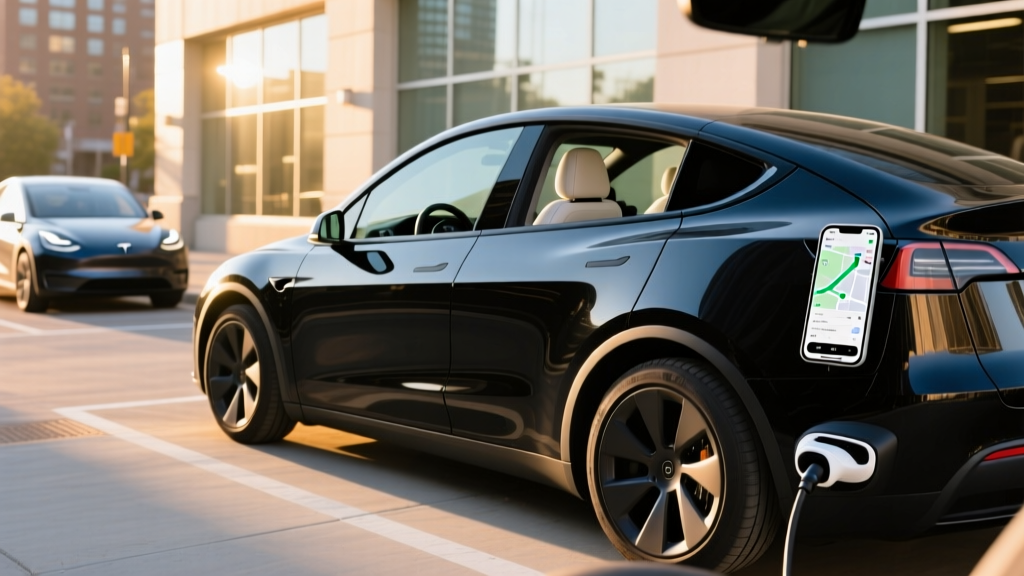
- Tesla app with remote preconditioning, location tracking, and Sentry Mode cameras
- Basic Autopilot (adaptive cruise + lane centering) included standard
The optional FSD (Supervised) package ($8,000 one-time or $99/month as of 2026) adds automatic lane changes, traffic light and stop sign recognition, and city-street navigation. While impressive in capability, it still requires active driver supervision and can behave unpredictably in construction zones, unmapped areas, or adverse weather. For most buyers, the included Basic Autopilot is sufficient for highway commuting.
Who Should Buy a Tesla in 2026 — and Who Shouldn't
✓ Pros
- Supercharger network — the most reliable and extensive DC fast-charging network in North America, now open to other brands but still seamless for Tesla owners
- Class-leading efficiency — Tesla's drivetrain and thermal management extract more miles per kWh than nearly any competitor
- OTA updates — continuous feature additions and improvements post-purchase
- Strong resale value relative to most EVs (though depreciation has accelerated since 2023 price cuts)
- LFP battery option on Model 3 RWD — daily 100% charging without degradation anxiety
✗ Cons
- 400V architecture — slower peak charge speed than 800V rivals (Ioniq 5 peaks at 350 kW, EV6 at 239 kW but on a more sustained curve)
- Minimalist interior isn't for everyone — no physical buttons, no traditional instrument cluster, stalkless steering wheel
- FSD (Supervised) costs $8,000 and remains Level 2 — an expensive convenience feature, not autonomy
- Service center wait times can stretch 2–4 weeks in some metro areas for non-critical repairs
- Insurance premiums 15–30% higher than comparable gas vehicles in many states
Decision Framework
- Choose Model Y Long Range if: You need crossover cargo space, family seating for five, and want 320 miles of range with AWD for under $40,000 (after credit). Best for families and road trippers.
- Choose Model 3 RWD if: You commute under 50 miles daily, have home charging, and want the lowest entry price with an LFP battery you can charge to 100% without worry. Best for budget-conscious commuters.
- Choose Model 3 Long Range if: You regularly drive 200+ miles between charges or live in a cold-weather state where the NMC battery's superior cold performance matters.
- Look at competitors if: You prioritize faster DC charging (Hyundai Ioniq 5), a more traditional interior with physical controls (Ford Mustang Mach-E), or a larger SUV (Rivian R1S, Kia EV9).
Competitor Check: How the Model Y and Model 3 Stack Up
Tesla's monthly sales dominance is being challenged more directly in 2026 than in any prior year. Key competitors and how they compare on the metrics that matter:
- Hyundai Ioniq 5 (84 kWh, AWD): EPA 290 miles, 800V architecture with peak 350 kW charging (10–80% in ~18 min), MSRP ~$48,000. Charges faster than Model Y but has less range and a smaller Supercharger-equivalent network advantage. Great for road-trippers who prioritize charging speed.
- Ford Mustang Mach-E (Extended Range AWD): EPA 312 miles, peak 150 kW DC charging, MSRP ~$49,000. More engaging to drive with a conventional interior. Slower charging than Tesla.
- Chevrolet Equinox EV (3LT): EPA 319 miles, peak 150 kW, MSRP ~$43,000. A value play that undercuts Model Y on price but charges significantly slower and lacks Tesla's software ecosystem.
For the latest EPA data on all of these vehicles, the fueleconomy.gov database remains the authoritative source for verified range and efficiency figures.
Frequently Asked Questions
What is the real-world range of the 2026 Model Y and Model 3?
The Model Y Long Range AWD delivers approximately 265–280 miles on highway road trips and 300+ miles in city driving, compared to its 320-mile EPA sticker. The Model 3 Long Range AWD achieves roughly 285–305 highway miles versus its 341-mile EPA rating. Cold weather (below 30°F) reduces both by an additional 20–30%.
How fast does a Tesla charge at home and on the road?
At home on a Level 2 Wall Connector (11.5 kW), both the Model Y and Model 3 Long Range add about 44 miles of range per hour — enough for a full overnight charge. On a V3 Supercharger (250 kW peak), a 10–80% session takes approximately 25 minutes. The Model 3 RWD with its smaller LFP battery peaks at 170 kW and takes about 30 minutes for 10–80%.
Does the Model Y or Model 3 qualify for the $7,500 federal EV tax credit?
As of early 2026, both the Model Y and Model 3 qualify for up to the full $7,500 under IRS §30D, provided the buyer meets income limits ($150K single / $300K joint MAGI) and the vehicle's battery meets critical mineral and component sourcing thresholds for the current year. The credit can be applied as a point-of-sale reduction. Always verify current eligibility on fueleconomy.gov before purchase, as sourcing requirements change annually.
Is a Tesla still worth buying versus competitors in 2026?
For buyers who prioritize charging infrastructure, software updates, and drivetrain efficiency, Tesla remains the default choice. The Supercharger network is the strongest competitive moat. However, if faster DC charging (800V), a more traditional interior, or a non-Tesla brand experience matters to you, the Hyundai Ioniq 5, Ford Mach-E, and Chevrolet Equinox EV are compelling alternatives. The "best" EV depends on your specific commute, charging access, and feature priorities.
What are Tesla's biggest advantages and drawbacks?
Advantages: Supercharger network, class-leading efficiency (MPGe/kWh per 100 mi), over-the-air updates, LFP battery option for worry-free daily charging, and strong software integration. Drawbacks: 400V charging architecture (slower than 800V rivals), minimalist interior that polarizes buyers, FSD's $8,000 cost for a Level 2 system, higher insurance premiums, and service center wait times in some regions.