When buyers research a Tesla, the conversation almost always starts with range or Autopilot. But the Tesla safety record — spanning NHTSA 5-star ratings, IIHS Top Safety Pick awards, and billions of real-world Autopilot miles — is arguably the most consequential data point for families and commuters. This profile examines the 2026 Tesla lineup (Model 3 and Model Y) through the lens of crash performance, active safety technology, and daily ownership practicality, giving you the exact numbers you need to evaluate whether Tesla's safety claims hold up.
Crash Test Ratings: What NHTSA and IIHS Actually Say
Both the Tesla Model 3 and Tesla Model Y earn 5-star overall ratings from the National Highway Traffic Safety Administration (NHTSA), with top marks in frontal crash, side crash, and rollover categories. The low center of gravity from the under-floor battery pack contributes to exceptional rollover resistance — a structural advantage every EV shares over comparable ICE vehicles.
The Insurance Institute for Highway Safety (IIHS) awards both models Top Safety Pick+ status (when equipped with acceptable headlights), with "Good" ratings across all crashworthiness tests. The Model 3 Highland refresh and Model 3 Juniper updates improved headlight performance, addressing earlier "Acceptable" downgrades that had kept some trims from the highest honor.
Active Safety and Autopilot: The Data Behind the Headlines
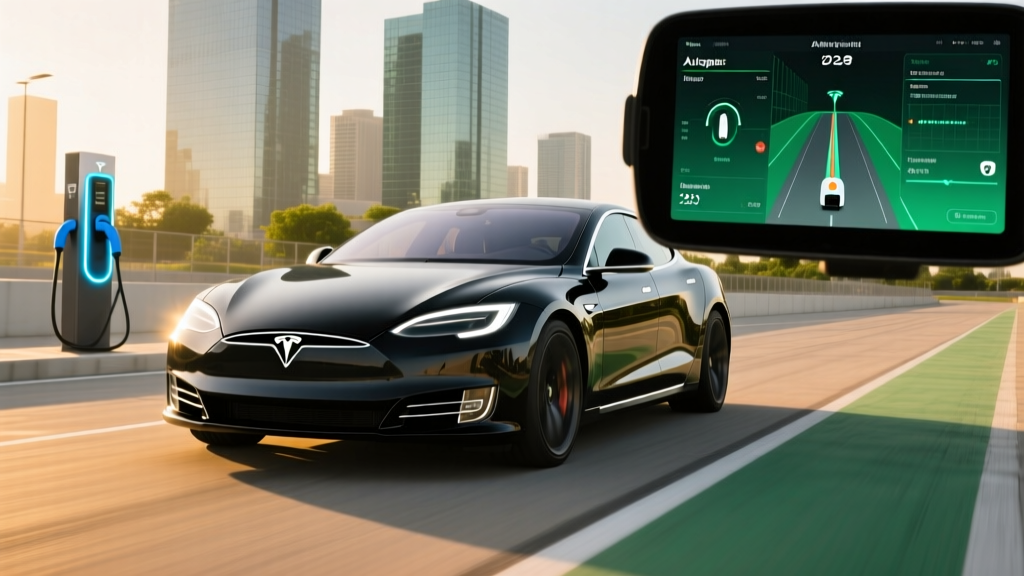
Tesla publishes quarterly safety reports claiming approximately one crash per 4-5 million miles driven with Autopilot engaged, versus roughly one per 1.5-2 million miles without. Context matters enormously here: Autopilot is primarily engaged on divided highways under favorable conditions, which are inherently lower-risk environments. Comparing these figures directly to the U.S. average (~1 crash per 670,000 miles per NHTSA) requires adjusting for road type, weather, and driver demographics.
Standard active safety features across the 2026 Model 3 and Model Y include automatic emergency braking (AEB), forward collision warning, lane departure warning, lane-keeping assist, blind-spot monitoring, and rear cross-traffic alert. These systems operate without requiring an Autopilot subscription and have consistently earned strong ratings from IIHS crash-prevention evaluations.
Model 3 (2026 Juniper): Range, Battery, and Charging Specs
The refreshed Model 3 Juniper continues into 2026 with two primary powertrain configurations. The Long Range AWD remains the volume seller for buyers prioritizing distance and all-weather traction.
| Spec | Model 3 RWD | Model 3 Long Range AWD |
|---|---|---|
| EPA Range | 272 mi | 363 mi |
| Battery (usable) | ~57.5 kWh (LFP) | ~75 kWh (NMC) |
| Max DC Charge Rate | 170 kW | 250 kW |
| 10–80% DC Time | ~25 min | ~22 min |
| Level 2 Home Rate | 11.5 kW / ~44 mi/hr | 11.5 kW / ~44 mi/hr |
| 0–60 mph | 5.8 sec | 4.2 sec |
| Horsepower | 271 hp | 346 hp |
| Efficiency | 132 MPGe / 25 kWh/100mi | 132 MPGe / 25 kWh/100mi |
| Base MSRP | $38,990 | $45,990 |
Model Y (2026 Refresh): Family SUV Safety and Practicality
The Model Y remains Tesla's best-selling vehicle globally, and its 2026 refresh carries over the structural safety cell that has earned it top marks. Cargo volume stands at 30.2 cu ft behind the second row (76.2 cu ft with seats folded), with an additional 4.1 cu ft front trunk. Rear legroom measures 41.6 inches — competitive with midsize crossovers like the Hyundai Ioniq 5 and Ford Mustang Mach-E.
| Charging Level | Power (kW) | Miles Added per Hour | Typical Use Case |
|---|---|---|---|
| Level 1 (120V) | 1.4 kW | ~5 mi/hr | Overnight trickle, emergencies |
| Level 2 (240V home) | 11.5 kW | ~44 mi/hr | Daily home charging |
| DC Fast (Supercharger V3) | 250 kW peak | ~1,000 mi/hr (peak) | Road trips, 10–80% in ~22 min |
| DC Fast (V4 Supercharger) | Up to 350 kW | Faster taper curve | Newer stations, CCS/NACS open network |
A critical note on charging curves: the 250 kW peak rate on Model 3 Long Range and Model Y Long Range is sustained only between roughly 10–40% State of Charge. Above 60%, the rate tapers significantly to protect the NMC cells, dropping below 100 kW past 80%. LFP-equipped RWD models tolerate regular 100% charging without degradation concerns, which partially offsets their lower peak charge rate for daily-use scenarios.
Pricing, Trims, and Federal Tax Credit Eligibility
Tesla's 2026 pricing positions the Model 3 RWD at $38,990 (including destination) and the Model 3 Long Range at $45,990. The Model Y Long Range starts at $46,990, while the Performance variant is $51,490. All prices reflect Tesla's direct-to-consumer model with no dealer markups or negotiation.
| Model / Trim | MSRP | Est. After §30D Credit | Credit Eligible? |
|---|---|---|---|
| Model 3 RWD | $38,990 | ~$31,490 | Yes (if sourcing rules met) |
| Model 3 Long Range | $45,990 | ~$38,490 | Yes (under $55k sedan cap) |
| Model Y Long Range | $46,990 | ~$39,490 | Yes (under $80k SUV cap) |
| Model Y Performance | $51,490 | ~$43,990 | Yes (under $80k SUV cap) |
- MSRP Caps: Sedans (Model 3) must be under $55,000; SUVs/trucks/vans (Model Y) under $80,000. All current trims qualify.
- Buyer Income Limits (2026): Modified AGI must not exceed $150,000 (single), $225,000 (head of household), or $300,000 (joint filers).
- Battery Sourcing: The $7,500 credit requires both critical-minerals and battery-component sourcing thresholds be met. Tesla's North American supply chain has expanded, but eligibility can shift quarterly. Verify current status at IRS.gov qualifying vehicle list before purchase.
- Point-of-Sale Transfer: Under §30D, you can transfer the credit to the dealer (Tesla) at purchase, reducing your out-of-pocket cost immediately rather than waiting for tax filing.
Warranty Coverage and Long-Term Battery Durability
Tesla's warranty structure covers the battery and drive unit for 8 years or 100,000 miles on RWD models (57.5 kWh LFP) and 8 years or 120,000 miles on Long Range AWD models (75 kWh NMC), whichever comes first. The capacity retention threshold is 70% — if the battery degrades below 70% of original capacity within the warranty period, Tesla will replace or refurbish it at no cost.
Real-world degradation data from fleet analytics sources (including Recurrent and TeslaFi community datasets) suggest NMC packs lose approximately 8–12% capacity over the first 100,000 miles, with LFP packs showing slightly less degradation but with a lower initial energy density. The basic vehicle limited warranty covers 4 years or 50,000 miles — shorter than Hyundai's 10-year/100,000-mile powertrain warranty on the Ioniq 5 and Ioniq 6.
Pros and Cons: The Honest Ownership Picture
Pros
- 5-star NHTSA rating, IIHS Top Safety Pick+ across Model 3 and Model Y
- Supercharger network: 50,000+ global fast chargers with NACS connector, now opening to other brands
- Class-leading efficiency: 25 kWh/100mi translates to lowest cost-per-mile in the segment
- Over-the-air updates continuously improve safety features and vehicle function
- LFP option allows daily 100% charging without degradation anxiety
- Strong resale value relative to non-Tesla EVs
Cons
- FSD (Supervised) is expensive ($8,000 or $99/mo) and remains Level 2 — not autonomous
- Minimalist interior lacks physical controls; turn signals on steering wheel are controversial
- No Apple CarPlay or Android Auto — Tesla's proprietary infotainment only
- Service center wait times remain a pain point in high-volume metro areas
- Ride quality on Model 3 is firm; road noise improved in Juniper but still present
- Insurance premiums 15–30% higher than comparable ICE sedans in most states
Who Should Buy a Tesla in 2026?
The Model 3 RWD suits urban commuters with home charging access who drive under 40 miles daily and want the lowest total cost of ownership in an EV sedan. The Model 3 Long Range is the road-trip choice, with 363 EPA miles and Supercharger access making 300-mile legs manageable with a single 20-minute stop.
The Model Y is the default for families needing cargo flexibility, rear-seat space, and available AWD for snow-belt states. If you tow, note that the Model Y's 3,500-lb rating is adequate for small trailers but trails the Ford F-150 Lightning and Rivian R1S.
Choose Model 3 Long Range if: You take frequent road trips over 250 miles, live in a cold-weather state, or want dual-motor AWD without stepping up to an SUV.
Choose Model Y Long Range if: You need rear cargo space for strollers, gear, or dogs, and want the same Supercharger advantage in a crossover form factor.
Look elsewhere if: You require Apple CarPlay, prefer physical buttons, want a longer basic warranty, or need 5,000+ lb towing capacity.
Frequently Asked Questions
What is the real-world range of the Tesla Model 3 and Model Y?
The Model 3 Long Range delivers an EPA-estimated 363 miles, but sustained 75-mph highway driving typically yields 290–320 miles. In sub-freezing temperatures without preconditioning, expect 230–260 miles. The Model Y Long Range (EPA 320 miles) returns roughly 260–280 highway and 210–240 in cold conditions. The RWD models with LFP batteries lose proportionally similar percentages from their lower EPA baselines (272 mi for Model 3 RWD).
How fast does a Tesla charge at home and on the road?
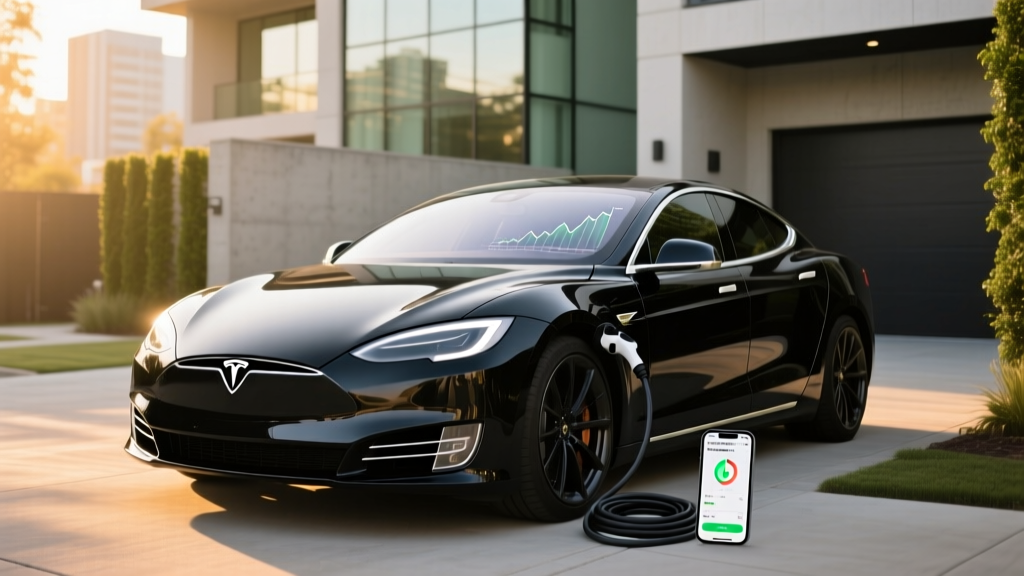
At home on a 240V Level 2 circuit (48-amp breaker, 11.5 kW), both Model 3 and Model Y add approximately 44 miles of range per hour — a full overnight charge from 20% to 80% takes roughly 7–8 hours. On DC fast chargers, Long Range models peak at 250 kW (10–80% in about 22 minutes), while RWD LFP models peak at 170 kW (10–80% in about 25 minutes). Actual charge speed depends on battery temperature, state of charge, and station output.
How much does a Tesla cost after the federal tax credit?
With the full $7,500 §30D credit applied at point of sale, a Model 3 RWD drops from $38,990 to approximately $31,490, and a Model Y Long Range from $46,990 to approximately $39,490. Eligibility depends on your income (under $150k single / $300k joint), the vehicle meeting battery-sourcing requirements, and the car being on the IRS qualifying list at the time of purchase. Always verify at IRS.gov before ordering.
Is Tesla's safety record better than competitors like Hyundai or Ford?
On crashworthiness, Tesla matches or slightly exceeds competitors — both the Model 3 and Model Y hold 5-star NHTSA ratings and IIHS Top Safety Pick+ awards, as do the Hyundai Ioniq 5 and Ford Mustang Mach-E in most trims. Tesla's advantage lies in its active-safety data volume: billions of Autopilot miles provide a dataset no other automaker can match. However, competitors offer features Tesla lacks, such as Hyundai's highway driving assist with more intuitive steering-wheel touch detection and Ford's BlueCruise hands-free operation on pre-mapped highways.
What are the biggest drawbacks of Tesla's safety technology?
The primary criticism is that Autopilot and FSD (Supervised) can create overreliance. NHTSA has investigated multiple incidents where drivers appeared to over-trust Level 2 systems. Tesla's camera-only vision approach (removing radar and ultrasonic sensors in 2022–2023) has drawn scrutiny, though subsequent OTA updates have improved object detection. Additionally, Tesla's emergency-calling system depends on cellular connectivity, which can fail in remote areas — a limitation shared with most connected vehicles.
Does the Tesla Model 3 or Model Y qualify for the $7,500 federal EV tax credit?
As of 2026, both the Model 3 and Model Y in all current trims appear on the IRS qualifying vehicle list and fall under their respective MSRP caps ($55k for sedans, $80k for SUVs). However, the $7,500 credit is split into two $3,750 halves tied to critical-minerals sourcing and battery-component manufacturing requirements. Tesla's supply chain has largely localized to North America, but eligibility can change. Confirm your specific vehicle's status on the IRS qualifying list at the time of delivery, and consult a tax professional if your income is near the AGI thresholds.