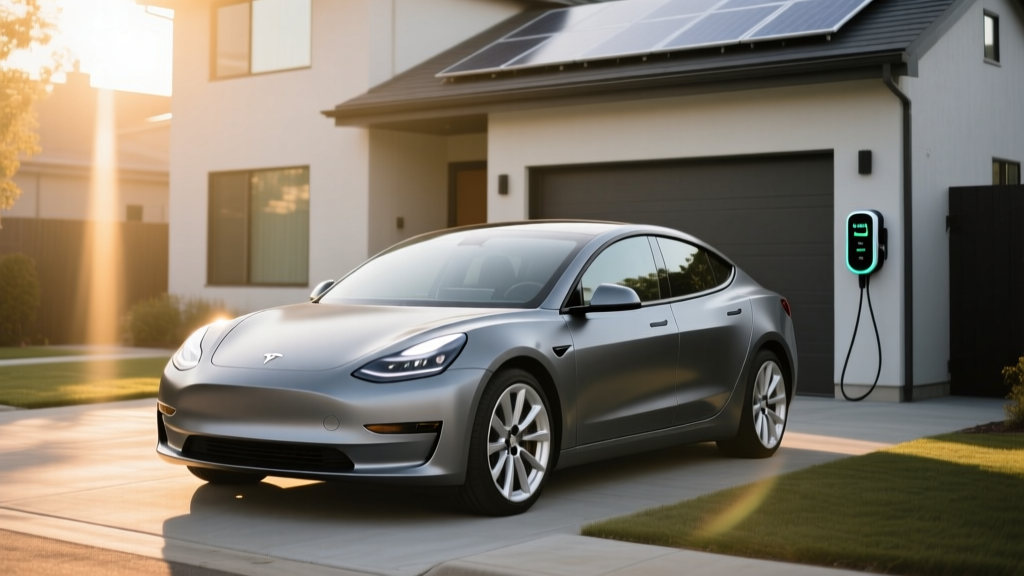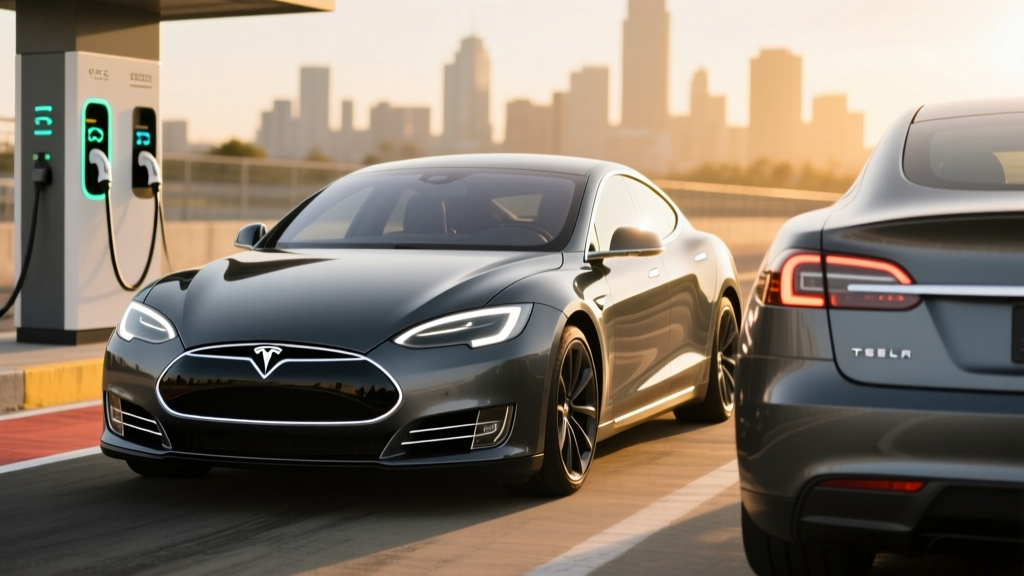
Tesla has built its brand partly on safety, consistently earning top crash-test scores and packing every vehicle with an extensive suite of active and passive protection systems. But with frequent Autopilot headlines and evolving federal oversight, buyers deserve a clear-eyed look at what Tesla safety features actually deliver — and where their limits lie. This review examines the 2025 Tesla lineup through the lens of safety, while covering the range, charging, pricing, and ownership realities you need before signing a purchase agreement.
Crash-Test Ratings: NHTSA and IIHS Scores Across the Fleet
All current Tesla models benefit from a rigid skateboard platform with a low center of gravity, which inherently reduces rollover risk and provides substantial crumple-zone volume. Here's how the core lineup performs in government and independent testing:
| Model | NHTSA Overall | IIHS Rating | Rollover Risk |
|---|---|---|---|
| Model 3 (Highland refresh) | 5 Stars | Top Safety Pick+ (when built after specific date) | ~6-7% |
| Model Y (Juniper refresh) | 5 Stars | Top Safety Pick+ | ~7-8% |
| Model S | 5 Stars | Good in most categories | ~5-6% |
| Model X | 5 Stars | Good/Acceptable depending on test | ~7-9% |
| Cybertruck | Not yet fully rated | Pending full IIHS evaluation | Low (stainless exoskeleton) |
Source: NHTSA and IIHS. Ratings can shift with mid-year production changes, so always verify the build-date-specific score on the vehicle's window sticker or the IIHS database before purchasing.
Active Safety Systems: What Autopilot Does — and Doesn't Do
Every Tesla ships with Basic Autopilot, which includes:
- Traffic-Aware Cruise Control (TACC) — maintains set speed and following distance
- Autosteer — lane-centering on clearly marked roads
- Automatic Emergency Braking (AEB) — forward collision mitigation
- Side Collision Warning and Lane Departure Avoidance
- Blind Spot Monitoring with camera-based visualization
The optional Full Self-Driving (Supervised) package (currently $8,000 or $99/month) adds:
- Navigate on Autopilot — automated highway on/off-ramp transitions
- Auto Lane Change — suggested or automatic lane changes with confirmation
- Smart Summon — low-speed parking lot navigation to the driver
- Traffic Light and Stop Sign Control
- Autosteer on City Streets — urban navigation with driver supervision
- FSD does not make the car autonomous — you are the driver, legally and practically.
- Autosteer can struggle in construction zones, faded lane markings, heavy rain, and direct sun glare on cameras.
- Tesla's vision-only approach (no LiDAR or radar in current production) means performance can degrade in low-visibility conditions where sensor-fusion competitors maintain an edge.
- NHTSA has issued standing investigations into Autopilot behavior near emergency vehicles — always stay alert around first-responder scenes.
Model 3 and Model Y: Range, Charging, and Efficiency Specs
Since the Model 3 and Model Y represent the vast majority of Tesla sales and safety-feature deployment, here's a detailed spec breakdown for the 2025 model year (Highland and Juniper refreshes respectively):
| Spec | Model 3 Long Range AWD | Model 3 RWD | Model Y Long Range AWD |
|---|---|---|---|
| EPA Range | 341 mi | 272 mi | 320 mi |
| Battery (usable) | ~75 kWh (NMC) | ~57.5 kWh (LFP) | ~75 kWh (NMC) |
| Drivetrain | Dual-Motor AWD | Rear-Wheel Drive | Dual-Motor AWD |
| 0-60 mph | 4.2 sec | 5.8 sec | 4.8 sec |
| Horsepower | ~346 hp | ~271 hp | ~384 hp |
| MPGe (combined) | 134 MPGe | 132 MPGe | 123 MPGe |
| Efficiency | 25 kWh/100mi | 25 kWh/100mi | 28 kWh/100mi |
| Max DC Fast Charge | 250 kW | 170 kW | 250 kW |
| 10-80% DC Time | ~25 min | ~28 min | ~25 min |
| Level 2 Home Rate | 11.5 kW (~44 mi/hr) | 7.7 kW (~30 mi/hr) | 11.5 kW (~44 mi/hr) |
| Cargo (rear seats up) | 23 cu ft | 23 cu ft | 30 cu ft |
| Frunk | 3.1 cu ft | 3.1 cu ft | 4.1 cu ft |
| Rear Legroom | 35.3 in | 35.3 in | 40.5 in |
Source: fueleconomy.gov and Tesla spec sheets.
Charging Infrastructure: Tesla's Supercharger Advantage
Tesla's Supercharger network remains the most reliable DC fast-charging ecosystem in North America, with over 6,500 stations and 30,000+ stalls in the U.S. alone. With the adoption of the NACS (North American Charging Standard) connector across the industry, Tesla has opened select Superchargers to non-Tesla EVs via a built-in adapter or Magic Dock — but Tesla owners still enjoy native plug-and-charge simplicity.
| Level | Power | Miles Added per Hour | Typical Use Case |
|---|---|---|---|
| Level 1 (120V household) | ~1.4 kW | ~5 mi/hr | Emergency / overnight trickle |
| Level 2 (240V home Wall Connector) | 11.5 kW | ~44 mi/hr | Daily home charging |
| DC Fast (V3 Supercharger) | Up to 250 kW | ~1,000+ mi/hr (peak) | Road trips, 10-80% in ~25 min |
| DC Fast (V4 Supercharger) | Up to 325 kW (future) | Higher peak rates | Newer deployments; Model 3 currently limited by onboard architecture |
Charging-curve reality: The 250 kW peak rate is only sustained roughly between 10-30% SoC. Above 50%, the rate tapers to ~100 kW, and above 80% it drops further to ~40 kW. This is why the 10-80% metric (~25 minutes) is far more useful than peak kW figures. Always precondition the battery via the Tesla navigation system before arriving at a Supercharger — skipping preconditioning in cold weather can add 10-15 minutes to your charge session.
Pricing, Trims, and Federal Tax Credit Eligibility
| Model / Trim | Base MSRP | §30D Credit Eligibility | Effective Price (with credit) |
|---|---|---|---|
| Model 3 RWD | $38,990 | Eligible for up to $7,500 (point-of-sale) | ~$31,490 |
| Model 3 Long Range AWD | $45,740 | Eligible for up to $7,500 | ~$38,240 |
| Model 3 Performance | $52,990 | Eligible for up to $7,500 | ~$45,490 |
| Model Y Long Range AWD | $44,990 | Eligible for up to $7,500 | ~$37,490 |
| Model Y Performance | $48,990 | Eligible for up to $7,500 | ~$41,490 |
| Model S / X | $79,990+ | NOT eligible (exceeds MSRP cap) | Full MSRP |
- MSRP Cap: Sedans (Model 3) must be ≤$55,000; SUVs/trucks/vans (Model Y) must be ≤$80,000.
- Buyer Income Cap: AGI ≤$150,000 single / ≤$225,000 head of household / ≤$300,000 joint.
- Battery Sourcing: Critical minerals and battery components must meet escalating domestic/free-trade-partner thresholds. Tesla's U.S. production generally qualifies, but verify at fueleconomy.gov before purchase.
- Point-of-Sale Transfer: You can transfer the credit to the dealer at purchase, reducing your out-of-pocket cost immediately rather than waiting for a tax refund.
- Consult a tax professional — individual eligibility varies. Rules are subject to change.
Warranty Coverage and Long-Term Battery Outlook
| Coverage | Model 3 / Model Y | Model S / Model X |
|---|---|---|
| Basic Vehicle | 4 years / 50,000 mi | 4 years / 50,000 mi |
| Battery & Drive Unit | 8 years / 120,000 mi (LR AWD) | 8 years / 150,000 mi |
| Battery Retention Threshold | 70% capacity during warranty | 70% capacity during warranty |
Tesla's LFP batteries (Model 3 RWD) tend to exhibit slower degradation than NMC packs, often retaining 90%+ capacity after 100,000 miles based on fleet data. NMC packs in Long Range models typically see 8-12% degradation over the same distance. The 70% retention warranty threshold is industry-standard, though some competitors offer 8-year/100,000-mile terms — Tesla's 120,000-mile coverage on Long Range models is actually more generous in mileage.
Who Should Buy a Tesla — and Who Should Look Elsewhere
- Best-in-class Supercharger network for road trips
- Consistently top-rated crash safety (5-star NHTSA)
- Over-the-air updates continuously improve features
- Class-leading efficiency (kWh/100mi)
- LFP option allows daily 100% charging without degradation worry
- Strong resale value relative to most EVs
- Vision-only Autopilot struggles in poor weather/visibility
- No traditional instrument cluster — all info on center screen
- Minimalist interior not for everyone (no physical buttons, limited storage)
- Service center wait times can stretch weeks in some markets
- FSD ($8,000) remains Level 2 despite the "Full Self-Driving" name
- Model S/X no longer qualify for federal tax credit
- Choose Tesla Model 3 RWD if: You commute under 50 miles daily, want the lowest entry price (~$31,500 after credit), and can charge at home overnight.
- Choose Tesla Model 3 Long Range if: You take regular road trips, need AWD for snow, and want 341 miles of EPA range.
- Choose Tesla Model Y Long Range if: You need family cargo space (30 cu ft + frunk), rear-seat room for car seats, and still want strong range.
- Look at Hyundai Ioniq 5 or Kia EV6 instead if: You prefer physical buttons, 800V ultra-fast charging (10-80% in ~18 min), or want a more conventional dealership service experience.
- Look at a Rivian R1S or Ford Explorer EV if: You need three rows or more traditional SUV ergonomics.
Frequently Asked Questions
What is the real-world range of a Tesla Model 3?
The EPA rates the 2025 Model 3 Long Range AWD at 341 miles. In real-world highway driving at 75 mph in moderate temperatures, expect roughly 280-300 miles. In freezing winter conditions, that drops to approximately 230-260 miles. The RWD trim (EPA 272 mi) realistically delivers 220-240 miles on the highway.
How fast does a Tesla charge at home and on the road?
At home on a Level 2 Tesla Wall Connector (240V, 48A), the Model 3 Long Range charges at 11.5 kW, adding roughly 44 miles of range per hour — a full overnight charge from 20% to 80% takes about 5 hours. On a V3 Supercharger, the 10-80% charge takes approximately 25 minutes, though the rate tapers significantly above 80% SoC.
How much does a Tesla cost after federal tax credits?
The 2025 Model 3 RWD starts at $38,990 MSRP. With the $7,500 §30D federal tax credit transferred at point-of-sale, the effective price drops to approximately $31,490 — before any state or local incentives. Eligibility depends on buyer income (≤$150K single / ≤$300K joint), battery sourcing requirements, and MSRP caps. Always verify current eligibility on IRS.gov.
Is Tesla Autopilot self-driving?
No. Autopilot and Full Self-Driving (Supervised) are SAE Level 2 driver-assistance systems. The driver must remain fully attentive, keep hands on the wheel (or demonstrate engagement via steering torque), and be ready to take over at any moment. Only Level 4 robotaxi services like Waymo operate without a human driver, and only in geofenced areas.
Does the Tesla Model Y qualify for the federal EV tax credit?
Yes, the Model Y (classified as an SUV) qualifies for up to $7,500 under §30D, as its MSRP falls under the $80,000 SUV cap. The buyer must also meet income requirements and the vehicle must satisfy battery-sourcing rules. Tesla's U.S.-built Model Y has generally qualified, but always confirm on fueleconomy.gov at the time of purchase, as component sourcing can shift.
Are Teslas safer than other EVs?
Teslas consistently earn 5-star NHTSA ratings and IIHS Top Safety Pick+ awards, placing them among the safest vehicles in any category — not just EVs. The low center of gravity from the skateboard battery pack provides inherent rollover protection. However, Tesla's vision-only approach to active safety means its driver-assist systems may not match the poor-weather performance of LiDAR- or radar-equipped competitors like Mercedes-Benz Drive Pilot or GM Super Cruise.