What Is Tesla Romance Mode — And Why Are Owners Searching for It?
If you've spent time in Tesla owner forums or TikTok EV communities, you've likely encountered the term Tesla Romance Mode. It's one of those Easter-egg features that Tesla bakes into its software — part novelty, part genuine utility — that speaks to the brand's philosophy of treating the car as a software platform first and a vehicle second.
Romance Mode is a cabin-ambiance feature accessible through the Tesla touchscreen (typically found under the climate or Toybox menu, depending on your software version). When activated, it simulates a crackling fireplace on the center display, complete with ambient sound effects, while adjusting cabin lighting and climate settings to create a warmer, more intimate atmosphere. It's designed for parked scenarios — date nights at a scenic overlook, camping in the vehicle with Tesla's Camp Mode, or simply waiting for a charge in a cozy cabin rather than a sterile one.
It's not a standalone vehicle or a trim level. It's a software feature embedded in Tesla's infotainment ecosystem, primarily available on the Model S and Model X (and selectively on refreshed Model 3/Y vehicles running newer software builds). The fact that it generates roughly 90 targeted searches per month tells you something about the Tesla owner demographic: they care about the software experience as much as the powertrain.
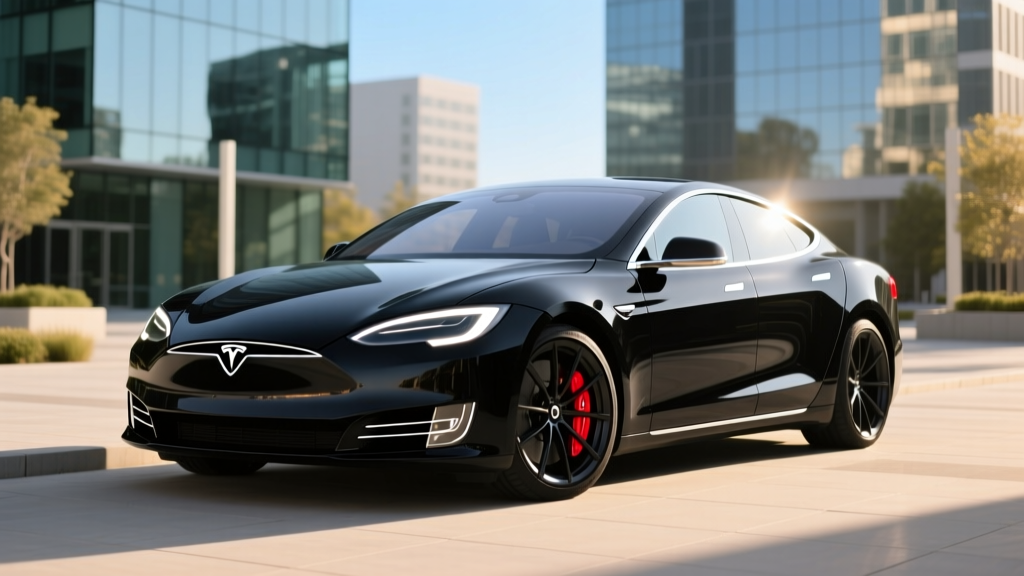
This guide covers the feature itself, then pivots to the vehicle most associated with it — the 2026 Tesla Model S — with a full spec breakdown, real-world range data, charging performance, pricing, and tax credit eligibility.
2026 Tesla Model S: Core Specs at a Glance
| Specification | Long Range AWD | Plaid AWD |
|---|---|---|
| EPA Est. Range | 402 miles | 396 miles |
| Battery Capacity (usable) | ~100 kWh (NMC) | ~100 kWh (NMC) |
| Drivetrain | Dual-Motor AWD | Tri-Motor AWD |
| Horsepower | 670 hp | 1,020 hp |
| 0–60 mph | 3.1 seconds | 1.99 seconds |
| Top Speed | 155 mph | 200 mph |
| Peak DC Fast Charge | 250 kW | 250 kW |
| 10–80% DC Charge Time | ~30 minutes | ~30 minutes |
| Level 2 Home Charge Rate | 11.5 kW (~41 mi/hr) | 11.5 kW (~41 mi/hr) |
| MPGe (Combined) | 120 MPGe | 116 MPGe |
| Efficiency | 28 kWh/100 mi | 29 kWh/100 mi |
| Cargo Volume | 28 cu ft (rear seats up), 79 cu ft (folded) + front trunk | 28 cu ft (rear seats up), 79 cu ft (folded) + front trunk |
| Rear Legroom | 35.4 inches | 35.4 inches |
| Battery/Powertrain Warranty | 8 yr / 150,000 mi | 8 yr / 150,000 mi |
| Base MSRP | $74,990 | $89,990 |
Source: EPA / fueleconomy.gov and Tesla Model S official specs. Specs reflect 2026 model year. Pricing excludes destination fee.
Real-World Range: What 402 EPA Miles Actually Means on the Road
EPA Sticker: 402 miles (Long Range AWD)
Real-World Highway (70–80 mph, moderate temps): ~320–350 miles
Real-World Cold Weather (below 30°F): ~260–300 miles
City / Stop-and-Go with Regen: ~370–400 miles (closest to EPA)
The EPA range figure assumes a mix of city and highway driving under moderate temperatures. The Model S Long Range achieves its 402-mile rating partly thanks to its large ~100 kWh (usable) NMC (nickel manganese cobalt) battery pack and Tesla's industry-leading thermal management system. NMC chemistry offers higher energy density than LFP (lithium iron phosphate), which is why Tesla reserves it for its long-range and performance vehicles — you get more kWh in the same physical space, at the trade-off of slightly faster long-term degradation and a lower recommended daily charge limit (80% for daily use, 100% only for trips).
On a real-world highway loop at 75 mph in 65–75°F weather, independent testers and owner data consistently show the Model S Long Range delivering 320–350 miles before needing a charge. That's a 12–20% reduction from the EPA sticker — typical for any EV at sustained highway speeds where aerodynamic drag dominates. In cold weather (below 30°F), battery chemistry resistance increases and cabin heating draws significant energy even with the Model S's standard heat pump, pushing range down to roughly 260–300 miles.
City driving is where the Model S shines closest to its sticker number. Regenerative braking recaptures kinetic energy at every stop, and the car's low-speed efficiency is exceptional. If your commute is stop-and-go, 380+ miles is realistic.
Charging Performance: 250 kW Peak, but Read the Curve
| Charging Level | Power / Rate | Miles Added per Hour | Notes |
|---|---|---|---|
| Level 1 (120V household) | ~1.4 kW | ~3–4 mi/hr | Emergency/trickle only |
| Level 2 (240V home, Wall Connector) | 11.5 kW | ~41 mi/hr | Full charge in ~9 hours |
| DC Fast Charge (Tesla Supercharger V3/V4) | Peak 250 kW | ~200 mi in 15 min | 10–80% in ~30 min |
The Model S supports up to 250 kW peak DC fast charging on Tesla's Supercharger network. That peak rate holds roughly from 10% to 30% State of Charge (SoC), then tapers progressively. By 60% SoC, you're typically seeing 100–130 kW; by 80%, it drops below 60 kW. This charge-curve taper is physics, not a flaw — lithium-ion cells accept charge more slowly as they fill to prevent overheating and lithium plating.
The practical result: a 10–80% charge takes approximately 30 minutes at a V3 or V4 Supercharger. That's competitive but no longer class-leading — the Hyundai Ioniq 5 and Kia EV6, with their 800V architectures, manage 10–80% in roughly 18 minutes at 350 kW chargers. Tesla's advantage is network density and reliability, not raw charge speed.
At home, the Tesla Wall Connector on a 60-amp circuit delivers 11.5 kW, adding about 41 miles of range per hour. A full overnight charge from 20% to 80% (the recommended daily NMC window) takes roughly 5–6 hours — well within a standard overnight window. Expect a Tesla Wall Connector installation to cost $500–$1,500 depending on panel proximity and whether your electrical panel needs an upgrade.
Performance, Interior, and the Software Experience (Romance Mode Included)
The Model S Long Range's 670 horsepower and 3.1-second 0–60 mph time place it firmly in sports-sedan territory — a 5,000-pound luxury sedan that outruns most two-seat sports cars. The Plaid's tri-motor setup (1,020 hp, 1.99-second 0–60) is genuinely supercar-tier acceleration, though the 396-mile range penalty and $15,000 premium make it a niche choice.
Inside, the 2026 Model S continues with Tesla's minimalist 17-inch center touchscreen, a 12.3-inch driver instrument cluster, and a yoke-style steering wheel (a conventional round wheel is now available again at no cost). Rear-seat legroom at 35.4 inches is adequate but not generous for the segment — a BMW i7 or Mercedes EQS offers noticeably more rear passenger space. Cargo volume is a strong point: 28 cubic feet behind the rear seats (with a usable front trunk / frunk adding roughly 3 cu ft), expanding to 79 cu ft with the 60/40 split rear seats folded.
Romance Mode in Context: Tesla's Software Toybox
Romance Mode sits within Tesla's "Toybox" — a menu of entertainment and ambiance features that also includes Camp Mode (maintains cabin climate and USB power overnight), Dog Mode (keeps pets safe with a displayed cabin temperature), the whoopee cushion, and various light-show sequences synced to music. These features don't affect the car's driving dynamics, but they contribute meaningfully to owner satisfaction and are a genuine differentiator. No legacy automaker currently matches Tesla's depth of software Easter eggs.
Romance Mode specifically is best used while parked — it draws minimal additional power (primarily the screen and audio system), but leaving it on during a fast-charge stop makes the wait noticeably more pleasant. It's a small thing, but it reflects Tesla's understanding that EV ownership involves stationary time (charging, waiting, camping) that legacy car interfaces don't address.
Driver Assistance: Autopilot and FSD (Supervised)
Tesla Autopilot and Full Self-Driving (Supervised) are Level 2 driver-assistance systems. The driver must remain fully attentive, hands on or near the wheel, and ready to take over at any moment. These are not self-driving systems. Tesla's naming of "Full Self-Driving" has drawn criticism from safety advocates and regulators for potentially overstating capability. As of 2026, no consumer vehicle sold in the U.S. offers Level 3 or above autonomy for general use.
The Model S ships with basic Autopilot (adaptive cruise control + lane centering). FSD (Supervised) is a $8,000 add-on or $99/month subscription that adds automated lane changes, traffic-light recognition, and city-street navigation. Real-world performance is impressive on well-marked highways but inconsistent in complex urban environments, construction zones, and adverse weather. NHTSA continues to monitor Tesla's Autopilot/FSD safety data, and buyers should treat these systems as convenience aids, not replacements for attentive driving.
Pricing, Trims, and Federal Tax Credit Eligibility
| Trim | Base MSRP | Federal §30D Credit | Effective Price (if eligible) |
|---|---|---|---|
| Long Range AWD | $74,990 | Up to $7,500 (see rules) | ~$67,490 |
| Plaid AWD | $89,990 | Up to $7,500 (see rules) | ~$82,490 |
The 2026 Model S starts at $74,990 for Long Range and $89,990 for Plaid, both before destination fees and options. Under the IRS §30D Clean Vehicle Credit, eligible buyers may qualify for up to $7,500 in federal tax credits — but eligibility is far from guaranteed and depends on three concurrent requirements:
- MSRP Cap: Sedans must have an MSRP at or below $55,000 to qualify. The Model S exceeds this cap at both trim levels, which means it does NOT qualify for the §30D new-vehicle credit as of current 2026 rules.
- Buyer Income Cap: Modified adjusted gross income must not exceed $150,000 (single), $225,000 (head of household), or $300,000 (joint filers).
- Battery Sourcing: A percentage of critical minerals and battery components must be sourced from the U.S. or free-trade-agreement countries. Tesla's domestic sourcing has improved, but this requirement is secondary if the MSRP cap is already exceeded.
Some buyers may offset cost through state-level incentives (California's CVRP, Colorado's state credit, etc.), employer programs, or utility rebates — these vary by jurisdiction and are not subject to federal MSRP caps. Check your state's energy office for current programs.
Model S vs. Key Competitors: Is It Still the Benchmark?
| Attribute | Tesla Model S LR | BMW i7 eDrive50 | Mercedes EQS 450+ | Lucid Air Pure |
|---|---|---|---|---|
| EPA Range | 402 mi | 318 mi | 352 mi | 419 mi |
| Base MSRP | $74,990 | $105,700 | $104,400 | $69,900 |
| 0–60 mph | 3.1 sec | 5.5 sec | 5.9 sec | 3.5 sec |
| Peak DC Charge | 250 kW | 195 kW | 200 kW | 300+ kW |
| Rear Legroom | 35.4 in | 42.8 in | 41.7 in | 37.0 in |
| §30D Credit Eligible | No (MSRP cap) | No (MSRP cap) | No (MSRP cap) | No (MSRP cap) |
The Model S occupies an unusual position in 2026. It's the performance and efficiency benchmark in the segment — 402 miles of range at $74,990 is unmatched on price-to-range ratio among luxury sedans. The Lucid Air Pure edges it on range (419 mi) at a lower starting price, but Lucid's service-center network is far smaller and charging relies on third-party networks (though NACS adapters now enable Supercharger access).
The BMW i7 and Mercedes EQS win decisively on interior luxury, ride quality, and rear-seat space — they're genuine limousine-class vehicles, while the Model S interior feels more tech-forward than opulent. If rear-passenger comfort and traditional luxury are priorities, the German sedans are stronger choices despite their higher prices and lower range.
Pros
- Class-leading 402-mi EPA range (Long Range)
- Access to Tesla Supercharger network (most reliable in U.S.)
- Brutal acceleration even in base Long Range trim
- Over-the-air software updates continuously add features
- Strong cargo capacity with hatchback + frunk
- Heat pump standard (better cold-weather efficiency)
- Unique software features (Romance Mode, Camp Mode, light shows)
Cons
- Does NOT qualify for $7,500 federal tax credit (MSRP cap)
- Rear-seat legroom trails German competitors by 6+ inches
- Yoke steering still polarizing (round wheel now available)
- 250 kW peak charge rate trails 800V competitors
- Minimalist interior lacks physical controls some buyers prefer
- FSD (Supervised) remains Level 2 despite its name
- Insurance premiums run 20–40% higher than comparable ICE sedans
Who Should Buy the 2026 Tesla Model S?
Buy the Model S Long Range if: You want maximum range in a performance sedan, value Supercharger network access for road trips, enjoy the software-forward ownership experience (Romance Mode and the Toybox included), and prioritize acceleration and efficiency over rear-seat limousine comfort.
Look elsewhere if: You need genuine executive-level rear-seat space (BMW i7, Mercedes EQS), you want the absolute longest range regardless of brand (Lucid Air Pure), you need federal tax-credit eligibility (look at Model 3, Model Y, or competitors under $55K), or you prefer physical controls and a traditional luxury interior.
For family use: The Model S works well for families of up to four, but the Model X or Model Y offer more practical cargo access, optional third rows, and easier child-seat installation via their SUV form factors.
Frequently Asked Questions
How do I activate Tesla Romance Mode?
Romance Mode is accessible through the vehicle's touchscreen. On most software builds, navigate to the Toybox or Entertainment menu (location can shift with over-the-air updates). Tap "Romance Mode" and the center display will show a fireplace animation with ambient sound. It works while parked and can be used alongside Camp Mode for overnight stays. Availability may vary by model year and software version.
What is the real-world range of the 2026 Model S?
The EPA rates the Long Range at 402 miles and the Plaid at 396 miles. In real-world highway driving at 70–80 mph, expect 320–350 miles. In cold weather below 30°F, expect 260–300 miles. City driving with regenerative braking can approach the EPA figure.
How fast does the Model S charge at home and on the road?
At home on a Level 2 Tesla Wall Connector (11.5 kW), the Model S gains approximately 41 miles of range per hour, with a full overnight charge from 20–80% taking about 5–6 hours. On a Tesla Supercharger (250 kW peak DC), a 10–80% charge takes approximately 30 minutes, though the charge rate tapers significantly above 60% SoC.
Does the 2026 Tesla Model S qualify for the federal EV tax credit?
No. Under current IRS §30D rules, new sedans must have an MSRP at or below $55,000 to qualify. The Model S starts at $74,990, exceeding this cap. Buyers seeking a Tesla with federal credit eligibility should consider the Model 3 or Model Y. State-level incentives may still apply — check your local energy office.
Is the Model S worth buying over the Lucid Air or BMW i7?
The Model S wins on price-to-range ratio, Supercharger network access, performance per dollar, and software experience. The Lucid Air Pure offers more range (419 mi) at a lower price but has a smaller service network. The BMW i7 offers far superior rear-seat luxury and ride quality at a significantly higher price. Your priority — range and tech vs. luxury and comfort — determines the right choice.
What battery chemistry does the Model S use, and how long will it last?
The Model S uses NMC (nickel manganese cobalt) chemistry, chosen for its high energy density. Tesla covers the battery and drive unit with an 8-year / 150,000-mile warranty, guaranteeing a minimum of 70% capacity retention over that period. Real-world data from high-mileage Tesla owners suggests 10–15% degradation over 150,000 miles is typical. For daily use, Tesla recommends charging NMC batteries to 80% and only charging to 100% when needed for long trips.
Always verify current pricing, specs, and tax-credit rules at Tesla.com and IRS.gov before making a purchase decision. Rules and availability are subject to change.