Quick Answer: Is the 2025 Chevy Silverado RST EV with AutoLevel Worth It?
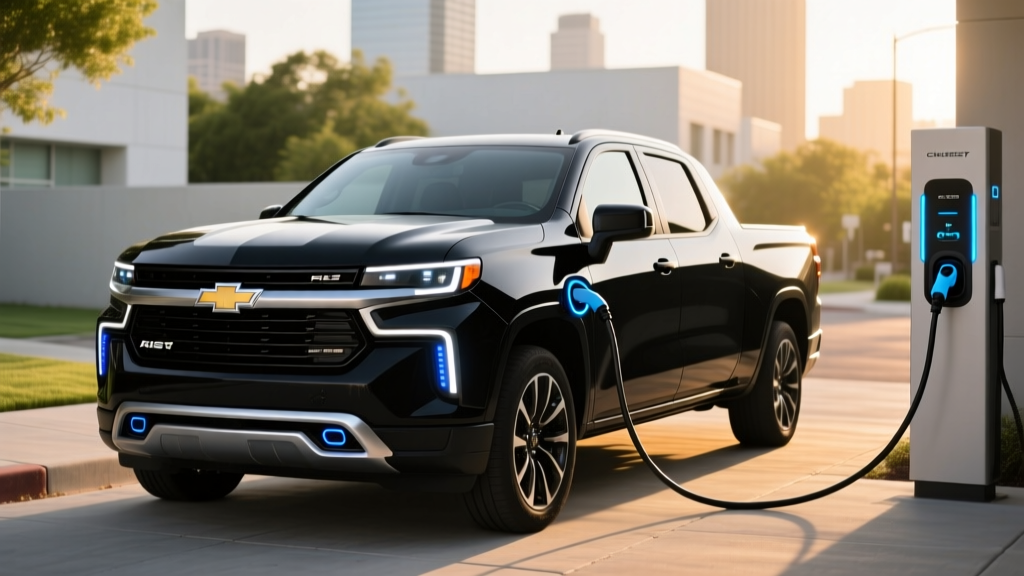
The 2025 Chevrolet Silverado RST EV (3LT trim, RST appearance package) with the available AutoLevel air suspension carries an MSRP starting around $79,900 before incentives. It delivers an EPA-estimated 392 miles of range from its 200+ kWh Ultium battery, can tow up to 10,000 lbs, and charges at up to 350 kW peak on DC fast chargers (10–80% in roughly 45 minutes). For buyers who need a full-size truck with serious range and can install a Level 2 home charger, it's one of the most capable electric pickups on the market. But at nearly $80K before options, the math only works if you drive high annual miles, have reliable home charging, and can capture the full $7,500 §30D federal tax credit.
Silverado EV RST Specs: What You're Actually Getting
Before crunching the ownership numbers, here's exactly what the 2025 Silverado RST EV delivers on paper and in practice. The RST is positioned as the sport-appearance trim, built on the 3LT equipment group, and includes the AutoLevel rear air suspension (standard on 3LT) for load-leveling when towing or hauling.
| Specification | 2025 Silverado EV RST (3LT) |
|---|---|
| Base MSRP | ~$79,900 (before destination & options) |
| EPA Range | 392 miles |
| Battery Capacity | ~205 kWh usable (NMC chemistry, Ultium platform) |
| Drivetrain | Dual-motor AWD, 510 hp / 615 lb-ft torque (standard output) |
| 0–60 mph | ~5.5 seconds |
| Max DC Fast Charge Rate | 350 kW peak |
| 10–80% DC Fast Charge Time | ~45 minutes |
| Level 2 AC Charging | Up to 19.2 kW (requires compatible Level 2 EVSE) |
| Max Towing Capacity | 10,000 lbs |
| Max Payload | ~1,800 lbs |
| Bed Length / Multi-Flex Midgate | 5'11" standard; up to 10'11" with midgate open |
| AutoLevel Air Suspension | Standard (rear, load-leveling) |
| Battery/Powertrain Warranty | 8 years / 100,000 miles |
Real-World Range vs. EPA Sticker
The 392-mile EPA estimate assumes mixed driving at moderate temperatures. In real-world conditions, expect:
- Highway driving (70–75 mph): ~320–350 miles. Aerodynamic drag hits full-size trucks hard at speed.
- Cold weather (below 32°F): ~280–330 miles. Battery chemistry and cabin heating consume extra energy. The Silverado EV does include a heat pump, which helps mitigate losses compared to resistive heating.
- Towing (loaded trailer): ~180–240 miles depending on trailer weight and profile. Towing cuts range roughly in half — this is physics, not a Chevy problem.
- City/suburban mixed: 360–390 miles. Regenerative braking recaptures energy effectively in stop-and-go traffic.
Source: EPA fueleconomy.gov — verify your specific trim configuration for exact figures.
Cost Breakdown: Silverado EV vs. Gas Silverado 1500
The purchase price gap is significant, but so are the fuel and maintenance savings over time. Here's a five-year ownership comparison assuming 15,000 miles/year, home charging at the national average electricity rate of $0.16/kWh, and regular unleaded at $3.40/gallon.
| Cost Category (5 Years) | Silverado EV RST (3LT) | Silverado 1500 RST Gas (4WD, 2.7L Turbo) |
|---|---|---|
| Purchase Price (MSRP) | $79,900 | $54,700 |
| Federal Tax Credit (§30D) | Up to -$7,500 (if eligible) | $0 |
| Effective Purchase Price | $72,400 | $54,700 |
| Fuel/Energy (75,000 mi) | ~$5,760 (2.0 kWh/mi × $0.16) | ~$12,750 (19 MPG combined × $3.40/gal) |
| Maintenance (oil, filters, brakes) | ~$1,200 | ~$3,800 |
| Insurance (est. average) | ~$12,500 | ~$9,800 |
| Estimated Depreciation | ~$28,000 | ~$22,000 |
| Total 5-Year Cost | ~$120,860 | ~$103,050 |
The EV saves roughly $7,000 in fuel and $2,600 in maintenance over five years, but the higher purchase price and insurance premiums leave it approximately $17,800 more expensive on a total-cost basis at current pricing. The gap narrows substantially if your electricity rate is lower (e.g., $0.10/kWh in some regions), if you drive more than 15,000 miles/year, or if gas prices rise above $4.00/gallon.
Tax credit caveat: The §30D federal tax credit of up to $7,500 has strict eligibility requirements including buyer income caps ($300K joint / $150K single modified AGI), MSRP caps ($80,000 for trucks/vans/SUVs), and battery critical-mineral sourcing rules that evolve annually. The Silverado EV RST's MSRP hovers near or above the $80K truck cap once options are added, so verify your exact build. Check current rules at IRS.gov §30D and consult a tax professional. As of 2025–2026, the credit can be transferred to the dealer at point of sale as a purchase-price reduction.
Charging at Home and on the Road: What You Need to Know
The Silverado EV's massive 205 kWh battery is both its greatest asset and its biggest charging challenge. Here's how the math works at each charging level:
| Charging Level | Power (kW) | Miles Added per Hour | 0–100% Full Charge Time |
|---|---|---|---|
| Level 1 (120V outlet) | ~1.4 kW | ~2–3 miles | ~70+ hours (impractical) |
| Level 2 (240V, 48A) | 11.5 kW | ~18–20 miles | ~18 hours |
| Level 2 (240V, 80A, 19.2 kW EVSE) | 19.2 kW | ~30–32 miles | ~11 hours |
| DC Fast Charge (350 kW peak) | Up to 350 kW | N/A (minutes-based) | 10–80% in ~45 min |
kW vs. kWh reminder: kW (kilowatts) measures power — how fast energy flows into the battery. kWh (kilowatt-hours) measures energy — the battery's total capacity. The Silverado EV has a ~205 kWh battery and can accept up to 350 kW of charging power. Think of it as a very large bucket with a wide hose.
Home Charging Installation: The Real Cost
You cannot rely on a standard 120V outlet with this truck. To add meaningful range overnight, you need a Level 2 charger on a dedicated 240V circuit. For the fastest Level 2 experience (19.2 kW), you'll need an 80-amp circuit, which requires a 100-amp breaker.
| Item | Estimated Cost Range |
|---|---|
| Level 2 EVSE (48A, hardwired, e.g., ChargePoint Home Flex or Emporia) | $400–$700 |
| Level 2 EVSE (80A, hardwired, e.g., FLO X8 or Wallbox) | $700–$1,200 |
| Electrician labor (new 60A or 100A circuit, conduit, wiring) | $800–$2,500 |
| Electrical panel upgrade (if needed: 100A → 200A service) | $1,500–$4,000 |
| Permit and inspection | $100–$400 |
| Total (no panel upgrade) | $1,300–$3,600 |
| Total (with panel upgrade) | $2,800–$7,600 |
Always hire a licensed electrician for a site assessment before purchasing equipment. Your panel's available amperage will determine whether a 48A or 80A charger is feasible without a panel upgrade.
DC fast charging reality: The 350 kW peak rate is just that — a peak. The charge curve tapers significantly above 50–60% state of charge. You'll see the fastest charging between roughly 10% and 40% SoC. Above 80%, charging slows dramatically to protect the NMC battery cells, which is why 10–80% is the standard metric. On a road trip, plan for 35–45 minutes at a 350 kW-capable station (like Tesla Supercharger V4 or Electrify America 350 kW stalls). At older 150 kW stations, expect 10–80% in roughly 65–80 minutes.
AutoLevel Air Suspension: What It Does (and Doesn't Do)
The AutoLevel rear air suspension is standard on the 3LT and is one of the RST's practical highlights for truck buyers. Here's what to expect:
- Load leveling: When you hook up a trailer or load the bed, the rear air springs automatically adjust to maintain a level ride height. This improves stability, headlight aim, and handling.
- Adjustable ride height: You can raise the suspension for ground clearance (useful off-road or at steep driveways) or lower it for easier bed access and improved aerodynamics at highway speed.
- Entry/exit mode: Lowers the truck when parked for easier step-in.
What it does NOT do: AutoLevel is not a self-driving or autonomous feature. It is a suspension system only. The Silverado EV's Super Cruise driver-assist system (available on higher trims or as an option) is a SAE Level 2 system — meaning the driver must remain fully attentive, hands on or near the wheel depending on the system variant, and responsible for all driving decisions at all times.
SAE Automation Level: Level 2
Super Cruise, even with its hands-free capability on pre-mapped divided highways, is classified as SAE Level 2 driver assistance. You are the driver. The system does not navigate construction zones, handle all weather conditions, or replace human judgment. Level 4 (fully driverless in defined areas) currently exists only in robotaxi services like Waymo — not in any consumer vehicle you can purchase.
Common Misconceptions: Myth vs. Fact
| Myth | Fact |
|---|---|
| "I'll never need to charge — 392 miles is enough for weeks." | Real-world range is often 300–350 miles on highway trips. Cold weather and towing cut it further. Plan to charge at home nightly for daily driving. |
| "The $7,500 tax credit applies to everyone." | §30D has income caps, MSRP caps, and battery-sourcing requirements that change yearly. Some configurations or buyers may not qualify. Verify at IRS.gov. |
| "Electric trucks can't tow." | The Silverado EV tows 10,000 lbs. But range drops to roughly 180–240 miles while towing. It can tow — just plan charging stops accordingly. |
| "I can charge on a regular outlet." | A 120V outlet adds ~2–3 miles per hour — roughly 30 miles overnight. With a 205 kWh battery, this is effectively useless. A 240V Level 2 charger is mandatory. |
| "The battery will need replacing in 5 years." | GM warranties the Ultium battery for 8 years/100,000 miles against degradation below 70% capacity. Industry data from similar large-format NMC packs suggests 10–15% degradation over 150,000 miles is typical. Replacement cost, if ever needed out of warranty, is estimated at $15,000–$25,000+ — a serious but unlikely expense within the first decade. |
| "Charging is cheaper than gas everywhere." | At $0.16/kWh (national average), the Silverado EV costs roughly $0.077/mile in energy vs. ~$0.17/mile for the gas Silverado at 19 MPG and $3.40/gal. But DC fast charging at $0.40–$0.60/kWh on road trips narrows the gap, and some public chargers approach gas-equivalent cost per mile. |
Decision Framework: Should You Buy the Silverado EV RST?
Buy the Silverado EV RST if:
- You can install a Level 2 home charger (ideally 80A/19.2 kW) and have a garage or covered parking spot.
- You drive 12,000+ miles per year — higher mileage accelerates fuel savings and closes the price gap with the gas Silverado.
- You want a truck with 390+ miles of range for daily use and occasional road trips, and you're willing to plan charging stops on longer hauls.
- You tow or haul moderately (under 10,000 lbs) and value the AutoLevel air suspension for load management.
- You qualify for the §30D tax credit (check income caps and MSRP limits).
- You want instant torque, quiet operation, and a frunk (front trunk) for secure storage.
Stick with the gas Silverado 1500 (or wait) if:
- You live in an apartment or lack access to home or workplace Level 2 charging. Public-only charging with a 205 kWh battery is expensive and time-consuming.
- You frequently tow heavy trailers over long distances. Range drops to ~200 miles, and DC fast-charging a 205 kWh battery takes 45+ minutes per stop.
- Your budget is under $60,000. Even with the tax credit, the Silverado EV RST is a premium-priced truck.
- You live in a region with extreme cold (frequent sub-zero temps) and high annual mileage — range losses compound significantly.
- You drive fewer than 8,000 miles per year — the fuel savings won't offset the higher purchase price within a reasonable timeframe.
First-Time EV Buyer Checklist
If the Silverado EV RST is your first electric vehicle, here's what to prepare before delivery day:
- Get a home electrical assessment. A licensed electrician should evaluate your panel capacity and quote a Level 2 installation. Budget $1,300–$7,600 depending on whether a panel upgrade is needed.
- Verify tax credit eligibility. Use the IRS's clean vehicle credit tool and check your build's VIN for battery-sourcing compliance. Rules tighten periodically — confirm for your purchase year.
- Download charging apps. PlugShare, A Better Routeplanner (ABRP), and your preferred network's app (Tesla, Electrify America, EVgo) are essential for trip planning.
- Understand preconditioning. The Silverado EV can warm or cool its battery before a DC fast-charge stop, which optimizes charge speed. Set a navigation destination to a charger and the system will precondition automatically.
- Plan for cold weather. If you live where temperatures regularly drop below freezing, budget for 20–30% range loss in winter and consider a garage to mitigate extreme cold exposure.
- Get an insurance quote before buying. EV insurance premiums are typically 15–30% higher than comparable gas vehicles due to repair costs and battery replacement values.
Frequently Asked Questions
Does the 2025 Silverado EV RST qualify for the $7,500 federal tax credit?
It may, but eligibility depends on three factors: (1) your modified adjusted gross income must be below $300,000 (joint) or $150,000 (single); (2) the truck's MSRP must not exceed $80,000 (the cap for trucks/vans/SUVs); and (3) the battery must meet critical-mineral and component-sourcing requirements that change annually. The Silverado EV RST's base MSRP of ~$79,900 is close to the cap — adding options could push it over. Always verify your specific configuration's eligibility at IRS.gov or with your tax advisor before relying on the credit.
How long does it take to charge the Silverado EV at home overnight?
With a 48A Level 2 charger (11.5 kW), you'll add roughly 18–20 miles per hour of charging, or about 150–160 miles in an 8-hour overnight session. With an 80A/19.2 kW charger, you'll add roughly 30–32 miles per hour, or about 250 miles overnight. For most daily driving needs, a 48A charger is sufficient. A full 0–100% charge takes 11–18 hours depending on charger amperage.
Can I use Tesla Superchargers with the Silverado EV?
The 2025 Silverado EV comes with a CCS1 (Combined Charging System) port natively. GM has been transitioning to NACS (Tesla's connector) for newer model years, and adapters are available or included depending on the build. Verify with your dealer whether your specific vehicle includes a NACS adapter or has a native NACS port. Tesla Supercharger access for GM vehicles has been expanding through the adapter program — check Chevrolet's EV portal for the latest compatibility details.
What happens to the battery after the 8-year warranty expires?
GM's Ultium battery warranty covers capacity below 70% of original for 8 years or 100,000 miles. Industry data from similar NMC battery packs (from vehicles like the Bolt EV and other Ultium-based models) suggests typical degradation of 8–15% over 150,000 miles. If a full replacement were needed out of warranty, estimates for a pack of this size range from $15,000 to $25,000+, though module-level repairs may be significantly cheaper. Battery technology costs have trended downward, and by the time your warranty expires, replacement costs will likely be lower than today's estimates.
Is the AutoLevel suspension worth the price premium over the WT trim?
If you tow or carry heavy payloads regularly, yes — the air suspension's automatic load-leveling improves stability, braking performance, and ride quality under load. If you primarily use the truck as a daily driver without significant hauling, the fixed coil-spring suspension on the lower WT (Work Truck) trim is perfectly adequate, and you'll save substantially on the purchase price. The WT starts roughly $25,000–$30,000 lower than the RST 3LT, though with reduced range, fewer features, and no AutoLevel.
How does the Silverado EV compare to the Ford F-150 Lightning and Rivian R1T?
The Silverado EV RST offers the longest EPA range in the segment at 392 miles (vs. F-150 Lightning Extended Range at ~320 miles and Rivian R1T Dual-Motor Max Pack at ~410 miles). The Lightning is generally less expensive and has broader availability. The R1T offers more off-road capability and a quad-motor option but at a higher price point. The Silverado EV's Multi-Flex midgate (extending bed length into the cabin) is a unique differentiator for long-item hauling. Each truck serves a slightly different buyer — compare based on your specific range, towing, and budget priorities.