Searches for "how much does a Tesla robot cost" have surged as Tesla pushes further into robotics and autonomous driving. But "Tesla robot" means very different things depending on who you ask — and the price tag swings from a few thousand dollars to tens of thousands, or even a per-mile ride. Let's untangle exactly what Tesla is selling (or planning to sell) in 2026, what it actually costs, and which of these products you can actually buy today.
This guide covers three distinct Tesla "robot" categories: the Cybercab robotaxi (a vehicle with no steering wheel), the Optimus humanoid robot, and the Model Y with Full Self-Driving — the closest thing to a "Tesla robot" you can put in your driveway right now. We'll give you hard numbers on pricing, availability, and what's real versus what's still on Elon Musk's roadmap.
What Exactly Is a "Tesla Robot"? Three Very Different Products
Before discussing cost, we need to clarify what Tesla actually offers in the robotics and autonomy space. The term "Tesla robot" gets thrown around loosely, but it maps to three distinct products with vastly different price points and availability timelines.
| Product | Category | Estimated Price | Availability | SAE Level |
|---|---|---|---|---|
| Tesla Cybercab | Robotaxi (no steering wheel) | ~$25,000–$30,000 (announced); rides at ~$0.20/mi | Announced; limited pilot expected 2026 | Level 4 (target) |
| Tesla Optimus (Gen 2) | Humanoid robot | $20,000–$30,000 (Musk estimate, unverified) | Not on sale; internal factory use only | N/A |
| Model Y w/ FSD (Supervised) | Consumer EV with driver-assist | $44,990–$52,490 MSRP + $8,000 FSD | On sale now | Level 2 |
The critical distinction: only the Model Y with FSD is something you can actually purchase today. The Cybercab and Optimus remain announced products without firm consumer pricing or delivery dates.
Tesla Cybercab: Robotaxi Pricing and What We Know
The Cybercab — Tesla's purpose-built robotaxi with no steering wheel or pedals — was unveiled in October 2024 with a target price of under $30,000 and an operating cost of roughly $0.20 per mile. However, as of early 2026, the Cybercab has not entered volume production, and Tesla has not published a final MSRP or opened consumer pre-orders.
Here's what Tesla has disclosed so far, alongside what remains unconfirmed:
- Target vehicle price: $25,000–$30,000 (preliminary, per Tesla's 2024 unveil)
- Ride-hailing cost: ~$0.20/mile (before taxes and fees), undercutting Uber/Lyft
- Production timeline: Tesla has targeted 2026 for limited production; volume timing unclear
- Regulatory status: No NHTSA approval for a steering-wheel-free vehicle on public roads as of this writing
- Range (estimated): ~250 miles EPA target, though no official EPA certification has been published
For context on what Tesla's autonomy claims look like in practice, the company's NHTSA ADS reporting page tracks all autonomous vehicle incidents. Tesla's FSD-equipped vehicles have been involved in documented incidents that underscore the gap between Level 2 driver-assist and true Level 4 autonomy.
Tesla Optimus Humanoid Robot: Price Estimates and Availability
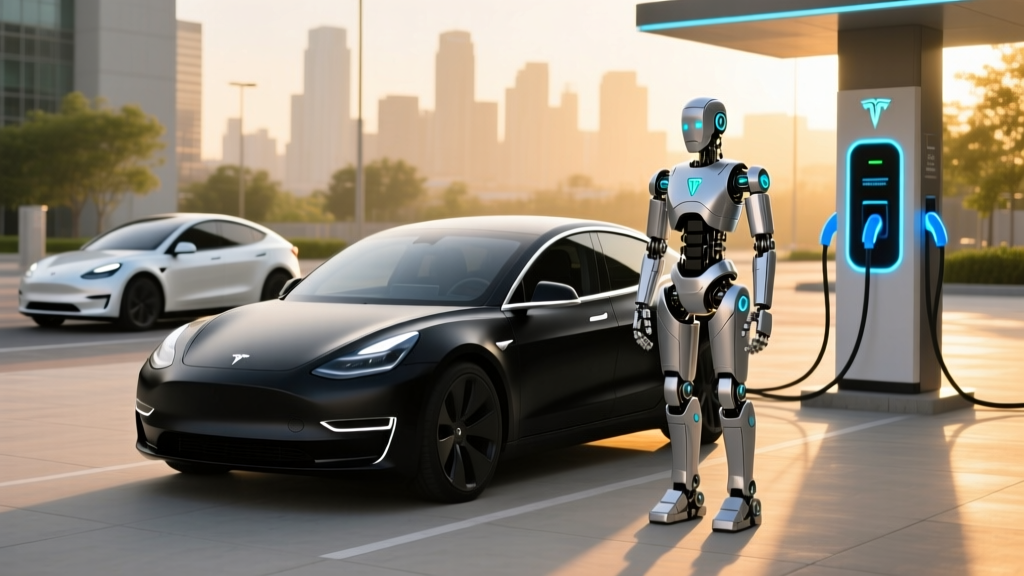
The Optimus (also called Tesla Bot) is Tesla's general-purpose humanoid robot, currently used in limited capacity inside Tesla factories for repetitive tasks like parts sorting. Elon Musk has stated in earnings calls and on social media that Optimus could eventually sell for $20,000 to $30,000 — roughly the price of a budget car.
However, there are major caveats:
- No consumer version exists. Optimus is not available for purchase by individuals or businesses outside Tesla.
- No official spec sheet. Tesla has not published payload capacity, battery runtime, or dexterity specifications for any production variant.
- The $20K–$30K figure is Musk's projection, not a confirmed MSRP. Actual production costs for a humanoid robot with this level of articulation could be significantly higher, especially at low volumes.
- Competitor pricing context: Boston Dynamics' Atlas robot is not sold commercially. Agility Robotics' Digit is leased to warehouses at undisclosed rates estimated well above $100,000 per unit. Humanoid robotics at scale remains extremely expensive.
If you're searching "how much does a Tesla robot cost" with Optimus in mind, the honest answer in 2026 is: there is no consumer price because there is no consumer product. Monitor Tesla's official channels for updates, but treat any price figure as speculative until a product page and order system go live.
Tesla Model Y with FSD: The "Robot" You Can Actually Buy
If you want Tesla's most advanced autonomous-driving technology in a vehicle you can drive home today, the 2026 Tesla Model Y with Full Self-Driving (Supervised) is the real answer. It's not a robotaxi — it's a Level 2 driver-assistance system that requires your full attention — but it's the closest thing to a "Tesla robot" that has an actual price tag, EPA certification, and delivery timeline measured in weeks, not years.
| Spec | Value |
|---|---|
| EPA Range | 320 miles |
| Battery Capacity | ~78 kWh usable (NMC chemistry) |
| Drivetrain | Dual-Motor AWD |
| Horsepower | 384 hp combined |
| 0–60 mph | 4.8 seconds |
| MPGe (combined) | 117 MPGe |
| Efficiency | 28 kWh/100 mi |
| Max DC Fast Charge | 250 kW peak |
| 10–80% DC Charge Time | ~27 minutes |
| Level 2 Home Charging | 11.5 kW (~44 mi/hr) |
| Cargo Volume | 72 cu ft (rear seats folded) |
| Rear Legroom | 39.4 inches |
| Battery Warranty | 8 years / 120,000 miles |
| Base MSRP | $44,990 |
| FSD (Supervised) Add-On | $8,000 one-time or $99/month |
FSD (Supervised): What You're Actually Paying For
Tesla's Full Self-Driving (Supervised) package adds $8,000 to the vehicle price (or $99/month as a subscription). It includes:
- Navigate on Autopilot (automatic highway interchanges and exits)
- Auto Lane Change
- Autopark and Summon
- Traffic Light and Stop Sign Control
- City street driving assistance
Is FSD worth $8,000? For daily commuters on predictable routes, it reduces fatigue significantly. For the price of the subscription model ($99/month), you can test it for a few months before committing. But it does not make the Model Y a "Tesla robot" in any unsupervised sense.
Pricing Breakdown: Model Y Total Cost with FSD and Tax Credits
Here's what a 2026 Model Y Long Range AWD with FSD actually costs at the point of sale, factoring in the current federal tax credit rules under IRS §30D.
| Configuration | MSRP | Federal Tax Credit (max) | Effective Price* |
|---|---|---|---|
| Long Range AWD (base) | $44,990 | Up to $7,500 | ~$37,490 |
| Long Range AWD + FSD | $52,990 | Up to $7,500 | ~$45,490 |
| Performance AWD | $48,990 | Up to $7,500 | ~$41,490 |
| Performance AWD + FSD | $56,990 | Up to $7,500 | ~$49,490 |
*Effective price assumes full §30D credit eligibility. Your actual credit may be $0, $3,750, or $7,500 depending on battery sourcing, your income, and the vehicle's MSRP compliance. The credit can now be transferred to the dealer at point of sale, reducing your upfront cost.
Federal Tax Credit Eligibility Checklist (§30D, 2026 Rules)
- MSRP cap: Vehicle must have an MSRP of $55,000 or less for SUVs (Model Y qualifies)
- Buyer income cap: Modified AGI must not exceed $150,000 (single), $225,000 (head of household), or $300,000 (joint filers)
- Battery sourcing: Critical minerals and battery components must meet phased-in domestic/free-trade-partner sourcing thresholds — the credit splits into $3,750 (minerals) + $3,750 (components)
- FEOC restriction: Vehicles with battery components from a Foreign Entity of Concern (e.g., certain Chinese suppliers) may lose part or all of the credit
- Point-of-sale transfer: You can transfer the credit to the dealer to reduce your purchase price at signing, rather than waiting to claim it on your tax return
Tesla's battery sourcing has been a moving target. Always verify current eligibility on fueleconomy.gov before purchasing, as component sourcing can change between production batches.
Charging Speed: DC Fast Charging and Home Level 2
Charging speed is where the Model Y's 250 kW peak capability meets real-world physics. Here's the breakdown:
| Charging Level | Power (kW) | Miles Added per Hour | Notes |
|---|---|---|---|
| Level 1 (120V outlet) | ~1.4 kW | ~4–5 mi/hr | Emergency/trickle only |
| Level 2 (240V home) | 11.5 kW | ~44 mi/hr | Full overnight charge in ~7–8 hours |
| DC Fast (Tesla Supercharger V3) | 250 kW peak | ~1,000 mi/hr at peak | 10–80% in ~27 min; tapers sharply above 80% |
| DC Fast (Supercharger V4) | Up to 250 kW | Similar to V3 for Model Y | Model Y architecture limits sustained rate |
Charging curve reality: The Model Y hits its 250 kW peak only between roughly 10–30% State of Charge (SoC) with a preconditioned battery. From 50–80%, the rate drops to approximately 100–120 kW. Above 80%, expect 40–60 kW as the battery management system protects cell longevity. Plan road-trip stops around 10–80% charges for optimal speed; charging from 80–100% can take as long as the 10–80% segment.
At home, a Level 2 wall connector on a 60-amp circuit delivers the full 11.5 kW (48 amps continuous), adding roughly 44 miles of range per hour. Most owners charge overnight and start each day at 80–90% SoC — which for a 320-mile EPA vehicle means 256–288 miles of real daily range.
Pros, Cons, and Who Should Buy the Model Y with FSD
Pros
- Access to Tesla's Supercharger network — the most reliable and widespread DC fast-charging network in the U.S.
- 320 miles EPA range covers most daily needs and road trips comfortably
- Over-the-air updates continuously improve FSD and vehicle features
- Strong cargo space (72 cu ft) and practical crossover form factor
- Competitive efficiency at 28 kWh/100 mi keeps charging costs low
- 8-year/120,000-mile battery warranty provides long-term peace of mind
Cons
- FSD costs $8,000 extra and is still Level 2 — not autonomous driving
- Real-world range drops to 220–250 mi in cold weather
- 250 kW peak charge rate is outpaced by competitors on 800V platforms (Hyundai Ioniq 5 at 350 kW peak)
- Tax credit eligibility depends on battery sourcing — may not get full $7,500
- Minimalist interior lacks physical controls; everything runs through the touchscreen
- Insurance costs tend to be higher than comparable non-Tesla EVs
Who This Vehicle Suits Best
Daily commuters with home charging will get the most value — waking up to a full battery every morning eliminates range concerns entirely. Tech-forward buyers who want the most advanced driver-assist system available (with the understanding that it still requires supervision) will find FSD compelling. Small families benefit from the practical cargo space and AWD traction.
This is not the right vehicle if you're looking for a true self-driving experience (that doesn't exist at the consumer level from any automaker), if you need a vehicle for heavy towing (the Model Y is rated for only 3,500 lbs), or if you live in an area with no access to home or workplace charging.
Is It Worth Buying vs. Competitors?
The Model Y competes against the Hyundai Ioniq 5, Ford Mustang Mach-E, and Kia EV6 in the electric crossover segment. Here's how it stacks up on the metrics that matter:
- Range: Model Y (320 mi) edges the Ioniq 5 Long Range (310 mi) and Mach-E Extended Range (312 mi)
- Charging speed: Ioniq 5 and EV6 on 800V architecture charge faster (10–80% in ~18 min at 350 kW) vs. Model Y (~27 min at 250 kW)
- Charging network: Tesla's Supercharger network remains the gold standard for reliability, though all major automakers now have NACS access agreements
- Driver assist: Tesla FSD is more feature-rich than competitors, but BlueCruise (Ford) and Highway Driving Assist (Hyundai/Kia) offer comparable highway comfort at lower add-on cost
- Price after credit: Competitively matched — all qualify for up to $7,500 under §30D, subject to sourcing and income rules
If charging speed is your top priority, the Ioniq 5's 800V architecture wins. If you value the Supercharger network and the most ambitious (if imperfect) driver-assist system, the Model Y with FSD remains the default choice.
Frequently Asked Questions
How much does a Tesla robot cost in 2026?
It depends on what you mean. The Tesla Cybercab robotaxi has an announced target price of under $30,000 but is not yet available for purchase. The Optimus humanoid robot has a projected price of $20,000–$30,000 but is not sold to consumers. The closest purchasable product is a Tesla Model Y with FSD (Supervised), starting at approximately $52,990 before tax credits.
Can I buy a Tesla Cybercab right now?
No. The Cybercab is an announced product with a planned 2026 production start, but it has not received NHTSA regulatory approval for its steering-wheel-free design, and Tesla has not opened consumer orders. Any website claiming to sell or take deposits for a Cybercab is not an official Tesla channel.
Is Tesla FSD actually self-driving?
No. FSD (Supervised) is classified as SAE Level 2 driver assistance. You must remain attentive, keep your hands on the wheel, and be prepared to take over at any moment. It is not comparable to Waymo's Level 4 robotaxi service, which operates without a human driver in designated zones.
Does the Tesla Model Y qualify for the $7,500 federal tax credit?
The Model Y is eligible for up to $7,500 under IRS §30D, but your actual credit depends on your income (capped at $150K single / $300K joint), the vehicle's battery component and critical-mineral sourcing compliance, and the MSRP cap ($55,000 for SUVs). Always verify current eligibility on fueleconomy.gov before purchasing, as sourcing rules can change.
What is the real-world range of the Tesla Model Y?
The EPA rates the 2026 Model Y Long Range AWD at 320 miles. Real-world highway driving at 70–75 mph yields approximately 270–290 miles. In cold weather below 30°F, expect 220–250 miles. Preconditioning the battery while plugged in helps preserve range and ensures faster DC charging.
How long will the Tesla Optimus robot take to reach consumers?
Tesla has not provided a confirmed consumer release date for Optimus. The robot is currently used in limited factory applications. Musk has suggested a consumer launch within the next few years, but humanoid robotics at scale faces significant manufacturing, safety, and regulatory hurdles. Treat any timeline as optimistic until Tesla opens a public order system.