Since the debut of the Tesla Model X, buyers have periodically asked: when will Tesla build a minivan or people-hauler? The phrase "Tesla Robo Van" has circulated across forums, social media, and speculative renderings for years, often conflating Tesla's autonomous vehicle ambitions with its anticipated passenger van platform. As of early 2026, Tesla has not officially unveiled, priced, or opened pre-orders for a vehicle called the "Robo Van." However, signals from Tesla's product roadmap, patent filings, and executive commentary suggest an electric van or multi-passenger shuttle is in development — possibly tied to the company's next-generation (Gen 3) vehicle platform.
This article separates confirmed facts from informed projections. We'll outline what a Tesla electric van would need to offer to compete with vehicles like the Volkswagen ID. Buzz, Mercedes-Benz eSprinter, and Ford E-Transit, and examine the technical, pricing, and regulatory framework that would shape its launch.
Is the Tesla Robo Van Real or Just Rumor?
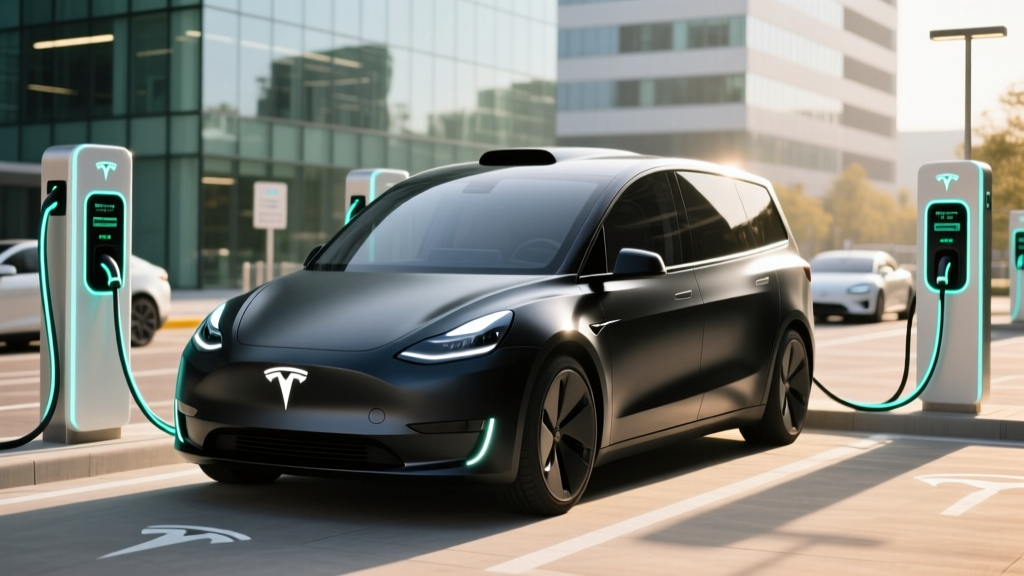
Tesla has never used "Robo Van" as an official product name. The term emerged organically from the EV community, blending two distinct Tesla narratives: the long-speculated Tesla Van (a passenger minivan or commercial shuttle) and Tesla's robotaxi program (the Cybercab, unveiled in October 2024). Some renderings depict a sleek, autonomous shuttle; others show a Model X-sized family hauler with a flat floor and sliding doors.
What we do know from Tesla's public statements:
- Next-gen platform (Gen 3): Tesla has confirmed a lower-cost vehicle architecture aimed at roughly a $25,000–$30,000 starting price. While most reporting points to a compact crossover, the unboxed manufacturing process Tesla described in its 2023 Investor Day could support multiple body styles on the same platform.
- Robotaxi ambitions: The Cybercab is designed as a Level 4 autonomous shuttle with no steering wheel. A larger "robo van" variant could serve fleet operators, airports, or ride-hail services — but Tesla has not confirmed such a model.
- No official timeline: Tesla's product roadmaps are notoriously fluid. Any projected launch date for a Tesla van remains speculative.
Projected Specs: What a Tesla Electric Van Would Need
Based on Tesla's current battery technology, platform architecture, and competitive positioning, here is an informed projection of what a production Tesla van might offer. All figures below are estimates based on Tesla's existing lineup and industry benchmarks — not confirmed specifications.
| Attribute | Projected (Gen 3 Platform) | Projected (Model X Platform) |
|---|---|---|
| EPA Range (est.) | 280–330 miles | 320–350 miles |
| Battery Capacity | ~75 kWh (LFP possible) | ~100 kWh (NMC) |
| DC Fast Charge (peak) | 170–250 kW | 250 kW |
| 10–80% Charge Time | ~25–35 min | ~30 min |
| Level 2 Home Charge | 11.5 kW (~38 mi/hr) | 11.5 kW (~38 mi/hr) |
| Drivetrain | RWD or AWD dual-motor | AWD dual-motor |
| 0–60 mph | 5.5–7.0 sec | 3.8–5.0 sec |
| Horsepower | 280–450 hp | 670 hp (Plaid: 1,020) |
| Seating | 7–8 passengers | 5–7 passengers |
| Cargo Volume (est.) | 80–120 cu ft (max) | 92 cu ft (Model X max) |
| Starting MSRP (est.) | $40,000–$50,000 | $80,000+ |
Charging: Speeds, Connectors, and Infrastructure
Any Tesla van would use the North American Charging Standard (NACS) connector — now the industry standard adopted by Ford, GM, Rivian, Hyundai, and others. This means access to Tesla's Supercharger network (over 25,000 stalls in North America as of 2025) plus third-party NACS-equipped DC fast chargers from Electrify America, EVgo, and ChargePoint.
| Charging Level | Power | Miles Added per Hour | Use Case |
|---|---|---|---|
| Level 1 (120V) | ~1.4 kW | ~4–5 mi/hr | Emergency/overnight trickle |
| Level 2 (240V, 48A) | 11.5 kW | ~38 mi/hr | Home/workplace daily charging |
| DC Fast (250 kW peak) | 250 kW | ~1,000 mi/hr (peak) | Road trips; 10–80% in ~30 min |
Charge curve reality: Peak 250 kW is sustained only at low state-of-charge (roughly 10–30%). Above 50% SoC, charging tapers significantly — expect an average rate closer to 120–150 kW across the full 10–80% session. Preconditioning the battery (via navigation to a Supercharger) is critical for achieving peak rates.
Battery Chemistry: LFP vs. NMC Trade-Offs
Tesla currently uses both LFP (lithium iron phosphate) and NMC (nickel manganese cobalt) cells across its lineup. A van targeting fleet and family buyers could go either direction:
| Factor | LFP | NMC |
|---|---|---|
| Energy Density | Lower (~160 Wh/kg) | Higher (~250 Wh/kg) |
| Cycle Life | 3,000–5,000+ cycles | 1,000–2,000 cycles |
| Cold-Weather Performance | More range loss in cold | Better cold performance |
| Cost | Lower (no cobalt/nickel) | Higher |
| Recommended Daily Charge | 100% OK | 80% recommended daily |
| Best For | Fleet, daily commuter, high-mileage | Long-range, cold-climate, performance |
A fleet-oriented Robo Van would likely use LFP for its durability and lower cost. A premium family variant might use NMC for maximum range and cold-weather capability.
Pricing, Trims, and Federal Tax Credit Eligibility
Without an official launch, pricing is speculative. However, if Tesla positions the van on its Gen 3 platform, a base price in the $40,000–$50,000 range would undercut the VW ID. Buzz ($59,995 starting MSRP for 2025) and compete with the Chrysler Pacifica Hybrid ($46,000+). A larger, Model X-based van would start above $80,000.
- Maximum credit: Up to $7,500 for new EVs ($4,000 for used)
- MSRP cap: Vans/SUVs/pickups ≤ $80,000; sedans ≤ $55,000
- Buyer income cap: AGI ≤ $150,000 (single) / $300,000 (joint)
- Battery sourcing: Critical minerals and battery components must meet escalating domestic-content thresholds per IRS §30D guidelines
- Point-of-sale transfer: Credit can be applied at purchase to reduce out-of-pocket cost
Note: Eligibility depends on exact battery sourcing at time of delivery. Always verify current rules at irs.gov and consult a tax professional.
How It Would Compare: Tesla Van vs. the Competition
If Tesla launches a passenger van, it enters a small but growing electric van segment. Here is how projected specs compare to current rivals:
| Spec | Tesla Van (Projected) | VW ID. Buzz (2025) | Chrysler Pacifica Hybrid |
|---|---|---|---|
| Powertrain | BEV | BEV | PHEV |
| EPA Range | ~310 mi (est.) | 234 mi | 32 mi EV + 520 mi total |
| Battery | ~75–100 kWh | 91 kWh (NMC) | 16 kWh (NMC) |
| DC Fast Charge | 170–250 kW | 175 kW | N/A (no DC fast) |
| Seating | 7–8 | 7 | 7 |
| Starting MSRP | ~$45,000 (est.) | $59,995 | $46,095 |
| ADAS | Autopilot / FSD (L2) | IQ.DRIVE (L2) | Uconnect + Safety (L2) |
The VW ID. Buzz offers retro charm and solid build quality but limited range and no access to the Supercharger network (now mitigated by NACS adapters). The Pacifica Hybrid is a proven family hauler with no range anxiety but higher operating costs and no pure-electric mode beyond 32 miles. A Tesla van's advantage would be Supercharger access, software integration, and potentially lower pricing.
Who Should Wait — and Who Should Buy Now?
- You want Supercharger network access for family road trips
- You prioritize over-the-air updates, software integration, and Tesla's app ecosystem
- You're targeting a sub-$50,000 all-electric 7-seater
- You're interested in a potential autonomous fleet vehicle for commercial use
- You need a family van this year — Tesla's van has no confirmed timeline
- You want a proven platform with dealer service infrastructure
- You prefer PHEV flexibility for mixed city/highway driving without charging access
- You need guaranteed federal tax credit eligibility with known battery sourcing
Frequently Asked Questions
What is the real-world range of the Tesla Robo Van?
Since the vehicle has not been officially released, no EPA or real-world range data exists. Based on Tesla's current battery technology, a projected EPA range of 280–350 miles is plausible depending on platform and battery size. Real-world highway range would likely be 15–20% lower than the EPA sticker, with further reduction in cold weather.
How fast would a Tesla electric van charge?
On a Gen 3 platform, expect 170–250 kW DC fast charging capability, achieving a 10–80% charge in approximately 25–35 minutes at a Supercharger V3 or V4 stall. Home Level 2 charging at 11.5 kW would add roughly 38 miles of range per hour — a full overnight charge for most daily needs.
Does the Tesla Robo Van qualify for the $7,500 federal tax credit?
Eligibility cannot be confirmed until the vehicle is released with known battery sourcing. Under current IRS §30D rules, a van priced under $80,000 purchased by a buyer under the income cap ($150K single / $300K joint) could qualify — provided critical mineral and battery component sourcing thresholds are met. Tesla's reliance on CATL LFP cells for some models has previously complicated credit eligibility.
Is the Tesla Robo Van self-driving?
Any consumer variant with a steering wheel would be SAE Level 2, requiring full driver engagement — even with FSD (Supervised) enabled. Only a dedicated driverless fleet vehicle (similar to the Cybercab or Waymo's Level 4 fleet) would operate without a human driver. Tesla's Full Self-Driving system, despite its name, is not autonomous.
When will the Tesla Robo Van be available?
Tesla has not announced a release date, pricing, or pre-order window for any van product. Industry analysts have speculated a reveal could accompany the Gen 3 vehicle launch (expected 2026–2027), but Tesla's timelines frequently shift. Monitor Tesla's official blog for confirmed announcements.
What are the biggest pros and cons of waiting for a Tesla van?
- Supercharger network access
- Best-in-class software and OTA updates
- Potentially competitive pricing ($40K–$50K)
- Strong efficiency (kWh/100mi) from Tesla's drivetrain
- FSD hardware for future autonomy upgrades
- No confirmed release date or specs
- Tesla's service center network is thinner than legacy OEMs
- Panel gap and build quality concerns persist
- Tax credit eligibility uncertain due to battery sourcing
- Insurance costs for Tesla vehicles tend to run 15–30% higher than segment average
This article will be updated when Tesla officially announces a van or multi-passenger EV product. All projected specifications are based on analysis of Tesla's current lineup, public patent filings, and industry benchmarks. For confirmed data, consult tesla.com and fueleconomy.gov.