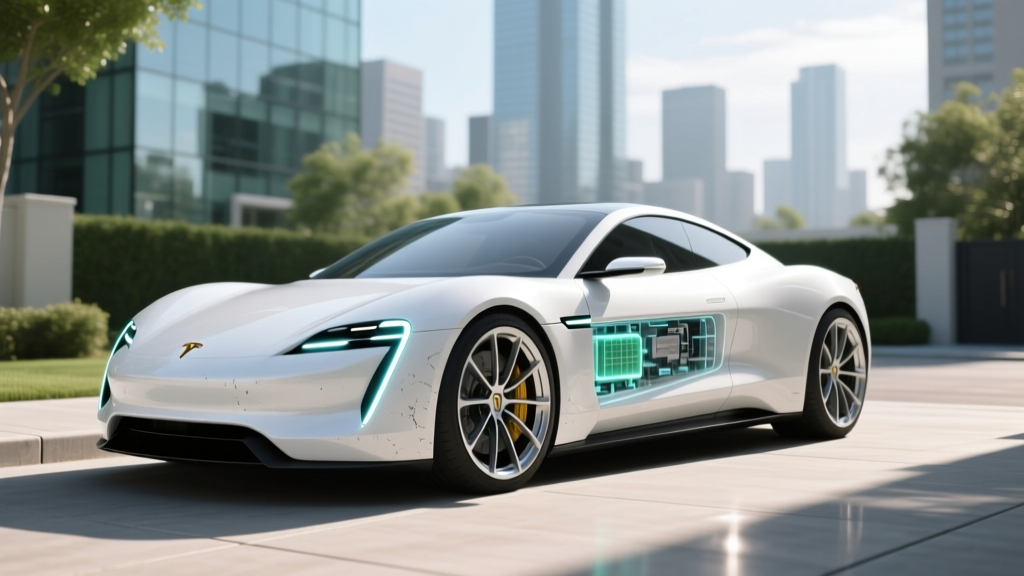
If you have been following Tesla's longest-running vaporware saga, the second-generation Roadster needs no introduction. First teased in 2017 with jaw-dropping claims, repeatedly delayed, and now tentatively targeted for production in late 2026 or 2027, the Roadster remains the most speculative vehicle in Tesla's lineup. Among the configurations generating the most search interest is the Tesla Roadster white — a Pearl White Multi-Coat exterior paired with the car's extreme performance package. This article breaks down every confirmed and estimated spec, separates marketing from physics, and tells you exactly where the Roadster stands today.
Tesla Roadster White: Spec Sheet at a Glance
| Specification | Tesla Claim / Estimate |
|---|---|
| EPA Range (projected) | 620 miles (Tesla claim); realistic estimate ~500–560 mi |
| Battery Capacity | ~200 kWh (estimated usable); NMC chemistry |
| Drivetrain | Tri-motor AWD (1 front, 2 rear) |
| Horsepower | ~1,000+ hp (wheel torque multiplied via SpaceX package) |
| 0–60 mph | 1.9 seconds (base); <1 sec with SpaceX cold-gas thruster package |
| Top Speed | 250+ mph |
| Max DC Fast Charge | Estimated 350 kW (unconfirmed) |
| 10–80% DC Charge | Estimated 25–35 minutes (dependent on pack thermal mgmt) |
| Level 2 Home Charging | ~11.5 kW / ~34 mi/hr (est. via Tesla Wall Connector) |
| Base MSRP | $200,000 (base); $250,000 (Founders Series) |
| Federal Tax Credit (§30D) | Not eligible — exceeds MSRP cap |
| Battery Warranty | Expected 8 yr / 150,000 mi (per Tesla S/X precedent) |
| Exterior Color (Pearl White) | $2,000 premium (estimated, per current Tesla pricing) |
Range Reality: 620 Miles on Paper, but What About the Real World?
Tesla has claimed a 620-mile range since the Roadster's 2017 unveiling. That number assumes a roughly 200 kWh usable battery pack and an efficiency figure near 3.2 miles per kWh — optimistic for a car with wide performance tires, active aerodynamics, and a low-slung sports-car profile. For context, the current Tesla Model S Long Range achieves 402 miles from a ~100 kWh pack at roughly 4.0 mi/kWh.
With a 200 kWh pack, even a conservative 2.8 mi/kWh would yield 560 miles. A more aggressive performance-oriented tune could drop that to 2.5 mi/kWh, landing around 500 miles. Any of these figures would shatter existing production-EV range records, but buyers should prepare for a real-world highway number closer to 480–540 miles under mixed conditions.
Charging Speed: Filling a 200 kWh Battery Takes Patience
A 200 kWh battery is roughly double the capacity of most long-range EVs on the road. Even at peak charging rates, the physics of filling that pack demand time. Tesla has not published official Roadster charging specs, but based on the company's V4 Supercharger architecture (capable of up to 350+ kW) and the Cybertruck's 800V-class electrical system, we can make educated projections.
| Charging Level | Power (kW) | Miles Added per Hour | 10–80% Time (est.) |
|---|---|---|---|
| Level 1 (120V household) | ~1.4 kW | ~4 mi/hr | ~100 hours |
| Level 2 (240V / 48A Wall Connector) | ~11.5 kW | ~34 mi/hr | ~12 hours |
| DC Fast Charge (V4 Supercharger) | Up to ~350 kW (peak) | ~900+ mi/hr (peak) | ~25–35 min |
The critical detail here is the charge curve. A 200 kWh pack will not sustain 350 kW from 10% to 80%. Expect peak rates only between roughly 10–40% State of Charge (SoC), tapering significantly above 60% to protect cell longevity. The 10–80% window is the relevant road-trip metric, and 25–35 minutes for that window would be competitive — but only if Tesla's thermal management can handle the heat rejection required by a pack this large.
For home charging, a full overnight session on a Level 2 Tesla Wall Connector (11.5 kW / 48A on a 60A circuit) will replenish roughly 340 miles in 10 hours. Owners who drive the Roadster as a weekend car will rarely need a full 0–100% home charge. Those using it daily should budget for a dedicated 60A circuit and a licensed electrician — installation typically runs $800–$2,000 depending on panel proximity.
Performance: Tri-Motor AWD and the SpaceX Thruster Question
The base Roadster is claimed to hit 0–60 mph in 1.9 seconds — already faster than any production car ever sold. Tesla's tri-motor layout (one front, two rear) enables torque vectoring across the rear axle, maximizing traction off the line. Estimated system output exceeds 1,000 horsepower at the wheels.
The more controversial claim involves the optional SpaceX cold-gas thruster package, which Elon Musk has suggested could drop 0–60 below 1.0 second using compressed-air thrusters mounted around the vehicle. As of 2026, this package has never been demonstrated on a production vehicle, and its legality on public roads is highly questionable. Treat it as an engineering concept, not a confirmed option.
Top speed is claimed at 250+ mph. Whether the Roadster's tires, cooling system, and aerodynamics can sustain that speed for more than brief bursts remains to be seen. For context, the Bugatti Chiron required enormous engineering effort to achieve sustained 250+ mph runs.
Pricing, Trims, and the Federal Tax Credit Reality
The Tesla Roadster was originally announced with a $200,000 base price and a $250,000 Founders Series (limited to the first 1,000 reservations, which required a full $250,000 deposit). Reservation holders have been waiting since 2017, and Tesla has not updated official pricing for inflation or supply-chain shifts.
| Configuration | Est. MSRP | Pearl White Add-On | §30D Tax Credit | Effective Price |
|---|---|---|---|---|
| Roadster Base | $200,000 | +$2,000 | $0 | $202,000 |
| Roadster Founders Series | $250,000 | Included | $0 | $250,000 |
Federal tax credit eligibility: The Roadster does not qualify for the IRS §30D clean vehicle credit. The credit is capped at $7,500 and applies only to vehicles with an MSRP at or below $55,000 (sedans) or $80,000 (SUVs/trucks/vans). At $200,000+, the Roadster is excluded entirely. Buyer income caps ($150,000 single / $300,000 joint) and battery critical-mineral sourcing rules are moot here — the MSRP cap alone disqualifies it. Do not factor any federal incentive into your Roadster budget.
Interior, Cargo, and Daily Usability
The Roadster is a 2+2 sports car, meaning two front seats and two barely-there rear seats suitable for children or luggage overflow. Tesla has shown a minimalist interior centered on a large touchscreen, consistent with the company's design language. Expect:
- Front legroom: ~42 inches (estimated, sports-car typical)
- Rear legroom: ~28 inches (tight — emergency use only)
- Cargo (trunk + frunk): ~10–14 cu ft combined (estimated)
- Removable glass roof panel: Confirmed by Tesla; stores in the trunk
This is not a grand tourer in the traditional sense. Cargo space is limited, rear seats are symbolic, and the low ride height makes ingress and egress a physical event. The Roadster is a weekend toy and a statement piece — not a daily commuter for most buyers.
Tech, Autopilot, and Driver Assistance
The Roadster will ship with Tesla's latest hardware suite (HW4 or newer), supporting Autopilot and the Full Self-Driving (Supervised) package. Key technology expectations:
- Autopilot: Adaptive cruise, lane-keeping, auto lane-change (standard)
- FSD (Supervised): City streets, stop-sign/light recognition, parking — SAE Level 2, driver must remain fully engaged
- Infotainment: 17-inch touchscreen, gaming-capable processor, streaming
- Over-the-air updates: Continuous feature additions post-delivery
Who Should Buy the Tesla Roadster (White or Otherwise)?
The Roadster occupies a narrow niche. It is best suited for:
- Hypercar collectors who want an electric conversation piece alongside a Porsche 918 or Rimac Nevera
- Tesla reservation holders from 2017 who have maintained their deposits and want to see the bet through
- Performance enthusiasts who value instant electric torque and sub-2-second acceleration above all else
It is not suited for daily commuters, families, road-trippers who need cargo space, or anyone counting on federal tax incentives. If you need a practical Tesla, the Model S Plaid delivers 396 miles of range, 1,020 hp, and 0–60 in 1.99 seconds for roughly $90,000 — with Supercharger access and real-world usability the Roadster cannot match.
Tesla Roadster White: Pros and Cons
✅ Pros
- Projected 500+ mile real-world range (class-leading if delivered)
- Sub-2-second 0–60 mph (fastest production car claim)
- Tri-motor AWD with torque vectoring
- Tesla Supercharger network access (NACS native)
- Removable glass roof for open-air driving
- OTA software updates and continuous improvement
❌ Cons
- Not yet in production — delivery timeline uncertain (2026–2027+)
- $200,000+ price with zero federal tax credit eligibility
- Unproven 200 kWh pack; charging times unconfirmed
- SpaceX thruster package may never be road-legal
- 2+2 seating is impractical for most buyers
- Long history of delays erodes confidence in timeline
Frequently Asked Questions
What is the real-world range of the Tesla Roadster?
Tesla claims 620 miles, but real-world highway driving at 70 mph will likely yield 480–540 miles depending on temperature, terrain, and driving style. Cold weather (below freezing) could reduce that to 390–450 miles.
How fast does the Tesla Roadster charge?
Estimated peak DC fast charging is ~350 kW on Tesla V4 Superchargers, with a projected 10–80% time of 25–35 minutes. Level 2 home charging at 11.5 kW adds roughly 34 miles per hour. Official specs are unconfirmed.
How much does the Tesla Roadster cost after tax credits?
The base Roadster is expected at $200,000 (plus ~$2,000 for Pearl White Multi-Coat). It does not qualify for the $7,500 federal §30D tax credit because it far exceeds the MSRP cap. Your effective price is the full MSRP plus destination, taxes, and registration.
Is the Tesla Roadster worth buying vs. competitors?
If Tesla delivers on its claims, the Roadster will offer unmatched range and acceleration for the price. However, the Rimac Nevera ($2.2M, 1,914 hp, 1.85-sec 0–60) is already in customer hands, and the Lotus Evija ($2.1M) is in production. The Roadster's value proposition depends entirely on Tesla actually shipping it — something the company has failed to do for nearly a decade.
Does the Tesla Roadster qualify for the federal EV tax credit?
No. Under current IRS §30D rules, the credit applies only to vehicles with an MSRP of $55,000 or less (sedans) or $80,000 or less (SUVs, trucks, vans). The Roadster at $200,000+ is ineligible regardless of buyer income or battery sourcing.
When will the Tesla Roadster actually be available?
Tesla has suggested a 2026–2027 production start, but the company has a long track record of missing timelines (the Roadster was originally slated for 2020). Reservation holders should plan for the possibility of further delays. No firm delivery date has been announced as of early 2026.
What does the Pearl White Multi-Coat color option include?
Tesla's Pearl White Multi-Coat is a multi-layer pearlescent paint that shifts subtly in different lighting conditions. On current Tesla models, it carries a $2,000 premium over the no-cost solid colors. Expect a similar upcharge on the Roadster. It is one of Tesla's most popular colors due to its ability to hide minor swirl marks and its heat-reflective properties in warm climates.