Quick Verdict: A Safety-First Sedan With Class-Leading Efficiency
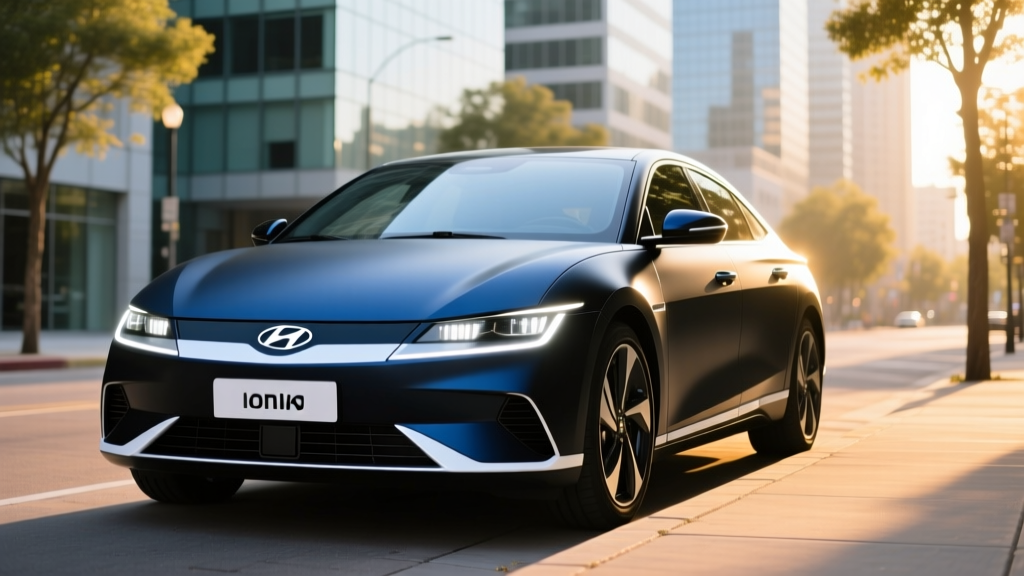
The 2026 Hyundai Ioniq 6 occupies a rare space in the EV market: a midsize sedan that prioritizes aerodynamic efficiency, top-tier crash protection, and ultra-fast 800-volt charging over crossover practicality. With an EPA-estimated 361 miles of range on the Long Range RWD trim and a standard suite of driver-assist features that earns it top marks from both NHTSA and IIHS, the Ioniq 6 makes a compelling case for safety-conscious EV buyers who don't need SUV cargo space.
But the Ioniq 6 isn't without trade-offs. Its sloping roofline cuts into rear headroom and trunk utility, and federal tax-credit eligibility depends on battery-sourcing rules that shift year to year. Below, we break down every spec that matters — from real-world range to charging curves to ownership costs — so you can decide if this sedan fits your daily drive.
Hyundai Ioniq 6 Safety Ratings and Driver-Assist Tech
The core reason buyers search for Hyundai Ioniq 6 safety data is the sedan's impressive crash-test performance. For the 2025–2026 model years, the Ioniq 6 earned the IIHS Top Safety Pick+ designation — the institute's highest honor — with Good ratings across every crashworthiness test category, including the updated moderate overlap front test that many competitors struggle with.
NHTSA awarded the Ioniq 6 a 5-Star Overall Safety Rating, with 5 stars in frontal crash, side crash, and rollover resistance categories.
Standard Hyundai SmartSense Features
Every Ioniq 6 trim ships with a comprehensive ADAS suite. These are SAE Level 2 driver-assist systems — meaning you must keep your hands on the wheel and eyes on the road at all times. This is not autonomous driving.
- Forward Collision-Avoidance Assist with pedestrian, cyclist, and junction-turning detection
- Blind-Spot Collision-Avoidance Assist with rear cross-traffic alert
- Lane Keeping Assist and Lane Following Assist
- Navigation-based Smart Cruise Control with stop-and-go (curve and speed-limit adaptive)
- Safe Exit Warning to prevent door openings into traffic
- Rear Occupant Alert
ADAS Limitation Warning: Hyundai's Highway Driving Assist 2 (HDA2) and Navigation-based Smart Cruise Control are not self-driving systems. They require continuous driver supervision. Performance degrades in heavy rain, snow, faded lane markings, and construction zones. Never treat Level 2 assist as a substitute for attentive driving.
Available Upgrades on Higher Trims
SEL and Limited trims add Highway Driving Assist 2 (HDA2), which combines adaptive cruise with lane-centering on divided highways, plus Remote Smart Parking Assist on Limited models — allowing the car to park and unpark itself in tight spaces while you stand outside with the key fob.
Range, Efficiency, and Real-World Expectations
The 2026 Ioniq 6 carries over the powertrain lineup introduced with the 2023 refresh. The efficiency champion is the Long Range RWD configuration, which pairs a 77.4 kWh (usable) NMC lithium-ion battery with a single rear-mounted motor.
| Spec | Long Range RWD | Long Range AWD | Standard Range RWD |
|---|---|---|---|
| EPA Range | 361 mi | 316 mi | 240 mi |
| Battery (usable) | 77.4 kWh (NMC) | 77.4 kWh (NMC) | 53.0 kWh (NMC) |
| Combined MPGe | 140 MPGe | 121 MPGe | 135 MPGe |
| kWh/100 mi | 24 | 28 | 25 |
| Horsepower | 225 hp | 320 hp | 149 hp |
| 0–60 mph | 6.2 sec | 5.1 sec | 8.4 sec |
| Drivetrain | RWD | AWD (dual-motor) | RWD |
Real-World Range Reality Check: The EPA's 361-mile figure for the Long Range RWD is achieved under controlled lab conditions. In real-world highway driving at 70–75 mph, expect roughly 290–310 miles before needing to charge. In freezing temperatures (below 32°F), range can drop 20–30%, putting realistic winter highway range around 240–260 miles. The Ioniq 6's heat pump (standard on Long Range trims) helps mitigate cold-weather losses compared to EVs without one, but physics still wins. City driving with regenerative braking can match or slightly exceed the EPA combined number.
Charging Speed: 800V Architecture Makes a Difference
The Ioniq 6 uses Hyundai Motor Group's E-GMP platform with an 800-volt electrical architecture — the same hardware underpinning the Kia EV6 and Genesis Electrified G80. This allows significantly faster DC fast-charging than 400V competitors like the Tesla Model 3 (which uses a ~400V architecture despite its high peak kW).
| Charging Level | Power / Rate | Time / Miles Added |
|---|---|---|
| Level 1 (120V household) | ~1.4 kW | ~4–5 mi/hr |
| Level 2 (240V home, 48A) | 10.9 kW | ~36 mi/hr; full charge in ~7.5 hr (77.4 kWh) |
| DC Fast Charge (peak) | ~240 kW (peak) | 10–80% in ~18 min (77.4 kWh battery) |
| DC Fast Charge (350 kW station) | Sustained ~180–200 kW avg (10–80%) | 10–80% in ~20–22 min real-world |
Charging-curve reality: The Ioniq 6's peak of ~240 kW occurs only between roughly 10–45% State of Charge on a 350 kW-capable charger. Above 55%, the curve tapers progressively — dropping to ~100 kW by 70% SoC and ~50 kW by 85%. This is normal lithium-ion behavior to protect cell longevity. If you're road-tripping, plan your stops to charge between 10–80% rather than topping off to 100% at every station; you'll spend less time plugged in overall.
The Ioniq 6 ships with a NACS (Tesla-style) charge port for the 2026 model year, giving direct access to Tesla Supercharger V3/V4 stations via native plug — no adapter required. CCS1 access is still available through the included NACS-to-CCS adapter at Electrify America, EVgo, and other networks.
Pricing, Trims, and Federal Tax Credit Eligibility
The 2026 Hyundai Ioniq 6 is offered in four trims. Pricing below reflects base MSRP before destination charges (~$1,150).
| Trim | Base MSRP | Est. After §30D Credit* | Key Additions |
|---|---|---|---|
| SE Standard Range | $38,650 | ~$31,150 | Base RWD, 240 mi range, cloth seats |
| SE | $43,500 | ~$36,000 | Long Range RWD or AWD, heated front seats |
| SEL | $47,400 | ~$39,900 | HDA2, leatherette, power liftgate, ambient lighting |
| Limited | $52,600 | ~$45,100 | Full LED matrix headlamps, ventilated seats, sunroof, Remote Smart Parking, Bose audio |
*Federal tax credit estimates assume full §30D eligibility. Actual credit amount varies.
Does the 2026 Ioniq 6 Qualify for the Federal EV Tax Credit?
Potentially — but eligibility under IRS §30D depends on several factors that change periodically:
- MSRP cap: Sedans must be priced at or below $55,000. The SE, SEL, and most Limited configurations qualify; a fully optioned Limited with AWD and packages may exceed the cap.
- Buyer income cap: Modified AGI must not exceed $150,000 (single), $225,000 (head of household), or $300,000 (joint).
- Battery sourcing: A percentage of critical minerals and battery components must be sourced from the U.S. or free-trade-agreement countries. These thresholds tighten annually. Hyundai has been progressively shifting battery supply chains, but you must verify current-year compliance on the IRS clean vehicle credit page or via the dealer's point-of-sale attestation.
- Point-of-sale transfer: As of 2024, eligible buyers can transfer the credit to the dealer at purchase, reducing the sale price directly rather than waiting for a tax refund.
Always confirm eligibility with your tax professional and the fueleconomy.gov tax credit lookup before finalizing a purchase.
Interior, Cargo, and Daily Livability
The Ioniq 6's cabin is a study in minimalism — dual 12.3-inch displays (instrument cluster and infotainment) sit behind a flat, bridge-style dashboard. Physical buttons are sparse; most climate and media controls route through the touchscreen, which draws mixed reactions from owners who prefer tactile knobs.
Passenger Space
- Front legroom: 42.9 inches
- Rear legroom: 35.1 inches
- Front headroom: 40.2 inches (38.7 in with sunroof)
- Rear headroom: 37.8 inches — the sloping roofline reduces this noticeably; taller passengers (6'0"+) may find it tight compared to the boxier Ioniq 5
Cargo
- Trunk: 12.3 cubic feet — adequate for groceries and luggage but smaller than a Tesla Model 3 (23 cu ft including under-floor) due to the sedan's fastback design
- Frunk: 0.8 cubic feet (essentially a charge-cable cubby; the 12V battery and electronics occupy most of the front compartment)
The rear seats fold 60/40 for longer items, but the trunk opening is narrow. If you regularly haul bulky cargo, the Ioniq 5 or a crossover is a more practical choice.
Standout Tech
- Digital Key 2: Use your smartphone (NFC/UWB) as the key fob
- Vehicle-to-Load (V2L): Power external devices (up to 3.6 kW) via the interior outlet or exterior charge-port adapter — useful for camping, tailgating, or emergency backup
- Over-the-air updates: Hyundai pushes firmware updates for powertrain calibration, infotainment, and ADAS refinements
- Relaxation seats: Front seats recline to a near-flat "zero gravity" position for charging-station rest breaks (Limited trim)
Warranty and Ownership Costs
Hyundai backs the Ioniq 6 with one of the strongest warranty packages in the EV market:
- Battery: 10 years / 100,000 miles (capacity retention above 70% of original)
- Powertrain: 10 years / 100,000 miles
- New vehicle: 5 years / 60,000 miles
- Roadside assistance: 5 years / unlimited miles
- Complimentary maintenance: 3 years / 36,000 miles
The 10-year battery warranty exceeds the industry norm of 8 years/100,000 miles and should ease long-term degradation concerns. NMC chemistry in the Ioniq 6 has shown approximately 5–8% capacity loss over 100,000 miles in fleet data from early 2023 models — well within the warranty threshold.
Estimated 5-Year Cost of Ownership
Charging the Ioniq 6 at home (national average $0.16/kWh) costs roughly $580/year for 12,000 miles of driving. The equivalent gas sedan at 28 MPG combined and $3.40/gallon would cost about $1,457/year in fuel. That's a ~$4,400 fuel savings over five years — before factoring in reduced maintenance (no oil changes, fewer brake replacements thanks to regenerative braking).
Who Should Buy the Hyundai Ioniq 6?
Choose the Ioniq 6 if:
- You commute 30–60 miles daily and want maximum efficiency (140 MPGe combined)
- Safety ratings are your top priority — Top Safety Pick+ and 5-star NHTSA are hard to beat
- You road-trip 3–5 times per year and value 18-minute 10–80% fast charging
- You prefer a sedan's driving dynamics over a crossover's ride height
- V2L capability matters for camping or emergency power
Look elsewhere if:
- You regularly carry rear-seat passengers over 6 feet tall (try the Ioniq 5 or Kia EV9)
- You need more than 12 cu ft of trunk space (the Tesla Model 3 or Model Y offer significantly more)
- You live in a region with limited DC fast-charging infrastructure and no home-charging option
- You want a third row or towing capability (the Ioniq 6 is not rated for towing)
Pros and Cons at a Glance
Pros
- Class-leading 361-mile EPA range (Long Range RWD)
- 800V architecture enables ~18-minute 10–80% DC fast charging
- Top Safety Pick+ from IIHS; 5-star NHTSA overall
- 10-year/100,000-mile battery warranty
- 140 MPGe combined — among the most efficient EVs sold
- Standard V2L for external power
- NACS charge port standard for 2026
Cons
- Fastback roofline limits rear headroom and trunk space
- Touchscreen-heavy controls lack physical knobs
- No towing rating
- AWD performance trim still trails Tesla Model 3 LR AWD in acceleration
- Tax-credit eligibility varies — verify before purchase
- Frunk is nearly useless for storage
Frequently Asked Questions
What is the real-world range of the Hyundai Ioniq 6?
The Long Range RWD achieves an EPA-estimated 361 miles, but real-world highway driving at 70+ mph typically yields 290–310 miles. In freezing temperatures, expect 240–260 miles. City driving with regenerative braking can approach or slightly exceed the EPA figure.
How fast does the Ioniq 6 charge?
On a 350 kW DC fast charger, the 77.4 kWh battery charges from 10–80% in approximately 18 minutes under ideal conditions, peaking near 240 kW before tapering. At home on a 240V Level 2 charger (48A/10.9 kW), a full charge takes about 7.5 hours — easily done overnight.
Does the 2026 Ioniq 6 qualify for the $7,500 federal EV tax credit?
It may, depending on your income (below $150K single / $300K joint), the specific trim's MSRP (must stay under $55,000 for sedans), and whether the battery meets current-year critical-mineral and component-sourcing thresholds under IRS §30D. Verify on fueleconomy.gov and with your tax professional before purchasing. The credit can be applied at the point of sale.
How does the Ioniq 6 compare to the Tesla Model 3?
The Ioniq 6 Long Range RWD offers more EPA range (361 vs ~341 miles) and faster peak charging architecture (800V vs ~400V), but the Model 3 Long Range AWD delivers stronger acceleration (4.2 sec 0–60), more cargo space (23 cu ft hatchback), and access to the mature Supercharger network — though the Ioniq 6 now has native NACS access to Superchargers as well. The Ioniq 6 wins on safety-test breadth and warranty length; the Model 3 wins on performance and practicality.
Is the Ioniq 6 good for road trips?
Yes, provided you plan around its 290–310 mile real-world highway range. The 18-minute 10–80% charging speed means minimal downtime at DC fast chargers, and the comfortable ride quality with low wind noise (the 0.21 Cd drag coefficient helps) makes long stints pleasant. Just know that charging deserts still exist in the Mountain West and rural Plains states.
What is the Ioniq 6's battery chemistry, and how long will it last?
The Ioniq 6 uses NMC (nickel manganese cobalt) lithium-ion cells. Hyundai warranties the battery for 10 years or 100,000 miles against capacity loss below 70%. Early fleet data from 2023 models suggests roughly 5–8% degradation at 100,000 miles with normal charging habits — meaning most owners will retain 90%+ capacity well past the warranty period.