The Tesla Roadster's Top Speed Promise: Separating Engineering From Hype
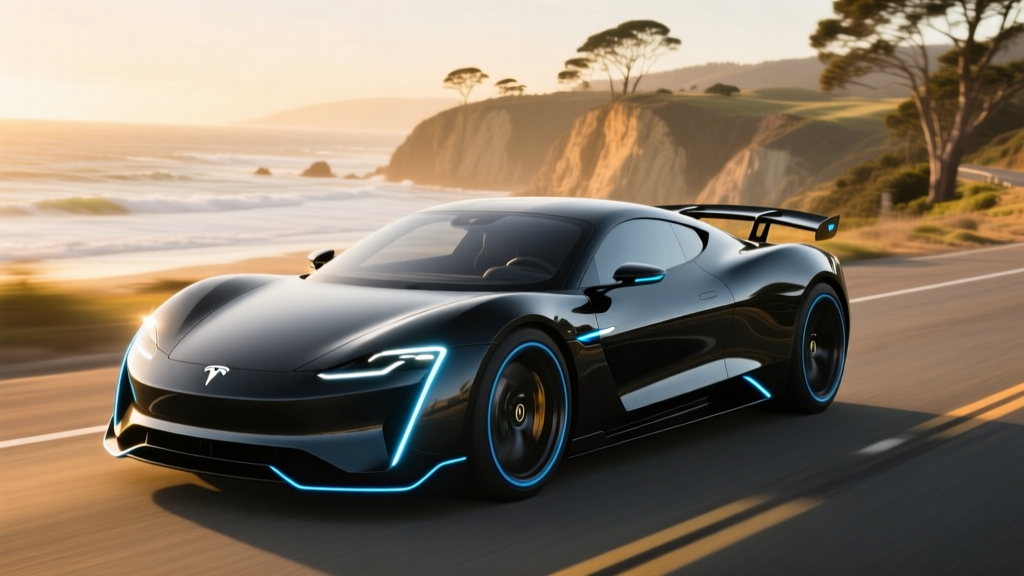
The second-generation Tesla Roadster has been one of the most anticipated—and most delayed—vehicles in the EV industry. First announced in 2017 with staggering performance claims, the Roadster has undergone multiple timeline revisions. As of early 2026, Tesla CEO Elon Musk has targeted a production reveal and initial deliveries, though the company has a well-documented history of missing projected launch dates. This review examines every known and estimated specification for the Roadster, with particular focus on its headline-grabbing top speed claims, while clearly distinguishing between Tesla's announced targets and independently verified data.
The central question for enthusiasts and prospective buyers: can the Roadster actually hit the 250+ mph top speed Tesla has claimed, and at what cost to range, usability, and price? Let's break down every available data point.
Performance Specs: Top Speed, 0-60, and the SpaceX Thruster Option
| Specification | Tesla Roadster (Announced) |
|---|---|
| Top Speed | 250+ mph (claimed, base model) |
| 0-60 mph | 1.9 seconds (base); <1.0 sec (with SpaceX package, claimed) |
| Quarter Mile | 8.8 seconds (claimed) |
| Horsepower | ~1,000+ hp (tri-motor AWD, estimated) |
| Drivetrain | AWD, tri-motor (one front, two rear) |
| Torque | 7,300 lb-ft wheel torque (claimed) |
The Roadster's tri-motor all-wheel-drive powertrain is the foundation of its performance claims. Tesla has stated the vehicle will produce approximately 10,000 Nm (7,376 lb-ft) of wheel torque—a critical distinction from crank torque figures used for internal combustion engines. Wheel torque is multiplied through gear reduction, so this number is not directly comparable to engine torque ratings, but it signals enormous tractive effort at the wheels.
The 250+ mph Top Speed: What Physics Requires
Achieving 250 mph in a production road car demands extraordinary engineering. For context, the Bugatti Chiron required a bespoke 8.0-liter quad-turbo W16 producing 1,500 hp to reach 261 mph. The Roadster would need to overcome aerodynamic drag that increases with the cube of velocity—meaning 250 mph requires roughly 2.4× the power of 200 mph. Tesla has hinted at active aerodynamics and a low drag coefficient, but sustaining 250 mph would deplete the battery at an extreme rate. Expect the top-speed figure to represent a peak capability achievable for short bursts, not sustained running.
The SpaceX Cold-Gas Thruster Package
Tesla has offered (as an announced option) a "SpaceX package" incorporating cold-gas thrusters positioned around the vehicle to improve cornering grip, braking, and straight-line acceleration. With this package, Tesla claims a sub-1.0-second 0-60 mph time. This system uses compressed air rather than combustion-based rocket propulsion. Whether this package passes federal safety regulations for road use, and how the pressurized gas tanks affect cargo space and weight, remain open questions pending production.
Range, Battery, and Efficiency Estimates
| Battery & Efficiency | Estimated / Claimed |
|---|---|
| Battery Capacity | 200 kWh (announced) |
| Chemistry | Likely NMC/NCA (nickel-based) for energy density; unconfirmed |
| Claimed Range | 620 miles (pre-EPA) |
| Est. Efficiency | ~32 kWh/100 mi (est. combined, given weight and aero) |
| Est. MPGe | ~105 MPGe (est. combined) |
A 200 kWh battery pack would be the largest ever installed in a production passenger vehicle. For comparison, the GMC Hummer EV uses a ~212 kWh pack but weighs over 9,000 lbs. The Roadster, as a sports car, would target a significantly lower curb weight—likely in the 4,400–4,800 lb range—making the energy density demands on the battery cells extreme. Tesla will almost certainly use a nickel-based chemistry (NMC or NCA) rather than LFP, as the energy density per kilogram is substantially higher and essential for fitting 200 kWh into a sports car chassis.
Efficiency will be the Roadster's compromise. A 200 kWh pack charged at residential electricity rates ($0.16/kWh national average) costs approximately $32 to fully charge. At an estimated 32 kWh/100 mi, that's roughly $0.052 per mile—still cheaper than premium gasoline at $4.50/gallon in a 20 mpg sports car ($0.225/mile), but far thirstier than a Tesla Model 3 at ~25 kWh/100 mi.
Charging Speed: DC Fast Charge and Home Level 2
Charging a 200 kWh battery is a substantial undertaking. Even with best-case charging infrastructure, the physics of moving this much energy into a battery pack define the ownership experience.
| Charging Level | Power (kW) | Miles Added per Hour | 10-80% Time (Est.) |
|---|---|---|---|
| Level 1 (120V) | 1.4 kW | ~4 mi/hr | Impractical (100+ hours) |
| Level 2 (240V, 48A) | 11.5 kW | ~35 mi/hr | ~12 hours |
| Level 2 (240V, 80A) | 19.2 kW | ~58 mi/hr | ~7.5 hours |
| DC Fast (V4 Supercharger) | 350 kW (peak est.) | ~1,000+ mi/hr (peak) | ~30-40 minutes |
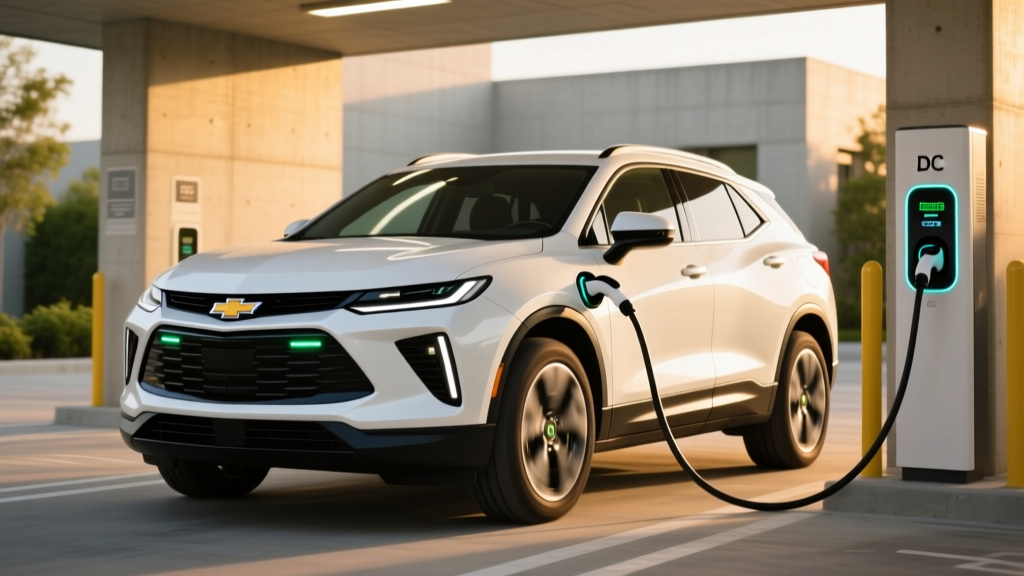
DC fast charging reality: Tesla's V4 Supercharger architecture supports peak rates up to 350 kW. However, a 200 kWh pack charging at 350 kW peak would still require significant time due to the sheer energy volume. Expect the charge curve to taper substantially above 50-60% state of charge to protect cell longevity. A realistic 10-80% session will likely take 30-40 minutes at a V4 Supercharger, assuming the pack's thermal management can sustain high C-rates. That's 120-160 kWh pushed into the battery in a single session—an enormous thermal load.
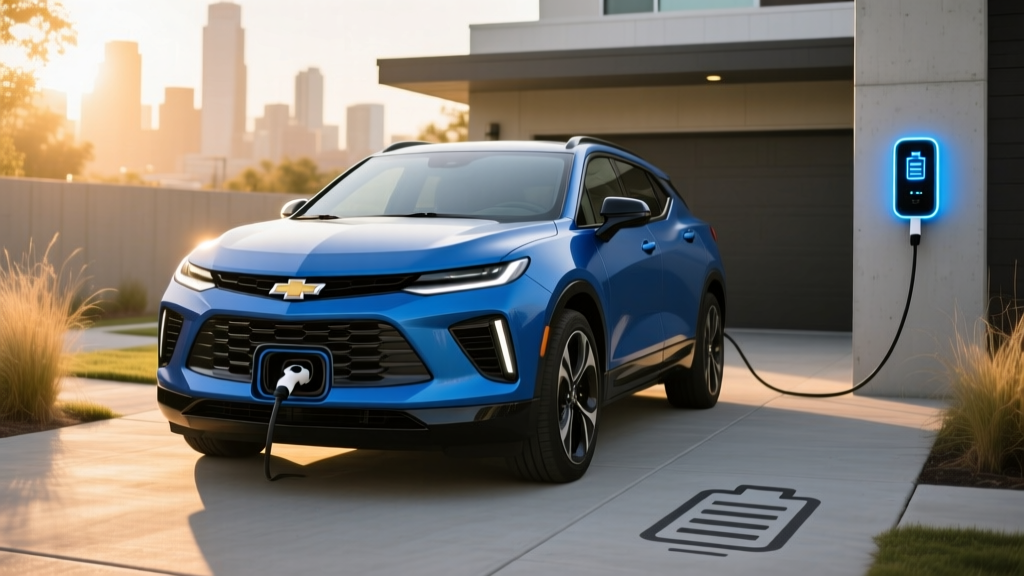
Home charging: With an 11.5 kW Level 2 wall connector (48-amp circuit on a 60-amp breaker), overnight charging adds roughly 35 miles per hour. A full charge from near-empty would take approximately 17 hours. Upgrading to a 19.2 kW Level 2 setup (80-amp circuit, 100-amp breaker) cuts this to roughly 10-11 hours. Roadster owners will likely need a dedicated 100-amp circuit or panel upgrade, which adds $1,500–$4,000 to home charging installation costs depending on existing electrical service.
Pricing, Tax Credits, and Ownership Costs
| Pricing Detail | Estimated Amount |
|---|---|
| Reservation Price (Founders Series) | $250,000 (announced, limited run) |
| Base MSRP (Estimated) | $200,000 (announced target) |
| SpaceX Package Add-On | $50,000+ (estimated) |
| Federal Tax Credit (§30D) | Not eligible — exceeds MSRP cap |
| Est. Insurance (Annual) | $5,000–$8,000+ (high-performance sports car) |
Federal Tax Credit Eligibility
Under current IRS §30D clean vehicle credit rules, the Roadster will not qualify for the federal $7,500 EV tax credit. The reason is straightforward: the §30D credit imposes an MSRP cap of $80,000 for sedans, sports cars, and wagons (and $80,000 for SUVs/trucks/pickups). At an estimated $200,000 base price, the Roadster exceeds this cap by a wide margin. Additionally, the buyer income caps ($150,000 single / $300,000 joint AGI) would exclude many—but not all—buyers in this price bracket regardless.
This is a vehicle purchased for performance and exclusivity, not incentive optimization. Buyers should also budget for premium insurance rates typical of high-horsepower sports cars, potential tire replacement costs (expect high-wear compound tires at $400–$600 per corner), and the likelihood that Tesla's service infrastructure may prioritize volume models over a low-production halo car.
Interior, Cargo, Technology, and Daily Usability
The Roadster is a 2+2 sports car with a removable glass roof panel (targa-style). Tesla has shown a minimalist interior centered around a large touchscreen, consistent with the brand's design language, though the production interior has not been fully revealed.
| Dimension / Feature | Estimate / Claim |
|---|---|
| Seating | 2+2 (two front, two small rear seats) |
| Cargo (Rear) | ~4-6 cu ft (estimated, behind rear seats) |
| Frunk (Front Trunk) | Likely minimal due to front motor and HVAC |
| Roof | Removable glass targa panel |
| Infotainment | Large center touchscreen, Tesla OS |
| Driver Assistance | Autopilot standard; FSD (Supervised) optional |
Standout tech features include Tesla's full software suite (over-the-air updates, Sentry Mode, Dog Mode, theater-mode streaming), the removable glass roof for open-air driving, and the potential SpaceX thruster system for track use. The tri-motor torque vectoring system should provide exceptional cornering dynamics by independently controlling torque to each rear wheel.
Notable drawbacks: The 2+2 layout means the rear seats are suitable only for small children or cargo overflow. With a 200 kWh pack, the vehicle will be heavy for a sports car—likely 4,500+ lbs—which affects tire wear, braking distances, and handling feel compared to lighter competitors like the Porsche 911 Turbo S (~3,600 lbs). Charging a 200 kWh battery at home requires substantial electrical infrastructure. And the price places the Roadster firmly in exotic-car territory, where depreciation and service accessibility are legitimate concerns.
Warranty and Battery Longevity
Tesla has not published specific Roadster warranty terms, but based on the company's existing coverage for the Model S Plaid (its closest performance analog):
- Vehicle Limited Warranty: 4 years / 50,000 miles (expected)
- Battery & Drive Unit Warranty: 8 years / 150,000 miles with minimum 70% capacity retention (expected)
The 200 kWh NMC/NCA pack will likely experience degradation consistent with Tesla's other nickel-based batteries—approximately 10-12% capacity loss over 150,000 miles based on fleet data from Model S and Model X owners. A battery replacement for a pack this size would be extraordinarily expensive: estimate $30,000–$50,000+ out of warranty, depending on future cell pricing. The sheer size of the pack means even modest per-kWh replacement costs add up quickly.
Who Should Consider the Tesla Roadster?
- You want a halo EV sports car with unmatched straight-line performance
- Budget exceeds $200,000 and you accept exotic-car ownership costs
- You have home charging with 100-amp+ electrical service
- Track days and top-speed runs are part of your use case
- You value Tesla's Supercharger network for long-distance sports car touring
- You need practical cargo space, daily usability, or family seating
- Federal tax credits factor into your purchase decision
- You want a proven, delivered vehicle with established service history
- Insurance costs or depreciation concerns are primary considerations
The Roadster targets a narrow buyer: someone who wants the fastest production car on paper, values Tesla's ecosystem, and can absorb the costs and risks of a low-volume exotic. For most performance EV buyers, alternatives like the Porsche Taycan Turbo GT ($230,000, proven platform, dealer service network), Lucid Air Sapphire ($249,000, 1,234 hp, 427-mile EPA range, delivered and reviewed), or Rimac Nevera ($2.2M, 1,914 hp, verified 258 mph top speed) offer confirmed performance with established production track records.
Tesla Roadster Pros and Cons
✅ Pros
- Claimed 250+ mph top speed would make it the fastest production EV
- 1.9-second 0-60 mph (base) rivals hypercars at a fraction of their price
- 620-mile target range eliminates range anxiety on road trips
- Access to Tesla Supercharger network (20,000+ stalls globally)
- Tri-motor torque vectoring for advanced handling dynamics
- Removable glass roof for open-air experience
- Over-the-air updates continuously add features
❌ Cons
- Not yet in production — delivery timeline remains uncertain
- All specs are manufacturer claims, not independently verified
- $200,000+ price with no federal tax credit eligibility
- 200 kWh battery means very long home charging times
- Heavy for a sports car (~4,500+ lbs est.) — affects tire wear and handling
- 2+2 rear seats are impractical for adults
- Likely very high insurance premiums
- SpaceX thruster package raises regulatory and safety questions
Frequently Asked Questions
What is the real-world range of the Tesla Roadster?
Tesla claims 620 miles, but this predates EPA certification. Real-world highway driving at 75 mph will likely yield 380–450 miles given aerodynamic drag at speed. In cold weather (below freezing), expect 280–360 miles of effective highway range. The 200 kWh battery provides a large absolute energy reserve, but the vehicle's weight and performance tires will reduce efficiency compared to lighter EVs.
How fast does the Tesla Roadster charge?
At a Tesla V4 Supercharger (up to 350 kW peak), expect a 10-80% charge in approximately 30-40 minutes, adding roughly 300-400 miles of range. At home on a standard 11.5 kW Level 2 charger, the 200 kWh pack requires about 17 hours from near-empty. An 80-amp Level 2 circuit (19.2 kW) cuts this to roughly 10-11 hours.
How much does the Tesla Roadster cost after tax credits?
The Roadster does not qualify for the federal §30D EV tax credit because its estimated $200,000 MSRP far exceeds the $80,000 cap for passenger cars. The purchase price is the purchase price—expect $200,000 for the base model and $250,000+ for the Founders Series. Some states may offer additional incentives, but these typically have their own price caps. Consult a tax professional for your specific situation.
Is the Tesla Roadster worth buying vs. the Lucid Air Sapphire or Porsche Taycan Turbo GT?
If verified performance matches claims, the Roadster offers unique straight-line speed at a lower price than hypercar alternatives. However, the Lucid Air Sapphire is already delivered and independently tested (1,234 hp, 1.89-sec 0-60, 427-mile EPA range, $249,000). The Porsche Taycan Turbo GT offers proven build quality and dealer service ($230,000). The Roadster's value proposition hinges entirely on Tesla delivering the promised specs on a reliable timeline—a historical weakness for the company's ambitious launches.
What is the top speed of the Tesla Roadster?
Tesla has claimed a top speed exceeding 250 mph for the base Roadster. This figure has not been independently verified, as the vehicle has not entered production. For reference, the Rimac Nevera (a delivered, $2.2M electric hypercar) has a verified top speed of 258 mph. If Tesla achieves 250+ mph, it would be among the fastest production cars ever built, EV or otherwise.
Does the Tesla Roadster qualify for the federal EV tax credit?
No. Under IRS §30D rules, new clean vehicles must have an MSRP below $80,000 (for cars, sedans, and sports cars) to qualify for the up-to-$7,500 credit. The Roadster's estimated $200,000 base price disqualifies it. Buyer income limits ($150K single / $300K joint) and battery critical-mineral sourcing requirements are additional hurdles, though the MSRP cap alone is decisive here.
Sources: Tesla product announcements, fueleconomy.gov (EPA efficiency data for comparable EVs), IRS §30D Clean Vehicle Credit guidelines. This article will be updated when Tesla provides production-verified specifications and EPA certification data.