The Tesla Roadster with the SpaceX Package has lived in the "announced but not yet delivered" category since 2017. As of early 2026, Tesla CEO Elon Musk has confirmed that the next-generation Roadster — including the cold-gas thruster-equipped SpaceX variant — is slated for production later this year. But with repeated delays in its history, buyers and enthusiasts deserve a clear-eyed look at what's been promised, what the physics allow, and what ownership might actually look like if this car reaches driveways.
This profile compiles every confirmed and estimated specification Tesla has published, contextualizes them against real-world EV ownership data, and flags where marketing meets reality. Nothing here should be taken as a purchase recommendation until Tesla begins deliveries and independent testing validates the claims.
What the SpaceX Package Actually Adds
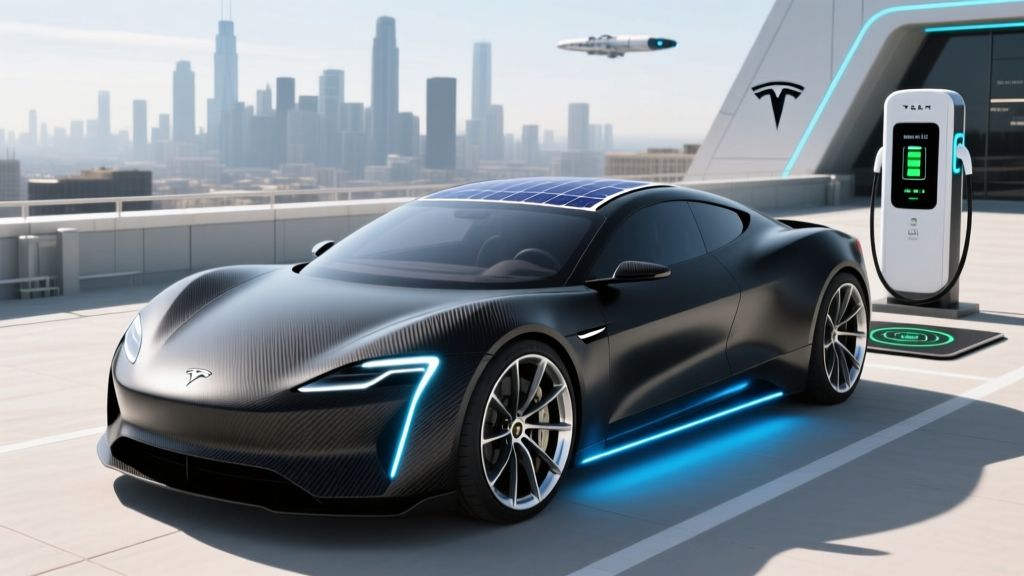
The standard second-generation Roadster is already an extreme-performance electric sports car. The SpaceX Package is an optional hardware suite that Tesla says will include approximately 10 cold-gas thrusters positioned around the vehicle's body. These thrusters use compressed air (not rocket fuel) to generate downforce during cornering, reduce braking distances, and — Tesla claims — assist with acceleration.
The thrusters are not designed for flight or sustained thrust. They function similarly to active aerodynamic systems on cars like the McLaren P1 or Aston Martin Valkyrie, but using directed gas expulsion rather than movable wings. Tesla has stated the system is intended for track use and will likely be software-locked or restricted for street driving due to safety regulations.
The SpaceX Package also reportedly includes a revised suspension tune, larger carbon-ceramic brakes, and lightweight body components. Pricing for the package has not been officially separated from the base Roadster cost, but early reservation materials suggested a combined premium of $50,000 or more over the standard Roadster.
Announced Specifications: Battery, Range & Efficiency
| Specification | Tesla Roadster (Announced) | Roadster + SpaceX Pkg (Est.) |
|---|---|---|
| Battery Capacity | 200 kWh (announced) | 200 kWh (announced) |
| Battery Chemistry | Likely NMC/NCA (unconfirmed) | Likely NMC/NCA (unconfirmed) |
| EPA Range (Claimed) | 620 miles | ~580–600 miles (est. w/ added weight) |
| Efficiency (Projected) | ~140 MPGe / 24 kWh/100mi | ~130 MPGe / 26 kWh/100mi |
| Drivetrain | Tri-motor AWD | Tri-motor AWD + thrusters |
| Horsepower | ~1,000+ hp (wheel torque est.) | ~1,000+ hp |
| 0–60 mph | 1.9 seconds (claimed) | <1.0 second (claimed, w/ thrusters) |
| Top Speed | 250+ mph | 250+ mph |
| Cargo Volume | ~3–5 cu ft (est., sports car) | ~3–5 cu ft (est.) |
| Seating | 2+2 (small rear seats) | 2+2 |
A 200 kWh battery pack is enormous by any standard. For context, the GMC Hummer EV — one of the largest battery packs in production — uses approximately 212 kWh usable. Packing that capacity into a sports car footprint presents serious packaging, weight, and thermal-management challenges. Tesla has not disclosed cell format (4680 cells are likely), pack voltage, or whether the 200 kWh figure is gross or net usable capacity.
Tesla claims 620 miles of range for the standard Roadster. If EPA-certified at that figure, real-world highway driving at 75 mph would likely yield 480–530 miles due to aerodynamic drag at speed. In cold weather (below 32°F / 0°C), expect a further 20–30% reduction, putting winter highway range at roughly 340–420 miles. The SpaceX Package's added thruster hardware and compressed-air tanks will add weight, likely reducing range by 3–5% versus the standard Roadster. These are estimates pending EPA certification.
Charging Speed: DC Fast, Level 2 & Home Setup
With a 200 kWh battery, charging speed is the Roadster's most critical ownership variable. Even with Tesla's best Supercharger hardware, filling a pack this large will take significantly longer than a Model 3 or Model Y.
| Charging Level | Power (kW) | Est. 10–80% Time | Miles of Range per Hour |
|---|---|---|---|
| Level 1 (120V, 12A) | ~1.4 kW | Not practical (~100+ hrs) | ~3–5 mi/hr |
| Level 2 (240V, 48A) | ~11.5 kW | ~12–14 hours | ~35–45 mi/hr |
| Level 2 (240V, 80A / Wall Connector) | ~19.2 kW | ~7–8 hours | ~60–75 mi/hr |
| DC Fast Charge (V4 Supercharger, peak) | ~350 kW (announced peak) | ~30–40 minutes (est.) | ~600+ mi/hr (peak) |
Tesla has not confirmed the Roadster's maximum DC charge rate. The company's V4 Supercharger cabinets support up to 350 kW on compatible vehicles, but sustained charging at that rate with a 200 kWh pack depends on the battery's C-rate tolerance, thermal management, and cell chemistry. Expect the charge curve to taper significantly above 60% State of Charge (SoC), meaning the 10–80% time will likely land in the 30–40 minute range under ideal conditions — but could stretch longer in cold weather without adequate battery preconditioning.
For home charging, a 48-amp Level 2 circuit (the most common residential installation) will add roughly 40 miles of range per hour. Fully replenishing a depleted 200 kWh pack overnight is not realistic at this amperage. Roadster owners will likely want an 80-amp dedicated circuit — which requires a 100-amp breaker and potentially a panel upgrade, adding $1,500–$3,500 to installation costs depending on your home's electrical service. Always consult a licensed electrician familiar with NEC Article 625 for EV charging installations.
Performance: The Sub-1-Second Claim Examined
The headline number — a 0–60 mph time under one second with the SpaceX Package — would make the Roadster the quickest production car ever built, eclipsing the Rimac Nevera (1.74 seconds) and Pininfarina Battista (1.79 seconds). But context matters enormously here.
Tesla's claimed 1.9-second 0–60 for the standard Roadster (without thrusters) is itself extraordinary and relies on the tri-motor AWD system's ability to vector torque instantaneously across all four wheels. The sub-1-second claim with thrusters likely assumes a prepped surface, optimal battery temperature, and full state of charge. Cold-gas thrusters would assist by pressing the tires harder into the pavement (increasing the friction coefficient), but they cannot overcome the fundamental traction limit of street-legal tires on public roads.
For daily driving, the difference between a 1.9-second and a 0.9-second 0–60 is academic. Both figures represent acceleration forces that exceed what most drivers can comfortably tolerate and what public roads can safely accommodate. The more relevant performance metric for a grand-touring sports car is sustained highway efficiency, thermal management under load, and braking performance — areas where Tesla has not yet provided independent test data.
Pricing, Trims & Federal Tax Credit Eligibility
| Item | Est. Cost |
|---|---|
| Roadster Base (Reservation Price) | $200,000 (announced) |
| Roadster Founders Series (First 1,000) | $250,000 (announced) |
| SpaceX Package Add-On (Est.) | +$50,000 (unconfirmed) |
| Federal §30D Tax Credit | $0 — Exceeds MSRP Cap |
| Estimated As-Tested (Roadster + SpaceX) | $250,000–$300,000+ |
The federal EV tax credit under IRS §30D caps eligible vehicles at an MSRP of $55,000 for sedans and $80,000 for SUVs, vans, and pickup trucks. The Roadster — at any trim — will far exceed these limits. It also likely exceeds buyer income caps ($150,000 single / $300,000 joint AGI) for most reservation holders. Additionally, the credit requires battery components and critical minerals to meet domestic-sourcing thresholds that escalate annually. Even if the Roadster somehow qualified on price (it won't), battery sourcing rules would need independent verification.
Bottom line: plan to pay full MSRP. There is no federal purchase incentive at this price point, and most state-level incentives also have MSRP caps well below $200,000. Check your state's specific EV incentive programs for any applicable benefits, but do not budget around them.
Interior, Technology & Practicality
Tesla has shown the Roadster's interior in limited previews: a minimalist cabin dominated by a large central touchscreen (likely 17+ inches), a yoke-style steering wheel, and a glass roof panel. The 2+2 seating layout means two small rear seats suitable for children or cargo overflow — not adults on any trip longer than a few miles.
Cargo space in a mid-engine-style EV sports car is inherently limited. Expect roughly 3–5 cubic feet of combined front trunk (frunk) and rear storage — enough for a weekend bag for two, not a grocery run for a family. This is a deliberate trade-off: the Roadster prioritizes aerodynamics, battery packaging, and performance over utility.
Technology features will almost certainly include:
- Tesla's latest infotainment OS with streaming, navigation, and over-the-air updates
- Autopilot standard, FSD (Supervised) available as a $8,000–$12,000 add-on (pricing subject to change)
- Track Mode with adjustable torque vectoring, regen, and cooling profiles
- SpaceX Package-specific UI showing thruster status, compressed-air reserves, and G-force telemetry
- Premium audio (likely 14+ speakers)
Notable drawbacks for a vehicle at this price: Tesla's panel-gap consistency and interior material quality have historically lagged behind Porsche, Mercedes-AMG, and Rimac at the six-figure tier. Whether the Roadster's cabin justifies a $250,000+ price tag against hand-stitched competitors remains an open question until production units are evaluated.
Who Should Consider the Roadster (and Who Shouldn't)
✅ Choose the Tesla Roadster if:
- You want the fastest-accelerating production car ever made and budget is not a constraint
- You already own a practical daily driver and want a weekend/track toy
- You value Tesla's Supercharger network and OTA software updates for a sports car
- You're willing to accept first-year production risks on a low-volume, highly complex vehicle
❌ Look elsewhere if:
- You need daily practicality, rear-seat space, or cargo room
- You want a proven luxury interior at the $200K+ price point (consider Porsche Taycan Turbo GT, Rimac Nevera, or Lotus Evija)
- You're counting on a tax credit or incentive to offset cost
- You need a vehicle available for delivery now — the Roadster is still in pre-production
Warranty, Service & Ownership Costs
Tesla has not published Roadster-specific warranty terms. Based on the company's current vehicle warranties, expect:
- Basic Vehicle: 4 years / 50,000 miles
- Battery & Drive Unit: 8 years / 120,000–150,000 miles (with minimum 70% capacity retention)
- SpaceX Thruster System: Unknown — likely a separate warranty term given the novel hardware
Insurance premiums for a 1,000+ hp, 250+ mph electric sports car will be substantial. Expect annual premiums in the $8,000–$15,000+ range depending on your driving record, location, and insurer. Very few carriers will write policies on a vehicle at this performance tier, and many will require agreed-value coverage.
Tire costs will also be significant. The Roadster's weight (likely 4,800–5,200 lbs given the 200 kWh pack) combined with instant torque will wear through high-performance tires quickly. Budget $2,000–$4,000 per set, with replacement every 8,000–15,000 miles under normal spirited driving.
Frequently Asked Questions
What is the real-world range of the Tesla Roadster?
Tesla claims 620 miles for the standard Roadster. Pending EPA certification, real-world highway range will likely be 480–530 miles at 75 mph, and 340–420 miles in freezing temperatures. The SpaceX Package may reduce range by an additional 3–5% due to added hardware weight.
How fast does the Roadster charge at home and on the road?
At home on a 48-amp Level 2 charger (~11.5 kW), expect roughly 40 miles of range per hour and a full charge in 12–14 hours. On an 80-amp circuit (~19.2 kW), that improves to ~70 mi/hr and 7–8 hours. DC fast charging at a V4 Supercharger (up to 350 kW peak) should deliver 10–80% in approximately 30–40 minutes under ideal thermal conditions.
How much does the Roadster cost after tax credits?
The Roadster does not qualify for the federal §30D EV tax credit because its MSRP far exceeds the $55,000 (car) / $80,000 (SUV/truck) cap. Expect to pay the full announced price of $200,000 for the base model and $250,000+ for the Founders Series or SpaceX Package variants.
Is the sub-1-second 0–60 time realistic?
On a prepped drag strip with optimal tire temperature, full battery charge, and cold-gas thrusters firing, it is physically plausible — though unverified by any independent test. On public roads with street tires and uncontrolled surfaces, achieving sub-1-second 0–60 is extremely unlikely and would be unsafe to attempt.
Is the Roadster worth buying vs. the Rimac Nevera or Lotus Evija?
The Rimac Nevera ($2.2M) is already in production with verified performance and a hand-built luxury interior. The Lotus Evija (~$2.3M) is similarly available. The Roadster's advantage is its projected range (620 miles vs. ~300–350 for competitors), access to the Supercharger network, and a significantly lower price point — if it ships as promised. If delivery timelines slip again or build quality doesn't match the price, the European hypercars offer proven alternatives at much higher cost.
When will the Roadster actually be available?
Tesla has targeted production for 2025–2026, but the Roadster has been delayed multiple times since its 2017 announcement. As of early 2026, Tesla states production will begin later this year. Reservation holders should treat all timelines as preliminary until vehicles are in customer hands.