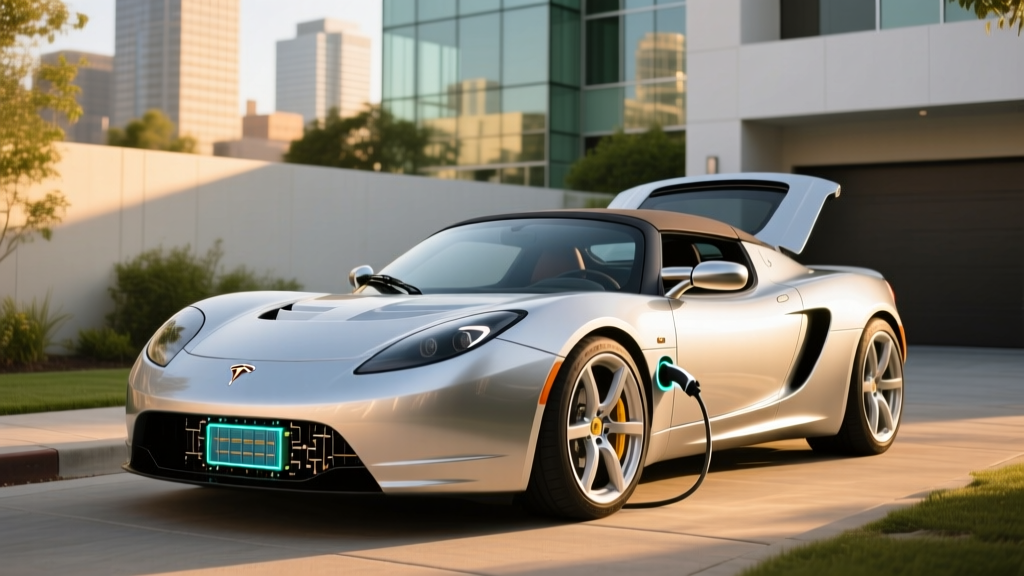
The original Tesla Roadster (2008–2012) is the car that proved battery-electric vehicles could be fast, desirable, and practical — at least for a very specific buyer. Built on a Lotus Elise chassis and powered by a laptop-battery-derived lithium-ion pack, the first-generation Roadster launched Tesla from a Silicon Valley startup into an automaker. In 2026, it occupies a unique space: part collector car, part EV history artifact, and part cautionary tale about early battery degradation. If you're evaluating a Tesla Roadster first gen on the used market, this guide covers the exact numbers, real-world ownership realities, and what to inspect before wiring funds.
Tesla Roadster First Gen: Core Specifications at a Glance
| Spec | Value |
|---|---|
| Model Years | 2008–2012 |
| EPA Range (Original) | 244 miles (later 2.0/2.5 software update) |
| Battery Capacity | ~53 kWh (usable), lithium-ion (NMC-type cylindrical cells) |
| Motor | Single AC induction, rear-wheel drive |
| Horsepower / Torque | 288 hp / 273 lb-ft (Sport: 295 hp) |
| 0–60 mph | 3.7 seconds (Sport: 3.7s with performance package) |
| Top Speed | 125 mph (electronically limited) |
| Efficiency (Original EPA) | 135 MPGe combined / ~25 kWh/100 mi |
| Curb Weight | 2,888 lbs |
| Cargo Volume | ~3.5 cu ft (rear trunk) |
| Original MSRP | $109,000 (base) – $128,000 (Sport/Signature) |
| Production Run | ~2,450 units worldwide |
Range, Battery Chemistry, and Degradation Reality
The first-gen Roadster's battery pack used approximately 6,831 cylindrical lithium-ion cells (the same form factor as consumer laptop batteries of the era) arranged in an NMC-like (nickel-manganese-cobalt) chemistry. Tesla rated the original 1.5 model at 220 miles, while the 2.0 and 2.5 revisions pushed the EPA estimate to 244 miles — a landmark figure in 2010.
EPA sticker: 244 miles (Roadster 2.0/2.5). In 2026, expect 160–210 miles from a surviving pack in good health, depending on State of Health (SoH). Highway driving at 70+ mph reduces range by roughly 15–20% versus city/regen-heavy driving. Cold-weather range loss (below 40°F) can cut another 20–30% due to the pack's rudimentary thermal management compared to modern liquid-cooled systems. Always request a SoH diagnostic before purchase.
Battery degradation is the single largest variable in a first-gen Roadster purchase. Early packs are now 13–18 years old. Tesla's own data from the era showed approximately 10–15% capacity loss over the first 100,000 miles under ideal conditions, but calendar degradation — the slow chemical aging of cells regardless of mileage — is the dominant factor for low-mileage survivors. A Roadster with 30,000 miles stored in a hot Arizona garage may have worse SoH than a 90,000-mile example kept in a climate-controlled facility in Oregon.
Tesla offered an upgraded Energy Storage System (ESS) replacement pack in the 2010s, rated at approximately 70 kWh, which restored range to roughly 300+ miles. These upgrade packs are rare and command a premium. Some owners have pursued third-party battery refurbishment services, but quality varies widely. Budget $20,000–$35,000 for a professional battery replacement or refurbishment if the pack is degraded beyond acceptable limits.
Charging: What to Expect From a 2008-Era System
The first-gen Roadster predates modern DC fast-charging standards. It was designed primarily for home and destination charging, using Tesla's proprietary connector and a High Power Wall Connector (HPWC).
| Charging Level | Max Rate | Miles Added Per Hour | Notes |
|---|---|---|---|
| Level 1 (120V) | ~1.4 kW | ~5 miles/hr | Emergency/trickle only; full charge in 36+ hours |
| Level 2 (240V, HPWC) | ~16.8 kW (70A) | ~56 miles/hr | Requires Tesla HPWC or J1772 adapter; full charge in ~3.5 hours |
| DC Fast Charge | Not natively supported | N/A | No CCS, CHAdeMO, or NACS DC capability; aftermarket adapters existed but are rare |
This is the Roadster's most significant limitation as a 2026 daily driver or weekend car. There is no DC fast charging. Road trips require meticulous planning around Level 2 stops, with 3–4 hour charging sessions at hotels or destination chargers. The 16.8 kW Level 2 rate was impressive in 2010 and remains adequate for overnight charging, but it means the Roadster is effectively a local-range vehicle for most owners.
The Roadster uses Tesla's proprietary pre-NACS connector. An adapter is needed to use modern J1772 public Level 2 stations, and Tesla no longer manufactures these adapters new. Third-party and used-market adapters are available but should be inspected for wear. The onboard charger is a single-phase unit; it cannot accept three-phase AC power common at some European and commercial stations.
Performance, Drivetrain, and Driving Impressions
The Roadster's 288 hp (295 hp in Sport trim) may sound modest by 2026 EV standards, but in a 2,888-lb carbon-fiber-and-aluminum chassis, it delivers. The 3.7-second 0–60 mph time was supercar territory in 2008 and remains brisk today. The two-speed gearbox in early 2008 models (a unique and problematic unit) was replaced by a single-speed fixed-gear reduction drive in later production, which is the version to prefer for reliability.
The single rear-mounted AC induction motor provides instant torque with a linear power delivery that was revelatory at launch. Handling benefits from the Lotus-derived suspension geometry — double-wishbone front and rear, with a low center of gravity thanks to the mid-mounted battery pack positioned behind the seats. Steering is unassisted and heavy at low speeds, a deliberate choice that rewards on canyon roads but taxes in parking lots.
There are no driver-assistance features. No Autopilot, no lane-keeping, no adaptive cruise — this is a pure analog driving experience with electric propulsion. For collectors and enthusiasts, that's a feature, not a bug.
Interior, Tech, and Daily Practicality
The Roadster's cabin is essentially a Lotus Elise interior with Tesla-specific instrumentation. Expect:
- A 7-inch touchscreen (cutting-edge in 2008, dated by 2026 standards) controlling climate, audio, and vehicle settings
- No navigation system (owners rely on phone mounts)
- No backup camera (not federally required until 2018)
- No Bluetooth audio streaming in early models (added in later production)
- Manual cloth or leather seats with minimal adjustability
- A removable soft top (hard top was an expensive option)
Cargo space is limited to approximately 3.5 cubic feet in the rear trunk — enough for a weekend bag for two, nothing more. There is no frunk (front trunk); the space is occupied by the motor and power electronics. Legroom is adequate for drivers under 6'2" but the fixed-seat, adjustable-pedal layout (borrowed from Lotus) is not ideal for all body types.
As a two-seat roadster with no rear seats, minimal storage, and a firm ride, this is not a commuter, family hauler, or road-trip car. It's a weekend toy, a collector piece, and a conversation starter at every Cars & Coffee.
Pricing, Collector Value, and Tax Credit Eligibility
The Tesla Roadster first gen is no longer sold new. On the 2026 collector and used market, pricing varies dramatically based on mileage, condition, battery SoH, and provenance:
| Condition / Configuration | Approximate 2026 Market Price |
|---|---|
| High-mileage, degraded battery (needs replacement) | $40,000 – $60,000 |
| Average condition, original battery, 30k–60k miles | $70,000 – $100,000 |
| Excellent condition, Sport trim, low miles, healthy SoH | $110,000 – $160,000 |
| Upgraded ESS (70 kWh), Signature edition, ultra-low miles | $150,000 – $250,000+ |
Does the First-Gen Roadster Qualify for the Federal EV Tax Credit?
No. Under current IRS §30D rules, the federal clean vehicle credit applies only to new qualifying vehicles purchased from a licensed dealer. As a discontinued model available only on the used market, the Roadster is ineligible for the new-vehicle credit.
The Used Clean Vehicle Credit (up to $4,000 or 30% of sale price, whichever is less) under IRS §25E has a strict MSRP cap of $25,000 for the original new vehicle sale price. Since the Roadster's original MSRP was $109,000–$128,000, it far exceeds this cap and does not qualify for the used-vehicle credit either. There are also buyer income limits ($75,000 single / $150,000 joint filers) and the vehicle must be at least two model years old and purchased from a dealer — but the MSRP cap alone disqualifies it.
Warranty and Long-Term Ownership Costs
All original factory warranties have expired. Tesla's original coverage included:
- Vehicle warranty: 3 years / 36,000 miles
- Battery warranty: 5 years / 100,000 miles (with a capacity retention guarantee of 70% minimum)
- Powertrain (motor, power electronics): 5 years / 100,000 miles
In 2026, every Roadster is well outside these windows. Buyers should budget for:
- Battery replacement or refurbishment: $20,000–$35,000
- AC compressor and cooling system service: $2,000–$4,000
- Suspension components (Lotus-sourced, generally available): $1,500–$3,000
- Insurance: Specialty collector-car insurance (Hagerty, Grundy) typically $800–$2,500/year depending on agreed value
Tesla still provides limited parts support through its service network, but turnaround times can be long for Roadster-specific components. The owner community and third-party specialists (such as Tesla's Vintage Service program) are critical resources.
Pros, Cons, and Who Should Buy a First-Gen Roadster
- Historically significant — the car that launched the EV revolution
- Lightweight, engaging driving dynamics from the Lotus chassis
- Strong collector appreciation trajectory (appreciating asset, not depreciating)
- No DCFC dependency means simpler electrical architecture (fewer things to break)
- Active owner community and growing specialist support network
- No DC fast charging — road trips require Level 2 planning and patience
- Severe battery degradation risk on any original pack; replacement is expensive
- Dated infotainment and zero driver-assistance technology
- No federal tax credit eligibility (new or used)
- Limited cargo, no rear seats, soft-top only (hard top rare and costly)
- Parts availability declining; Lotus-sourced components require specialist sourcing
Who This EV Suits Best
The first-gen Roadster is ideal for: EV collectors and automotive historians who want the car that started Tesla; weekend-car enthusiasts with garage space and a Level 2 home charger; and investors who see appreciation potential in a limited-production, historically pivotal vehicle.
It is not suited for: daily commuters, road trippers, families, or anyone who needs DC fast charging, modern infotainment, or a warranty safety net.
First-Gen Roadster vs. Key Alternatives
If you're spending $80,000–$150,000 on a collector EV or sports car in 2026, consider how the Roadster stacks up against alternatives:
| Vehicle | Price Range | Range / Charging | Collector Appeal |
|---|---|---|---|
| Tesla Roadster (2008–2012) | $40k–$250k+ | 160–244 mi / L2 only | Very high (EV origin story) |
| BMW i8 (2014–2020) | $50k–$100k | PHEV: 18 mi electric + gas | High (design icon) |
| Porsche 911 (997/991) | $60k–$150k | Gas only | Very high (sports car benchmark) |
| Tesla Model S Plaid (used) | $70k–$100k | 350+ mi / 250 kW DCFC | Moderate (performance EV) |
The Roadster wins on historical significance and rarity. It loses on daily usability, charging infrastructure compatibility, and technology. For a pure collector play, it's unmatched in the EV space. For a weekend driver you actually want to use, a modern used EV or a Porsche offers more practicality.
Frequently Asked Questions
What is the real-world range of the Tesla Roadster first gen in 2026?
With the original EPA rating of 244 miles (for 2.0/2.5 models), most surviving Roadsters deliver 160–210 miles in mixed driving, depending on battery State of Health. Highway speeds above 70 mph and cold temperatures below 40°F will reduce this further. Always get a diagnostic SoH reading before purchasing.
How fast does the first-gen Roadster charge?
At home on a 240V High Power Wall Connector, it charges at up to 16.8 kW, adding roughly 56 miles of range per hour — a full charge takes about 3.5 hours. There is no DC fast charging capability. Public Level 2 charging requires a J1772-to-Tesla adapter.
Does the Tesla Roadster qualify for any federal EV tax credit?
No. The IRS §30D new vehicle credit only applies to new purchases, and the Roadster is discontinued. The §25E used vehicle credit has a $25,000 original-MSRP cap, which the Roadster's $109,000+ MSRP far exceeds. Consult a tax professional for state-specific incentives that may apply.
Is the first-gen Roadster worth buying vs. a modern EV?
As a collector car and piece of automotive history, yes — it has strong appreciation potential and an active enthusiast community. As a practical EV, no. A 2026 Tesla Model 3, Hyundai Ioniq 5, or BMW i4 offers vastly more range, DC fast charging, modern safety tech, and warranty coverage at a fraction of the Roadster's market price.
What are the biggest risks of owning a first-gen Roadster?
Battery degradation and replacement cost ($20,000–$35,000) is the primary risk. Secondary concerns include declining parts availability, the lack of any modern driver-assistance or safety technology, and the absence of DC fast charging, which limits road-trip practicality. Insurance and maintenance costs are comparable to other collector sports cars.
How many first-gen Roadsters were built?
Approximately 2,450 units were produced between 2008 and 2012, making it one of the rarest production Teslas. This scarcity underpins its collector value and long-term appreciation trajectory.