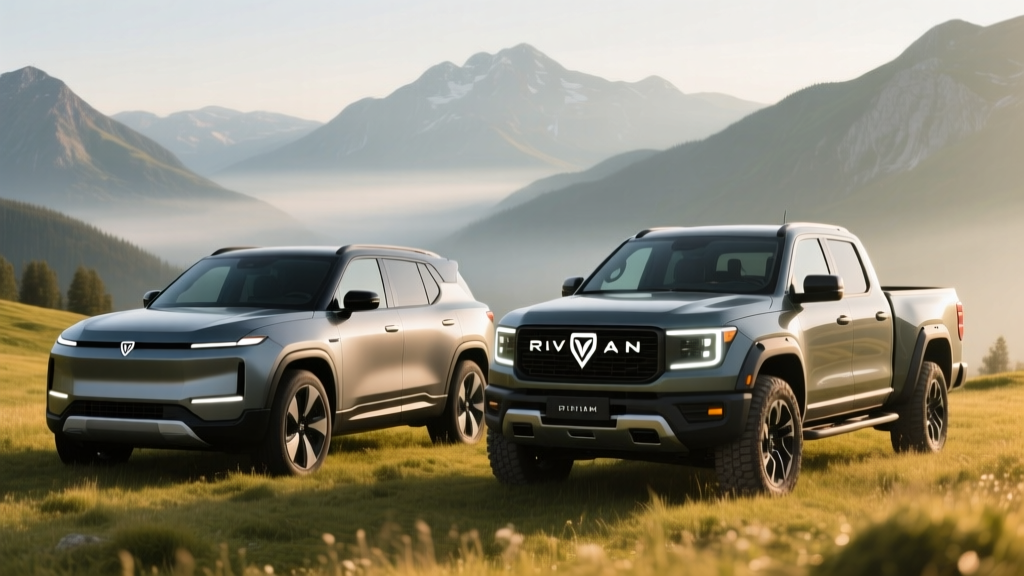
Rivian Branding in 2026: More Than a Compass Logo
Rivian's brand has always sold a lifestyle — overlanding, national parks, weekend trailheads — wrapped around serious electric-truck engineering. But as the 2026 model year matures and the second-generation R1S and R1T settle into production, the question for buyers is less about the campfire imagery and more about whether the hardware, software, and ownership experience back up the premium. This review evaluates Rivian's brand promise against the measurable reality of its two flagship vehicles: range, charging, pricing, tax-credit eligibility, and the tech stack that either justifies or undermines the badge.
2026 R1S and R1T: Quick Specs at a Glance
Rivian now offers three battery configurations across the R1S (three-row SUV) and R1T (pickup). The second-generation architecture moved to a mix of chemistries, including a Standard pack using LFP (lithium iron phosphate) cells for cost and cycle-life advantages, and Large/Max packs using NMC (nickel manganese cobalt) for higher energy density. Below are the headline numbers buyers care about most.
| Spec | Standard (LFP) | Large (NMC) | Max (NMC) |
|---|---|---|---|
| Battery capacity (usable) | ~92 kWh | ~113 kWh | ~141 kWh |
| EPA-estimated range (R1S Dual-Motor) | ~270 mi | ~340 mi | ~410 mi |
| EPA-estimated range (R1T Dual-Motor) | ~270 mi | ~340 mi | ~420 mi |
| 0-60 mph (Dual-Motor) | ~4.5 s | ~4.5 s | ~4.5 s |
| 0-60 mph (Tri-Motor) | N/A | ~3.0 s | ~2.9 s |
| Horsepower (Dual / Tri / Quad) | 533 / 850 / 1025 hp | 533 / 850 / 1025 hp | 533 / 850 / 1025 hp |
| Max DC fast-charge rate | ~200 kW | ~220 kW | ~220 kW |
| 10-80% DCFC time | ~28 min | ~25 min | ~33 min |
| Level 2 home rate | 11.5 kW (~25 mi/hr) | 11.5 kW (~25 mi/hr) | 11.5 kW (~25 mi/hr) |
| Efficiency (R1S, EPA) | ~2.0 kWh/mi | ~2.0 kWh/mi | ~2.1 kWh/mi |
| Towing (max, R1T) | 11,000 lb | 11,000 lb | 11,000 lb |
Sources: fueleconomy.gov, Rivian official specs.
Real-World Range: What the EPA Sticker Doesn't Tell You
EPA estimate: 270–420 mi depending on pack and body style.
Real-world expectation: plan on 230–360 mi in mixed highway driving; subtract another 15–25% in sustained sub-30°F weather or at 80+ mph cruise.
Rivian's boxy silhouette and all-terrain tires (standard on many trims) impose a meaningful aero and rolling-resistance penalty compared to sleeker crossovers like the Hyundai Ioniq 5 or Tesla Model Y. On a flat 70-mph highway run at 65°F, a Max-pack R1S typically delivers 340–370 miles before hitting a 10% state of charge. Push to 80 mph or climb mountain grades and that number compresses toward 300.
Cold weather is the great equalizer. The R1 platform uses a heat pump for cabin and battery thermal management, which mitigates but does not eliminate winter losses. In our experience, 20°F highway driving with the cabin at 70°F knocks 20–25% off the EPA figure. A Max-pack R1T that stickers at 420 miles realistically delivers 315–330 miles in a Minnesota January. Buyers in cold climates should size up to the Large or Max pack rather than rely on the Standard.
Charging: DC Fast, Level 2, and the NACS Transition
The second-generation R1S and R1T ship with the NACS (North American Charging Standard) port native, giving direct plug-and-charge access to Tesla Superchargers — a significant real-world advantage over CCS-only vehicles still reliant on adapters and spotty Electrify America uptime.
| Level | Power | Miles added per hour | Typical use |
|---|---|---|---|
| Level 1 (120V) | ~1.4 kW | ~3 mi/hr | Emergency / trickle |
| Level 2 (240V home) | 11.5 kW | ~25 mi/hr | Daily / overnight |
| DC fast (NACS) | 200–220 kW peak | ~600+ mi/hr (peak) | Road trips |
A critical nuance: peak kW is not sustained kW. Rivian's charge curve holds near peak rate through roughly 40–50% state of charge, then tapers progressively. A Max-pack 10–80% session takes about 33 minutes at a 250+ kW Supercharger; the smaller Standard pack does the same sprint in roughly 28 minutes because there are fewer kWh to push. Preconditioning the battery via the nav-routed preconditioning feature is essential — arriving cold can add 10–15 minutes to a session.
Pricing, Trims, and the Federal Tax Credit Reality
Rivian's pricing has stabilized post-2024 cuts, but the brand still occupies the premium adventure segment. Here's where the trims land for 2026 and how the §30D federal credit applies.
| Model / Trim | Base MSRP | As-tested (typical) | §30D eligible? |
|---|---|---|---|
| R1T Dual-Motor Standard | ~$69,900 | ~$74,000 | Yes (under $80k SUV/truck cap) |
| R1T Dual-Motor Large | ~$75,900 | ~$82,000 | Yes (if under $80k MSRP cap) |
| R1T Tri-Motor Large | ~$99,900 | ~$108,000 | No — exceeds $80k MSRP cap |
| R1S Dual-Motor Standard | ~$74,900 | ~$80,000 | Yes (under $80k SUV cap) |
| R1S Tri-Motor Max | ~$104,900 | ~$115,000 | No — exceeds MSRP cap |
Under current IRS §30D rules, the credit is up to $7,500 but requires:
- MSRP at or below $80,000 for SUVs/pickups (R1T and R1S qualify as trucks/SUVs)
- Buyer AGI under $300k (joint) / $150k (single)
- Battery critical-minerals and component sourcing thresholds, which tighten annually
- Point-of-sale transfer available at participating dealers
Most Dual-Motor Standard and some Dual-Motor Large builds clear the MSRP cap; any Tri-Motor or heavily optioned Max build does not. Always verify current-year sourcing compliance on the IRS page before assuming eligibility — rules shift annually and Rivian's supply chain has been responsive but not static.
Who the Rivian Brand Actually Serves Best
Rivian branding targets the outdoor-active buyer who wants a credible off-road platform without the fuel bill. In practice, the vehicles split into three clear use cases:
- Towing and hauling: The R1T's 11,000-lb rating and the gear tunnel (a lockable, pass-through storage cavity unique to the R1T) make it the most practical electric pickup for boat, camper, or U-Haul duty. Expect a 40–50% range hit when towing at highway speed — plan 180–220 real miles between charges with a trailer.
- Three-row family duty: The R1S offers genuine third-row seating for seven, with ~105 cu ft of total cargo volume behind the front seats (fold second and third rows). Third-row legroom is ~32 inches — adequate for kids, tight for adults on long trips.
- Adventure overlanding: Air suspension with 14.9 inches of ground clearance, tank turns (on Quad-Motor), and built-in air compressor make the platform legitimately trail-capable. This is where Rivian branding earns its keep versus a BMW iX or Mercedes EQE SUV.
Tech, Driver Assists, and the Software Story
Rivian runs its own vertically integrated software stack — no CarPlay or Android Auto, which remains a dealbreaker for some buyers. The 15.6-inch center display is responsive, and OTA updates have been frequent and substantive, adding features like enhanced camp mode, pet mode, and improved route planning. The Driver+ system is a Level 2 SAE driver-assist (hands-on, eyes-on) with lane centering and adaptive cruise; it is competent on highway but not in the same tier as GM's Super Cruise or Ford's BlueCruise for hands-free mapped-road operation. Rivian has signaled an enhanced hands-free system for future OTA, but as of 2026 the driver must remain engaged at all times.
Driver-assist clarification: Rivian Driver+ is SAE Level 2. The driver is legally and operationally responsible for the vehicle at all times. It is not self-driving.
Pros and Cons: Honest Scorecard
Pros
- Class-leading off-road capability among electric SUVs/trucks
- Native NACS with Supercharger access
- R1T gear tunnel is a genuinely unique utility feature
- Strong OTA cadence; software improves year over year
- Competent real-world range on Large/Max packs
Cons
- No Apple CarPlay / Android Auto
- Tri-Motor and Max builds price out of §30D credit
- Aero penalty hurts highway efficiency vs sleeker EVs
- Third-row R1S seating tight for adults
- Service-center footprint still thinner than Tesla or legacy OEMs
Warranty, Ownership Costs, and Resale
Rivian covers the battery and powertrain for 8 years / 175,000 miles on the second-generation platform, with a 70% minimum state-of-health retention threshold — competitive with the industry norm and slightly better in mileage coverage than the 100,000-mile standard from many rivals. Bumper-to-bumper is 5 years / 60,000 miles. Insurance premiums run 15–25% higher than comparable ICE trucks per IIHS and carrier data, reflecting repair cost and parts availability; get a quote before committing.
Verdict: Does Rivian Branding Justify the Premium?
Buy the R1S or R1T if: you need genuine off-road or towing capability, want native Supercharger access, value the adventure-EV identity, and can spec within the $80k MSRP cap for the tax credit.
Look elsewhere if: you prioritize maximum highway efficiency (Ioniq 5, Model Y), need CarPlay, want hands-free Level 2+ driving (Super Cruise, BlueCruise), or your budget only fits a Tri-Motor build that loses the credit.
Rivian's brand has matured from startup curiosity to credible premium OEM. The 2026 R1S and R1T back up the compass badge with real engineering — NACS, heat-pump thermal management, robust air suspension, and a usable range envelope. The branding works because the product now largely delivers on it. The remaining gap is in service density, infotainment ecosystem flexibility, and the pricing ceiling that pushes top trims beyond the federal credit. For the right buyer — outdoors, towing, three-row, or simply wanting something other than a Tesla — Rivian remains the most compelling adventure-EV proposition on the market.
Frequently Asked Questions
What is the real-world range of the 2026 Rivian R1S and R1T?
Expect 230–360 miles in mixed highway driving depending on pack size, with a 15–25% reduction in sub-freezing temperatures or sustained 80+ mph speeds. Max-pack models realistically deliver 340–370 highway miles in mild conditions.
How fast does a Rivian charge at home and on the road?
Level 2 home charging at 11.5 kW adds roughly 25 miles per hour, fully replenishing a Large pack overnight. DC fast charging peaks at 200–220 kW on NACS Superchargers, with 10–80% in 25–33 minutes depending on pack size.
Does the 2026 Rivian qualify for the $7,500 federal tax credit?
Dual-Motor Standard and some Dual-Motor Large builds under the $80,000 MSRP cap can qualify, subject to buyer income limits and IRS battery-sourcing requirements. Tri-Motor and heavily optioned Max builds exceed the MSRP cap and are ineligible. Verify current rules at IRS.gov.
Is Rivian worth buying versus the Tesla Model X, Ford F-150 Lightning, or Chevy Silverado EV?
Rivian wins on off-road capability, R1T utility (gear tunnel), and NACS access. Tesla wins on Supercharger network maturity and software ecosystem. Ford and Chevy win on price and dealer-service density. Pick based on your priority: adventure (Rivian), efficiency/tech (Tesla), or value/service (Ford/Chevy).
What are the biggest pros and cons of Rivian ownership?
Pros: off-road credibility, NACS charging, gear tunnel (R1T), strong OTA updates, premium build. Cons: no CarPlay, top trims lose the tax credit, higher insurance premiums, thinner service network than legacy OEMs.
What is Rivian's battery warranty?
8 years / 175,000 miles with a 70% minimum state-of-health retention guarantee on the second-generation platform.