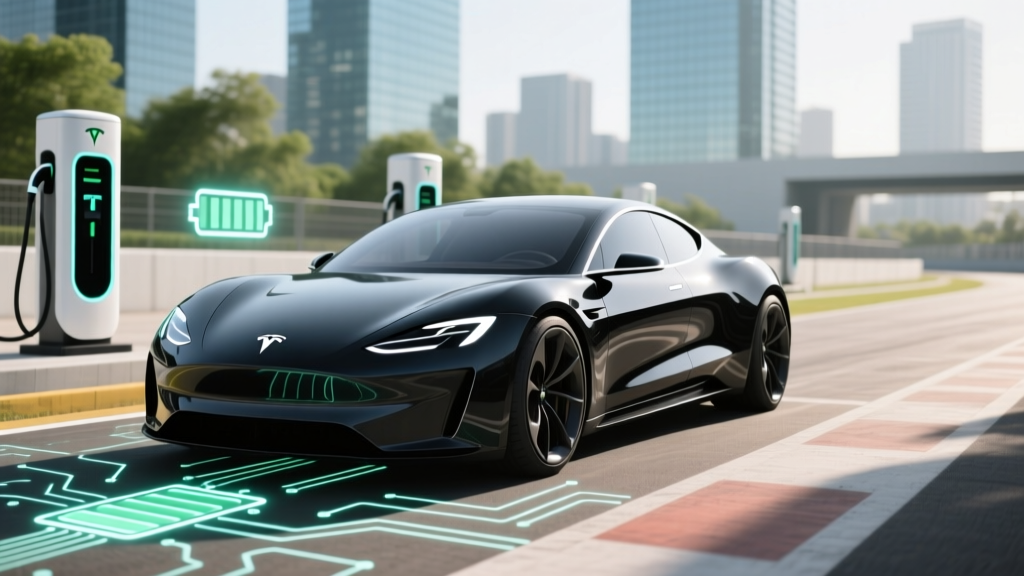
The Tesla Roadster has occupied a peculiar space in the EV landscape since its 2017 unveiling: simultaneously the most anticipated sports car in the industry and the most perpetually delayed. As of early 2026, the latest Tesla Roadster demo delay has once again reshuffled expectations, with Tesla CEO Elon Musk confirming at the Q4 2025 earnings call that the next-generation Roadster remains in engineering validation rather than production-intent tooling. For would-be reservation holders and performance-EV shoppers alike, the question is no longer just how fast will it go — it's when, or if, it will actually ship.
This profile examines every confirmed and estimated specification Tesla has published, contextualizes the Roadster against cars you can actually buy today, and provides a decision framework for whether holding a reservation makes financial and practical sense in 2026.
Announced Specifications at a Glance
| Attribute | Tesla Claim / Estimate | Notes |
|---|---|---|
| EPA Range (target) | 620 miles | Unverified; would require ~200 kWh pack |
| Battery Capacity | ~200 kWh (announced) | Chemistry unconfirmed; likely NMC high-nickel |
| 0-60 mph | 1.9 seconds (base) / 1.1 sec (SpaceX package) | SpaceX package uses cold-gas thrusters |
| Top Speed | 250+ mph | Electronically limited |
| Drivetrain | Tri-motor AWD | 1 front, 2 rear motors (announced) |
| Peak Torque | 10,000 Nm (7,376 lb-ft) wheel torque | Tesla-claimed; includes gear reduction |
| Max DC Fast Charge | Est. 350+ kW | Not confirmed; 200 kWh pack demands high C-rate |
| Base MSRP (announced) | $200,000 | Founder's Series: $250,000 (limited to 1,000 units) |
| Reservation Deposit | $50,000 (fully refundable pre-2019) | Current deposit terms unclear |
Why the Tesla Roadster Demo Delay Keeps Happening
Understanding the latest Tesla Roadster demo delay requires looking at Tesla's production priorities. Since 2022, Tesla has redirected engineering bandwidth toward the Cybertruck production ramp, the next-generation compact platform (projected $25,000 vehicle), and Optimus humanoid robot development. The Roadster, as a low-volume halo product generating minimal revenue relative to its engineering complexity, consistently lands at the bottom of the production queue.
The engineering challenges are non-trivial. A 200 kWh battery pack — roughly double the capacity of a Model S Plaid — introduces severe packaging, thermal management, and weight challenges in a two-seat roadster chassis. For context, the GMC Hummer EV carries a ~212 kWh pack and weighs over 9,000 pounds. Tesla must reconcile a similar energy capacity with a sports-car weight target that Musk has suggested should remain under 4,500 pounds. That physics problem alone explains why the Roadster remains in validation rather than tooling.
The SpaceX cold-gas thruster package, announced as part of an optional performance upgrade, adds another layer of regulatory and engineering complexity. Compressed-air propulsion systems for road vehicles require crash-safety certification and pressure-vessel compliance that no current FMVSS standard directly addresses. This is uncharted regulatory territory.
Real-World Range Expectations vs. the 620-Mile Claim
Even if the 620-mile EPA figure proves optimistic, a 200 kWh pack would still deliver extraordinary range by any standard. The practical question for a sports-car buyer is whether that range justifies the weight, cost, and charging-time penalties of such a large battery.
Charging Speed: What a 200 kWh Pack Demands
Tesla has not published official DC fast-charging specifications for the Roadster, but physics constrains the possibilities. To charge a 200 kWh pack from 10-80% (140 kWh added) in a reasonable timeframe requires enormous power delivery:
| Charging Level | Power (kW) | 10-80% Time (est.) | Notes |
|---|---|---|---|
| Level 1 (120V/12A) | 1.4 kW | ~100 hours | Impractical; emergency/trickle only |
| Level 2 (240V/48A) | 11.5 kW | ~12 hours | Overnight charge feasible but long |
| Level 2 (240V/80A) | 19.2 kW | ~7.5 hours | Requires 100A circuit; panel upgrade likely |
| DC Fast (V4 Supercharger) | 350 kW (peak) | ~25-30 min | Assumes sustained high C-rate; taper above 80% |
| DC Fast (avg sustained) | ~250 kW | ~35-40 min | More realistic average over the curve |
Home Level 2 charging at 11.5 kW (48A on a 60A circuit, the most common residential setup) would add roughly 35-40 miles of range per hour — adequate for daily top-ups but meaning a full 10-80% charge requires leaving the car plugged in overnight and into the next morning. Buyers planning garage installation should budget for a potential electrical panel upgrade to 200A service if their home currently has 100A service, adding $1,500-$3,500 to typical Level 2 installation costs of $800-$2,000.
On the road, Tesla's V4 Supercharger architecture supports up to 350 kW, but sustained charge rates depend on battery temperature, state of charge, and cell chemistry. A 200 kWh pack charged at an average of 250 kW from 10-80% would take roughly 35-40 minutes — respectable for the energy volume but significantly longer than a Model 3 Long Range's 10-80% in approximately 18 minutes at a V3 or V4 stall.
Performance, Interior, and Technology
If the announced 1.9-second 0-60 mph time holds in production (1.1 seconds with the SpaceX thruster package), the Roadster would be the quickest production car ever built, surpassing the Rimac Nevera's 1.85-second run and the Lucid Air Sapphire's 1.89-second time. The tri-motor AWD layout with torque vectoring across all four wheels should translate that power into usable traction, though tire technology — specifically, the contact patch of street-legal rubber — remains the limiting factor at launch.
Interior and cargo specifications remain entirely unpublished. Based on the Roadster's two-seat convertible configuration, buyers should expect:
- Seating: 2 passengers only; no rear seat
- Cargo: Estimated 5-8 cu ft trunk space behind seats (comparable to a Mazda MX-5 Miata's 4.6 cu ft); possible small frunk
- Infotainment: Likely a centrally mounted touchscreen (15-17" estimated), running Tesla's current vehicle OS with navigation, streaming, and over-the-air updates
- Driver Assistance: Tesla Autopilot (SAE Level 2) standard; FSD (Supervised) likely available as an option — note that both require continuous driver attention and are not autonomous driving systems
- Roof: Removable glass roof panel (announced)
Pricing, Tax Credits, and Ownership Economics
Tesla's announced base price of $200,000 (with the limited Founder's Series at $250,000) places the Roadster firmly in hypercar territory. However, federal tax credit eligibility under IRS §30D introduces important constraints:
| Item | Detail |
|---|---|
| Base MSRP (announced) | $200,000 |
| Founder's Series MSRP | $250,000 (1,000 units) |
| §30D MSRP Cap (sedans/sports cars) | $55,000 |
| Federal Tax Credit Eligible? | No — MSRP far exceeds $55,000 cap |
| Buyer Income Cap | $150K single / $300K joint (irrelevant — MSRP disqualifies) |
| Estimated Insurance (annual) | $5,000-$9,000+ (high-performance sports car tier) |
| Battery/Powertrain Warranty | Unannounced; expect 8 yr/100,000-150,000 mi minimum per Tesla precedent |
The IRS §30D clean vehicle credit caps eligible sedans and sports cars at an MSRP of $55,000. At $200,000, the Roadster exceeds this cap by a factor of nearly four. No buyer — regardless of income, battery sourcing, or point-of-sale transfer election — will qualify for the up-to-$7,500 federal credit on this vehicle. State-level incentives vary by jurisdiction; buyers should consult their state's energy or DMV office for local rebates that may apply without MSRP restrictions.
Tesla has not published official warranty terms. Based on current Tesla precedent (Model S: 8 years/150,000 miles battery and drive unit warranty with a minimum 70% capacity retention threshold), the Roadster should receive comparable or better coverage given its price point. However, a 200 kWh battery replacement outside warranty — should it ever be needed — could cost $30,000-$50,000+ at current cell pricing, a significant long-term ownership risk for a vehicle that will likely depreciate steeply in its first three years.
Tesla Roadster vs. Competitors You Can Buy Today
| Spec | Tesla Roadster (announced) | Rimac Nevera | Lucid Air Sapphire | Porsche Taycan Turbo GT |
|---|---|---|---|---|
| Price | $200,000 | $2,200,000 | $249,000 | $230,000 |
| 0-60 mph | 1.9s | 1.85s | 1.89s | 2.1s |
| EPA Range | 620 mi (claimed) | ~300 mi (WLTP ~340) | 427 mi | 269 mi |
| Availability | Not available | Limited production | On sale now | On sale now |
| Seats | 2 | 2 | 5 | 4-5 |
The Lucid Air Sapphire offers 1,024 horsepower, a 1.89-second 0-60 time, 427 EPA miles of range, four-door practicality, and a sub-$250K price — all available for delivery today. The Porsche Taycan Turbo GT brings Weissach-package track credibility, 1,092 hp in launch-control mode, and Porsche's dealer/service network. Both represent real, purchasable alternatives for buyers who refuse to wait indefinitely.
Decision Framework: Wait or Buy Now?
Hold your Roadster reservation if:
- You view the $50,000 deposit as an interest-free option on a potential future collectible
- You already own a daily-driver performance EV and the Roadster would be a weekend/garage car
- You want the absolute maximum range any production EV has ever offered and can accept a 2027+ delivery timeline
- The SpaceX thruster package genuinely excites you and no alternative offers comparable novelty
Buy a Lucid Air Sapphire or Porsche Taycan Turbo GT now if:
- You want a sub-2-second 0-60 EV that you can drive and enjoy this year
- You need more than two seats or meaningful cargo capacity
- You value established dealer service networks and confirmed warranty terms
- You're spending $200K+ and want a vehicle with known depreciation curves and insurance quotes
Pros and Cons
Pros (If It Ships as Announced)
- Unmatched claimed 620-mile range — more than any production EV
- Sub-2-second 0-60 mph (base); sub-1.2s with SpaceX package
- Tri-motor AWD torque vectoring for extraordinary cornering traction
- Tesla Supercharger network access (17,000+ stalls in North America)
- Removable glass roof for open-air driving
- OTA updates and Tesla's software ecosystem
Cons
- Not available — repeated demo delays with no firm production date
- Zero confirmed EPA certification or real-world testing data
- $200,000+ price with no federal tax credit eligibility
- 200 kWh pack means very long home charging times and heavy weight
- Two-seat roadster with minimal cargo — impractical as a primary vehicle
- Insurance costs likely $5K-$9K+ annually
- Tesla service center capacity already strained; hypercar-level service needs uncertain
- $50,000 deposit ties up capital indefinitely with unclear delivery timeline
Frequently Asked Questions
What is the real-world range of the Tesla Roadster?
Tesla claims 620 EPA miles, but this figure has not been independently verified by the EPA. Based on real-world EV efficiency patterns, expect approximately 450-500 miles on the highway at 70-75 mph in moderate temperatures, and 350-400 miles in cold-weather highway driving below freezing. These estimates assume the 200 kWh pack ships as announced.
How fast does the Roadster charge at home and on the road?
At a standard home Level 2 charger (11.5 kW / 48A), a full 10-80% charge would take approximately 12 hours. On a Tesla V4 Supercharger at an estimated 350 kW peak, 10-80% could take 25-30 minutes, though sustained averages closer to 250 kW would push this to 35-40 minutes. Official charging specs have not been published.
Does the Tesla Roadster qualify for the federal EV tax credit?
No. The IRS §30D clean vehicle credit caps eligible sedans and sports cars at $55,000 MSRP. At $200,000, the Roadster exceeds this cap by a wide margin. Buyer income limits and battery-sourcing requirements are irrelevant because the MSRP cap alone disqualifies it. Consult irs.gov for current credit rules.
Is the Roadster worth waiting for vs. buying a Lucid Air Sapphire?
If you need a car now, the Lucid Air Sapphire delivers 1,024 hp, 1.89-second 0-60, 427 EPA miles of range, and four-door practicality for $249,000 — available today with confirmed specs and warranty. The Roadster is worth waiting for only if you specifically want a two-seat convertible, the SpaceX thruster novelty, or the 620-mile range claim, and you're comfortable with an open-ended delivery timeline.
When will the Tesla Roadster actually be available?
Tesla has not provided a firm production start date as of early 2026. The latest demo delay pushes any realistic production timeline to late 2027 at the earliest, with volume deliveries more likely in 2028. Tesla's historical pattern with the Roadster suggests further delays remain possible. The original Roadster was announced in 2017 — nine years ago.
What happens to my $50,000 reservation deposit?
Early reservation holders (pre-2019) placed fully refundable $50,000 deposits. Tesla's current deposit terms and refund policies for newer reservations have not been clearly communicated publicly. Reservation holders should contact Tesla directly and review their reservation agreement for current refund terms. Keeping $50,000 in a high-yield savings account or index fund while waiting would generate meaningful returns over a multi-year delay.