Verdict: The $200,000 Question
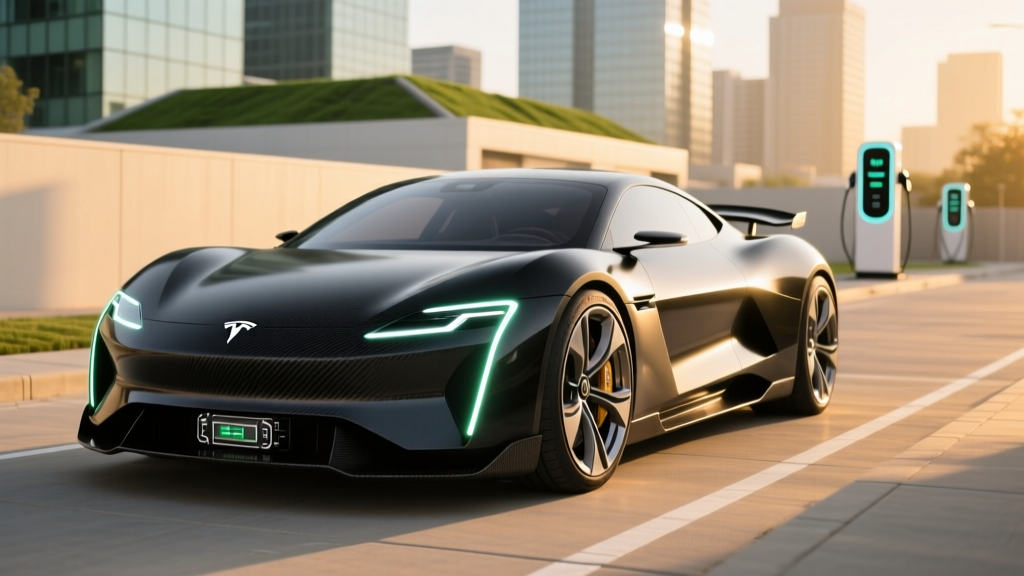
If you've been tracking the Tesla Roadster cost since its 2017 unveiling, you're not alone. Nearly a decade later, Tesla's halo sports car remains one of the most anticipated—and most delayed—vehicles in EV history. As of early 2026, Tesla has confirmed the Roadster is targeted for production, but firm delivery dates and finalized specs remain elusive. What we do have are Tesla's claimed performance targets, a pricing structure that has shifted multiple times, and enough engineering breadcrumbs to assess whether this car justifies its six-figure price tag.
This review compiles every confirmed and estimated data point available, separates Tesla's marketing claims from real-world physics, and gives you the framework to decide if the Roadster belongs on your shortlist—or if competitors like the Rimac Nevera or Lotus Evija offer more tangible value today.
| Spec | Value |
|---|---|
| EPA Range (claimed) | 620 miles (unverified) |
| Battery Capacity | ~200 kWh (estimated, NMC chemistry) |
| 0-60 mph | 1.9 seconds (claimed, with SpaceX package) |
| Top Speed | 250+ mph (claimed) |
| Horsepower | ~1,000+ hp (tri-motor AWD, estimated) |
| Drivetrain | Tri-motor AWD |
| Max DC Fast Charge | ~250-350 kW (estimated, 4680 cells) |
| 10-80% Charge Time | ~25-35 minutes (estimated) |
| Base MSRP | $200,000 (estimated, base model) |
| Founders Series MSRP | $250,000 (limited to first 1,000 units) |
| Federal Tax Credit (§30D) | Not eligible (exceeds MSRP cap) |
| Battery Warranty | 8 years / 150,000 miles (estimated, per Tesla norm) |
Range and Efficiency: Can 620 Miles Be Real?
Tesla has claimed a 620-mile range for the Roadster since 2017. If true, this would obliterate every production EV on the market—the Lucid Air Grand Touring currently leads at 516 EPA miles. But achieving 620 miles requires a battery pack estimated at roughly 200 kWh, which would make it the largest passenger-vehicle battery ever produced.
EPA Claimed: 620 miles
Expected Highway (70 mph): ~480-520 miles (aerodynamic drag at speed reduces efficiency by 15-20%)
Expected Cold Weather (30°F): ~400-450 miles (lithium-ion chemistry loses 15-30% capacity in freezing temps)
Aggressive Driving: ~350-400 miles (this is a sports car; spirited driving will consume energy rapidly)
For context, a 200 kWh pack at an optimistic 3.5 miles/kWh (the Lucid Air achieves roughly 4.0-4.5 mi/kWh but is a sedan optimized for efficiency) yields about 700 miles on paper. A sports car with wider tires, more aggressive aero tuning, and performance-oriented powertrain mapping will sacrifice some of that efficiency. Expect real-world highway range closer to 480-520 miles—still extraordinary, but not 620.
The Roadster is expected to use Tesla's 4680 cell format with NMC (nickel manganese cobalt) chemistry, prioritizing energy density over the LFP (lithium iron phosphate) chemistry used in Tesla's standard-range models. NMC offers higher energy density per kilogram, which is critical in a performance vehicle where weight matters, but it degrades slightly faster over thousands of charge cycles compared to LFP.
Charging Speed: Peak Power and Real-World Expectations
With a battery this large, charging speed is critical. Nobody wants to sit at a Supercharger for two hours. Tesla's 4680 cells and V4 Supercharger architecture should enable impressive charge rates, but physics imposes limits on a 200 kWh pack.
| Charging Level | Power (kW) | Rate | Notes |
|---|---|---|---|
| Level 1 (120V) | ~1.4 kW | ~4-5 mi/hr | Emergency/trickle only; a full charge would take ~6 days |
| Level 2 (240V, 48A) | 11.5 kW | ~35-40 mi/hr | Home charging; overnight adds ~300-350 miles |
| Level 2 (240V, 80A) | 19.2 kW | ~60-65 mi/hr | Tesla Wall Connector max; full charge in ~10-12 hours |
| DC Fast Charge (V4 Supercharger) | ~250-350 kW peak | ~800-1,100 mi/hr (peak) | 10-80% estimated in 25-35 minutes; charge curve tapers significantly above 80% |
Understanding the charge curve: Peak kW is not sustained kW. A 350 kW peak might hold for 10-15 minutes at low state of charge (10-30%), then taper to 200 kW, then 150 kW, then 80 kW as the battery fills. The 10-80% time of 25-35 minutes accounts for this taper. Charging from 80-100% could add another 20-30 minutes due to cell-balancing requirements at high SoC.
For home charging, most Roadster owners will install a Tesla Wall Connector on a 60-amp circuit (delivering 48 amps continuous), adding roughly 300-350 miles overnight. Given the car's range, most owners will only need to charge at home 1-2 times per week under normal driving.
Performance: 1.9 Seconds and the Physics Behind It
Tesla's claimed 1.9-second 0-60 mph time (with the optional SpaceX cold-gas thruster package) would make the Roadster the quickest production car ever built. The standard tri-motor configuration is expected to achieve roughly 2.1-2.4 seconds—still firmly in hypercar territory.
The tri-motor AWD layout (one front, two rear motors) enables precise torque vectoring and the kind of instant torque delivery that only electric powertrains can provide. With an estimated 1,000+ horsepower and all-wheel-drive traction, the Roadster's acceleration will likely exceed what most drivers can physically tolerate without discomfort.
For comparison:
- Rimac Nevera: 1.85s 0-60, 1,914 hp, $2.2M
- Lotus Evija: ~2.8s 0-60, 1,972 hp, $2.3M
- Tesla Model S Plaid: 1.99s 0-60, 1,020 hp, $89,990
The Roadster's performance targets sit in the company of multi-million-dollar hypercars, at roughly one-tenth the price. That's the value proposition Tesla is selling—assuming they can deliver.
Tesla Roadster Cost Breakdown: Pricing, Trims, and Tax Credits
The Tesla Roadster cost structure has been a moving target since 2017. Initial reservations required a $50,000 deposit (later increased to $200,000 for the Founders Series). Here's where pricing stands based on Tesla's most recent communications:
| Item | Amount |
|---|---|
| Base Model MSRP (estimated) | $200,000 |
| Founders Series MSRP (first 1,000) | $250,000 |
| SpaceX Thruster Package (option) | ~$50,000 (estimated add-on) |
| Federal Tax Credit (§30D) | $0 — Not eligible |
| Estimated Out-the-Door (base) | ~$205,000-$215,000 (with destination, taxes, registration) |
Why no federal tax credit? The IRS §30D clean vehicle credit has an MSRP cap of $80,000 for sedans and sports cars. At $200,000+, the Roadster exceeds this cap by a wide margin and is categorically ineligible for the $7,500 federal credit. Additionally, §30D imposes buyer income caps ($300,000 AGI for joint filers) and battery critical-mineral sourcing requirements—but the MSRP cap alone disqualifies the Roadster regardless of buyer income.
For buyers at this price point, the absence of a $7,500 credit is unlikely to be a dealbreaker. However, some states offer their own luxury-EV incentives or registration-fee reductions that may apply. Check your state's energy or DMV website for current programs.
Interior, Cargo, and Daily Usability
The Roadster is a 2+2 sports car (two front seats, two small rear seats), though the rear seats are best suited for children or cargo overflow. Tesla has not published final interior dimensions, but based on the prototype shown at unveiling events:
- Front legroom: Estimated ~42 inches (sports car typical)
- Rear legroom: Estimated ~28-30 inches (minimal; child-seat feasible but tight)
- Cargo (trunk): Estimated ~8-10 cu ft (rear trunk)
- Frunk (front trunk): Estimated ~3-5 cu ft (limited by front motor and electronics)
- Total cargo: ~11-15 cu ft combined
This is a grand-touring sports car, not a family hauler. You'll fit two carry-on bags in the trunk and a laptop bag in the frunk. For road trips, pack light or plan to ship luggage ahead.
Standout Tech Features (expected):
- 17-inch center touchscreen (Tesla's latest horizontal UI)
- Full Self-Driving (Supervised) hardware — SAE Level 2 driver-assist, not autonomous driving
- Glass roof with electrochromic tinting
- Removable glass roof panel (targa-style)
- Over-the-air software updates
- Premium audio system (expected 17+ speakers)
Tesla's Autopilot and Full Self-Driving (Supervised) are SAE Level 2 systems. The driver must remain fully engaged, hands on or near the wheel, eyes on the road, at all times. These systems do NOT make the Roadster self-driving. Autonomous (Level 4) driving is only available in limited robotaxi services like Waymo—not in any consumer vehicle Tesla sells.
Pros, Cons, and Who Should Buy the Roadster
- Projected 620-mile range (best-in-class if delivered)
- 1.9s 0-60 mph with SpaceX package — fastest production car ever
- Tri-motor AWD with torque vectoring
- Access to Tesla Supercharger network (17,000+ stalls in North America)
- Over-the-air updates keep the car improving post-purchase
- Hypercar performance at ~1/10th the price of Rimac/Lotus equivalents
- Still not in production as of early 2026 — delivery timeline uncertain
- $200,000+ price is a significant commitment for an unproven product
- No federal tax credit eligibility (MSRP cap)
- 200 kWh battery means long home-charge times without Level 2 install
- Rear seats are essentially decorative for adults
- Tesla's build-quality reputation (panel gaps, service-center wait times)
- Insurance costs for a $200K+ sports car will be substantial ($500-$900/month estimated)
Who this EV suits best:
- Enthusiast collectors who want the fastest production car ever made and can tolerate production delays
- Grand-touring road trippers who want 500+ real-world miles of range between Supercharger stops
- Tesla loyalists with existing deposits who believe in the company's long-term execution
Who should look elsewhere:
- Family buyers: Rear seats are impractical; consider the Model X or Rivian R1S
- Budget-conscious buyers: The Model S Plaid delivers 1.99s 0-60 for under $90,000
- Immediate-delivery seekers: The Roadster is not yet available; Rimac Nevera and Lotus Evija are shipping now
Is the Tesla Roadster Worth It vs. Competitors?
- You want the absolute longest range of any EV (620 mi claimed, ~500 real-world)
- You want sub-2-second 0-60 performance at the lowest possible price in the hypercar segment
- You value Tesla's Supercharger network and OTA update ecosystem
- You're willing to wait for production to begin and accept early-production risk
- You want a car you can take delivery of today
- You value hand-built Croatian craftsmanship and exclusivity (150 units total)
- Budget is not a concern ($2.2M vs $200K)
- You want 1.99s 0-60 performance right now for under $90,000
- You need four full-size doors and practical cargo space
- You want Tesla's tech stack without the Roadster's price or wait
Warranty and Long-Term Ownership
Tesla has not published Roadster-specific warranty terms, but based on current Model S/X coverage, expect:
- Battery warranty: 8 years / 150,000 miles (whichever comes first), with a minimum 70% capacity retention threshold
- Drive unit warranty: 8 years / 150,000 miles
- Basic vehicle warranty: 4 years / 50,000 miles
A 200 kWh NMC battery pack replacement, should it ever be needed out of warranty, would likely cost $25,000-$40,000 based on current Tesla battery pricing. However, NMC packs in Tesla vehicles have shown degradation curves of roughly 10-12% over 150,000 miles in Model S/X data, suggesting the Roadster's pack should retain 85-90% capacity through the warranty period under normal use.
Maintenance costs will be minimal compared to gas hypercars—no oil changes, no transmission fluid, no spark plugs. Expect to budget for tire replacement (performance tires on a 1,000+ hp car wear quickly; $2,000-$3,500 per set every 10,000-15,000 miles) and cabin air filter service.
Frequently Asked Questions
What is the real-world range of the Tesla Roadster?
Tesla claims 620 miles EPA, but real-world highway driving at 70 mph should yield approximately 480-520 miles. In cold weather (below freezing), expect 400-450 miles. Aggressive driving will reduce range further, potentially to 350-400 miles. These are estimates based on the physics of a ~200 kWh battery in a performance vehicle; final EPA certification has not been published.
How fast does the Roadster charge at home and on the road?
On a Level 2 home charger (11.5 kW / 48A), expect roughly 35-40 miles of range per hour of charging, or about 300-350 miles overnight. On a V4 Supercharger, peak rates of 250-350 kW should deliver a 10-80% charge in approximately 25-35 minutes, though charge speed tapers significantly above 80% SoC.
How much does the Tesla Roadster cost after tax credits?
The Roadster does not qualify for the $7,500 federal EV tax credit under IRS §30D because its MSRP ($200,000+) far exceeds the $80,000 cap for sedans and sports cars. The estimated out-the-door cost is $205,000-$215,000 for the base model, including destination and registration. The Founders Series is $250,000.
Does the Roadster qualify for the federal EV tax credit?
No. The IRS §30D clean vehicle credit limits eligibility to vehicles with an MSRP of $80,000 or less (for sedans, sports cars, and wagons). The Roadster's $200,000+ price disqualifies it entirely, regardless of buyer income or battery sourcing. Some state-level incentives may still apply—check your state energy office for details.
Is the Tesla Roadster worth buying vs. the Rimac Nevera or Lotus Evija?
If you can wait for production and want the best range-to-price ratio in the hypercar segment, the Roadster offers extraordinary value at $200,000 vs. $2.2M for the Nevera. However, the Nevera and Evija are available now with proven, delivered performance. The Roadster remains a promise—albeit a compelling one from a company that has delivered on ambitious targets before (eventually).
What are the biggest pros and cons?
Pros: Unmatched projected range (620 mi), sub-2s 0-60, Supercharger access, relatively affordable for the hypercar segment. Cons: Not yet in production, $200K+ price, no tax credit, uncertain delivery timeline, Tesla build-quality concerns, high insurance costs.
When will the Tesla Roadster actually ship?
As of early 2026, Tesla has not confirmed a firm production start date. Elon Musk has referenced 2026 production timelines at various events, but Tesla has a history of significant delays (the Roadster was originally slated for 2020). Reservation holders should plan for the possibility of further delays and should not sell a current vehicle in anticipation of a specific delivery date.
Note: The Tesla Roadster is an announced vehicle that has not yet entered production as of early 2026. Specifications cited in this article are based on Tesla's public claims, prototype demonstrations, and informed estimates based on Tesla's current technology platform. Final production specs, pricing, and EPA certification may differ. Always verify with Tesla's official Roadster page for the most current information.