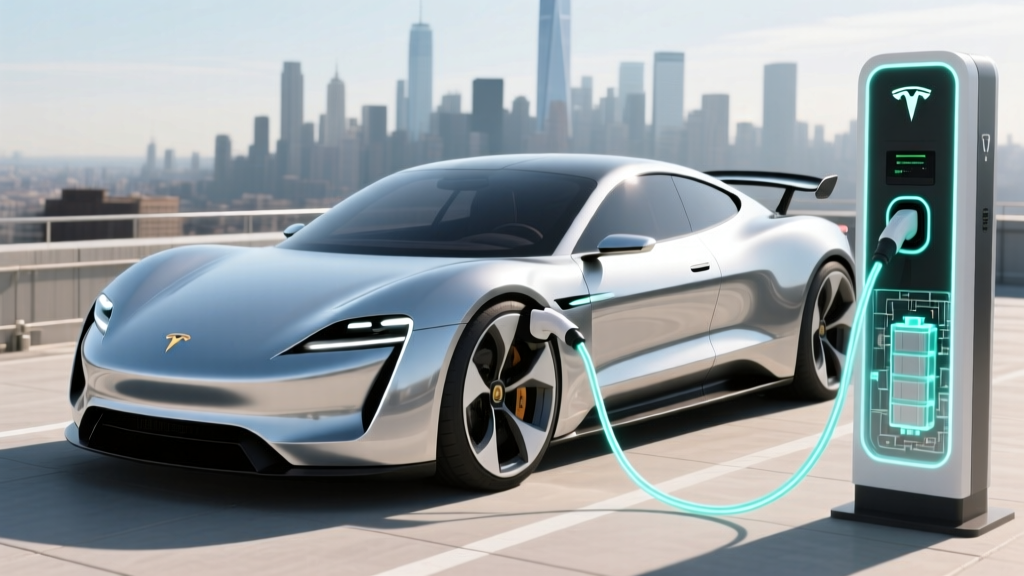
When Elon Musk pulled the tarp off the second-generation Tesla Roadster in November 2017, the numbers sounded like science fiction: a 620-mile range, a 200 kWh battery pack, a 1.9-second 0-60 mph time, and a $200,000 price tag. Nearly a decade later, the vehicle has not entered production. For shoppers searching for the roadster tesla 2017 announcement and wondering whether it is finally buyable in 2026, the short answer is no. This profile breaks down every claimed specification, explains what has changed (and what hasn't), and evaluates whether the Roadster's promised performance still holds up against today's real-world EVs you can actually order.
The 2017 Tesla Roadster at a Glance: Claimed vs. Reality
Tesla unveiled the next-generation Roadster as a halo car meant to shatter every performance benchmark in the EV space. Below are the manufacturer's preliminary specifications as announced. None of these figures have been independently verified by the EPA, NHTSA, or any third-party tester because no production vehicle has been delivered.
| Specification | Claimed (2017 Announcement) | 2026 Status |
|---|---|---|
| EPA Range | 620 miles (unverified) | Not EPA-certified; vehicle unreleased |
| Battery Capacity | 200 kWh (chemistry undisclosed) | Preliminary; no production pack confirmed |
| 0-60 mph | 1.9 seconds | Claimed; unverified |
| 0-100 mph | 4.2 seconds | Claimed; unverified |
| Top Speed | 250+ mph | Claimed; unverified |
| Quarter Mile | 8.8 seconds | Claimed; unverified |
| Drivetrain | AWD (tri-motor: 1 front, 2 rear) | Preliminary |
| Torque (wheel) | 10,000 Nm (~7,376 lb-ft) | Claimed; unverified |
| Seating | 4 (2+2 configuration) | Preliminary |
| Base Price | $200,000 (Founders Series: $250,000) | Expected to increase at launch |
| Reservation Deposit | $50,000 (fully refundable historically) | Tesla has modified deposit terms over time |
Battery and Charging: What We Know (and Don't)
The 2017 announcement specified a 200 kWh battery pack — roughly double the capacity of most long-range EVs on the road today. Tesla never disclosed the cell chemistry (NMC, NCA, or otherwise), form factor, or supplier. Given the pack size and the performance targets, industry analysts widely assume an NMC (nickel manganese cobalt) or NCA (nickel cobalt aluminum) chemistry, as LFP (lithium iron phosphate) cells lack the energy density required to fit 200 kWh into a sports car chassis without excessive weight.
DC Fast Charging (Claimed)
Tesla stated the Roadster would support extremely high DC fast-charge rates, though a specific peak kW figure was never officially published in the 2017 presentation. Given the 200 kWh pack size, even a conservative 0.5C charge rate would mean 100 kW sustained, while a 1C rate would require 200 kW. Tesla's current V4 Supercharger architecture supports up to 350 kW for compatible vehicles, and it is reasonable to expect the Roadster would leverage the highest available Supercharger speeds at launch.
| Charging Level | Expected Power | Estimated Speed | Notes |
|---|---|---|---|
| Level 1 (120V) | ~1.4 kW | ~4-5 mi/hr | Impractical for a 200 kWh pack (140+ hours) |
| Level 2 (240V, 48A) | ~11.5 kW | ~35-40 mi/hr | Full charge in ~17-20 hours |
| Level 2 (240V, 80A) | ~19.2 kW | ~60-65 mi/hr | Requires high-amperage wall connector & circuit |
| DC Fast Charge (est.) | 250-350 kW (projected) | 10-80% in ~30-40 min (est.) | Large pack means longer absolute charge times despite high kW |
A critical reality of EV charging: a 200 kWh battery, even at 350 kW peak, takes substantially longer to fill than a 75 kWh pack at the same rate. The charge curve also tapers significantly above 80% state of charge to protect cell longevity. Expect the 10-80% window to take 30-40 minutes under optimal thermal preconditioning, with the final 20% potentially adding another 45+ minutes.
Performance: The Numbers That Turned Heads
The 2017 Roadster's headline performance claims remain staggering even by 2026 standards:
- 0-60 mph: 1.9 seconds (claimed) — faster than the Rimac Nevera (1.85s verified) and well ahead of the Tesla Model S Plaid (1.99s EPA-verified)
- 0-100 mph: 4.2 seconds — a figure that rivals dedicated hypercars
- Top speed: 250+ mph
- Quarter mile: 8.8 seconds
- Drivetrain: Tri-motor AWD with torque vectoring (one front motor, two rear)
In 2021, Tesla additionally teased a "SpaceX package" with cold-gas thrusters that would allegedly improve braking, cornering, and acceleration — potentially dropping 0-60 below 1.1 seconds. This remains firmly in the realm of concept claims with no production validation.
For comparison, the fastest production EV currently available, the Tesla Model S Plaid, achieves a verified 1.99-second 0-60 at a starting price of approximately $89,990 — less than half the Roadster's projected base price. The Rimac Nevera holds the production-car record at 1.85 seconds but costs over $2 million.
Interior, Technology, and Practicality
Because no production Roadster has been delivered, interior specifications remain based on prototype showings and Tesla's general design trajectory. The 2017 prototype featured:
- Seating: 2+2 layout (two front, two small rear seats) — rear seats likely suitable only for children or cargo overflow
- Removable glass roof: Stowable in the trunk (claimed)
- Infotainment: Expected to use Tesla's latest-generation horizontal touchscreen (likely 15-17 inches), though the exact production spec is unconfirmed
- Driver assistance: Tesla Autopilot hardware expected; FSD (Supervised) capability likely available as an option. Note: Autopilot and FSD are SAE Level 2 driver-assist systems requiring full driver engagement — not self-driving.
Cargo and Passenger Space
As a 2+2 sports car, cargo capacity will be severely limited. The front trunk (frunk) and rear trunk combined are expected to offer roughly 8-12 cubic feet — enough for a weekend bag for two, but not practical for family hauling. Rear-seat legroom in similar sports car configurations (Porsche 911, for reference) typically measures under 30 inches, making it child-seat-only territory.
Pricing, Tax Credit Eligibility, and Ownership Costs
| Item | Amount |
|---|---|
| Base MSRP (announced 2017) | $200,000 |
| Founders Series (first 1,000 units) | $250,000 |
| Expected price at launch (2026+ estimate) | $200,000 - $250,000+ (likely higher) |
| Federal §30D Tax Credit | $0 — exceeds MSRP cap |
| Estimated annual insurance | $6,000 - $12,000+ (sports car/hypercar class) |
| Estimated annual electricity (12,000 mi/yr) | $800 - $1,200 (at $0.15/kWh, ~3 mi/kWh) |
Federal Tax Credit: Why the Roadster Doesn't Qualify
Under current IRS §30D rules, the new clean vehicle credit offers up to $7,500, but vehicles must meet several requirements that the Roadster fails:
- MSRP cap: Sedans, sports cars, and wagons must have an MSRP of $55,000 or less. The Roadster's $200,000+ price tag disqualifies it immediately.
- Buyer income cap: AGI limits of $150,000 (single) / $300,000 (joint) — many Roadster buyers would exceed this regardless.
- Battery sourcing & critical minerals: Must meet escalating domestic-content thresholds. Unverifiable until production specs are finalized.
Bottom line: do not factor any federal tax credit into your Roadster purchase calculus.
How the Roadster Compares to EVs You Can Actually Buy
Since the Roadster remains unreleased, here is how its claimed specs stack up against real, purchasable high-performance EVs in 2026:
| Vehicle | EPA Range | 0-60 mph | Battery (kWh) | Price (MSRP) | Available Now? |
|---|---|---|---|---|---|
| Tesla Roadster (claimed) | 620 mi (unverified) | 1.9s (claimed) | 200 (unverified) | $200,000+ | No |
| Tesla Model S Plaid | 396 mi | 1.99s | ~100 (NMC) | ~$89,990 | Yes |
| Lucid Air Sapphire | 427 mi | 1.89s | 118 (NMC) | $249,000 | Yes |
| Lucid Air Grand Touring | 516 mi | 3.0s | 112 (NMC) | $125,600 | Yes |
| Rimac Nevera | ~340 mi (WLTP) | 1.85s | 120 (NMC) | $2,200,000 | Yes (limited) |
| Porsche Taycan Turbo GT | 326 mi | 2.1s | 105 (NMC) | $230,000 | Yes |
The Lucid Air Sapphire delivers comparable (or better) acceleration at a similar price point and is actually available today. The Model S Plaid offers 95% of the Roadster's claimed acceleration for less than half the price. The Roadster's differentiator — if it ever ships — would be its range: no current production EV comes close to 620 miles.
✅ Pros (If It Ships as Claimed)
- Unmatched claimed range (620 mi) — no production EV comes close
- Supercar-rivaling acceleration (1.9s 0-60) at a fraction of hypercar pricing
- Tri-motor AWD with torque vectoring for exceptional handling
- Tesla Supercharger network access (most reliable DC fast-charging network)
- Removable roof panel for open-air driving
- OTA software updates and Tesla's tech ecosystem
❌ Cons (The Reality)
- Not available for purchase — announced in 2017, still unreleased in 2026
- All specs are unverified manufacturer claims with no EPA/NHTSA certification
- Expected price has likely increased well above $200,000
- No federal tax credit eligibility (MSRP far exceeds $55K cap)
- 200 kWh pack means very long home-charging times (17+ hours on Level 2)
- 2+2 seating and minimal cargo make it impractical for daily use
- Tesla's track record of delayed production timelines (Cybertruck: 4-year delay)
- Insurance costs likely extreme for a 250+ mph electric sports car
Who Is the Tesla Roadster For?
If Tesla eventually delivers the Roadster with anything close to its claimed specifications, the buyer profile is narrow:
- Collector/enthusiast: Someone who already owns multiple vehicles and wants a halo EV for weekend drives and car shows.
- Performance benchmark chaser: A buyer who values having the fastest-accelerating, longest-range EV badge.
- Tesla loyalist with budget: Existing Tesla owners with the means to drop $200K+ on a speculative product.
The Roadster is not suited for: daily commuters (overkill performance, impractical cargo), families (2+2 seating with tiny rear seats), budget-conscious buyers, or anyone who needs a vehicle in a defined timeframe. If you need a high-performance EV today, the Model S Plaid or Lucid Air Sapphire are real, tested, warrantied alternatives.
Warranty and Long-Term Ownership Outlook
Because the Roadster is unreleased, no official warranty terms have been published. For reference, Tesla's current warranty structure for its performance vehicles includes:
- Basic vehicle: 4 years / 50,000 miles
- Battery & drive unit: 8 years / 150,000 miles (with minimum 70% capacity retention)
Given the Roadster's 200 kWh pack and extreme performance use case, battery degradation monitoring will be critical. High-discharge events (repeated 1.9-second launches) generate significant heat, which accelerates cell degradation over time. Tesla's thermal management system is among the best in the industry, but the physics of a 200 kWh pack under hypercar-level loads is uncharted territory. Replacement cost for a 200 kWh pack, if out of warranty, could plausibly exceed $40,000-$60,000 based on current cell pricing trajectories.
Production Timeline: A History of Delays
Understanding the Roadster's timeline is essential for anyone considering a reservation:
- November 2017: Unveiled; reservations opened at $50,000 deposit
- 2019: Production target pushed to 2020
- 2020: Delayed to 2021
- 2021: Delayed to 2022; "SpaceX package" teased
- 2022: Delayed to 2023
- 2023: Musk stated design was "done" but production pushed to 2025
- 2024-2025: Continued vague references; no firm production date confirmed
- 2026: Still not in production; no EPA certification or crash-test data available
This pattern mirrors the Cybertruck (announced 2019, delivered late 2023 — a 4-year delay with significant spec and price changes). Buyers who placed deposits in 2017-2019 have been waiting 7-9 years.
Frequently Asked Questions
What is the real-world range of the Tesla Roadster?
There is no verified real-world range because the vehicle has not entered production. Tesla claims 620 miles, but this figure is not EPA-certified. Based on current EV efficiency benchmarks, a realistic highway range estimate would be 450-500 miles in mild conditions and 350-400 miles in cold weather — if the 200 kWh pack and claimed efficiency targets are achieved.
How fast does the Roadster charge?
Exact DC fast-charge kW figures were never officially published. Based on Tesla's current Supercharger infrastructure (V4 at up to 350 kW), a reasonable projection is 250-350 kW peak, yielding a 10-80% charge in approximately 30-40 minutes. Home Level 2 charging at 11.5 kW (48A) would take roughly 17-20 hours for a full charge of the 200 kWh pack.
How much does the Tesla Roadster cost after tax credits?
The Roadster does not qualify for the federal §30D EV tax credit because its MSRP ($200,000+) far exceeds the $55,000 cap for sedans and sports cars. The effective purchase price is the full MSRP — likely $200,000 to $250,000+ at launch, plus destination fees, taxes, and registration. State incentives vary by jurisdiction; consult your state's official energy office for local programs.
Is the Tesla Roadster worth buying vs. competitors?
You cannot buy one today. If it ships with claimed specs, it would offer unmatched range and acceleration for its price class. However, the Lucid Air Sapphire ($249,000) delivers verified 1.89-second 0-60 times and 427 miles of EPA range right now, with a full warranty and NHTSA crash testing. The Model S Plaid offers similar acceleration for under $90,000. The Roadster is a speculative bet; competitors are proven products.
What are the biggest pros and cons?
Pros: Unrivaled claimed range and acceleration, Tesla Supercharger access, tri-motor AWD, removable roof. Cons: Unreleased after 9 years, all specs unverified, no tax credit, extreme insurance costs, impractical 2+2 layout, very long home-charging times, and a history of production delays.
Does the Tesla Roadster qualify for the federal EV tax credit?
No. Under current IRS §30D rules, the Roadster's MSRP of $200,000+ far exceeds the $55,000 cap for non-SUV/truck body styles. Additionally, many prospective buyers would exceed the income caps ($150,000 single / $300,000 joint filer). Battery sourcing requirements are also unverifiable until production begins.
Can I still place a reservation for the Tesla Roadster?
Tesla's reservation page availability has fluctuated over the years. As of 2026, check Tesla's official Roadster page for current reservation status. Deposit terms, amounts, and refund policies have changed multiple times — read the current agreement carefully before committing funds.