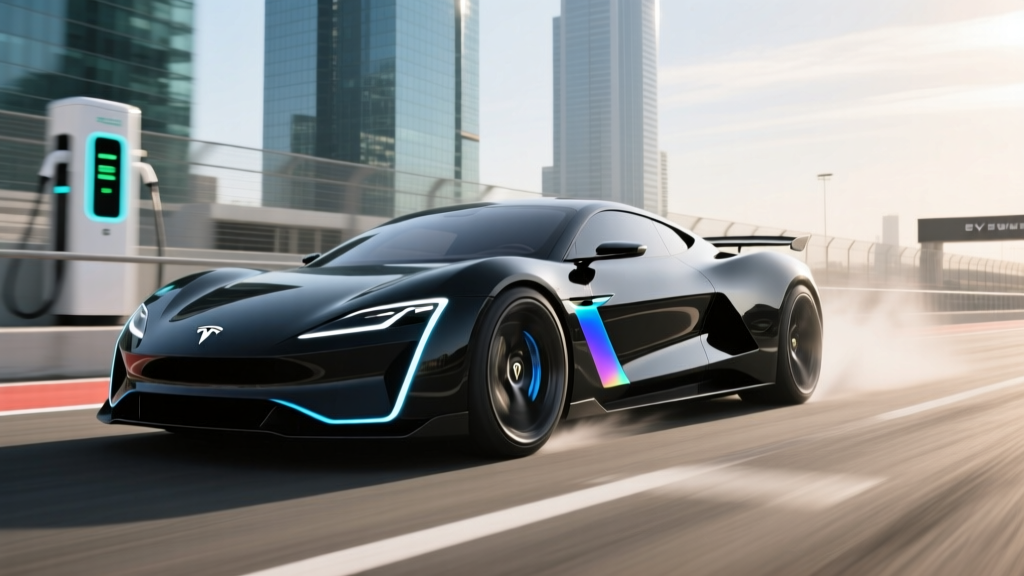
Since Elon Musk first pulled the covers off the second-generation Tesla Roadster in November 2017, the EV world has been waiting — and waiting, and waiting. Now, as Tesla targets a 2026 production window for what it calls the quickest production car ever made, the question enthusiasts and spec-watchers keep asking is simple: what does the Tesla Roadster 0-100 mph sprint actually look like?
Before we get into the numbers, a critical disclosure: the Tesla Roadster is not yet available for purchase or delivery as of early 2026. Tesla has accepted reservations ($50,000 refundable deposits) for years, but serial production has not commenced. Every specification below is based on Tesla's most recently published figures, engineering updates shared at shareholder events, and statements from Tesla executives. Treat these as preliminary and subject to change until EPA certification and customer deliveries begin.
That said, what Tesla has outlined is nothing short of staggering. Here is everything we know — and what real-world physics suggests we should actually expect.
Tesla Roadster Preliminary Specifications at a Glance
| Attribute | Tesla-Published Figure | Notes |
|---|---|---|
| 0–60 mph | 1.9 seconds (base); under 1 sec with SpaceX package | Rollout-subtracted; 1-ft rollout standard drag-strip convention |
| 0–100 mph | ~4.2 seconds (estimated) | Not officially published; extrapolated from 0–60 and ¼-mile data |
| Quarter-mile | 8.8 seconds | Base configuration |
| Top Speed | 250+ mph | Electronically limited expected |
| Wheel Torque | 10,000 N·m (~7,376 lb-ft) | At the wheels, not motor output — a critical distinction |
| Drivetrain | Tri-motor AWD (1 front, 2 rear) | Torque vectoring rear axle |
| Battery Capacity | 200 kWh | Chemistry unconfirmed; likely high-nickel NMC/NCA |
| Range (claimed) | 620 miles | Pre-EPA; real-world figure expected to be significantly lower |
| Max DC Fast Charge | ~350 kW (estimated) | Tesla has not published a confirmed peak kW |
| Base MSRP | $200,000 (announced) | Founders Series was $250,000 (sold out) |
| Production Target | 2026 (slipped multiple times) | Reservations open; no delivery date confirmed |
A few notes on reading this table: Tesla's torque figure is measured at the wheels, which multiplies motor output through the gear reduction. Direct motor-to-motor comparisons with, say, the Rimac Nevera or Lucid Air Sapphire require converting to the same reference point. And the 620-mile range claim deserves the most skepticism of any number here.
The Tesla Roadster 0-100 Question: Parsing the Acceleration Claims
The headline number — 0–60 mph in 1.9 seconds — would make the Roadster the fastest-accelerating production car ever sold, eclipsing the Rimac Nevera (1.85 sec claimed, ~1.97 sec independently tested) and the Pininfarina Battista. But the Tesla Roadster 0-100 mph metric is where the engineering story gets more interesting.
Tesla has not published an official 0–100 mph time. However, using the stated 0–60 of 1.9 seconds and a quarter-mile of 8.8 seconds (at an implied trap speed well above 150 mph), the 0–100 mph split likely falls in the 4.0 to 4.5 second range. For context, the Bugatti Chiron Super Sport hits 100 mph in roughly 4.4 seconds — and that car weighs nearly 4,400 pounds with a quad-turbo W16.
The SpaceX cold-gas thruster package (an optional add-on that uses compressed air stored in tanks behind the rear seats) is claimed to cut the 0–60 time below one second. If Tesla achieves even 0.9 seconds, the 0–100 mph time could theoretically drop below 3 seconds, though the aerodynamic drag penalty above 60 mph makes this an extraordinary engineering challenge. Independent verification will be essential once production cars reach testers.
Battery Chemistry, Pack Design, and Degradation Expectations
Tesla has not confirmed the Roadster's cell chemistry, but the 200 kWh capacity virtually rules out LFP (lithium iron phosphate). LFP's lower energy density (~160 Wh/kg at the cell level vs. ~250–300 Wh/kg for high-nickel NMC/NCA) would make a 200 kWh LFP pack prohibitively heavy for a performance sports car targeting sub-4,000-pound curb weight.
The likely candidate is Tesla's 4680-format cells with a high-nickel cathode (NMC or NCA), potentially using the dry-electrode manufacturing process Tesla has been scaling at its pilot lines. The 4680 form factor offers a packaging and thermal-management advantage: fewer cells, a structural battery pack that contributes to chassis rigidity, and improved cooling surface area.
On degradation: a 200 kWh pack operating at the Roadster's performance levels will see significant thermal stress during hard launches and sustained high-speed driving. Tesla's battery warranty for the Roadster has not been published, but based on the Model S/X precedent, expect 8 years or 150,000 miles with a minimum 70% capacity retention threshold. The larger pack has a degradation buffer advantage — even at 10% loss, you'd still have 180 kWh usable, which is more than most EVs start with.
Charging: What 200 kWh Means at the Plug
Charging a 200 kWh battery is a fundamentally different proposition than topping off a 75 kWh Model 3. Even at Tesla's best-case Supercharger speeds, filling this pack from 10% to 80% will take meaningfully longer than a smaller-battery EV — and home charging will require serious infrastructure.
| Charging Level | Power (kW) | Miles of Range per Hour | 10–80% Time (Est.) |
|---|---|---|---|
| Level 1 (120V / 12A) | ~1.4 kW | ~3–4 mi/hr | Impractical (60+ hours) |
| Level 2 (240V / 48A) | 11.5 kW | ~30–35 mi/hr | ~17–19 hours |
| Level 2 (240V / 80A) | 19.2 kW | ~50–58 mi/hr | ~10–12 hours |
| DC Fast Charge (V4 Supercharger) | ~350 kW (peak est.) | N/A | ~25–35 minutes |
Key takeaways for prospective owners:
- Home charging is mandatory. Even at 19.2 kW (which requires a 100-amp dedicated circuit and likely a panel upgrade to 200A+ service), an overnight charge adds roughly 400–460 miles — sufficient for most daily use but not a full pack replenishment from near-empty.
- DC fast charging will taper hard above 80%. With a 200 kWh pack, the charge curve above 80% could add 15–20 minutes to go from 80% to 100%. Plan road trips around 10–80% stops for efficiency.
- Sustained charge rate matters more than peak kW. A 350 kW peak that drops to 150 kW within 5 minutes is worse than a 250 kW peak that sustains for 20 minutes. Tesla's V4 Supercharger architecture should handle the Roadster's pack, but real-world charge-curve data won't exist until production cars are tested.
Pricing, Tax Credit Eligibility, and Total Cost
The Tesla Roadster was originally announced at a base price of $200,000, with a limited "Founders Series" at $250,000 (the first 1,000 units, now sold out). Given Tesla's history of price adjustments — and the inflation in battery raw materials since 2017 — the final MSRP at launch could differ. Industry analysts expect the base Roadster to land between $200,000 and $250,000 before options.
| Item | Amount |
|---|---|
| Estimated Base MSRP | $200,000 – $250,000 |
| Federal §30D Tax Credit | $0 (not eligible) |
| Reason for Ineligibility | MSRP cap for passenger cars is $55,000; Roadster exceeds this by ~4x |
| Estimated Out-the-Door Cost | $210,000 – $270,000 (incl. destination, taxes, registration) |
Let's be direct about the IRS §30D tax credit rules: the Roadster will not qualify. The federal credit for new clean vehicles has an MSRP cap of $55,000 for sedans and sports cars (and $80,000 for SUVs, pickups, and vans). At four to five times that limit, the Roadster is categorically excluded — regardless of battery sourcing, buyer income, or any other factor.
Additionally, buyer income caps ($300,000 MAGI for joint filers, $150,000 for single filers) would further limit the pool of eligible buyers even if the MSRP cap didn't already disqualify it. State-level incentives vary by jurisdiction; consult your state's energy office or a tax professional for specifics.
Interior, Cargo, and Daily Usability
The Roadster is a 2+2 sports car (two front seats, two small rear seats), though the rear seats are best described as occasional-use or cargo overflow. Tesla has shown a minimalist interior with a large central touchscreen (likely 17 inches, consistent with the refreshed Model S), a yoke-style steering wheel, and a glass roof panel that stows in the trunk.
Concrete cargo and passenger dimensions have not been published, but based on the vehicle's footprint (similar to a Porsche 911 Turbo in overall length) and Tesla's packaging approach:
- Front trunk (frunk): Estimated 3–5 cu ft (limited by the front motor and HVAC components)
- Rear trunk: Estimated 8–12 cu ft (space compromised by battery and optional thruster tanks)
- Total cargo: ~12–17 cu ft — enough for two carry-on bags and a weekend duffel, not much more
- Front legroom: Estimated 42–44 inches (sports car typical)
- Rear legroom: Estimated 28–32 inches (tight; children or groceries only)
This is a halo performance car, not a grand tourer. If you need luggage space for road trips exceeding a weekend, the Model S or Lucid Air will serve you better.
Driver Assistance and Technology
The Roadster is expected to ship with Tesla's latest hardware suite for driver-assistance systems. This includes:
- Tesla Autopilot: Adaptive cruise control, lane centering, automatic emergency braking — standard
- Full Self-Driving (Supervised): Optional upgrade; enables automated lane changes, navigation-based on/off-ramp handling, and traffic-light recognition
Unique to the Roadster:
- SPACEX cold-gas thruster system (optional): Compressed air tanks behind rear seats with nozzles positioned around the car for acceleration, braking, and cornering assistance. Tesla claims it "improves" top speed, braking distance, and cornering grip. Independent validation pending.
- Active aerodynamics: Expected deployable rear wing and underbody management for drag reduction at highway speeds and downforce at track speeds.
- Torque vectoring: Independent rear motors enable millisecond-level torque distribution between left and right rear wheels, improving cornering dynamics beyond what a mechanical limited-slip differential can achieve.
Roadster vs. the Competition: Is It Worth the Wait?
The Roadster doesn't exist in a vacuum. Even at its price point, buyers have options that are actually available today:
| Spec | Tesla Roadster (Announced) | Rimac Nevera | Lucid Air Sapphire | Porsche Taycan Turbo GT |
|---|---|---|---|---|
| 0–60 mph | 1.9 sec | 1.85 sec (claimed) | 1.89 sec | 2.1 sec |
| Range (EPA) | 620 mi (claimed, unverified) | ~300 mi (WLTP ~490 km) | 427 mi | 269 mi |
| Battery | 200 kWh | 120 kWh | 118 kWh | 105 kWh |
| MSRP | ~$200,000 | $2,200,000 | $249,000 | $230,000 |
| Availability | Not yet (2026 target) | Limited production | Available now | Available now |
| Seats | 2+2 | 2 | 5 | 4 |
The Roadster's value proposition, if Tesla delivers on its claims, is clear: Rimac Nevera performance at roughly one-tenth the price, with significantly more range and practicality (barely). But that "if" is doing enormous work. Tesla has a documented history of delayed timelines — the Roadster was originally promised for 2020, then 2022, then 2025, and now 2026.
The Lucid Air Sapphire is the rational alternative: it's available today, delivers 1,234 horsepower, hits 60 mph in 1.89 seconds, and offers 427 miles of EPA-certified range with five seats and a real trunk. At $249,000, it's in the same price neighborhood — and you can drive it home this month.
- Potentially the quickest production car ever built (0–60 under 2 sec)
- 620-mile claimed range dwarfs every competitor
- Tri-motor AWD with torque vectoring for world-class handling
- Tesla Supercharger network access for road-trip capability
- 2+2 seating offers more practicality than 2-seat hypercars
- Fraction of the cost of a Rimac Nevera or Pininfarina Battista
- Not yet available — years of delays erode trust
- Specs are unverified; no independent testing exists
- No federal tax credit eligibility (MSRP far exceeds §30D cap)
- 200 kWh pack means long charge times even at V4 Superchargers
- Rear seats are token; cargo space is minimal
- Insurance costs for a $200K+ EV with 10,000 N·m of torque will be extreme
- SpaceX thruster package adds complexity and unproven technology
Who Should Consider the Tesla Roadster?
The Roadster is not a rational purchase. It's a statement car — a technological showcase that exists to push the boundaries of what an electric vehicle can do. Here's who it suits:
- The patient enthusiast: You've held a $50K reservation deposit for years and you're willing to wait for Tesla to deliver. You want the bragging rights of owning the quickest car on the planet.
- The Tesla loyalist: You've owned a Model S Plaid, you live in the Tesla ecosystem, and you want the flagship. Supercharger access and OTA updates matter to you.
- The collector: You buy limited-production vehicles as assets. The Roadster's cultural significance (the car that proved EVs can out-accelerate any ICE hypercar) gives it long-term collector appeal.
Who should look elsewhere:
- Anyone who needs a car this year. The Roadster may not deliver in 2026. The Lucid Air Sapphire, Porsche Taycan Turbo GT, and even the Model S Plaid are available now.
- Practical daily drivers. Cargo space is limited, ride quality will be firm, and insurance will be punishing.
- Budget-conscious buyers. At $200K+ with no tax credit, this is firmly in luxury/exotic territory.
Choose the Lucid Air Sapphire if: You want near-identical performance (1.89 sec 0–60), real EPA-certified 427-mile range, four-door practicality, and delivery within weeks — not years.
Choose the Porsche Taycan Turbo GT if: You prioritize build quality, dealer service infrastructure, track-proven dynamics, and a brand with decades of motorsport heritage over raw straight-line numbers.
Frequently Asked Questions
What is the Tesla Roadster's real-world range?
Tesla claims 620 miles from the 200 kWh pack, but this figure has not been EPA-certified. Based on real-world efficiency patterns for high-performance EVs, expect 380–450 miles at highway speeds (70–80 mph) and 280–340 miles in cold weather (below freezing). The actual EPA sticker, once published, will likely fall between 450 and 550 miles if Tesla's aerodynamic and efficiency claims hold.
How fast does the Tesla Roadster charge?
Tesla has not published official DC fast-charge specs, but based on V4 Supercharger architecture and the pack size, expect a peak charge rate around 300–350 kW. A 10–80% charge would take approximately 25–35 minutes at a V4 Supercharger. Home Level 2 charging at 11.5 kW (48A) adds roughly 30–35 miles per hour; at 19.2 kW (80A), it adds roughly 50–58 miles per hour.
Does the Tesla Roadster qualify for the federal EV tax credit?
No. Under IRS §30D rules, the federal clean vehicle credit has an MSRP cap of $55,000 for passenger cars (including sports cars). The Roadster's estimated $200,000+ price tag makes it categorically ineligible, regardless of battery sourcing or buyer income.
Is the Tesla Roadster 0-100 mph time confirmed?
No. Tesla has published a 0–60 mph time of 1.9 seconds and a quarter-mile of 8.8 seconds, but has not officially released a 0–100 mph figure. Based on those data points, the 0–100 mph time is estimated at 4.0–4.5 seconds for the base configuration. The optional SpaceX thruster package could reduce this further, but no verified testing has been conducted.
When will the Tesla Roadster actually be available?
Tesla has targeted 2026 for production, but this date has slipped multiple times since the original 2020 announcement. Reservations remain open with a $50,000 deposit. Until Tesla begins customer deliveries and the EPA publishes official certification data, all specs and timelines should be treated as preliminary.
How does the Roadster compare to the Tesla Model S Plaid?
The Model S Plaid hits 0–60 in 1.99 seconds, offers 396 miles of EPA range, seats five, and starts at ~$89,990 — all available today. The Roadster promises more speed, more range, and a lighter, lower sports-car form factor, but at more than double the price and with no confirmed delivery date.