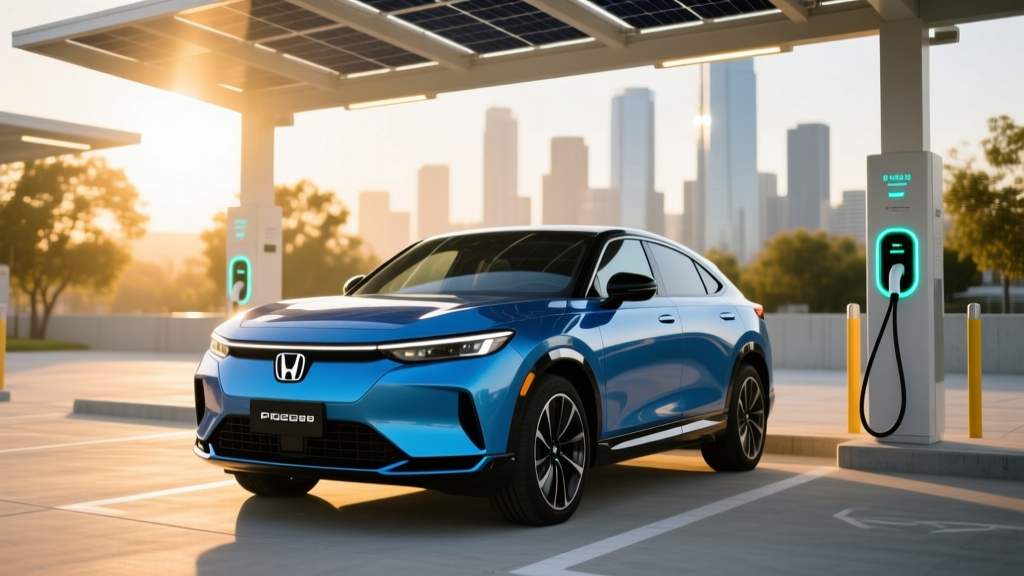
If you've been tracking 2025 Honda Prologue discounts, you're not alone. Honda's first mass-market electric SUV has rapidly become one of the most incentivized EVs on the market, stacking federal tax credits, Honda's own lease cash, and dealer discounts to bring the effective price well below its MSRP. For buyers who want a practical, midsize electric crossover without the Tesla badge, the Prologue has quietly become a compelling deal — but only if you understand how the incentives layer together.
We've driven the Prologue, charged it on multiple networks, and dug into the pricing mechanics so you don't have to. Here's everything you need to know about range, charging, real-world efficiency, and exactly how much you can save.
2025 Honda Prologue Pricing, Incentives, and Discounts Breakdown
The 2025 Prologue is available in three trims — EX, Touring, and Elite — with front-wheel drive (single motor) or all-wheel drive (dual motor). Honda has aggressively positioned this SUV against rivals like the Hyundai Ioniq 5, Ford Mustang Mach-E, and Chevrolet Equinox EV, and the discount environment reflects that competitive pressure.
| Trim / Drivetrain | Base MSRP | Federal §30D Credit | Honda Lease Cash* | Effective Price (Purchase) | Effective Lease From* |
|---|---|---|---|---|---|
| EX FWD | $47,400 | Up to $7,500 | Up to $11,000 | ~$39,900 | ~$249/mo |
| EX AWD | $49,400 | Up to $7,500 | Up to $11,000 | ~$41,900 | ~$279/mo |
| Touring FWD | $51,700 | Up to $7,500 | Up to $11,000 | ~$44,200 | ~$319/mo |
| Touring AWD | $53,700 | Up to $7,500 | Up to $11,000 | ~$46,200 | ~$349/mo |
| Elite AWD | $57,900 | Up to $7,500 | Up to $11,000 | ~$50,400 | ~$419/mo |
*Honda lease cash amounts vary by region and month. Lease deals often route the federal credit through the lessor (Honda Financial Services) as a capitalized-cost reduction, which is how you see sub-$300/mo lease offers. Always confirm current incentives with your local dealer.
Federal Tax Credit Eligibility (§30D)
The 2025 Honda Prologue qualifies for the full $7,500 federal EV tax credit under IRS §30D, provided you meet the following criteria:
- MSRP cap: Prologue MSRP is under the $80,000 SUV cap ✓
- Buyer income cap: AGI must not exceed $150,000 (single), $225,000 (head of household), or $300,000 (joint filing)
- Battery sourcing: Prologue uses GM's Ultium platform — battery components and critical minerals meet 2025 phase-in thresholds ✓
- Point-of-sale transfer: You can transfer the credit to the dealer at purchase for an immediate $7,500 price reduction, or claim it on your tax return
- New vehicle only: Must be purchased new; used Prologues fall under a separate §25E credit (up to $4,000)
Source: IRS.gov — Credits for New Clean Vehicles. Consult a tax professional for your specific eligibility.
Range, Battery, and Efficiency: What the EPA Says vs. Reality
The 2025 Prologue is built on General Motors' Ultium BEV3 platform (shared with the Chevrolet Blazer EV and Cadillac Lyriq), which gives it a proven battery architecture and competitive range figures.
| Spec | EX / Touring FWD | EX / Touring AWD | Elite AWD |
|---|---|---|---|
| Usable battery capacity | 85 kWh (NMC) | 85 kWh (NMC) | 85 kWh (NMC) |
| EPA estimated range | 302 miles | 288 miles | 273 miles |
| EPA efficiency (combined) | 99 MPGe (34 kWh/100mi) | 95 MPGe (35 kWh/100mi) | 92 MPGe (37 kWh/100mi) |
| Real-world highway range* | ~255–270 miles | ~240–255 miles | ~225–245 miles |
EPA range is measured on a mixed city/highway cycle. Expect highway-only driving at 70+ mph to reduce range by 10–15% compared to the EPA sticker. In cold weather (below 32°F), battery efficiency drops further — plan for 15–25% range loss in winter conditions, especially without preconditioning. The Prologue does include battery preconditioning for DC fast charging, which helps in cold weather, but cabin heating still draws significantly from the pack. For a 300-mile EPA FWD model, budget roughly 250 miles of real-world highway range in mild weather, and ~220 in freezing temperatures.
Charging Speed: DC Fast Charging and Home Level 2
Charging speed is where the Prologue's Ultium architecture shows its strengths — and one notable limitation. Here are the exact numbers:
| Charging Level | Power / Rate | Time / Miles Added |
|---|---|---|
| Level 1 (120V household outlet) | ~1.4 kW | ~3–4 miles per hour |
| Level 2 (240V home/public AC) | 11.5 kW (onboard charger max) | ~29 miles per hour; full charge in ~9 hours |
| DC Fast Charging (peak) | 155 kW peak | 10–80% in approximately 34 minutes |
| DC Fast Charging (sustained average) | ~100–110 kW average to 80% | ~170 miles added in 20 minutes |
The Prologue's 155 kW peak DC charge rate is respectable but not class-leading. The Hyundai Ioniq 5, for comparison, peaks at 240 kW on an 800V architecture and hits 10–80% in about 18 minutes. The Prologue's charge curve holds near peak through roughly 40% SoC, then tapers progressively. You'll see the most benefit from DC fast charging between 10–60% — above 80%, charging slows dramatically, as it does in all EVs, but the taper is more pronounced here.
Home charging tip: The 11.5 kW onboard charger means a 48-amp Level 2 home circuit (hardwired, 60-amp breaker) will deliver the Prologue's maximum AC charge rate. A standard 32-amp Level 2 unit (like many plug-in home chargers) will deliver about 7.7 kW, adding roughly 20 miles per hour — still plenty for overnight replenishment. Source: Honda Prologue Official Specs.
Performance, Drivetrain, and Driving Impressions
The Prologue offers two powertrain configurations:
| Spec | FWD (Single Motor) | AWD (Dual Motor) |
|---|---|---|
| Horsepower | 212 hp | 288 hp |
| Torque | 236 lb-ft | 333 lb-ft |
| 0–60 mph | ~7.8 seconds | ~5.8 seconds |
| Drivetrain | Front-wheel drive | eAWD (dual motor) |
| Towing capacity | 1,500 lbs | 1,500 lbs |
The AWD dual-motor variant is the one to drive if you want genuine acceleration punch — 288 hp and 333 lb-ft of instant torque make merging and passing effortless. The FWD model is adequate for commuting but feels its weight (roughly 5,000 lbs) when asked for quick acceleration from a stop.
Ride quality is a highlight: the Prologue uses a multilink rear suspension and delivers composed, quiet highway cruising that feels more premium than its price suggests. The steering is light and low-effort — ideal for parking but not engaging on back roads. Regenerative braking offers multiple levels selectable via paddle shifters, including a near-one-pedal-driving mode at the strongest setting, though it doesn't come to a complete stop without touching the brake pedal.
Interior, Cargo Space, and Technology
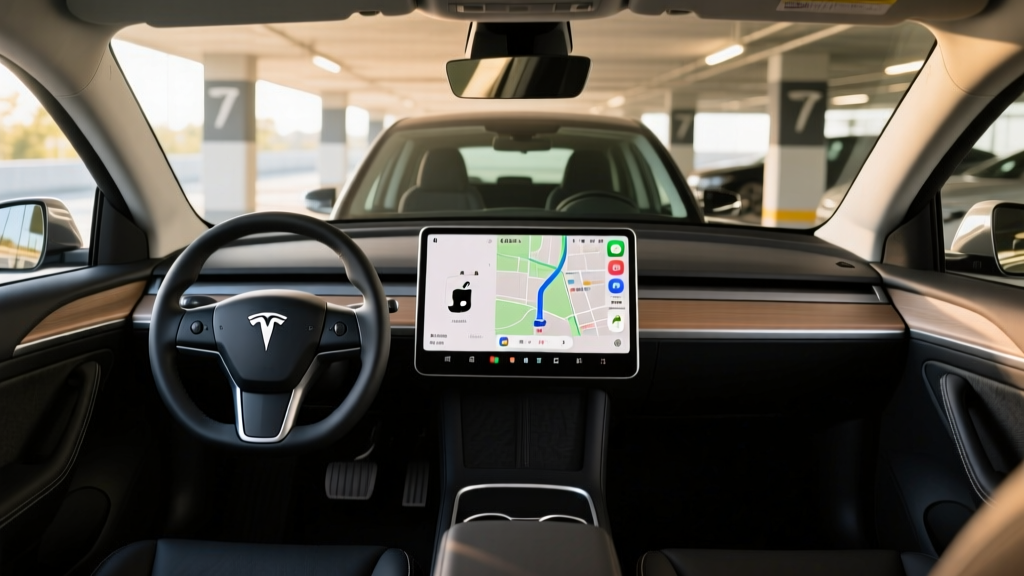
The Prologue's cabin reflects its GM underpinnings, which means the infotainment system is Google Built-in (the same platform used in the Chevrolet Blazer EV and Cadillac Lyriq). This is a significant differentiator from Honda's typical in-house infotainment.
Interior Dimensions and Cargo
| Measurement | Specification |
|---|---|
| Front headroom | 40.0 inches |
| Front legroom | 41.4 inches |
| Rear headroom | 38.5 inches |
| Rear legroom | 37.5 inches |
| Cargo volume (behind rear seats) | 25.2 cu ft |
| Cargo volume (rear seats folded) | 57.7 cu ft |
| Front trunk (frunk) | Not available |
Rear-seat space is generous — 37.5 inches of legroom comfortably fits adults on longer trips. Cargo volume is competitive with the class, though the lack of a frunk (front trunk) means you lose the bonus storage that rivals like the Ioniq 5 and Mach-E offer. A flat load floor with seats folded makes the 57.7 cu ft max cargo area practical for furniture or camping gear.
Tech and Driver Assistance
- Infotainment: 11.3-inch touchscreen (EX) or 11.3-inch with Google Built-in (Touring/Elite), wireless Apple CarPlay and Android Auto, Google Maps navigation with real-time charging routing
- Instrument cluster: 11.0-inch digital driver display
- Honda Sensing suite: Adaptive cruise control with low-speed follow, lane-keeping assist, collision mitigation braking, road sign recognition, blind-spot monitoring
- Available features: Head-up display (Elite), 12-speaker Bose premium audio (Touring/Elite), heated and ventilated front seats, panoramic moonroof (Elite)
- Driver assist level: SAE Level 2 — the Honda Sensing system requires continuous driver supervision. This is not a hands-free or self-driving system.
The Google Built-in infotainment is snappy and intuitive, with native Google Assistant voice control and Google Maps that automatically plans routes around charging stops. However, some Honda loyalists may find the departure from Honda's traditional interface jarring — and the lack of a physical volume knob is a recurring complaint.
Warranty Coverage and Battery Longevity
| Coverage Type | Term |
|---|---|
| Limited vehicle warranty | 3 years / 36,000 miles |
| Powertrain warranty | 5 years / 60,000 miles |
| Battery pack warranty | 8 years / 100,000 miles (10 years / 150,000 miles in CARB states) |
| Battery capacity retention guarantee | Minimum 70% capacity over warranty period |
| Roadside assistance | 3 years / 36,000 miles |
The battery warranty is competitive and backed by GM's Ultium platform, which has shown strong early durability data across the Lyriq and Blazer EV fleets. The NMC (nickel manganese cobalt) chemistry in the Prologue's pack offers high energy density but benefits from not being routinely charged to 100% — set your daily charge limit to 80–90% for optimal long-term State of Health (SoH). The 70% retention threshold over 8 years/100,000 miles is industry-standard.
How the Prologue Stacks Up Against Competitors
The Prologue competes in the most crowded segment of the EV market. Here's how it compares on the metrics that matter:
| Spec | Honda Prologue AWD Touring | Hyundai Ioniq 5 SEL AWD | Ford Mustang Mach-E Premium AWD | Chevrolet Equinox EV 3RS AWD |
|---|---|---|---|---|
| Base MSRP | $53,700 | $52,600 | $53,995 | $48,600 |
| EPA range (AWD) | 288 mi | 290 mi | 290 mi | 307 mi |
| Battery (usable kWh) | 85 kWh (NMC) | 77.4 kWh (NMC) | 91 kWh (NMC) | 85 kWh (NMC) |
| Peak DC charge rate | 155 kW | 240 kW (800V) | 150 kW | 150 kW |
| 10–80% DC charge time | ~34 min | ~18 min | ~38 min | ~35 min |
| 0–60 mph | 5.8 sec | 5.0 sec | 5.1 sec | 6.2 sec |
| Horsepower | 288 hp | 320 hp | 346 hp | 288 hp |
| Federal tax credit | $7,500 | $7,500 | $3,750* | $7,500 |
| Cargo (rear seats up) | 25.2 cu ft | 27.2 cu ft | 29.7 cu ft | 26.4 cu ft |
*Mach-E qualifies for $3,750 under 2025 §30D rules due to partial battery-sourcing compliance. Verify at fueleconomy.gov.
The Prologue's advantage isn't in any single spec — it's in the combination of competitive range, strong incentives, Honda's dealer network, and ride comfort. If fast-charging speed is your priority, the Ioniq 5 wins decisively. If cargo space matters most, the Mach-E has the edge. But for buyers who want a comfortable, well-built family EV with the deepest discount stack available, the Prologue's incentive environment is hard to beat.
Who Should Buy the 2025 Honda Prologue?
- Commuters who charge at home nightly and need 250+ real-world miles
- Families wanting a quiet, comfortable ride with generous rear-seat space
- Honda loyalists transitioning to electric who want familiar dealer service
- Lease shoppers who can exploit stacked incentives for sub-$300/mo payments
- Buyers in CARB states who get the extended 10-year battery warranty
- You road-trip frequently and need the fastest possible DC charging (Ioniq 5's 800V system is significantly faster)
- You need a frunk for extra cargo or frequent maximum cargo space (Mach-E has more)
- You want hands-free highway driving (Ford BlueCruise and GM Super Cruise offer hands-free Level 2; Honda Sensing does not)
- You tow more than 1,500 lbs (the Prologue's tow rating is low for its class)
2025 Honda Prologue — Pros and Cons at a Glance
- Deep discount stacking: up to $7,500 federal + up to $11,000 Honda lease cash
- 302-mile EPA range (FWD) is competitive for the segment
- Quiet, composed ride quality that punches above its price
- Google Built-in infotainment with native charging navigation
- Generous rear-seat legroom (37.5 in.)
- Strong battery warranty with 70% retention guarantee
- Full $7,500 §30D tax credit eligibility with point-of-sale transfer
- 155 kW peak DC charging is slower than class leaders (Ioniq 5: 240 kW)
- No front trunk (frunk) — lost cargo opportunity
- 1,500-lb towing capacity is low for a midsize SUV
- Infotainment lacks a physical volume knob
- No hands-free driving mode — Honda Sensing requires hands on wheel at all times
- FWD model feels underpowered for the vehicle weight
- Cold-weather range loss is significant without active battery heating
Frequently Asked Questions
What is the real-world range of the 2025 Honda Prologue?
The FWD Prologue is EPA-rated at 302 miles, but expect approximately 255–270 miles on the highway at 70+ mph in mild weather. In cold weather (below freezing), plan for 220–240 miles of real-world range. AWD models drop to 288 EPA miles (roughly 240–255 real-world highway).
How fast does the Prologue charge at home and on DC fast chargers?
At home on a Level 2 (240V) charger, the Prologue accepts up to 11.5 kW, adding about 29 miles per hour and fully charging overnight in roughly 9 hours. On DC fast chargers, it peaks at 155 kW, reaching 10–80% in approximately 34 minutes. The charge curve tapers significantly above 60% SoC.
How much does the 2025 Honda Prologue cost after tax credits?
The base EX FWD starts at $47,400 MSRP. After the $7,500 federal §30D credit (via point-of-sale transfer), the effective purchase price drops to approximately $39,900. Lease deals have been advertised as low as $249/month with stacked Honda lease cash applied as a cap-cost reduction. Actual pricing varies by dealer and region.
Does the 2025 Honda Prologue qualify for the full $7,500 federal EV tax credit?
Yes, the Prologue qualifies for the full $7,500 under current IRS §30D rules. Its MSRP is well under the $80,000 SUV cap, and its Ultium battery meets 2025 critical-mineral and battery-component sourcing requirements. However, buyer income caps apply: $150K single / $225K head of household / $300K joint AGI. You can transfer the credit to the dealer at purchase for an immediate price reduction. Confirm details at IRS.gov.
Is the Honda Prologue worth buying over the Hyundai Ioniq 5 or Ford Mach-E?
It depends on your priorities. If charging speed and road-trip convenience matter most, the Ioniq 5 is objectively better (240 kW peak, 18-minute 10–80%). If cargo space and a sportier drive are key, the Mach-E has the edge. But if you value ride comfort, deep incentive stacking, Honda dealer familiarity, and strong value after credits, the Prologue is arguably the best deal in the segment right now — especially on lease.
Does the Prologue have a frunk?
No. Unlike the Ioniq 5 and Mach-E, the Prologue does not have a front trunk. All cargo space is in the rear (25.2 cu ft with seats up, 57.7 cu ft folded).
Can the Prologue tow?
Yes, but modestly. The Prologue is rated for 1,500 lbs of towing capacity across all trims — sufficient for a small utility trailer or a pair of dirt bikes, but not enough for most boat trailers or campers. If you need serious towing, consider the Rivian R1S or Ford F-150 Lightning.