If you're researching a Tesla in Rhode Island, you're navigating a unique EV landscape. The Ocean State is compact—roughly 48 miles long and 37 miles wide—making daily commutes short by national standards. But New England winters, a growing but still maturing public charging network, and shifting federal incentive rules mean your Tesla experience here will differ from an owner in California or Texas. This guide covers the 2026 Tesla lineup with Rhode Island ownership in mind: real-world range in cold weather, local Supercharger and destination charging access, home installation realities in older New England homes, and exactly which models qualify for the §30D federal tax credit.
The 2026 Tesla Lineup: What's Available in Rhode Island
Tesla sells four core models in the U.S. for the 2026 model year, all available for delivery to Rhode Island addresses via the company's direct-to-consumer model. Rhode Island has no traditional Tesla dealerships—service is handled through mobile rangers, the Providence-area service center, and the Norwood, MA facility just across the border.
| Model | Trim | EPA Range | Battery (kWh Usable) | Chemistry | 0-60 mph | Drivetrain | Base MSRP |
|---|---|---|---|---|---|---|---|
| Model 3 | RWD | 363 mi | ~60 kWh | LFP | 5.8s | RWD | $38,990 |
| Model 3 | Long Range AWD | 363 mi | ~79 kWh | NMC | 4.2s | Dual-Motor AWD | $45,490 |
| Model 3 | Performance | 341 mi | ~79 kWh | NMC | 2.9s | Dual-Motor AWD | $52,990 |
| Model Y | Long Range AWD | 320 mi | ~79 kWh | NMC | 4.8s | Dual-Motor AWD | $46,630 |
| Model Y | Performance | 303 mi | ~79 kWh | NMC | 3.5s | Dual-Motor AWD | $51,490 |
| Model S | Long Range | 402 mi | ~100 kWh | NMC | 3.1s | Dual-Motor AWD | $79,990 |
| Model X | Long Range | 348 mi | ~100 kWh | NMC | 3.8s | Dual-Motor AWD | $84,990 |
Sources: fueleconomy.gov, Tesla.com. Specifications reflect 2026 model year. Prices exclude $1,390 destination fee.
Real-World Range in Rhode Island's Climate
The EPA range figures above are tested under controlled conditions. Rhode Island's climate introduces two significant variables: cold-weather battery performance and the state's highway-heavy commute patterns along I-95 and Route 1.
EPA Sticker: 363 mi (Model 3 Long Range AWD)
Summer mixed driving: ~330-345 mi (achievable with moderate speeds)
Highway (70-75 mph sustained, I-95 corridor): ~280-310 mi
Winter (20-35°F, with cabin heat): ~240-280 mi (30-35% reduction typical for LFP; 20-25% for NMC with heat pump)
Worst-case cold highway: ~220-250 mi (sub-20°F, high speed, defrost)
All 2026 Tesla models include a heat pump, which recovers waste heat from the drivetrain to warm the cabin—significantly reducing winter range loss compared to older resistive-heater EVs. However, LFP chemistry (used in the Model 3 RWD) is more susceptible to cold-weather range reduction and slower charging in freezing temperatures than NMC.
For Rhode Island's geography, even the reduced winter range is practical. A Providence-to-Newport round trip is roughly 65 miles. Providence to Westerly is about 50 miles one way. You can complete nearly any in-state commute multiple times before needing to charge. The range question matters more for trips to Boston, New York, or ski areas in Vermont and New Hampshire.
Charging Infrastructure: Superchargers, Home Setup, and Rhode Island Realities
DC Fast Charging Speeds
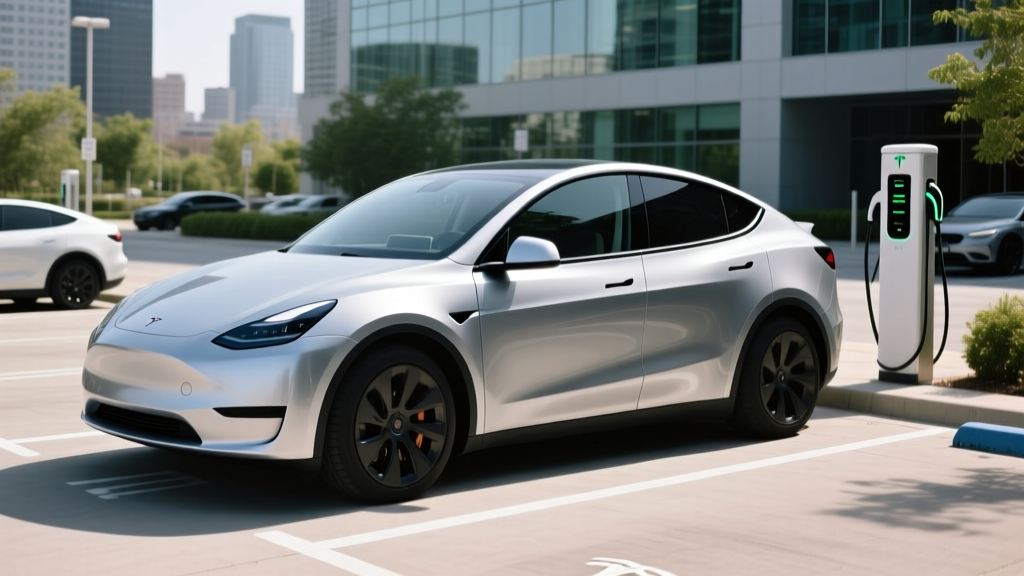
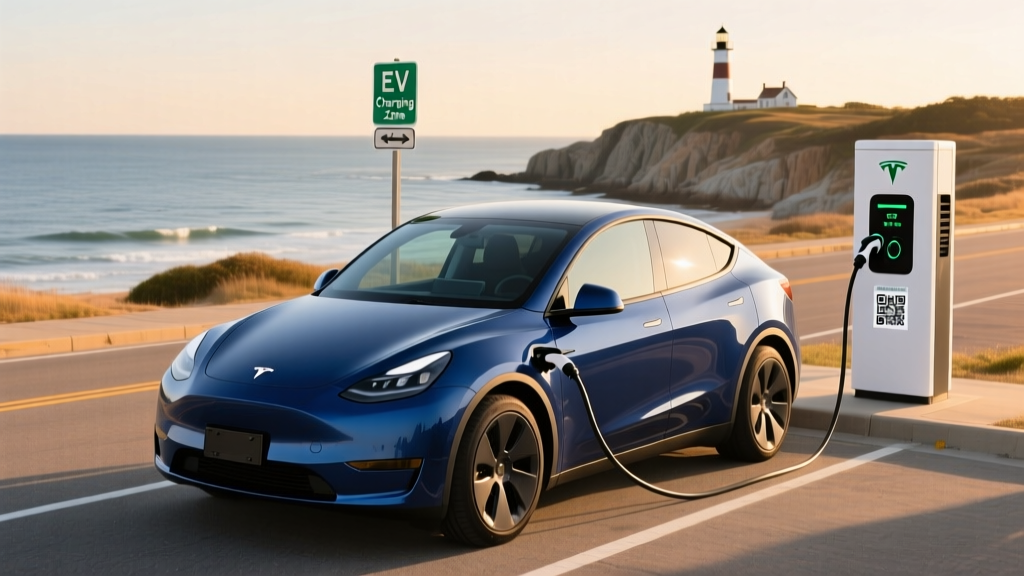
Tesla's Supercharger network remains the gold standard for reliability. Rhode Island has several Supercharger stations, including locations in Warwick, Providence (near the Providence Place mall area), and Smithfield. V3 Superchargers deliver up to 250 kW; newer V4 posts (rolling out in select locations) support up to 325 kW for compatible vehicles.
| Model / Trim | Peak DC kW | 10-80% DCFC Time | Level 2 (11.5 kW) Miles/Hr | Level 1 (120V) Miles/Hr |
|---|---|---|---|---|
| Model 3 RWD (LFP) | 170 kW | ~30 min | ~37 mi/hr | ~3-4 mi/hr |
| Model 3 Long Range / Perf | 250 kW | ~25 min | ~41 mi/hr | ~3-4 mi/hr |
| Model Y Long Range / Perf | 250 kW | ~27 min | ~37 mi/hr | ~3-4 mi/hr |
| Model S / X | 250 kW | ~30 min | ~34 mi/hr | ~3 mi/hr |
Charge curve reality: Peak kW is not sustained. A Model 3 Long Range hitting a V3 Supercharger at 10% SoC will ramp quickly to ~250 kW but begin tapering around 50% SoC. The 10-80% time is the practical metric—above 80%, charging slows dramatically to protect the battery. On a road trip, plan stops around 20-25 minutes and leave at ~80% rather than waiting for a full charge.
All 2026 Teslas sold in North America come equipped with the NACS (North American Charging Standard) port natively. If you own an older CCS-equipped EV from another brand, you'll need an adapter for Superchargers, but Tesla owners plug in directly.
Home Charging in Rhode Island
Home charging is where most Rhode Island Tesla owners will do 85-95% of their charging. The state's housing stock—particularly in Providence, Pawtucket, and older coastal towns—presents specific challenges.
Tesla Wall Connector: $475 (hardware) + electrician labor
Electrical panel: Many pre-1970 Rhode Island homes have 100-amp service. A Level 2 charger drawing 48 amps (11.5 kW) typically requires a 60-amp dedicated circuit and 200-amp panel service. Panel upgrades run $2,000-$4,500.
Installation (panel adequate): $800-$2,500 depending on conduit run length
Installation (panel upgrade needed): $3,000-$6,500 total
Rhode Island incentives: Check Rhode Island Energy for current EV charger rebates—utility programs change annually.
The Tesla Wall Connector delivers up to 11.5 kW (48 amps) on a 60-amp circuit. For the Model 3 Long Range, that's roughly 41 miles of range per hour of charging—enough to fully replenish overnight. The Mobile Connector included with the vehicle provides 3-4 miles per hour on a standard 120V outlet, adequate for topping off if your daily driving is under 30 miles.
Efficiency, Performance, and Daily Drivability
Tesla's efficiency remains best-in-class. The Model 3 Long Range AWD achieves 132 MPGe combined (25 kWh/100 mi) per the EPA. That translates to roughly $0.04-$0.05 per mile on Rhode Island residential electricity rates (~$0.22/kWh average, among the higher rates in the U.S.). Compare this to a 30 MPG gas car at $3.30/gallon: $0.11 per mile. The per-mile fuel savings is substantial even with New England's above-average electricity costs.
Performance specs are well-documented: the Model 3 Performance hits 60 mph in 2.9 seconds with 510 horsepower; the Model Y Long Range provides 384 hp and a 4.8-second sprint. For Rhode Island winters, dual-motor AWD is strongly recommended—all Long Range and Performance trims include it. The RWD Model 3 is capable with winter tires but lacks the traction redundancy of dual-motor setups on icy Route 1 or I-95 on-ramps.
Cargo and Passenger Space
The Model Y remains Tesla's family hauler. Behind the second row, it offers 30.2 cu ft of cargo space; fold the rear seats and you get 72.1 cu ft. The Model 3 sedan provides 23 cu ft of trunk space plus a small frunk. Rear legroom in the Model 3 is 35.2 inches—adequate for adults but tighter than the Model Y's 41.6 inches. If you're regularly carrying rear-seat passengers or car seats, the Model Y's crossover proportions make a meaningful difference.
Federal Tax Credit Eligibility for Rhode Island Buyers
The §30D Clean Vehicle Credit remains available for qualifying new EV purchases in 2026, but eligibility is model-specific and buyer-specific. The credit is now available as a point-of-sale transfer, meaning the dealer (or in Tesla's case, the company) applies the credit as a price reduction at purchase rather than requiring you to claim it on your tax return.
- Credit amount: Up to $7,500 (split: $3,750 for battery components + $3,750 for critical minerals sourcing)
- Buyer income caps: AGI ≤ $150,000 (single), ≤ $300,000 (joint), ≤ $225,000 (head of household)
- MSRP caps: ≤ $55,000 for sedans (Model 3), ≤ $80,000 for SUVs/trucks (Model Y, Model X)
- Battery sourcing: Battery components must be manufactured or assembled in North America (phase-in thresholds increase annually); critical minerals must be sourced from the U.S. or FTA partners
- Point-of-sale transfer: Available—credit applied at purchase, reducing out-of-pocket cost
- Verify current eligibility: fueleconomy.gov and IRS.gov
| Model / Trim | Base MSRP | MSRP Cap Eligible? | Est. Credit (if income qualifies) | Effective Price |
|---|---|---|---|---|
| Model 3 RWD | $38,990 | Yes (sedan ≤$55K) | $7,500 | ~$31,490 |
| Model 3 Long Range AWD | $45,490 | Yes | $7,500 | ~$37,990 |
| Model 3 Performance | $52,990 | Yes | $7,500 | ~$45,490 |
| Model Y Long Range AWD | $46,630 | Yes (SUV ≤$80K) | $7,500 | ~$39,130 |
| Model Y Performance | $51,490 | Yes | $7,500 | ~$43,990 |
| Model S Long Range | $79,990 | Yes (sedan, but near cap) | Partial—verify sourcing | Varies |
| Model X Long Range | $84,990 | No (SUV cap $80K) | $0 | $84,990 |
Critical caveat: Battery sourcing requirements tighten annually. Even if a model's MSRP qualifies, the full $7,500 requires both the battery-component and critical-minerals thresholds to be met. Tesla's supply chain has largely shifted to meet these requirements for Model 3 and Model Y, but the exact credit amount (full $7,500 vs. partial $3,750) can change as sourcing rules update. Always verify on fueleconomy.gov before purchasing. The Model X exceeds the $80,000 SUV MSRP cap and does not qualify regardless of buyer income.
Warranty Coverage and Long-Term Ownership
Tesla's warranty structure is straightforward:
- Basic Vehicle Limited Warranty: 4 years / 50,000 miles
- Battery & Drive Unit (Model 3 RWD, LFP): 8 years / 100,000 miles
- Battery & Drive Unit (Model 3 LR/Perf, Model Y, Model S, Model X): 8 years / 120,000 miles (Long Range/Performance) or 8 years / 150,000 miles (Model S/X)
- Capacity retention threshold: Tesla warrants the battery will retain at least 70% of original capacity during the warranty period
For Rhode Island owners driving 10,000-12,000 miles annually (typical for the state's short commutes), the battery warranty provides 8+ years of coverage before reaching mileage limits. Real-world degradation data from Tesla's fleet suggests NMC packs lose approximately 10-12% capacity over 150,000 miles; LFP packs may show slightly more early degradation but stabilize well. The 70% threshold is conservative—most packs retain 85-90% at the warranty boundary based on fleet data.
Tech, Driver Assistance, and the Autopilot Question
Every 2026 Tesla includes the company's 15.4-inch center touchscreen running Tesla's proprietary infotainment OS, over-the-air updates, built-in navigation with real-time Supercharger routing, and the base Autopilot driver-assistance suite (traffic-aware cruise control, autosteer within lane markings, emergency braking).
Tesla Autopilot and Full Self-Driving (Supervised) are SAE Level 2 driver-assistance systems. The driver must remain fully engaged—hands on or near the wheel, eyes on the road, ready to take over instantly. FSD (Supervised), available as a $8,000 option or $99/month subscription, adds automatic lane changes, traffic light/stop sign recognition, and navigation-on-autopilot. It does not make the vehicle autonomous. Level 4 self-driving (no driver required) is available only in geofenced robotaxi services like Waymo—not in any consumer Tesla vehicle.
For Rhode Island driving, Autopilot is most useful on I-95 corridor commutes and longer trips to Boston or New York. In Providence's tight downtown streets, rotary intersections, and older road infrastructure, manual driving remains more practical and predictable.
Who Should Buy a Tesla in Rhode Island?
Choose Tesla Model 3 If:
- Your commute is under 40 miles round trip (nearly all RI commutes)
- You prioritize efficiency and lowest cost of ownership
- You don't regularly need rear cargo space or car-seat room
- You want the most affordable entry into the Supercharger network
- LFP chemistry (RWD trim) is acceptable—you'll charge to 100% regularly
Choose Tesla Model Y If:
- You have children, car seats, or regular rear passengers
- You need crossover cargo versatility (30.2 cu ft rear)
- You take road trips to New England ski areas or the Cape
- You want AWD standard (all Model Y trims are dual-motor)
- You prefer a higher seating position for visibility
The Model S and Model X serve niche buyers who want maximum range (Model S: 402 mi EPA) or falcon-wing rear doors and three-row seating (Model X). At $80,000-$85,000+, they're difficult to justify against the Model Y for most Rhode Island buyers unless budget is not a primary constraint.
Pros
- Supercharger network reliability—best-in-class for road trips
- Industry-leading efficiency (kWh/100 mi)
- OTA updates add features post-purchase
- Strong resale value relative to most EVs
- Heat pump standard—critical for New England winters
- Point-of-sale tax credit reduces upfront cost
Cons
- No traditional dealership—service requires mobile ranger or travel to MA/Providence center
- LFP cold-weather range loss more pronounced than NMC
- Panel upgrade costs in older RI homes can exceed $4,000
- FSD subscription cost adds up without delivering Level 4 autonomy
- Insurance premiums 15-30% higher than comparable gas vehicles
- Build quality variability—panel gaps, interior trim inconsistencies persist
Frequently Asked Questions
What is the real-world range of a Tesla in Rhode Island winters?
Expect a 20-30% reduction from EPA figures in sustained cold (below 35°F). A Model 3 Long Range rated at 363 miles EPA will deliver roughly 250-290 miles in typical Rhode Island winter conditions (25-40°F, mixed driving, cabin heat on). The heat pump helps, but battery chemistry inherently loses efficiency in cold. Preconditioning the battery while plugged in recovers significant range—always precondition before departing in winter.
How fast does a Tesla charge at home and on the road in Rhode Island?
At home on a Tesla Wall Connector (11.5 kW, 48A), expect 37-41 miles of range per hour depending on model—a full overnight charge is standard. On V3 Superchargers (available at Warwick, Providence, Smithfield), peak speeds reach 250 kW with 10-80% in 25-30 minutes. Rhode Island's Supercharger coverage is adequate for residents, though you may plan stops in neighboring Massachusetts or Connecticut for longer trips.
Does every Tesla qualify for the $7,500 federal tax credit?
No. The Model 3 (all trims under $55K) and Model Y (all trims under $80K) qualify if your AGI is within limits ($150K single / $300K joint) and battery sourcing requirements are met. The Model X at $84,990 exceeds the SUV MSRP cap and does not qualify. Always verify current sourcing eligibility on fueleconomy.gov—rules update periodically throughout the year.
Is a Tesla worth buying in Rhode Island vs. competitors like the Hyundai Ioniq 5 or BMW i4?
Tesla's Supercharger network remains the decisive advantage for road-trip-capable EVs. Competitors like the Ioniq 5 (800V architecture, 10-80% in ~18 min) and BMW i4 (premium interior, CCS charging) offer compelling alternatives, but rely on Electrify America, EVgo, or ChargePoint for DC fast charging—networks with lower uptime reliability. If you road-trip frequently, Tesla's network advantage is significant. If you primarily commute locally and rarely fast-charge, the Ioniq 5 or i4 are strong competitors worth cross-shopping.
What does Tesla service look like in Rhode Island?
Rhode Island has a Tesla service center in the Providence area and mobile ranger service for many common repairs (tire rotations, 12V battery replacement, minor software issues). Major body or drivetrain work may require a trip to the Norwood, MA service center. Tesla's direct-sales model means no dealership negotiations—but also no local dealer advocacy if issues arise. Response times for mobile service vary; plan for 1-2 weeks for non-urgent appointments.