There Is No Tesla Rex — Here's What You Need to Know
If you've been searching for the Tesla Rex, you're not alone. The name has circulated across social media, YouTube thumbnails, and EV forums for over a year, generating genuine curiosity about whether Tesla is planning a new model to slot into its lineup. Let's cut through the noise with the facts as they stand in 2026.
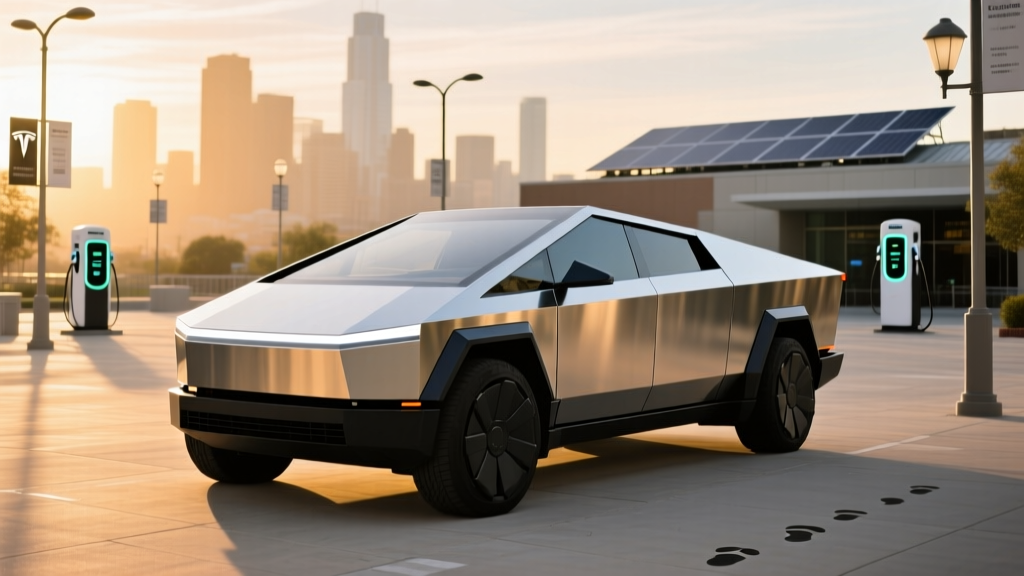
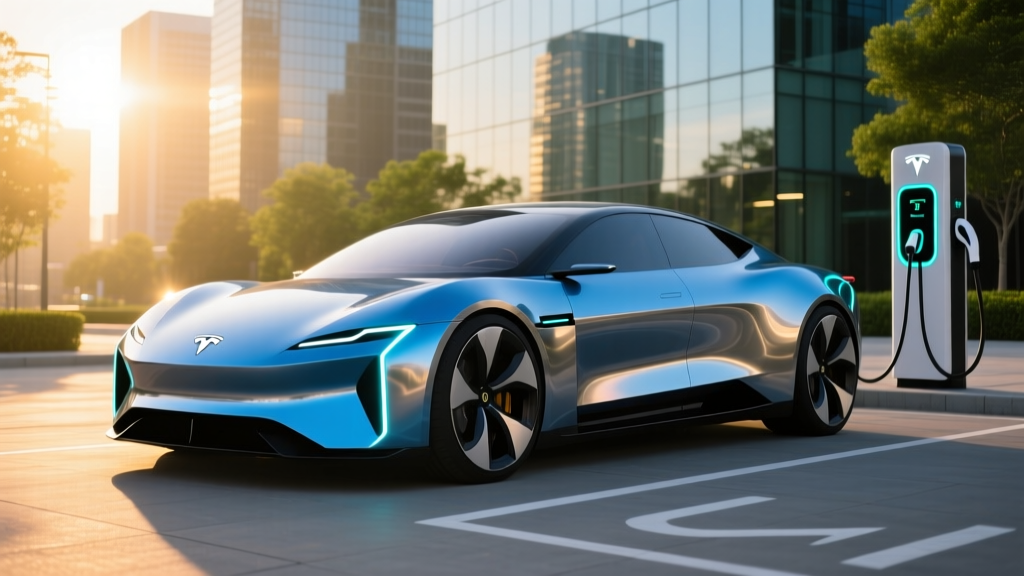
Tesla has not announced, teased, or filed trademarks for a vehicle called the "Rex." There is no Tesla Rex on sale, in production, or officially in development as of this writing. The name appears to originate from speculative renders, clickbait content, and fan-created concepts — not from Tesla's product roadmap, SEC filings, or earnings calls.
This matters because buying decisions should be based on confirmed specifications, verified pricing, and real-world testing — not viral speculation. If you're shopping for a Tesla in 2026 or considering what the brand actually offers, here's a precise breakdown of the current lineup and where a hypothetical new model might fit.
The Current 2026 Tesla Lineup: What You Can Actually Buy
Rather than chase a phantom nameplate, let's look at the vehicles Tesla actually sells in the US market for the 2026 model year. Each model below reflects EPA-certified data, manufacturer specifications, and real-world ownership variables.
| Model | EPA Range | Battery (kWh usable) | Peak DC Charge | 10–80% Time | 0–60 mph | Starting MSRP |
|---|---|---|---|---|---|---|
| Model 3 RWD | 363 mi | ~60 (LFP) | 170 kW | ~28 min | 5.8 s | $38,990 |
| Model 3 Long Range AWD | 341 mi | ~75 (NMC) | 250 kW | ~22 min | 4.2 s | $44,990 |
| Model Y Long Range AWD | 320 mi | ~75 (NMC) | 250 kW | ~23 min | 4.8 s | $44,990 |
| Model S Long Range | 402 mi | ~100 (NMC) | 250 kW | ~27 min | 3.1 s | $74,990 |
| Model X Long Range | 335 mi | ~100 (NMC) | 250 kW | ~28 min | 3.8 s | $79,990 |
| Cybertruck AWD | 340 mi | ~123 (NMC) | 250 kW | ~30 min | 4.1 s | $79,990 |
Sources: fueleconomy.gov, Tesla.com official specifications.
Where Would a "Tesla Rex" Fit? Analyzing the Gaps
The speculation around a Tesla Rex likely stems from real gaps in Tesla's product portfolio. Let's examine where a new model could logically land and what it would need to offer.
The Compact Crossover Gap
Tesla's most affordable vehicle in the US is the Model 3 sedan at roughly $38,990. Competitors like the Chevrolet Equinox EV ($33,000 base) and Hyundai Kona Electric ($32,975) undercut that price point significantly. A smaller, more affordable crossover — sometimes rumored as a "Model 2" or "Model Q" — would address the sub-$35,000 segment. This is the most plausible slot for any new Tesla nameplate aimed at volume.
The Rugged/Off-Road Gap
The name "Rex" (Latin for "king") suggests something bold, possibly rugged. The Cybertruck fills the truck segment, but Tesla has no body-on-frame SUV or dedicated off-roader to compete with the Rivian R1S, Jeep Wrangler 4xe, or the incoming electric Ford Bronco concepts. A rugged SUV could carry a name like Rex, but Tesla has given no indication this is in development.
The Robotaxi / Cybercab
Tesla's announced Cybercab is a dedicated autonomous vehicle concept targeting fleet and ride-hail use — not a consumer vehicle in the traditional sense. It uses a different business model entirely and wouldn't carry a consumer-friendly nameplate like Rex.
Real-World Range and Charging: What Tesla Owners Actually Experience
EPA range estimates are measured under controlled laboratory conditions. In practice, Tesla owners should plan for:
- Highway driving at 70+ mph: Expect 85–90% of EPA range (e.g., Model 3 LR's 341 mi EPA → ~290–305 mi real-world highway)
- Cold weather (below 32°F): Range drops 20–35% depending on cabin heating demands and battery preconditioning. An LFP Model 3 RWD rated at 363 mi may deliver 240–290 mi in freezing conditions without preconditioning.
- City/regenerative driving: Often matches or slightly exceeds EPA figures thanks to aggressive regen recapturing energy at low speeds.
Charging Speed: Peak kW Is Not Sustained kW
A common mistake in EV shopping is focusing only on peak charge rate. A Tesla Model 3 Long Range may peak at 250 kW at a V3 Supercharger, but that rate is only sustained between roughly 10–30% state of charge (SoC). The charge curve tapers significantly above 60%, and by 80% SoC, the rate typically drops below 60 kW. This is why the 10–80% time (~22 minutes for Model 3 LR) is the most honest metric for road-trip planning.
| Charge Level | Power (kW) | Miles Added Per Hour | Typical Use Case |
|---|---|---|---|
| Level 1 (120V household) | 1.2–1.4 kW | 3–5 mi/hr | Overnight trickle, emergencies |
| Level 2 (240V home, 48A) | 11.5 kW | 30–44 mi/hr | Daily home charging, full overnight fill |
| DC Fast (V3 Supercharger) | Up to 250 kW | ~200+ mi in 15 min (peak) | Road trips, highway corridors |
| DC Fast (V4 Supercharger) | Up to 250+ kW | Similar to V3, improved cable design | Newer Supercharger stations |
Home Level 2 charging with a Tesla Wall Connector on a 60-amp circuit (48A continuous) adds roughly 44 miles of range per hour on a Model 3. A full charge from 10% to 100% takes approximately 7–8 hours, making overnight charging the practical standard for daily use.
Federal Tax Credit: Does a Tesla Qualify Under §30D?
Federal EV tax credit eligibility under IRS §30D is determined by a combination of vehicle sourcing requirements, MSRP caps, and buyer income limits. Here's how Tesla models stand for 2026:
- MSRP Cap: Sedans (Model 3, Model S) must be under $55,000. SUVs/trucks/vans (Model Y, Model X, Cybertruck) must be under $80,000.
- Buyer Income Cap (MAGI): $150,000 single / $225,000 head of household / $300,000 joint filers.
- Battery Sourcing: Critical minerals and battery components must meet escalating North American sourcing thresholds. These requirements tighten annually, and eligibility can change mid-year.
- Point-of-Sale Transfer: Since 2024, eligible buyers can transfer the credit to the dealer at purchase, reducing the out-of-pocket price immediately rather than waiting for tax filing.
Credit eligibility changes as battery sourcing rules tighten and Tesla adjusts supply chains. Always verify current status at fueleconomy.gov before purchasing, and consult a tax professional regarding your personal income situation. Never assume a flat $7,500 credit applies to every Tesla or every buyer.
Battery Chemistry: LFP vs NMC in Tesla's Lineup
Tesla uses two distinct battery chemistries across its models, and the choice has real ownership implications:
| Factor | LFP (Lithium Iron Phosphate) | NMC (Nickel Manganese Cobalt) |
|---|---|---|
| Used In | Model 3 RWD, Model Y RWD | Model 3 LR, Model Y LR, Model S, Model X, Cybertruck |
| Energy Density | Lower (heavier for same kWh) | Higher (more range in lighter pack) |
| Recommended Charge | 100% daily OK | 80% daily; 100% for trips only |
| Cold Performance | Weaker in freezing temps | Better cold-weather retention |
| Cycle Life | 3,000+ cycles typical | 1,500–2,000 cycles typical |
| Cost | Lower (cheaper vehicles) | Higher (premium trims) |
What this means practically: If you buy a Model 3 RWD with LFP, Tesla recommends charging to 100% at least weekly to maintain battery calibration. You can safely leave it plugged in at full charge. With NMC models, daily charging to 80% preserves long-term health, and you only charge to 100% before road trips. This is a meaningful daily-ownership difference that catches some new EV buyers off guard.
Driver Assistance: Autopilot and FSD Are Level 2, Not Self-Driving
Tesla's Autopilot and Full Self-Driving (Supervised) are SAE Level 2 driver-assistance systems. The driver must remain fully engaged, hands on the wheel (or providing torque input), and eyes on the road at all times. These systems do not drive the car autonomously. Only Level 4 services like Waymo operate without a human driver, and those are limited to geo-fenced urban areas with regulatory approval.
Tesla's Autopilot (standard) includes adaptive cruise control and lane centering. FSD (Supervised), available as a $8,000 one-time purchase or $99/month subscription as of 2026, adds automated lane changes, traffic light/stop sign recognition, and city street navigation. While FSD has improved significantly, it still requires active supervision and can make errors in construction zones, unusual intersections, and adverse weather.
Who Should Buy a Tesla in 2026 — and Who Should Look Elsewhere?
Choose Tesla if:
- You want access to the Supercharger network (still the most reliable DC fast-charging network in the US, even as NACS opens to other brands)
- You value over-the-air software updates that add features post-purchase
- You want strong efficiency (Model 3 achieves 132 MPGe combined per EPA) and low per-mile charging cost
- You prefer a minimalist interior with a single central touchscreen controlling nearly all functions
Look elsewhere if:
- You want physical buttons, a traditional instrument cluster, or Apple CarPlay/Android Auto (Tesla does not support either)
- You need a sub-$30,000 EV (consider Chevy Equinox EV, Nissan Leaf, or used EV market)
- You want a rugged off-road EV (Rivian R1S, Ford F-150 Lightning with off-road packages)
- You need three-row seating under $80,000 (Rivian R1S, Kia EV9)
Tesla Rex FAQ: Answering the Most Common Questions
Is the Tesla Rex a real car?
No. Tesla has not announced any vehicle named Rex. The name appears in speculative renders and social media posts but has no basis in official Tesla communications, SEC filings, or product announcements.
When will the Tesla Rex be available?
There is no release date because the vehicle does not exist in Tesla's confirmed product pipeline. Tesla's announced upcoming products as of 2026 include the next-generation Roadster (delayed multiple times) and the Cybercab robotaxi concept.
What is Tesla's cheapest car in 2026?
The Model 3 Rear-Wheel Drive starts at $38,990 MSRP before any incentives. With the federal §30D tax credit (if eligible — up to $7,500 depending on sourcing, income, and MSRP rules), the effective price can drop to approximately $31,490. Always verify current eligibility at fueleconomy.gov.
Does Tesla make a compact or subcompact SUV?
Not as of 2026. The Model Y is Tesla's smallest crossover, and it's classified as a midsize SUV. Rumors of a smaller, more affordable Tesla crossover persist but remain unconfirmed.
How long do Tesla batteries last?
Tesla warrants its battery packs for 8 years or 100,000–150,000 miles (varies by model) with a minimum 70% capacity retention threshold. Real-world data from high-mileage owners shows most NMC packs retaining 85–90% capacity at 100,000 miles. LFP packs generally show even slower degradation due to their higher cycle life.
Can I charge a non-Tesla EV at a Supercharger?
Yes. Tesla has opened select Supercharger stations to non-Tesla NACS-equipped vehicles. As of 2026, Ford, Rivian, and other automakers shipping NACS-native vehicles can access the network. CCS-equipped vehicles require a Tesla-approved adapter.