The Real Question: Can a Tesla Rental Actually Make You Money on Uber?
If you're considering Tesla rentals for Uber in 2026, the math comes down to three variables: weekly rental cost, electricity expense per mile, and whether the vehicle qualifies for Uber Comfort or Uber Black pricing tiers. Tesla's dominance in the rideshare rental market isn't accidental — the combination of low per-mile energy costs, access to the Supercharger network, and premium-fare eligibility makes models like the Model 3 and Model Y compelling tools for full-time drivers. But not every Tesla rental is created equal, and picking the wrong trim can erase your margin.
This guide breaks down the 2026 Tesla lineup through the lens of a rideshare operator: range you can actually use in a shift, charging downtime between trips, total weekly cost, and which models unlock higher fare tiers. We'll focus on the two models most commonly available through Hertz, Sixt, and specialized EV rental fleets — the 2026 Tesla Model 3 Long Range and the 2026 Tesla Model Y Long Range — with notes on the Standard Range trims where available.
Range Reality Check for Rideshare
EPA Estimated Range (Model 3 LR): 363 miles
Real-World Expectation: 270–300 miles in mixed city/highway driving; expect 220–250 miles at sustained 75 mph highway speeds; subtract 20–30% in sub-30°F winter conditions, dropping usable range to roughly 190–220 miles. For rideshare, plan your shift around 200 usable miles before needing a charge stop.
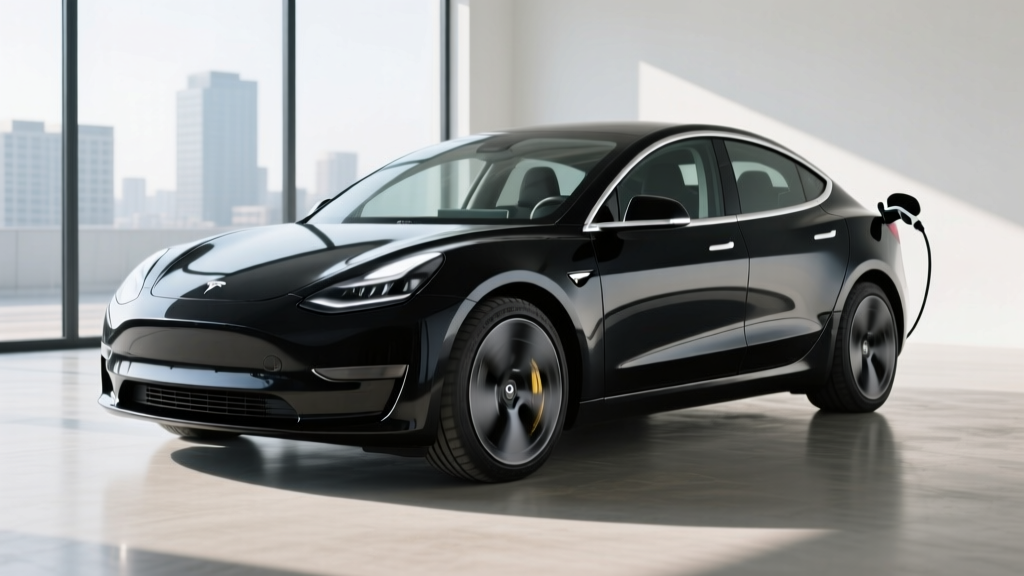
2026 Tesla Model 3 Long Range: The Rideshare Default
The Model 3 Long Range remains the most common Tesla in rideshare rental fleets for good reason. It balances range, efficiency, and passenger comfort in a package that qualifies for Uber Comfort in most markets — meaning a 20–40% fare premium over UberX on the same trip.
| Spec | Value |
|---|---|
| EPA Range | 363 miles |
| Battery Capacity | ~79 kWh usable, NMC (LG M50 cells) |
| Drivetrain | Dual-Motor AWD |
| Horsepower | ~384 hp combined |
| 0–60 mph | 4.2 seconds |
| Efficiency | 132 MPGe combined / 25 kWh/100 mi |
| Max DC Fast Charge | 250 kW (peak) |
| 10–80% DC Fast Charge | ~25 minutes (with preconditioning) |
| Level 2 Home Charging | 11.5 kW (~44 mi/hr) |
| Cargo Volume | 23 cu ft (trunk + frunk combined) |
| Rear Legroom | 35.3 inches |
| Battery/Drive Unit Warranty | 8 years / 120,000 miles (70% capacity retention) |
| Base MSRP | $47,740 |
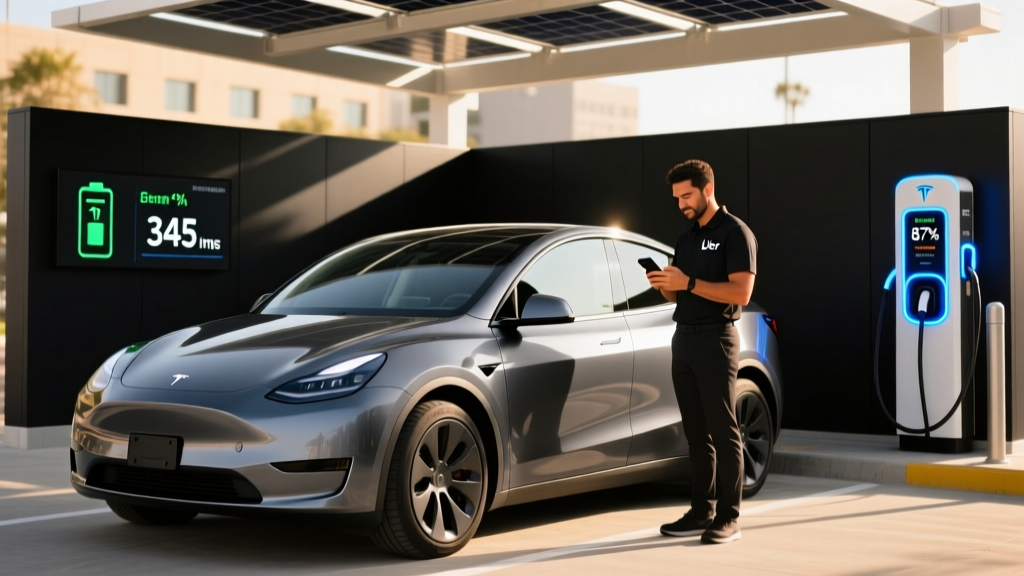
Charging Speed: Your Downtime Between Rides
| Level | Power | Miles Added per Hour | Typical Use Case |
|---|---|---|---|
| Level 1 (120V) | ~1.4 kW | ~4–5 mi/hr | Emergency only; useless for rideshare |
| Level 2 (240V, 48A) | 11.5 kW | ~44 mi/hr | Overnight at home/depot; full charge in ~7 hrs |
| DC Fast (Supercharger V3) | Up to 250 kW peak | ~1,000+ mi/hr (peak) | Mid-shift top-up; 10–80% in ~25 min |
| DC Fast (Supercharger V4) | Up to 350 kW (future capability) | — | Model 3 currently limited to ~250 kW by onboard architecture |
Charge curve reality: The Model 3 LR peaks at 250 kW only between roughly 10–30% state of charge. From 30–60%, expect a sustained 120–150 kW; above 80%, the rate tapers sharply to under 50 kW. For rideshare, the optimal strategy is to charge from 15% to 75% (about 20 minutes at a V3 Supercharger), which adds roughly 180 miles of usable range. Don't wait for 100% — the last 20% can take longer than the first 60%.
2026 Tesla Model Y Long Range: The Space Premium Play
The Model Y Long Range commands a higher weekly rental rate (typically $50–$100/week more than a Model 3) but opens doors to Uber Comfort Electric and, in some markets, UberXL eligibility when paired with the optional third row (though the third row is impractical for adult passengers). Its real advantage is cargo space for airport runs and passenger comfort ratings.
| Spec | Value |
|---|---|
| EPA Range | 320 miles |
| Battery Capacity | ~78.1 kWh usable, NMC (Panasonic/LG) |
| Drivetrain | Dual-Motor AWD |
| Horsepower | ~384 hp combined |
| 0–60 mph | 4.8 seconds |
| Efficiency | 117 MPGe combined / 29 kWh/100 mi |
| Max DC Fast Charge | 250 kW (peak) |
| 10–80% DC Fast Charge | ~27 minutes |
| Level 2 Home Charging | 11.5 kW (~39 mi/hr) |
| Cargo Volume (rear seats up) | 30.2 cu ft (behind 2nd row); 72 cu ft folded |
| Rear Legroom | 40.5 inches |
| Battery/Drive Unit Warranty | 8 years / 120,000 miles (70% capacity retention) |
| Base MSRP | $48,240 |
Model Y Range Reality
EPA Estimated Range: 320 miles
Real-World Expectation: 240–270 miles mixed driving; 200–230 miles at highway speeds. The Model Y's taller, less aerodynamic profile costs it roughly 15% efficiency versus the Model 3 on highway runs. In cold weather (below 30°F), plan for 170–200 usable miles. If your market involves frequent airport runs with luggage, the cargo trade-off is worth it — but you'll charge slightly more often.
Weekly Rental Cost & Earnings Math for Uber Drivers
As of early 2026, here's what Tesla rentals for Uber typically cost through major rental platforms and specialized EV fleet operators:
| Vehicle | Weekly Rate | Insurance Included? | Mileage Cap | Uber Tier Eligibility |
|---|---|---|---|---|
| Model 3 Standard Range (RWD) | $250–$320 | Varies by platform | 1,000–1,500 mi/wk | UberX, Uber Comfort (select markets) |
| Model 3 Long Range (AWD) | $300–$399 | Usually included | 1,000–unlimited | Uber Comfort, Uber Comfort Electric |
| Model Y Long Range (AWD) | $350–$499 | Usually included | 1,000–unlimited | Uber Comfort Electric, UberXL (limited) |
Energy cost advantage: At a national average electricity rate of $0.14/kWh and the Model 3's efficiency of 25 kWh/100 miles, your fuel cost is roughly $0.035 per mile. Compare that to a 30 MPG gas car at $3.40/gallon: $0.113 per mile. Over a 1,200-mile week, you save approximately $94 in fuel. If you charge primarily at Superchargers ($0.28–$0.40/kWh average in 2026), your cost rises to $0.07–$0.10 per mile — still a meaningful discount versus gas, but the savings narrow significantly. The economics work best when you have access to overnight Level 2 charging at home or at a depot rate.
The Tax Credit Question for Rental Fleets
When you rent a Tesla for Uber, you don't directly benefit from the federal EV tax credit — the fleet owner does. Under IRS §30D rules, the 2026 Model 3 Long Range qualifies for up to $7,500 in federal tax credits for the purchasing entity, subject to:
- MSRP Cap: Sedans must be under $55,000 (Model 3 LR at $47,740 qualifies)
- Battery Sourcing: Critical minerals and battery components must meet phased-in domestic/FTEA content thresholds (80% critical minerals, 100% battery components for 2026)
- Income Caps (for individual buyers): $150K single / $300K joint AGI — not applicable to fleet purchasers
- FEOC Restriction: Vehicles with battery components from Foreign Entities of Concern are disqualified
This credit is why rental companies can offer Teslas at competitive weekly rates — they acquire the vehicles at an effective discount and pass some savings to drivers. If you're considering buying instead of renting, the same credit may apply to you directly.
Tech & Driver Assistance: What Uber Drivers Actually Use
The 2026 Tesla infotainment system runs on the Ryzen-based hardware with a 15.4-inch touchscreen (Model 3) or 15-inch (Model Y). For rideshare drivers, the most relevant features aren't entertainment — they're navigation and driver assistance:
- Tesla Navigation with Supercharger Routing: Automatically plans charge stops on longer trips and preconditions the battery for optimal charge speed on arrival. This is a genuine time-saver on airport runs 50+ miles away.
- Basic Autopilot (standard): Traffic-Aware Cruise Control and Autosteer (lane centering). This is SAE Level 2 driver assistance — you must keep your hands on the wheel and eyes on the road at all times. It reduces fatigue on highway segments but is not autonomous driving.
- Full Self-Driving (Supervised): A $8,000 add-on or $99/month subscription that adds automatic lane changes, traffic light/stop sign recognition, and Navigate on Autopilot. Still Level 2 — still requires full driver supervision. Most rental fleets do not include FSD, and it's not a meaningful earnings booster for Uber since passengers don't see or benefit from it.
- Sentry Mode & Dashcam: Records all driving and can capture incidents — useful for dispute resolution with passengers or insurance claims.
- Cabin Overheat Protection: Keeps interior temperature safe between rides in hot climates.
Driver Assistance ≠ Self-Driving
Tesla's Autopilot and FSD (Supervised) are SAE Level 2 systems. The driver is fully responsible for the vehicle at all times. Only Level 4 services like Waymo operate without a driver. Never use a phone or disengage attention while driving rideshare passengers, regardless of what driver-assist features are active.
Pros and Cons: Tesla Rentals for Uber
Pros
- Lowest per-mile fuel cost in rideshare (3–4¢/mi on home charging)
- Access to 6,000+ Supercharger stalls in North America — the most reliable DC fast-charging network
- Uber Comfort / Comfort Electric eligibility = 20–40% fare premium
- Minimal maintenance: no oil changes, no transmission fluid, brake pad life extended by regen braking
- High passenger satisfaction ratings (quiet cabin, panoramic roof, brand cachet)
- Over-the-air updates keep vehicles current without dealer visits
Cons
- Higher weekly rental rate than a Camry Hybrid or Prius ($300–$499 vs. $180–$250)
- Charging downtime: 20–30 min per DC fast charge vs. 5 min at a gas station
- Supercharger costs erode fuel savings if you lack home Level 2 access
- Model 3 rear seat is tight for tall passengers (35.3" legroom vs. Camry's 38.0")
- Tire wear is accelerated due to vehicle weight and instant torque — expect replacement at 25,000–35,000 miles
- Insurance costs baked into rental rates are higher than comparable ICE vehicles
- Winter range loss of 20–30% can force mid-shift charging in cold markets
Model 3 vs. Model Y: Which Rental Should You Choose?
| Factor | Model 3 Long Range | Model Y Long Range |
|---|---|---|
| Weekly Rental Cost | $300–$399 | $350–$499 |
| Usable Range (real-world) | 270–300 mi | 240–270 mi |
| Efficiency (kWh/100mi) | 25 | 29 |
| Cargo Space | 23 cu ft | 30.2 cu ft (72 folded) |
| Rear Legroom | 35.3 in | 40.5 in |
| Uber Tier | Comfort, Comfort Electric | Comfort Electric, UberXL (limited) |
| Best For | City driving, efficiency-focused, lower cost | Airport runs, luggage-heavy trips, passenger comfort |
Choose the Model 3 Long Range if: You drive primarily in dense urban markets, prioritize minimizing weekly costs, and don't frequently haul luggage or groups. The Model 3's efficiency advantage means fewer charge stops and lower electricity bills — critical when every cent per mile matters.
Choose the Model Y Long Range if: Your market includes frequent airport runs, you operate in a city where Uber Comfort Electric has strong demand, or you value the cargo flexibility for riders with strollers, skis, or luggage. The extra 5.2 inches of rear legroom also translates to noticeably better passenger ratings.
Is It Worth Buying Instead of Renting?
If you're driving 40+ hours per week on Uber, the breakeven math on purchasing versus renting shifts in favor of buying within 12–18 months. Here's the rough comparison:
- Renting at $350/week: $18,200/year with no equity, no depreciation risk, and included insurance/maintenance.
- Buying a Model 3 LR at $47,740: After a potential $7,500 federal credit (if eligible per IRS guidelines), effective cost is ~$40,240. Add insurance (~$2,400/year for commercial rideshare coverage), maintenance (~$600/year), and electricity (~$2,100/year at 1,200 mi/wk). Year-one total: ~$45,340. Year-two: ~$5,100. By month 24, you've spent ~$50,440 total vs. $36,400 renting — but you own an asset worth roughly $28,000–$32,000 at trade-in (based on current EV depreciation curves).
The purchase path wins if you plan to drive 2+ years and can secure affordable rideshare insurance. The rental path wins for part-time drivers, those testing the market, or drivers who don't want depreciation exposure.
Frequently Asked Questions
What is the real-world range of a Tesla Model 3 on Uber shifts?
The EPA rates the 2026 Model 3 Long Range at 363 miles, but real-world mixed driving yields 270–300 miles. At sustained highway speeds (70–80 mph), expect 220–250 miles. In freezing weather, plan for 190–220 miles. Most full-time rideshare drivers plan shifts around a 200-mile usable window before scheduling a 20–25 minute Supercharger stop.
How fast does a Tesla charge at a Supercharger during an Uber shift?
At a V3 Supercharger (250 kW capable), the Model 3 and Model Y Long Range charge from 10–80% in approximately 25–27 minutes with battery preconditioning enabled. Peak speed occurs only at low state of charge; expect 150–180 miles of range added in a 20-minute stop. Always precondition by navigating to the Supercharger in the Tesla app or nav — arriving without preconditioning can double your charge time in cold weather.
Does renting a Tesla for Uber qualify me for any tax credits?
No. The federal §30D EV tax credit applies to the vehicle purchaser, not the renter. The rental fleet company claims the credit. If you buy a Tesla for rideshare use, you may qualify for up to $7,500 depending on the vehicle's MSRP (under $55,000 for sedans, $80,000 for SUVs), your adjusted gross income, and battery sourcing compliance. Consult a tax professional and check current IRS guidance before purchasing.
Can I drive Uber Black with a rented Tesla?
Generally no. Uber Black requires a commercial livery license, specific insurance, and vehicle models on Uber's approved Black list. The Model 3 and Model Y are not on the Uber Black list in most US markets. However, both qualify for Uber Comfort and Uber Comfort Electric, which offer a meaningful fare premium over UberX without the Black-tier requirements.
How much does it cost to charge a Tesla for a week of Uber driving?
At 1,200 miles per week and the Model 3's efficiency of 25 kWh/100 miles, you'll consume roughly 300 kWh weekly. At home Level 2 rates ($0.14/kWh national average), that's about $42/week. At Supercharger rates ($0.32/kWh average), it's about $96/week. Most drivers use a mix — overnight home charging for the bulk and Superchargers for mid-shift top-ups — landing around $55–$75/week in electricity costs.
Is a Tesla rental better than a hybrid for Uber?
It depends on your market and charging access. A Prius or Camry Hybrid rents for $180–$250/week and needs no charging infrastructure, but costs $0.09–$0.11/mile in gas and only qualifies for UberX fares. A Tesla Model 3 rents for $300–$399/week, costs $0.035–$0.07/mile in electricity, and unlocks Comfort-tier fares. If you have home charging and your market rewards Comfort pricing, the Tesla typically nets more profit despite the higher rental rate. If you lack charging access or drive in a market without Comfort demand, the hybrid is the safer play.