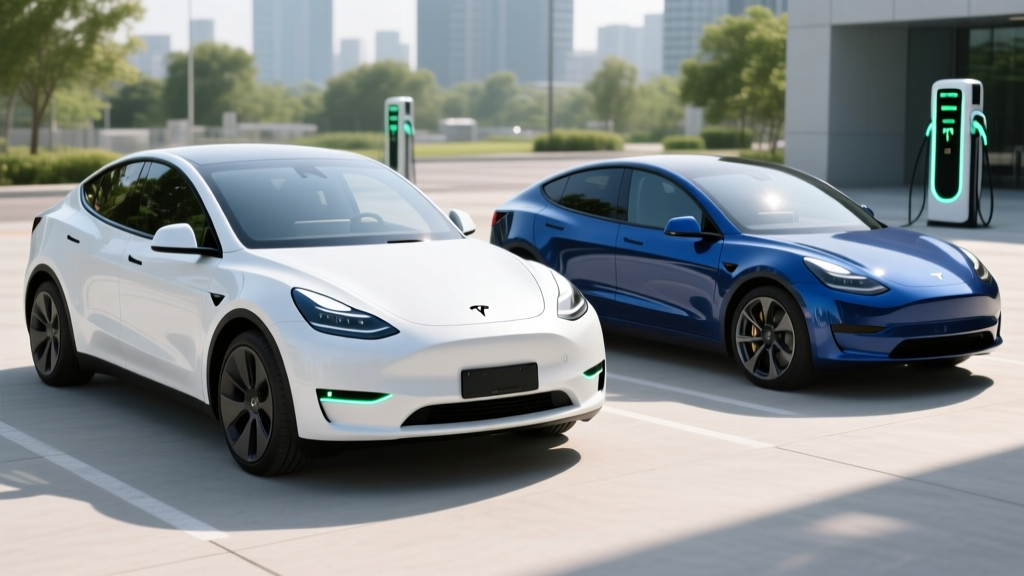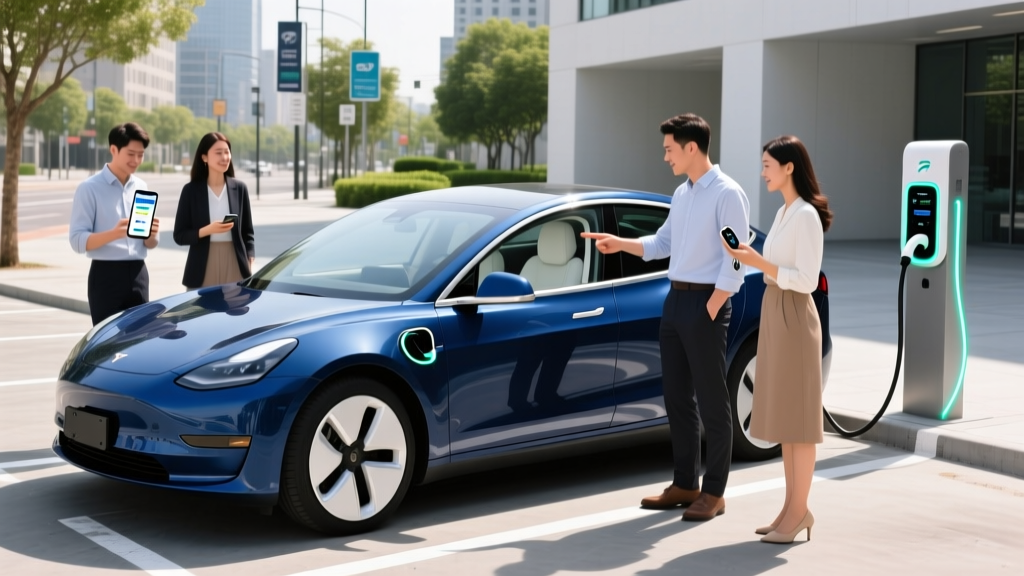
If you live in Minnesota and are researching your first electric vehicle, you have probably typed "Tesla rental MN" into a search bar at least once. The instinct is smart: a 15-minute dealer loop around the block tells you almost nothing about how an EV handles a -10°F morning in Edina, a 240-mile round trip to Duluth, or a week of subzero preconditioning in your own garage. Renting a Tesla for a weekend or a week lets you validate the ownership experience against your actual life before committing $40,000–$55,000.
This guide is written for Minnesota EV shoppers who want to use a rental as a structured test drive. We will cover which Tesla models make the most sense to rent in MN, the real-world range and charging numbers you should expect in Upper Midwest conditions, and how to translate a rental experience into a confident buy (or walk-away) decision.
Which Tesla Models Are Actually Available to Rent in Minnesota?
Tesla does not operate a traditional dealership network, so you will not find a "Tesla rental" at a franchised lot. In the Twin Cities metro and greater Minnesota, your realistic sources are:
- Turo (peer-to-peer): The largest selection of Model 3, Model Y, and occasionally Model S/X. Hosts in Minneapolis, St. Paul, Bloomington, and near MSP Airport typically list 2023–2026 model years.
- Hertz Dream Collection: Hertz still operates a Tesla fleet at MSP, though inventory fluctuates. Mostly Model Y Standard Range and Model 3 RWD.
- Sixt: Sixt MSP occasionally lists Tesla Model Y, but availability is less predictable than Turo.
- Local specialty EV rental companies: A handful of boutique outfits in the Twin Cities offer weekend EV rentals including Teslas.
For Minnesota buyers, the two models that matter most are the 2026 Tesla Model Y Long Range AWD and the 2026 Tesla Model 3 Long Range AWD. These are the trims most commonly listed on rental platforms and the ones most relevant to MN ownership (AWD, heat pump, longest range).
2026 Tesla Model Y Long Range AWD: The MN Shopper's Spec Sheet
| Attribute | Value |
|---|---|
| EPA Estimated Range | 320 miles |
| Usable Battery Capacity | ~78.1 kWh (NMC chemistry) |
| Drivetrain | Dual-Motor AWD |
| Horsepower | 384 hp (combined) |
| 0–60 mph | 4.8 seconds |
| Max DC Fast-Charge Rate | 250 kW (peak) |
| 10–80% DC Fast Charge | ~27 minutes |
| Level 2 Home Charging | 11.5 kW (~44 miles/hr at 48A) |
| EPA Efficiency | 122 MPGe combined / 27 kWh/100 mi |
| Cargo Volume | 30.2 cu ft (rear seats up) / 72.0 cu ft (folded) |
| Rear Legroom | 37.8 inches |
| Base MSRP | $47,990 |
| Federal Tax Credit (§30D) | Up to $7,500 (eligibility varies) |
| Battery & Drive Unit Warranty | 8 years / 120,000 miles (≥70% retention) |
Source: EPA fueleconomy.gov, Tesla Model Y specifications.
Real-World Range in Minnesota: What the EPA Sticker Does Not Tell You
EPA sticker: 320 miles (Model Y LR AWD)
Summer highway (70–75 mph, 65°F): Expect ~275–290 miles
Winter highway (70 mph, 15°F): Expect ~200–230 miles
Deep cold city driving (-5°F, short trips): Expect ~190–220 miles
Why the gap? Cold batteries increase internal resistance, cabin heating draws 3–6 kW continuously, and winter tires (if equipped) add rolling resistance. The Model Y's heat pump helps, but physics wins below 20°F.
This is exactly the kind of data you need to validate during a Minnesota rental. If your daily commute is 40 miles round trip in January, even a cold-soaked Model Y handles it easily. If you regularly drive from the Twin Cities to Fargo (240 miles one way) in February, you will need to plan a Supercharger stop in Fergus Falls or Alexandria — and the rental will show you exactly how that feels.
Charging in Minnesota: Superchargers, Home Level 2, and What to Test During Your Rental
Minnesota has one of the better Supercharger networks in the Midwest, with stations along I-35, I-94, I-90, and US-53. During your rental, you should deliberately test three charging scenarios:
| Charging Level | Power (kW) | Miles Added per Hour | Typical Use Case |
|---|---|---|---|
| Level 1 (120V household outlet) | ~1.4 kW | ~4–5 mi/hr | Emergency/trickle only |
| Level 2 (240V, 48A home charger) | 11.5 kW | ~44 mi/hr | Daily overnight charging |
| DC Fast (Tesla Supercharger V3) | Up to 250 kW | ~180 mi in 15 min | Road trips |
| DC Fast (above 80% SoC) | Tapers to ~40 kW | ~25 mi/hr | Avoid charging above 80% on trips |
Critical charge-curve reality: The Model Y peaks at 250 kW only between roughly 10–30% state of charge. From 50–80%, expect sustained rates closer to 80–120 kW. Above 80%, charging slows dramatically to protect the NMC battery. On road trips, plan to charge from 10–80% and drive on — do not sit at a Supercharger waiting for 100%.
Minnesota rental charging tip: Use the Tesla in-car navigation to route to Superchargers. The car will precondition the battery (warm it to optimal temperature) as you approach the station, which is essential for achieving peak charge rates in cold weather. If you pull up to a Supercharger without preconditioning in January, you might see only 50–70 kW instead of 250 kW.
Tax Credits, Pricing, and the Buy-vs-Rent Math
After your rental, the big question: does buying make financial sense? Here is where the 2026 federal EV tax credit under IRS §30D comes in.
| Scenario | MSRP | Federal Credit | Effective Price |
|---|---|---|---|
| Full §30D credit (all requirements met) | $47,990 | -$7,500 | $40,490 |
| Partial credit (e.g., critical minerals only) | $47,990 | -$3,750 | $44,240 |
| No credit (income above cap or sourcing fails) | $47,990 | $0 | $47,990 |
Key §30D eligibility rules for 2026:
- MSRP cap: SUVs (including Model Y) must be under $80,000. The Model Y qualifies easily.
- Buyer income cap: Adjusted gross income must not exceed $150,000 (single), $225,000 (head of household), or $300,000 (joint).
- Battery sourcing: The $7,500 credit splits into two halves — $3,750 for critical-mineral sourcing and $3,750 for battery-component manufacturing. Tesla's supply chain has shifted significantly, and the exact credit amount varies by production batch. Always verify current eligibility on the IRS clean vehicle credit page before purchasing.
- Point-of-sale transfer: You can transfer the credit to the dealer at purchase, reducing your out-of-pocket cost immediately rather than waiting for tax filing.
Rental math: A typical Turo rental for a Model Y in the Twin Cities runs $90–$140/day. A 5-day rental ($500–$700) gives you enough time to test cold-weather commuting, a Supercharger road trip, and home-charging logistics. That is a fraction of the potential cost of buying the wrong vehicle.
Driving Impressions: What a Rental Reveals That a Test Drive Cannot
After spending a week with a Model Y in Minnesota conditions, here is what stands out:
Performance: The dual-motor AWD system delivers 384 hp with zero lag. The 4.8-second 0–60 time is genuinely quick, but more importantly for MN drivers, the instant torque and low center of gravity give the Model Y confident traction on icy roads. The regenerative braking (one-pedal driving) takes about two days to adapt to but becomes second nature.
Ride and comfort: The 2025+ refresh improved ride quality over earlier Model Ys, but it is still firm compared to a Hyundai Ioniq 5 or Ford Mustang Mach-E. On Minnesota's frost-heaved roads, you will feel the imperfections. The cabin is quiet, and the heat pump is remarkably efficient — cabin warming in -5°F takes about 5–7 minutes with preconditioning.
Tech and driver assist: Tesla's 15.4-inch touchscreen handles everything (no physical instrument cluster). Basic Autopilot is included and handles highway lane-keeping well, but it is a SAE Level 2 driver-assist system — you must keep your hands on the wheel and eyes on the road. Full Self-Driving (Supervised) is a $8,000 add-on or $99/month subscription and remains Level 2 despite the name. Do not confuse it with Level 4 autonomous systems like Waymo.
Cargo practicality: With 30.2 cu ft behind the rear seats and 72.0 cu ft folded, the Model Y swallows Costco runs, ski gear, and luggage for a family of four. The front trunk (frunk) adds 4.1 cu ft for charging cables or a small bag.
Pros and Cons: The Honest Minnesota Ownership Verdict
Pros
- Best-in-class Supercharger network reliability in MN and surrounding states
- Heat pump standard — significantly better cold-weather efficiency than resistive heating
- OTA updates continuously improve the vehicle post-purchase
- Low running costs: ~$0.04–$0.06/mile on home electricity vs. ~$0.14/mile for a comparable gas SUV
- Strong resale value relative to most EVs
- Spacious cargo area with flat load floor
Cons
- 20–35% range loss in deep MN winter is real and unavoidable
- No physical buttons — everything through the touchscreen (turn signals on the yoke are polarizing)
- Firm ride on rough/frost-damaged roads
- Insurance premiums in MN average 15–25% higher than comparable gas SUVs
- CCS adapter required for non-Tesla DC fast chargers (included with new vehicles since 2025, but verify on rental)
- FSD subscription is expensive and still requires full driver attention
How to Structure Your Tesla Rental in MN as a Proper Test Drive
Do not just rent a Tesla for a weekend joyride. Use this framework to extract maximum value:
- Day 1–2: Commute simulation. Drive your actual daily route in morning and evening conditions. Note energy consumption (displayed in Wh/mi on the touchscreen). If your commute uses 20% of the battery in winter, you have plenty of margin.
- Day 3: Home charging test. If your rental host allows it, plug into a 240V outlet (NEMA 14-50 or Wall Connector) at home. Confirm your electrical panel can support Level 2 charging. An electrician visit during the rental period can give you a real installation quote ($500–$2,000 depending on panel capacity).
- Day 4: Road trip simulation. Drive 100+ miles on the highway at 70–75 mph. Use the Tesla trip planner to route through a Supercharger. Note how long a 10–80% charge actually takes (expect 25–30 minutes in warm weather, 30–40 minutes in cold).
- Day 5: Cold-soak test (winter only). Park outside overnight in subzero temperatures. In the morning, use the Tesla app to start preconditioning 20 minutes before departure. Measure how much range was lost overnight (typically 5–15 miles in deep cold).
Should You Buy After Your Tesla Rental MN Experience?
The answer depends on your specific situation:
Buy the Model Y if: You have access to Level 2 home charging (garage or driveway with 240V), your daily driving is under 100 miles, you value the Supercharger network for road trips to Wisconsin, the Dakotas, or beyond, and you qualify for at least a partial §30D tax credit.
Consider competitors if: You want a softer ride (Hyundai Ioniq 5), physical buttons and a more traditional interior (Ford Mustang Mach-E), or you need a CCS-native vehicle for areas where Supercharger coverage is thin (though in MN, Tesla's network is dominant).
Walk away if: You have no home charging access and your nearest public charger is unreliable, or your budget cannot absorb the higher insurance premiums and potential winter range limitations.
Frequently Asked Questions
What is the real-world winter range of a Tesla Model Y in Minnesota?
In sustained temperatures below 20°F with highway driving, expect 200–230 miles from the Model Y Long Range AWD's 320-mile EPA rating. City driving with short trips and cold-soaks can drop this to 190–220 miles. The heat pump helps, but cabin heating and battery warming consume significant energy in deep cold.
How much does it cost to rent a Tesla in Minnesota?
On Turo in the Twin Cities metro, a 2024–2026 Model Y typically rents for $90–$140/day depending on the host, trim level, and season. Hertz at MSP may offer similar pricing. Weekly rates sometimes drop to $70–$100/day. Always factor in charging costs (~$12–$18 for a full Supercharger session).
Does the Tesla Model Y qualify for the $7,500 federal tax credit in 2026?
The Model Y's MSRP ($47,990) is well under the $80,000 SUV cap, so it clears the price test. However, the full $7,500 credit depends on battery critical-mineral and component sourcing requirements that shift throughout the year, plus buyer income limits ($150K single / $300K joint). Check the IRS clean vehicle credit page for current eligibility before purchasing.
Can I charge a Tesla rental at non-Tesla charging stations in Minnesota?
Newer Teslas (2025+) ship with a NACS-to-CCS adapter or have native NACS ports, and Tesla has opened many Superchargers to non-Tesla vehicles. However, for the broadest compatibility with Electrify America, EVgo, and ChargePoint DC fast chargers, confirm the rental includes Tesla's CCS adapter. Level 2 public chargers with J1772 connectors require the mobile connector adapter (usually included).
Is Tesla's Autopilot or FSD actually self-driving?
No. Both Basic Autopilot and Full Self-Driving (Supervised) are SAE Level 2 driver-assistance systems. The driver must remain fully engaged — hands on the wheel, eyes on the road — at all times. The car does not handle all driving scenarios autonomously. True self-driving (Level 4) in the US is currently limited to geofenced robotaxi services like Waymo in select cities.
What should I check about my home electrical setup during a Tesla rental?
Use the rental to test whether a 240V NEMA 14-50 outlet or a Tesla Wall Connector is feasible in your garage or driveway. Check your electrical panel for available amperage — a 200-amp panel typically supports a 48A Level 2 charger without upgrade. If your panel is 100A or older, budget $1,500–$3,000 for a panel upgrade. Have a licensed electrician inspect during the rental period.
How does the Tesla Model Y compare to competitors for Minnesota buyers?
The Model Y leads in Supercharger network access and cargo space but trails the Hyundai Ioniq 5 in ride comfort and the Ford Mustang Mach-E in interior traditionalism. For pure MN winter practicality, the Model Y's heat pump and AWD traction are excellent. The deciding factor for most MN buyers is charging infrastructure: if your road trips follow Tesla Supercharger corridors, the Model Y is hard to beat.